Balen Shah's Past Assertions on Foreign Policy Contrast with Recent Greetings to Indian PM Modi

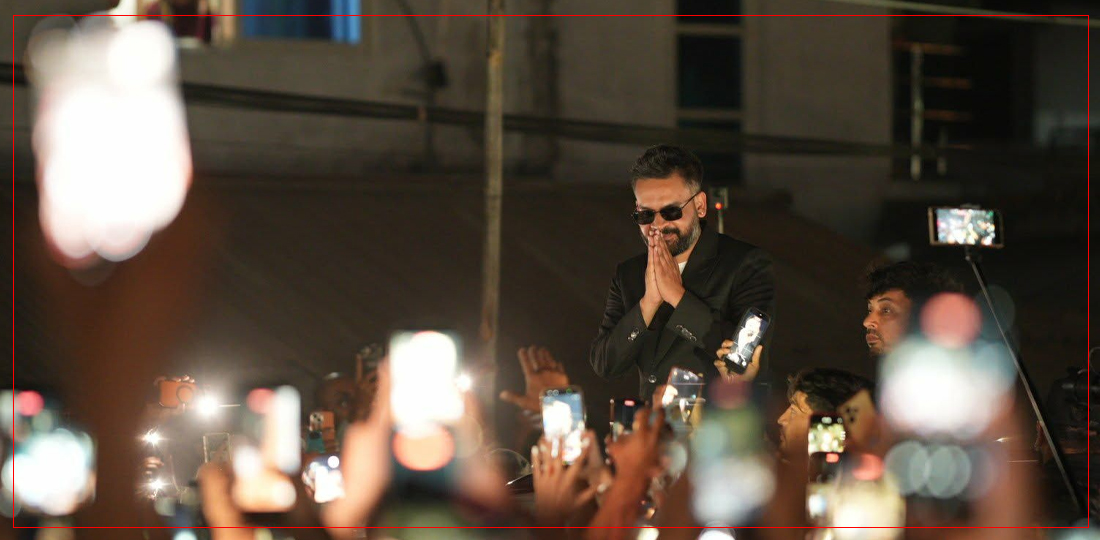
Kathmandu. India has expressed eagerness to cooperate with the new government immediately after the results of the recently concluded elections in Nepal were announced. Indian Prime Minister Narendra Modi called Rabi Lamichhane, Chairman of the Rastriya Swatantra Party (RSP), and senior leader Balendra Shah to congratulate them and wish them well for the upcoming government.
The day after Modi shared this information via a post on social media, Balen responded to the same post saying, 'Thank you for the good wishes, Honorable Prime Minister Narendra Modi ji. I express my belief that we will work together to further strengthen, deepen, and make the existing historical, close, and multidimensional relationship between Nepal-India more fruitful in the coming days. Furthermore, I wish to extend heartfelt congratulations to the Government of India and the Indian people for successfully winning the World Cup title twice in a row.'
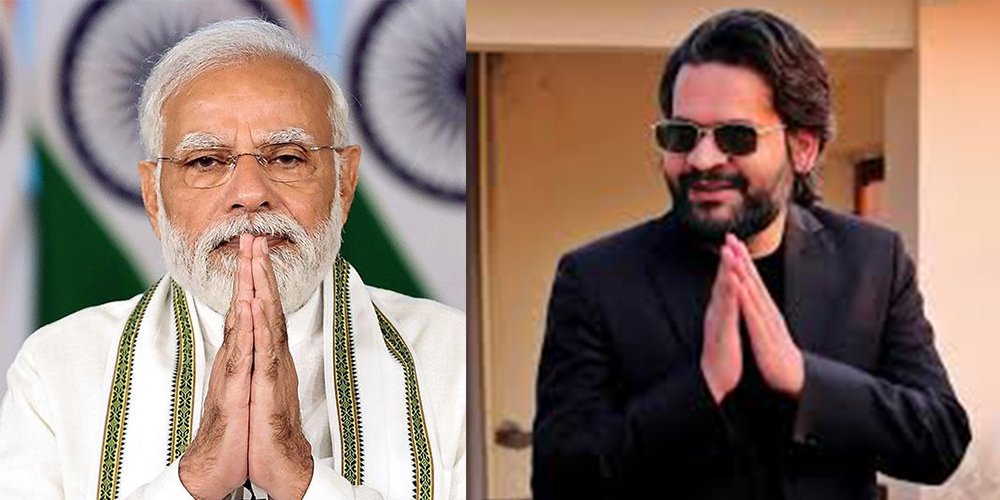
Following this reaction from Balen, who is the proposed Prime Ministerial candidate from RSP, many people reminded him of past incidents. Reactions are also surfacing regarding Balen's past statements about countries including India, China, and the US. As the Mayor of Kathmandu, he frequently criticized India and China, and now there is increased curiosity about the kind of relationship he will maintain with those countries after becoming Prime Minister.
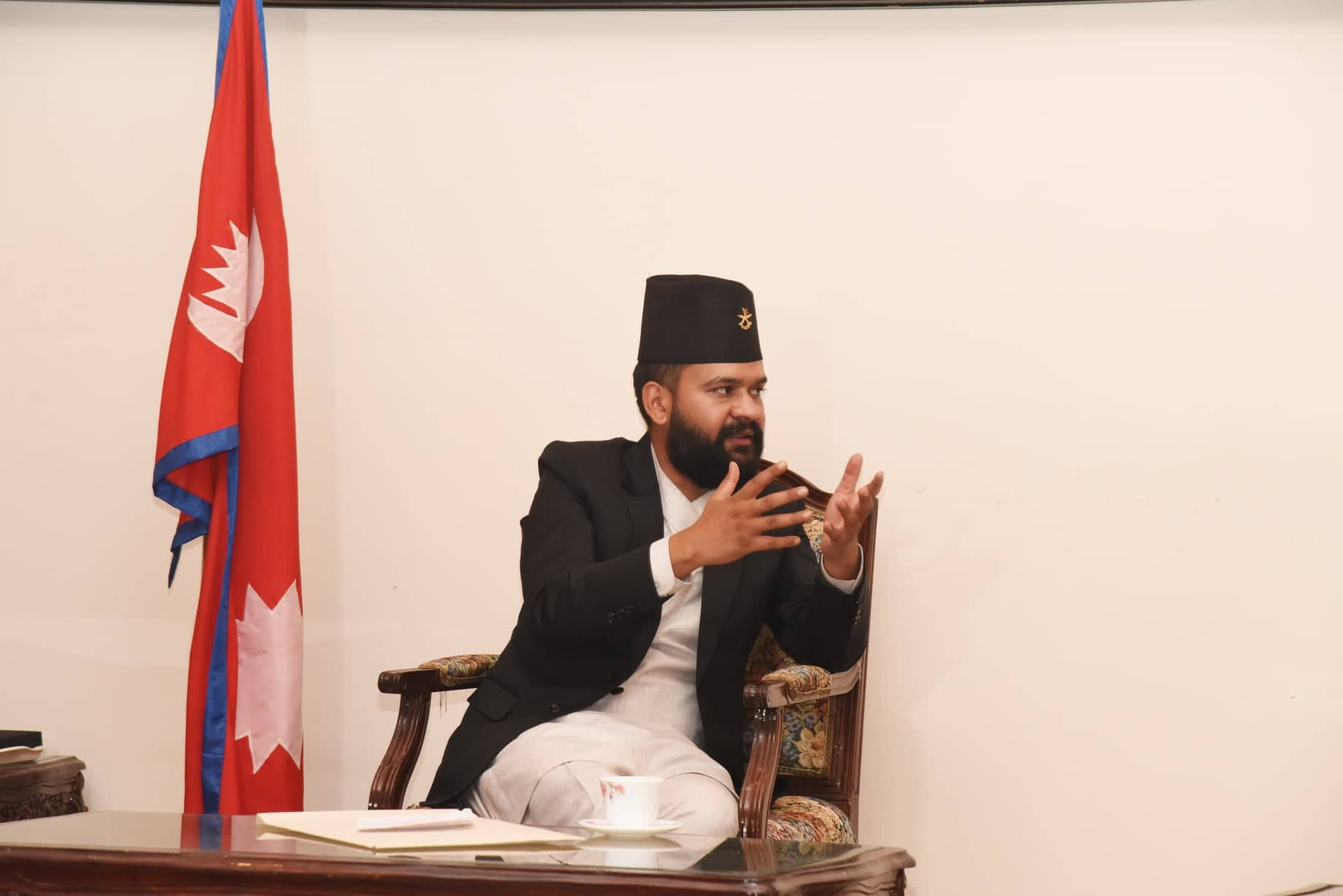
Nilaambar Acharya, an expert in foreign affairs, states that senior RSP leader Balen Shah cannot act as he did before. He said, 'Whatever he said or did regarding international issues while he was Mayor was a matter of that time. After becoming Prime Minister, one must speak based on the country's foreign policy and the Panchsheel principles. The situation he was in yesterday should not be the situation now.'
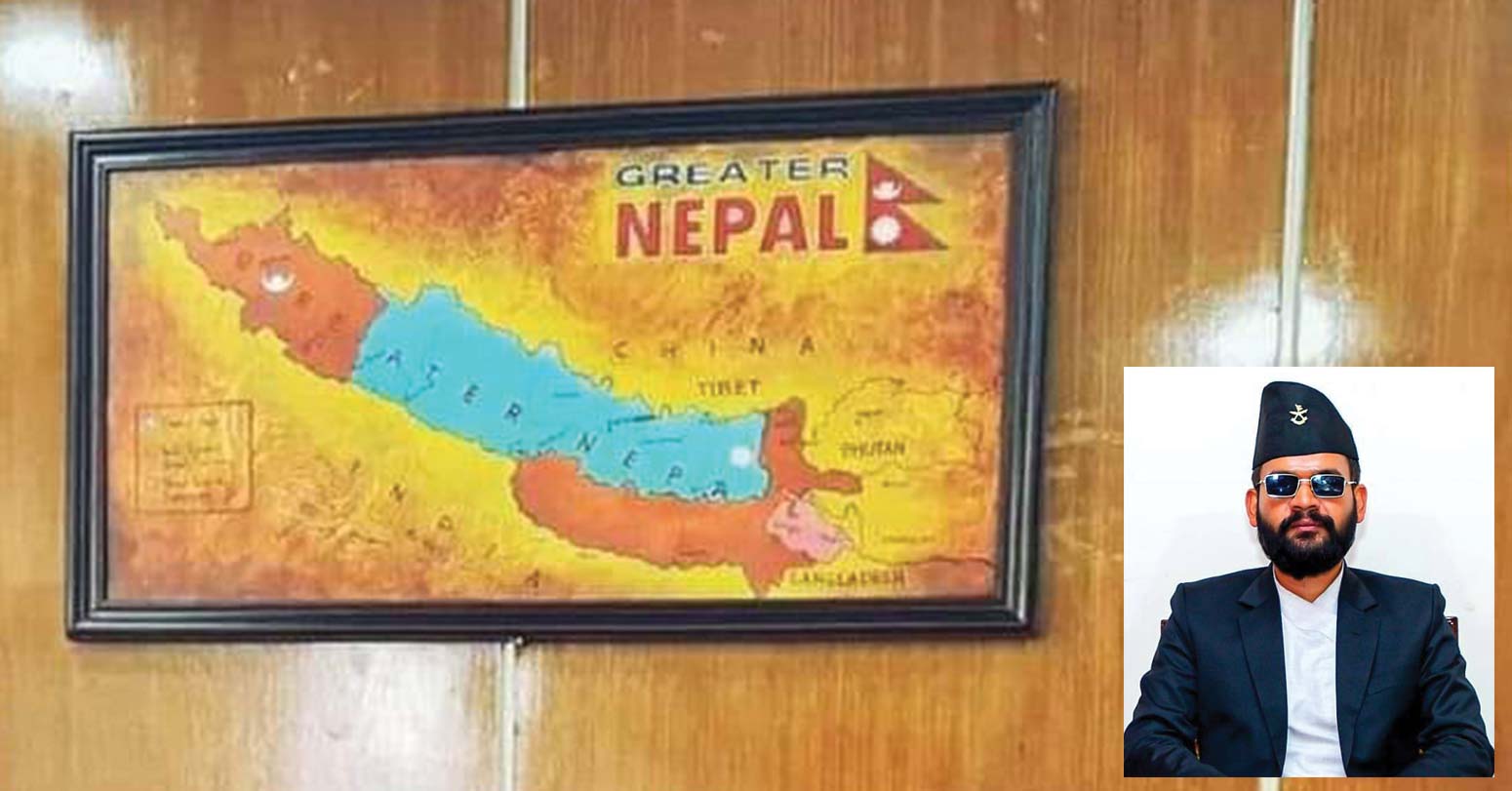
While Mayor, Balen canceled his proposed visit to China over the issue of the 'Chuche' map and garnered significant attention by placing a map of Greater Nepal in his office. In the last week of Jestha 2080 BS, after India placed a map of Greater India in its new parliament building, Balen placed a map of Greater Nepal in his office as well. This earned him praise. Now, when the same Balen thanks Indian Prime Minister Modi, most people find it unusual on social media, while some have criticized him.
Dr. Mrigendra Karki, Executive Director of the Center for Nepal and Asian Studies (CNAS) under Tribhuvan University, told Ratopati, 'When India placed a map in its parliament that included some parts of Nepal, claiming it as a cultural map, Balen also placed a map of Greater Nepal in his office, calling it an old map. Now that he is Prime Minister, if he places the same map in parliament, he must advance foreign policy and international relations accordingly. For that, we have to wait for Balen's future activities and work.'
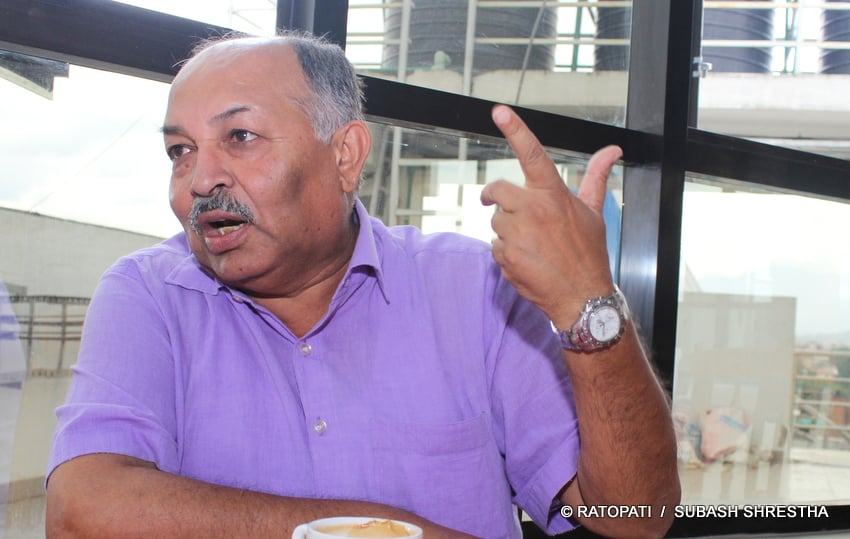
Former Ambassador Vijayakanta Karna also stated that there is a big difference between the roles of Mayor and Prime Minister. He believes that the thinking and working style naturally change after becoming the country's Prime Minister. 'The country does not run on the thinking of a Mayor,' he said.
Karna suggests that since Indian Prime Minister Narendra Modi himself had a phone conversation with RSP Chairman Rabi Lamichhane and senior leader Balen, it can be hoped that relations and cooperation between the two countries will improve in the coming days. 'Rabi and Balen also expect cooperation from India,' he said, 'The next government must build good relations not only with India but also with China and other countries.'
Following the Gen-Z movement on Bhadra 23 and 24, Balen had written objectionable things on social media linking India, China, and the US. His statement written in the middle of the night on Kartik 15 last year was heavily criticized. Following that criticism, he deleted the post.
Since then, Balen has not commented publicly on international issues. Before that, he was quite aggressive regarding the then government and international matters.
Foreign affairs expert Acharya clarified that Nepal has a definite direction for its foreign policy and must proceed accordingly. 'There has been a political change in the country, but there is no change in foreign policy, nor should there be,' he said. 'One must follow the existing policy. A government is being formed after elections in a new situation, a new environment. Some things might change slightly, but there will be no radical change in foreign policy.'
Emphasizing the need to maintain equal relations with neighboring countries including India and China, Acharya made it clear that the sensitivities of other countries must also be considered. He stated that due to geographical location, it is necessary to maintain a relatively good relationship with India and China.
When then-Prime Minister KP Sharma Oli visited China on Bhadra 14 last year, Mayor Balen had said, 'Best wishes for the China visit, Prime Minister. Please do not forget to remind China that the agreement between India and China to resume trade through Nepal's Lipulekh pass has encroached upon our sovereignty; that area is ours. We have full faith in you.'
On the same day, he publicly announced the postponement of his planned five-day visit to China. Mentioning that Nepal issued a new map incorporating Lipulekh, Limpiyadhura, and Kalapani on Jestha 7, 2077 BS, Balen had said, 'A few days ago, China's Ministry of Natural Resources published a map of Nepal maintaining the old 'Bucce' map, removing those areas.'
Balen stated that China showing Nepali territory to India without consulting Nepal was a wrong step taken against Nepal's sensitivity. For that reason, he said he canceled his five-day visit to China on moral grounds.
The then-Mayor faced a contempt of court case for making statements against Indian culture. On Ashadh 21, 2080 BS, Balen questioned on social media, 'We doubted Pushpa Kamal Dahal, and we doubted the parliamentarians who made Dahal the Prime Minister. The majority in the government obeyed Delhi's orders. Are the Indian slaves running the country, and am I the only one protesting? And am I the only one in contempt of court? Are all of you dead corpses?'
While taking a date from the court on Ashadh 24, 2080 BS, he said, 'Today is a special day, from today I am on bail, for protesting against India's cultural interference, and today the Prime Minister received relief, when they said India makes the Prime Minister of this country. I am a criminal from today.'
When Balen was Mayor of RSP, he banned the screening of Indian films. Citing that the Indian film 'Adipurush' carried the message that Janaki was an Indian daughter, he announced that the film would not be screened within Kathmandu Metropolitan City.
On Jestha 32, 2080 BS, Balen had said, 'As long as the word in the South Indian film Adipurush stating that Janaki is an Indian daughter is not corrected, not only in Nepal but also in India, no Hindi film will be allowed to run within Kathmandu Metropolitan City. Three days are given to correct this. Victory to Mother Sita!'
Exactly three days later, on Ashadh 3, 2080 BS, he stated that there was no doubt that it was the primary duty of every government, government agency, non-governmental sector, and Nepali citizen to protect the national interest while keeping Nepal's independence, sovereignty, and self-respect intact. He said that if the film continued to be screened as it was, it would be a direct attack on Nepal's nationality, cultural unity, and national icons.
He responded strongly not only to China and India but also to the US. When the then US Ambassador to Nepal sought a meeting with Mayor Balen, he sent a message stating he would meet only after obtaining permission from the Ministry of Foreign Affairs. Balen met the Ambassador only after he obtained permission.
On Mangsir 16, 2079 BS, Balen wrote on his Facebook, 'We have no desire to beg for help from foreigners like you. He came with an offer to provide us with financial assistance, but we sent him back saying that we would help in building a temple or 'Pati Pauwa' reflecting Nepali civilization in America. Furthermore, we expressed the view that instead of selling electricity generated through MCC to foreigners, that electricity should be used within Nepal for economic progress.'
This specific news has been automatically translated by AI. As a result, there may be some inaccuracies or language errors.

_aADS5ULwOP.jpg)