Fuel Shortages and Unrest Grip Asia Amid Middle East Conflict and Soaring Oil Prices

_jTt0pFHblK.jpg)
Dhaka. Following a sharp rise in oil prices due to the ongoing conflict in the Middle East, fuel shortages and dissatisfaction are emerging in various Asian countries. The situation in Bangladesh has become particularly tense, leading to the deployment of soldiers to guard major oil depots.
Bangladesh, heavily reliant on oil imports, sources nearly 95 percent of its energy needs from abroad. Amid fears of fuel shortages, long queues have appeared at petrol pumps in various locations, including the capital, Dhaka. The army has been stationed at key depots to tighten security, and police patrols around petrol pumps have been increased.
Ashrafuzzaman Dulal, an employee at a petrol pump in Dhaka, stated that angry motorcycle riders vandalized the station due to supply shortages. According to him, violence erupted on Sunday after drivers were unconvinced by the explanation that fuel was not arriving from the depot.
On Tuesday, Shahjahan Traders, one of the oldest stations in the capital, posted a notice apologizing to customers for running out of fuel.
The government of Bangladesh, which has a population of 170 million, has initiated fuel rationing to keep the situation under control. Due to the energy shortage, students have been sent home, and light displays at public celebrations have also been canceled.
Meanwhile, police reported that a young man died in a clash with employees over refueling on Saturday night in the southern district of Jhenaidah. Following the death of the 25-year-old, an enraged crowd set three buses on fire and vandalized one filling station.
On Tuesday, a vehicle queue stretching nearly 1.5 kilometers was visible in Dhaka's city center. Kamrul Hasan, who waited in line for a long time for his car, said his owner left the car in the queue and used a rickshaw to reach his destination.
According to petrol pump employee Akhtar Hossain, the crowds do not subside for hours. "We didn't see such large crowds even during the Gulf War," he said.
On the other hand, oil prices slightly decreased on Tuesday after US President Donald Trump stated that the US-Israel war against Iran "could end soon." However, prior to this, the price of crude oil on the international market had exceeded $100 per barrel. This level is the highest seen since Russia invaded Ukraine in 2022.
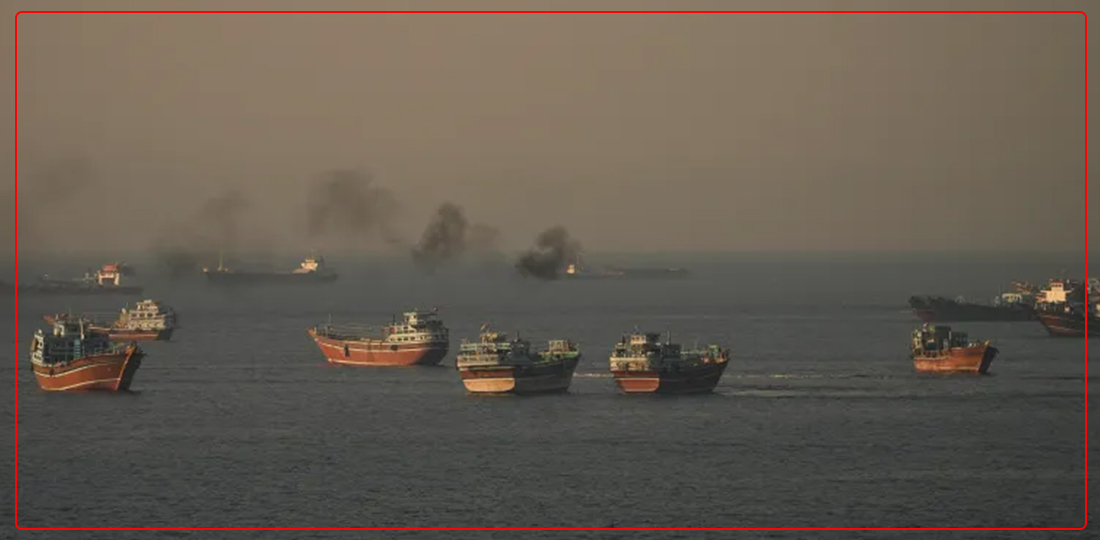
Market instability increased after Iran targeted the Gulf region with missile and drone attacks. Maritime traffic in the Strait of Hormuz has also been affected since the war began. Since about one-fifth of the world's crude oil is transported through this route, its impact is being felt in the global market.
The impact of the fuel crisis is also beginning to be felt in other Asian countries. In Vietnam on Tuesday, thousands of motorcyclists lined up for petrol. The price of unleaded petrol there has increased by more than 20 percent.
However, Vietnam has so far avoided a major shortage after the government removed the duty imposed on imported petroleum products. A 57-year-old man in Hanoi named Tuan expressed deep frustration after having to wait a long time for petrol.
According to him, after waiting in line for about an hour, he was informed that the pump's system had shut down when it was his turn, causing many drivers to return disappointed.
Queues of vehicles were also seen at petrol pumps in the Philippines this week. Officials have warned against hoarding fuel, and similar scenes have been observed in Pakistan and Sri Lanka.
According to Enrico Guda, a gas station attendant in Metro Manila, the daily workload has doubled as people rush to fill up in anticipation of further price hikes.
The situation appears more difficult in Myanmar. In this country, which imports about 90 percent of its fuel, the energy supply was already weak due to the civil war. To conserve oil reserves, the government has implemented a rule that prohibits half of private vehicles from being on the road each day.
Hla Htay, a 56-year-old car rental operator, said such regulations make it difficult for drivers dependent on cars to operate their businesses.
In the border town of Tachileik in Myanmar, some petrol pumps have closed after supplies from Thailand decreased. Fuel prices there increased up to three times last week.
However, some countries such as Japan, Indonesia, China, India, and Afghanistan have not yet experienced a widespread crisis.
Lee In-tae, a 42-year-old businessman in Seoul, said that as a precaution, he has started refueling more frequently than before. "I used to fill my car once a week, but now I try to fill up whenever I see a cheaper pump," he said.
This specific news has been automatically translated by AI. As a result, there may be some inaccuracies or language errors.