Iran Signals Prolonged Conflict Despite Trump's Claims of Swift Resolution


Kathmandu. Although US President Donald Trump claimed the conflict with Iran would 'end soon,' Tehran has indicated that the fighting will continue as long as necessary. Iran's Foreign Minister, Abbas Araghchi, expressed skepticism about such claims on Tuesday, stating that his country is prepared to continue missile attacks.
Trump's claim that the conflict would soon conclude came just hours after Tehran launched new attacks targeting US-allied Gulf nations. However, Araghchi, in an interview with PBS NewsHour, signaled that the conflict could be prolonged, stating, "The shooting continues and we are ready. We will continue our missile attacks as long as necessary using our missiles."
Iran's Revolutionary Guard also responded to Trump's remarks, warning that they would decide how the war would end. Araghchi also dismissed the possibility of talks with Washington. According to him, the experience of talking with the US has been 'extremely bitter,' and the US attacks during previous negotiations have made Tehran more distrustful.
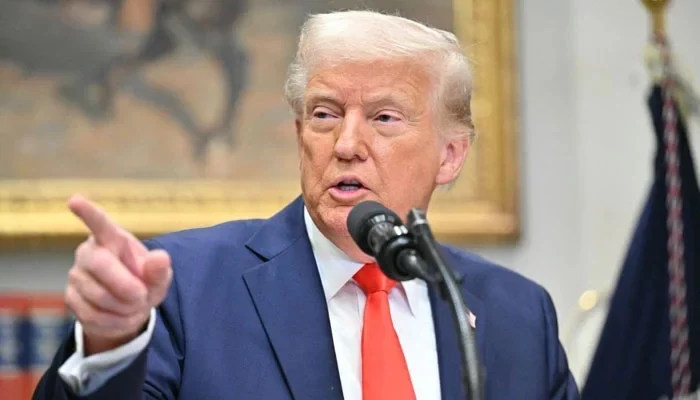
Meanwhile, Trump, at a press conference in Florida on Monday, claimed the campaign would be short-lived. "It will end soon, and if it starts again, they will be affected even more," he said. He also warned of an 'unimaginable scale of attack' if Tehran blocks oil supplies.
Trump's comments appear to have brought some relief to global markets. Oil prices, which had risen the previous day, fell by about five percent, and stock markets in Tokyo and Seoul opened strongly. The day before, crude oil prices in the international market had exceeded $100 per barrel.
However, the impact of the conflict remains widespread. Reports indicated that Iranian attacks targeted Gulf nations again on Tuesday morning. The United Arab Emirates stated it was responding to missile and drone attacks from Iran, while sirens blared in Bahrain, urging citizens to seek shelter. Saudi Arabia and Kuwait also reported intercepting and destroying some drones.
Reports have also emerged of attacks continuing inside Iran. Local media reported fresh strikes in the capital, Tehran, and the Khomein region. Israel stated it attacked Iranian missile launch sites following missile launches from Iran.
The ongoing war is also affecting the global economy. Fears of disruption to fuel supply have increased, along with concerns about rising inflation. In an effort to lower prices, Trump announced the lifting of some oil-related sanctions after talks with Russian President Vladimir Putin.
Meanwhile, Iran is also targeting ships traveling through the Strait of Hormuz, through which about 20 percent of the world's crude oil passes. French President Emmanuel Macron stated that his country and allies are working on a 'defensive' campaign to reopen the strait for safe passage of ships after the difficult phase of the conflict ends.
There has also been a change in leadership within Iran. Following the death of Ayatollah Ali Khamenei in a US-Israel attack, his son Mojtaba Khamenei emerged as the new Supreme Leader. Trump referred to him as a 'light' leader and signaled that he should influence Iran's leadership selection process.
This appointment has received mixed reactions within Iran. While some welcomed it, state media released images showing thousands of people in central Tehran demonstrating in support of the new leader.
The conflict has also had repercussions outside Iran. Israel launched new attacks in Lebanon on Tuesday. According to Lebanese officials, at least 486 people have been killed and more than 1,313 injured in Israeli attacks since March 2.
Lebanon was drawn into the war after Iran-backed Hezbollah attacked Israel. Lebanese President Michel Aoun accused Hezbollah of working to 'destroy' the country, but the group's parliamentary leader stated there was no option other than resistance.
Syria also criticized Hezbollah, condemning the mortar fire from Lebanon into its territory and warning that no attacks would be tolerated.
According to government statistics, millions of Lebanese have been displaced due to Israeli attacks and ground operations. More than 660,000 people have been registered as displaced.
Among them is 40-year-old Zeinab El Masri, who is forced to live on the streets of Beirut with her husband and children. "We have nothing to eat or drink, only a little bread," she said.
The war has made life even harder for people during the Muslim fasting month of Ramadan. Some residents in Iran stated that rising prices and economic problems accompanying the war have made life more difficult.
Reza, a 36-year-old cafe manager in the northeastern city of Boukan, said he was surprised to see people climbing onto rooftops to watch bomb explosions. But according to him, the real problem is the economic crisis. "Banks have stopped giving cash, and many cards have been blocked," he said.
For this reason, he made a different decision at his cafe. "Coffee is free for those who cannot afford to pay for it," he said.
This specific news has been automatically translated by AI. As a result, there may be some inaccuracies or language errors.
_w1ohuluTvQ.png)