
Anthropologist Suresh Dhakal Analyzes Election Results, Citing Digital Platforms and Collective Imagination
_0bGT6sqgY0.jpg)
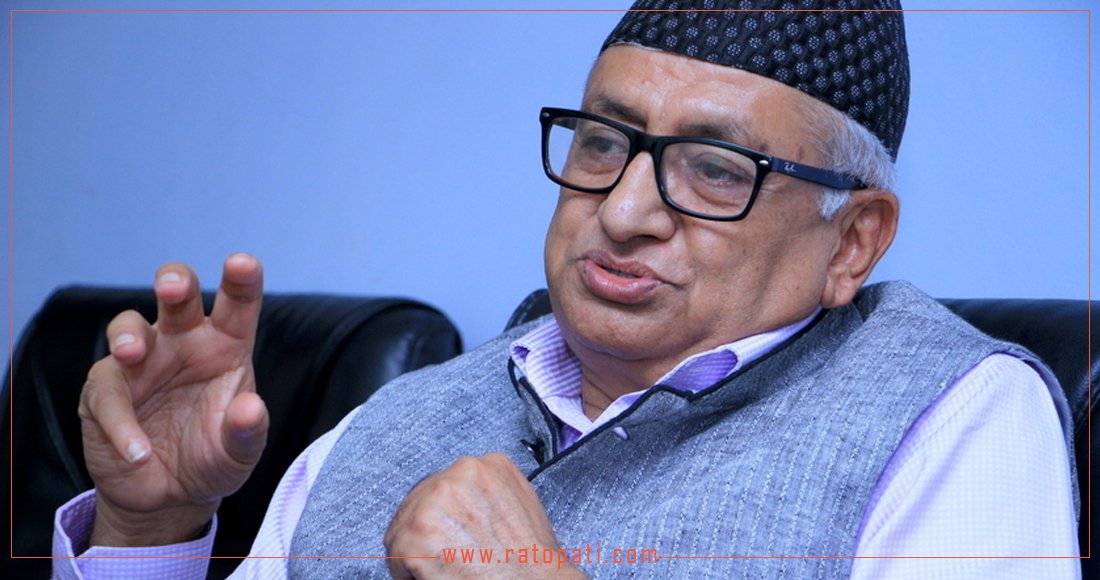
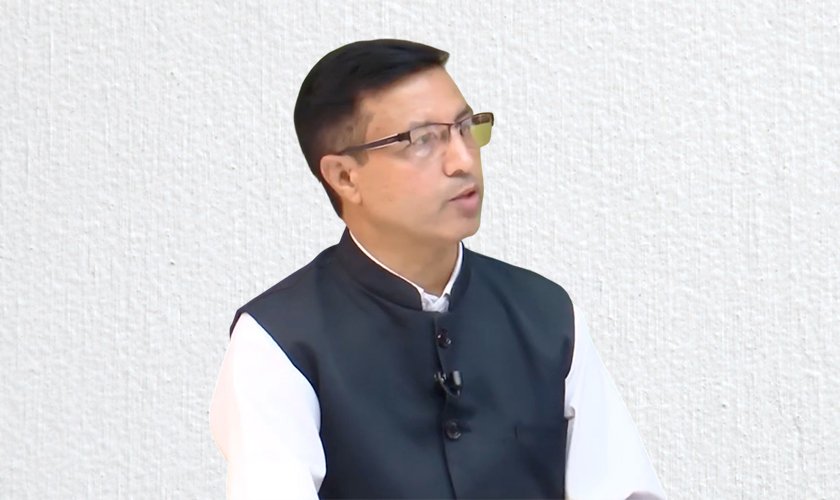
Anthropologist Suresh Dhakal, author of several books including 'Land and Agrarian Questions: Essays on Land Tenure, Agrarian Relations and Peasant Movements in Nepal', 'Land Ownership and Land Reform in Nepal', and 'History Before History: An Anthropological Account of Cultural Evolution', 'The Agrarian History of Nepal: The Political Economy of Agro-ecological Change', has been actively teaching anthropology at Tribhuvan University for nearly two decades. Here is his conversation with Naresh Gyawali for Ratopati, focusing on the sociology of elections:
- How do you view the current election results, and what kind of picture of future Nepal do you see emerging from them?
Classically, I have called this an 'interesting' result. If we label this vote result as 'expected' or 'unexpected,' we position ourselves on one side. Expected means as you wished, and unexpected means as you did not wish. Therefore, while analyzing this election result, I do not wish to take a side.
From an anthropological perspective, this is a very intriguing phenomenon. Politics can never be viewed separately from social, economic, cultural, and foreign relations. In that sense, I view it with interest. However, it is even more interesting to see how the general voters from Jhapa in the east to Dadeldhura in the west voted for the same party.
_ezOzUNxD5l.jpg)
One thing I have been saying for a long time is that future elections are being fought not through party organization or worker rallies, but through the use of digital platforms, including social media. It appears that whoever utilized it effectively was able to influence the election results. Reports were published about how much money Meta earned from Nepal in the previous election. While no such report has been published to date, it can be estimated that the amount this time was certainly higher than before.
A quick look at the current election results suggests that the incompetence and ineffectiveness of the old political parties, their unchanged state, and the expectations for the new, along with the expectations following the Gen Z movement, have been channeled by voters into a single political party.
Now, through social imagination, RSP has been made into something like a new religion. This has established RSP as a new religion. A religion is such that there are no questions, only belief.
The data on who was sensitive and who was not sensitive to the Gen Z movement are all available in the digital world. That data was transformed into a clear narrative. Through that narrative or discourse, a 'collective imagination' was constructed among the general public. For example: 'We must fulfill the dreams of the Gen Z, we must destroy the anti-Gen Z forces in the election, we must show the ones who ordered firing on the Gen Z movement, we must remove the old ones and bring in the new.' A larger narrative is built by connecting various such data points and small narratives. Whoever could do that, the result came in their favor.
_fU0m92o0tM.jpg)
- Are you suggesting that the 'battlefield' of elections, which used to be geography in the past, has now changed to the 'algorithm' and 'echo chamber' of social media? In other words, was this 'digital warfare'?
I prefer not to use such strong words as 'warfare' or 'battlefield' for this. Let's not call it that. In simple terms, the more competently you use the digital age, the result you get. The construction of a larger picture, a story, that can connect with the general public. Along with this, the 'emotional identification' of the general public, which can establish narratives like - 'They killed so many youths', 'They murdered school children', 'Now Gen Z must run the government'.
We need to look at what influenced the thinking of the general public? How did everyone come to think the same way? How was that constructed?
It can be said that the background of the current election result is the ability to convey one's message through stories in language understood by the people, reaching their homes and ears, and constructing such a discourse. While saying this, there is no doubt that the main reason for all this is the ineptitude, inaction, and incompetence of the old political forces. However, the reason why the unprecedented votes came for the newly termed political party RSP is the engineering I mentioned in the background.
Now, through social imagination, RSP has been made into something like a new religion. This has established RSP as a new religion. A religion is such that there are no questions, only belief. The supporters of RSP seem like a believing congregation. A congregation of hundreds of thousands of believers. We cannot devalue the general Nepali public who decided to vote for RSP with great trust and consideration. This is a tremendous success for RSP. This is the reality. Therefore, everyone must accept it.
_tBetWmvBXX.jpg)
But what influenced the thinking of the general public? How did everyone come to think the same way? How was that constructed? We need to look at that. Because the decision-making process is not purely a personal matter. It is constructed from your cultural thought system, experience, geography, and objective circumstances. Therefore, this is not just a political matter. Look at a simple thing: people need information to form their thoughts. The basis for thought formation is determined by who is delivering that information and how effectively it reaches the general public.
- How did other political parties fail in constructing the collective imagination?
Firstly, constructing a larger discourse requires small, fragmented stories. Stories scattered in small pieces are the raw material for a larger discourse. RSP skillfully crafted narratives like 'The old ones ruined everything', 'Everything will be fine now', 'Only the new can build Nepal', in a way that others could not.
He is not directly voting for Balen, but through such stories constructing an 'imaginary hero', voters like him across the country were influenced. Such a symbolic hero is essential for 'collective imagination'.
But the question arises, why couldn't they? Because the so-called old political parties no longer have dreams to offer. They could not show the general public that 'this is my dream too,' and their dreams failed to connect emotionally with the general public. Furthermore, the discourse that is constructed needs to be disseminated 'multiple times' and in 'multiple ways'. However, there remains the question of whether some figures who have emerged victorious from the election can maintain the dignity and prestige of the parliament.
- How much do you see the 'face value' of the 'symbolic hero' influencing the election?
I will answer your question through an interesting anecdote: The sister who sells vegetables at my house came after many days. When asked where she had been, she replied, 'I went to vote, and I came back after making him win.' When asked whom she made win, she said, 'I went to make Balen win, and I came back after making Balen win.' Now look, she is not directly voting for Balen, but through such stories constructing an 'imaginary hero', voters like her across the country were influenced. Such a symbolic hero is essential for 'collective imagination'.
_YYQGNFFbz6.jpg)
- Although RSP was not officially part of the Gen Z movement, it seems to have benefited entirely from it. How do you view this?
The initial campaigners or concept creators of the Gen Z movement are still outside. They are not directly involved in politics. But the ability of RSP to construct a fictional story around that movement as a significant component must be considered a special capability. This requires a team, and that team worked competently.
The future is never dark. But it depends on how those actors work in the coming days. Every issue has a definite lifespan.
I am not taking sides, but there are three main questions of the Gen Z movement. First, when the organizers asked to retreat, fearing the movement might become violent, who pushed it to the parliament building? Second, who gave the order to shoot the young men and women who reached there? Third, who were the ones burning private property, the court, and Singha Durbar the next day? Who was behind the terror committed by the state and the terror committed against the state?
They should have been able to narrate the story by turning those incidents to their advantage. Involving school children in such violence is considered a crime. Who told this story well, whose storytelling was good, who connected emotionally—that is the main thing. I am saying this now because the election is over, the people are happy, and the winners are happy. But we might have to study the background of how the social psychology behind this works for a long time.
- In this election, Nepal Workers and Peasants Party (NWPP) lost in Bhaktapur, considered a stronghold of the leftists since 2048 BS, and Janamorcha lost in Baglung. Should this be seen as a significant turning point towards the end of the leftists in Nepal?
The future is never dark. But it depends on how those actors work in the coming days. Every issue has a definite lifespan. The actions of the actors are needed to keep it alive. If they don't work, that's what happens. The result in Bhaktapur was a very interesting subject for me in this election. Studying Bhaktapur Municipality, I saw that there is no corruption, no misgovernance, and no problem with development. The leadership is also willing to dialogue. But this tsunami swept everyone away at once. As they say, when a tsunami washes away a Tesla factory, it also washes away a small rickshaw factory.
_AVvUUPhpqX.jpg)
In the case of the leftists, there has been a long-standing lack of dialogue with the people. The strongest example of this is Prachanda. In the past, he was a candidate who could win from anywhere, but today he had to go to Rukum as a refugee just to win. In the past, the Maoists could offer a dream, so the general public was ready to sacrifice their lives. But today, it is easy to understand that Prachanda is also struggling because he cannot offer that same dream. The same thing happened with UML and other leftist parties. When they were in power, they appeared as rulers.
I understand politics as both an event and a process. Even if this result hadn't come, the leftist movement was already on a downward trend. This is just a 'marker'. In anthropology, there is a theory called 'Cultural Theory'. If you cannot climb up, you have to start from the bottom. It cannot gain momentum from the middle. Therefore, perhaps the leftist movement in Nepal still has further to fall to the very bottom.
This specific news has been automatically translated by AI. As a result, there may be some inaccuracies or language errors.

_Eqo5W0NMVM.jpg)