Indian Media Closely Follows Nepal Election Results, Highlighting Rise of Independent Party and Balen Shah

_Fs1ij2MYgZ.jpg)
The vote counting for the House of Representatives election has reached its final stage. According to the results so far, the Rastriya Swatantra Party (RSP) has secured a clear majority.
It is evident from news published in neighboring India's media that India is taking significant interest in Nepal's elections.
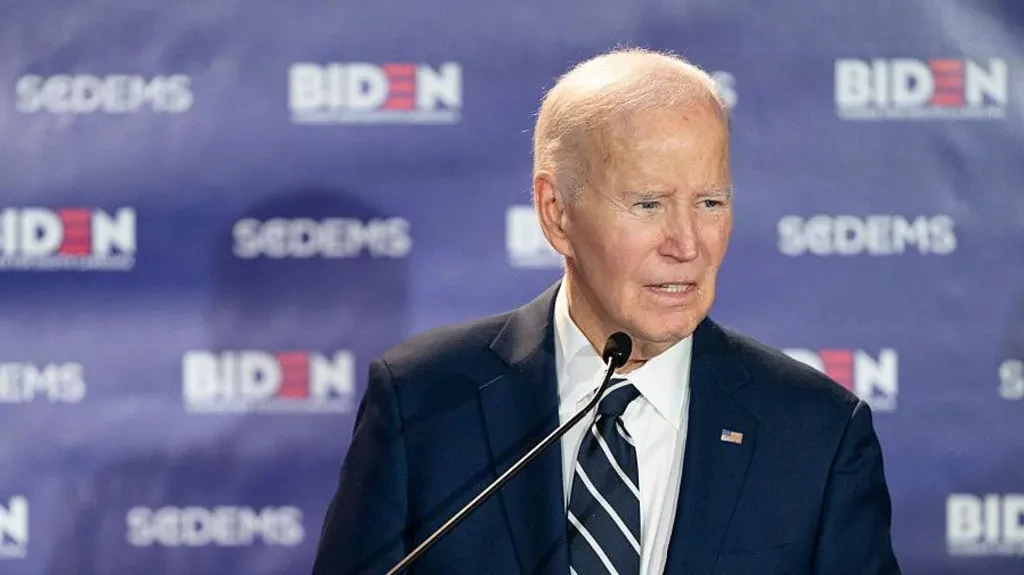
Amidst the fluctuating Nepal-India relations, Indian media have been publishing news with great anticipation regarding the new government to be formed in Nepal. They have given particular priority to the victory of Balen Shah.
Various Indian media outlets have published news stating that the path for a young leader of Madhesi origin to become Prime Minister for the first time in Nepal has been smoothed.
Navbharat Times, in its report, mentioned that the public has chosen young leaders like RSP and Balen Shah over traditional parties in Nepal. The news also posed the question, 'Can RSP bring about significant change, or will it lose public trust like Prachanda?'
Mentioning that the new government will face numerous challenges, Navbharat Times wrote in its online edition, 'Balen and most new parliamentarians lack extensive experience in politics and government operation. They will need to coordinate with the bureaucracy to meet public expectations.'
Navbharat Times noted that fulfilling election promises, especially providing employment, will not be easy for the new government. The news also highlighted the equally strong challenge for the new government to maintain a balanced relationship with neighboring India and China. 'If the new government adopts a balanced policy and increases cooperation with India in the development and energy sectors, it could benefit both Nepal's stability and regional balance,' the news stated.
Similarly, the online edition of Dainik Jagran also carried news about Nepal's election results. The news mentioned that the entire country is dancing to the tune of Balen Shah's rap music, as established parties and many of their leaders were sidelined in the election, overshadowed by Nepal's monarchy and the subsequent political landscape.
Furthermore, the online edition of Amar Ujala broadcasted a video report stating that the public has given a mandate for Balen Shah to become Nepal's new Prime Minister.
In the online edition of Dainik Jagran, an article by international affairs expert Dr. Rishi Gupta reviewed the results of the Nepal election. Gupta asserted that it is almost certain that Balen Shah will become the Prime Minister according to the mandate, and he also commented on some of Balen's working styles.
He wrote, 'Balen Shah is a popular leader. During his tenure as Mayor of Kathmandu, he was frequently accused of disregarding rules. If his working style remains the same in the position of Prime Minister, it could affect the country's policy stability and become a cause for public grievance.'
However, he asserted that the public has given a new dimension to democracy by exercising their right to vote, and discussed that this signals an end to the long-standing political instability and the tug-of-war among coalitions. He mentioned in the article that the current mandate has largely shelved the issue of restoring the monarchy, which has occasionally surfaced in the country.
Likewise, the online edition of Hindustan Times referred to Balen Shah as a popular leader and mentioned that he is also popular in India.
The statement by Devendra Chand Deva, an Indian journalist and expert on India-Nepal activities, was also quoted in the news, emphasizing the necessity of resolving the Nepal-India border dispute during Balen's tenure to further improve relations between the two countries.
The online edition of ABP News Channel also mentioned that the path for a stable government in Nepal has widened. The news stated that the elections held in Nepal have significantly weakened the old parties, establishing the Rastriya Swatantra Party and its leader Balen Shah.
This specific news has been automatically translated by AI. As a result, there may be some inaccuracies or language errors.