
Political Analyst Arun Subedi on Election Results: A Paradigm Shift Away from Party Loyalty
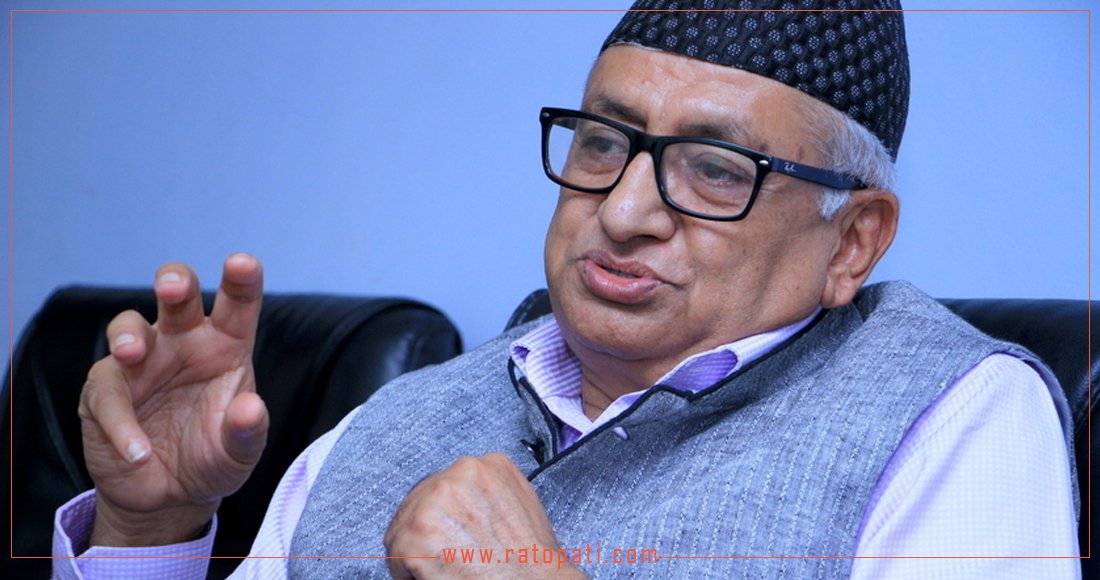
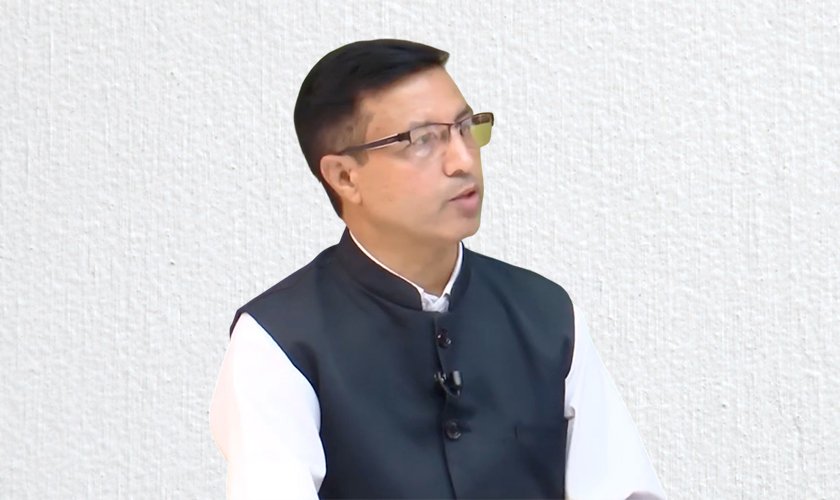
Kathmandu. While some consider the election results natural, others find them surprising. Political analyst Arun Subedi deems them expected. He concludes that the results emerged because the Congress and UML faltered on economic and political agendas.
He is extremely pleased that the election has resulted in the 'political sterilization' of communists in Nepal. This is an edited excerpt from an interview with Arun Subedi, an expert in geopolitics, international politics, development economics, and Nepal's water resource management, on Ratopati's 'Warpar' regarding the election results, the formation of the new government, foreign policy, economic policy, and various other issues (the full interview can be viewed/heard in the video):
Were the election results expected, unexpected, or unimaginable?
They appeared unexpected in a few places. Otherwise, the election results were expected for me.
Does this mean you had prior information about the election results?
I informed all my friends in various parties about the situation based on how informed I was.
What did you tell them? Did you advise them not to contest the election, saying they would lose?
I didn't say that exactly. But I told some that a situation contrary to what you expect, unfavorable to your side, might arise. I told some that an adverse situation you cannot even imagine could occur in your favor. To some people, I explicitly stated that you are losing by a large margin.
Does this election result ratify the 'unorganized rebellion' of Bhadra 23 and 24, in your words?
Definitely.
If the existing legal and constitutional structure remains as it is, no party will secure a majority. Did analysts like you also fail in this assessment?
This election turned out like one for a directly elected executive. Similar to what happened in India in 2014. Today, most people who were voting in favor of the RSP (Rastriya Swatantra Party) did not even know who the parliamentary candidates were. Politics used to be based on party workers. Based on that, every village was politically divided. But after the unorganized rebellion, politics became entirely people-based, not worker-based.
People who have no district organization, no ward or village presence, have been elected. This is a major paradigm shift in politics. When this shift occurs, analyses based on traditionally available circumstances naturally go wrong.
What are the positive aspects of this election result?
One is that there used to be regimented politics. People were divided among parties, flags reached every house, and workers were in every home—that kind of politics existed. That is no longer the case. The political and party narrative of 'permanent voters' and 'permanent workers' has been completely fractured today. The core area (stronghold) is finished.
And the negative aspects?
I cannot say if it is negative or positive. Politicians have been displaced from politics. Technocrats or celebrities, social activists have taken their place. The situation where politicians are generally displaced from politics raises curiosity and is a strange subject regarding where the future politics and state governance will head.
It is an election; there is competition; one party wins, another loses. But margins of 40,000 or 50,000 votes have become common. With such a constitutional arrangement, a party is close to a two-thirds majority. Isn't such a result astonishing? Aren't you surprised how this happened?
I have no option but to ponder your question and look at the results from all constituencies. The answer cannot be given based on conspiracy theories. It cannot be explained by saying foreigners were involved. Before the election, I used one phrase: all Nepalis are going into the election while being under a kind of cyber arrest (electronic siege).
Why did KP Oli fail? We don't need to keep saying he doesn't show morality. But Congress President Gagan Thapa also failed. Will he show morality?
He must take moral responsibility for this failure. I think he probably will take it.
Some people say that if Sher Bahadur Deuba had gone into the election as President, the Congress would not have faced this shameful defeat.
One can speculate about things that didn't happen as they wish.
After the current election results, the dominance of the leftists in parliament is set to decrease significantly. You must be happy about this, right?
My heart is delighted by this. The election has, in a way, put a full stop to the leftist ideology, leftist organization, and the process of the left-leaning transformation of society in Nepal. It has politically sterilized the communists in Nepal. The situation for producing new communists is now closed. The old ones will gradually fade away.
What is your suggestion for the new government to be formed?
Rather than what I say, they should act according to their manifesto. The first stage of liberalization happened in the economic policy in 2048 BS. They should move to the second stage of liberalization. They must advance their foreign policy centered on national interest. The world is currently in an extremely sensitive and complex phase. The Prime Minister elected by a sovereign parliament is constitutionally and legally weak in Nepal. Strengthen this. Furthermore, my suggestion is to declare a Development Emergency for 10 years and abolish all procedural laws.
This specific news has been automatically translated by AI. As a result, there may be some inaccuracies or language errors.

_Eqo5W0NMVM.jpg)