
Internal Debate Erupts in CPN-UML Following Disappointing Election Results

Kathmandu. Following the embarrassing results in the House of Representatives elections held on Falgun 21, the debate over policy and leadership restructuring has resurfaced within the CPN-UML. Although the issue of leadership change became prominent after the two-day 'Gen-Ji' movement in the third week of Bhadra demanding good governance and corruption control, Oli, who was re-endorsed for a third term as chairman after hastily conducting the 11th General Convention, was severely rejected in the subsequent election results.
Even though he was endorsed by the party cadres, the UML has internally begun such a debate, taking heed of the suggestion that the public has rejected both Oli's policies and leadership, giving them an alternative.
In the 2079 elections, the UML, which became the second-largest party in parliament with the highest 2.8 million votes under the proportional representation system, is being analyzed as not only having dropped significantly in terms of numbers in the elections held on Falgun 21 but having been completely devastated to the point of being unable to recover. Party Chairman KP Sharma Oli himself has not yet commented on the party's embarrassing election results. However, most UML leaders and cadres have concluded that the party suffered a huge loss due to Chairman Oli's policies, leadership, and working style, and that it is time to seek an alternative for policy and leadership. Nevertheless, leaders and cadres have not been able to hold this debate in the party's formal committees.
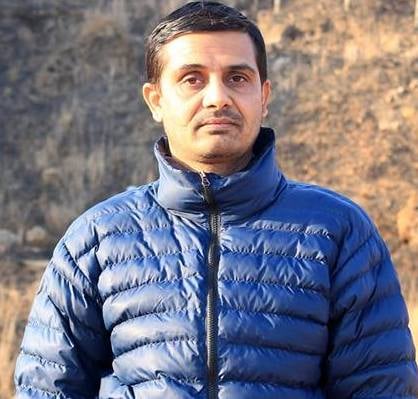
Although the final election results have not been made public and leaders and cadres are still engaged in election-related activities, they have brought the debate and discussion on policy and leadership restructuring to the forefront by publicly sharing their views on social media and through communication channels individually. Deputy Secretary-General Yogesh Bhattarai himself admits that the election results have rejected both the UML's policy and leadership.
“The people have peacefully rejected our policy and leadership through their votes in the election. This is the objective reality of today,” Bhattarai says. “We must take the path of regaining public support through comprehensive transformation within ourselves.”
Bhattarai stated that the disagreement with the policy adopted by the party after Bhadra 23 and 24 was raised in party meetings and the 11th National General Convention but was rejected, and he believes the time has come to reopen that debate. Bhattarai is confident that the UML will rise again by moving forward through debate on policy and leadership.

According to a UML office-bearer, it would be beneficial for the party and Oli himself if Chairman Oli took responsibility for the party's defeat in the elections and resigned immediately.
“We suffered a severe blow in the election, and one of the many reasons for this situation is the result of the Chairman's ego, arrogance, and unitary working style,” that office-bearer told Ratopati. “After such a blow, Chairman Oli should show morality and resign immediately.”
Indeed, there have always been two factions within the UML regarding the perspective on the 'Gen-Ji' movement. One faction considered the 'Gen-Ji' movement natural, while Oli, relying on the majority within the party, consistently labeled the movement as criminalization and incitement by foreign forces. Moreover, Oli, who strongly argued that the election was a competition between those who burn the country and those who build it, ultimately not only lost himself but also played a role in dragging the entire UML party to the abyss. The public responded to Oli's thinking, behavior, and working style through the ballot, forcing the entire UML to reconsider.
UML leader Anand Pokharel believes that Chairman Oli himself should speak about the election results and the changed situation.
“I believe that a person with dynamic leadership, understanding of politics, understanding of moral ground, and one who provides ideology and philosophy will speak for himself about the entire process based on his own realization,” Pokharel told Ratopati. “Therefore, I might also be one of those who cannot look at the leader personally or to the sides!”
Pokharel states that in a situation where the party has been defeated to the extent that there is no room left to lose in this election, the leadership, including the chairman, must show that morality. Many UML leaders and cadres understand that the UML was decimated in the elections due to errors in ticket distribution, the stripping of former President Bidya Bhandari's party membership, and the biased treatment of the dissenting faction by those surrounding Oli.
In such a situation, do UML leaders and cadres have the courage to demand Chairman Oli's resignation? Leader Pokharel says, “Don't let the meeting happen.”
Not only UML leaders Bhattarai and Pokharel, but Vice-Chairman Bishnu Poudel, considered close to Oli, has also reacted, stating that a serious review of the party's leadership, policies, and execution must be conducted following the nationwide defeat, and necessary decisions must be taken.
Vice-Chairman Poudel stated that after the results of the nationwide elections arrive, the party will conduct a deep self-reflection. “We will soon make appropriate decisions regarding the party's leadership, policies, and methods of execution in accordance with the feelings of the nation and the people,” Poudel had said as the election results were coming in.
Professor Krishna Pokharel, who understands the UML and is also a political analyst, analyzes that UML Chairman Oli has failed in every respect. Pokharel understands that although Oli attempted to present new leadership by holding a General Convention, it failed to bring about a change in policy and leadership.
“The UML General Convention was held in a situation where it was done more for the ritualistic deification of Oli himself rather than for changing policy and leadership,” Pokharel told Ratopati. “That General Convention neither energized the cadres nor had a positive impact on the general public.”
Pokharel analyzes that the public responded to Oli's working style and behavior through the election. Pokharel analyzes that the election results have indicated the necessity for policy and leadership restructuring not only in the UML but in all older parties.
“This is necessary in all parties, not just the UML,” Pokharel says, adding that the UML sinking to the abyss in the election is the result of Oli's self-centered working style and the mentality of 'I can do whatever I want.'
Pokharel suggests that it might take significant effort and time for the UML to recover from the recent setback. “The Congress, being a party that follows liberal democracy, might not find it as difficult to recover, but it is difficult for communists to rise,” he says. Pokharel comments that for fallen communists to rise is like a fallen elephant getting up. “When an elephant falls, it doesn't get up easily. Similarly, it is difficult for communists to rise after falling,” Pokharel says.
This specific news has been automatically translated by AI. As a result, there may be some inaccuracies or language errors.

_MrvSPkqfle.jpg)

