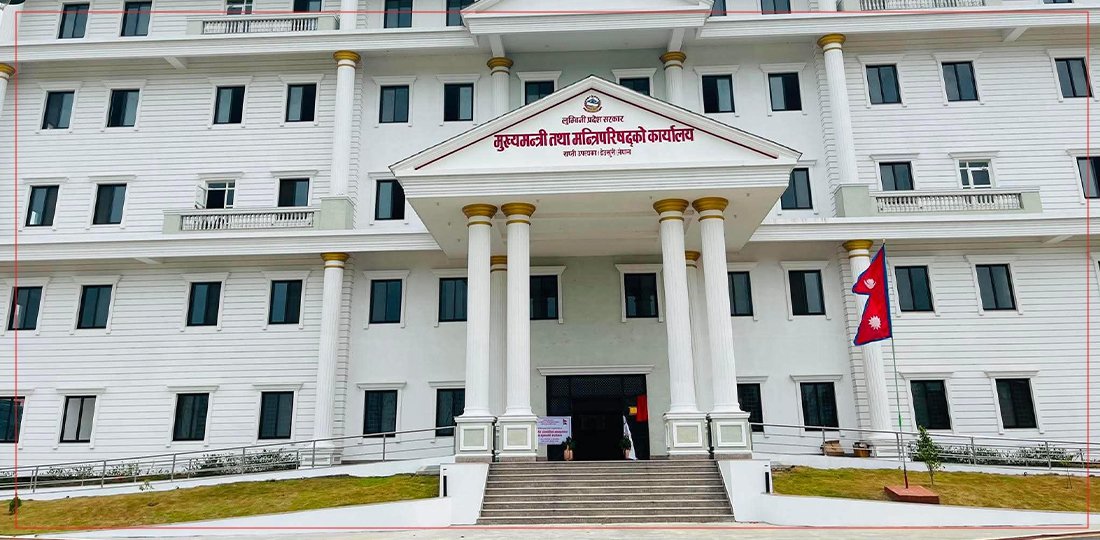
Poverty and Fear Plague Majhi Community Living Near Kali Gandaki River Amid Unchecked Sand Mining

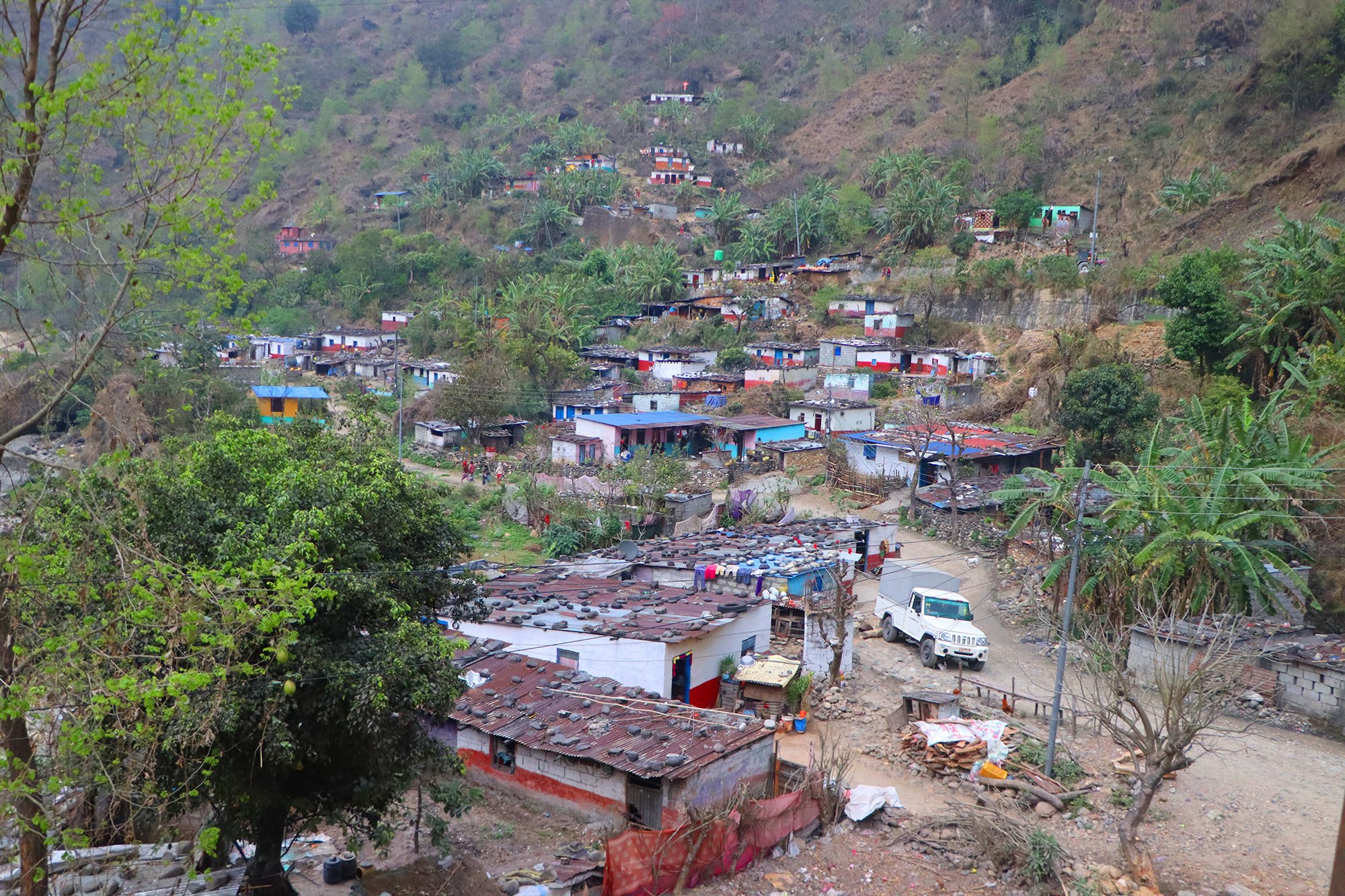
Baglung. The Kali Gandaki River flows near the settlement. Next to it are shacks covered with small cement blocks and old corrugated iron sheets. The roof is covered with stones. Why are stones placed on the roof like this? This scene in the Majhi settlement raises this question in the minds of every traveler on the Baglung-Pokhara Highway.
The roofs of the houses built in the Majhi settlement in Maldhunga, Kushma Municipality-1, Parbat, clearly show the condition of the residents here. The reason the Majhi residents place stones on their roofs is poverty.
There is no suitable place to build a proper house. Even if there is space, there is no money. The residents of the Majhi settlement, who struggle daily to make ends meet, are always overlooked by the state. While the highway nearby is noisy, the Majhi settlement remains silent. Most families residing here do not possess land ownership certificates (Lalpuja). Many are living by paying rent for their shacks.
For decades, the locals living on the banks of the Kali Gandaki have been troubled by one thing lately: the exploitation of the Kali Gandaki.
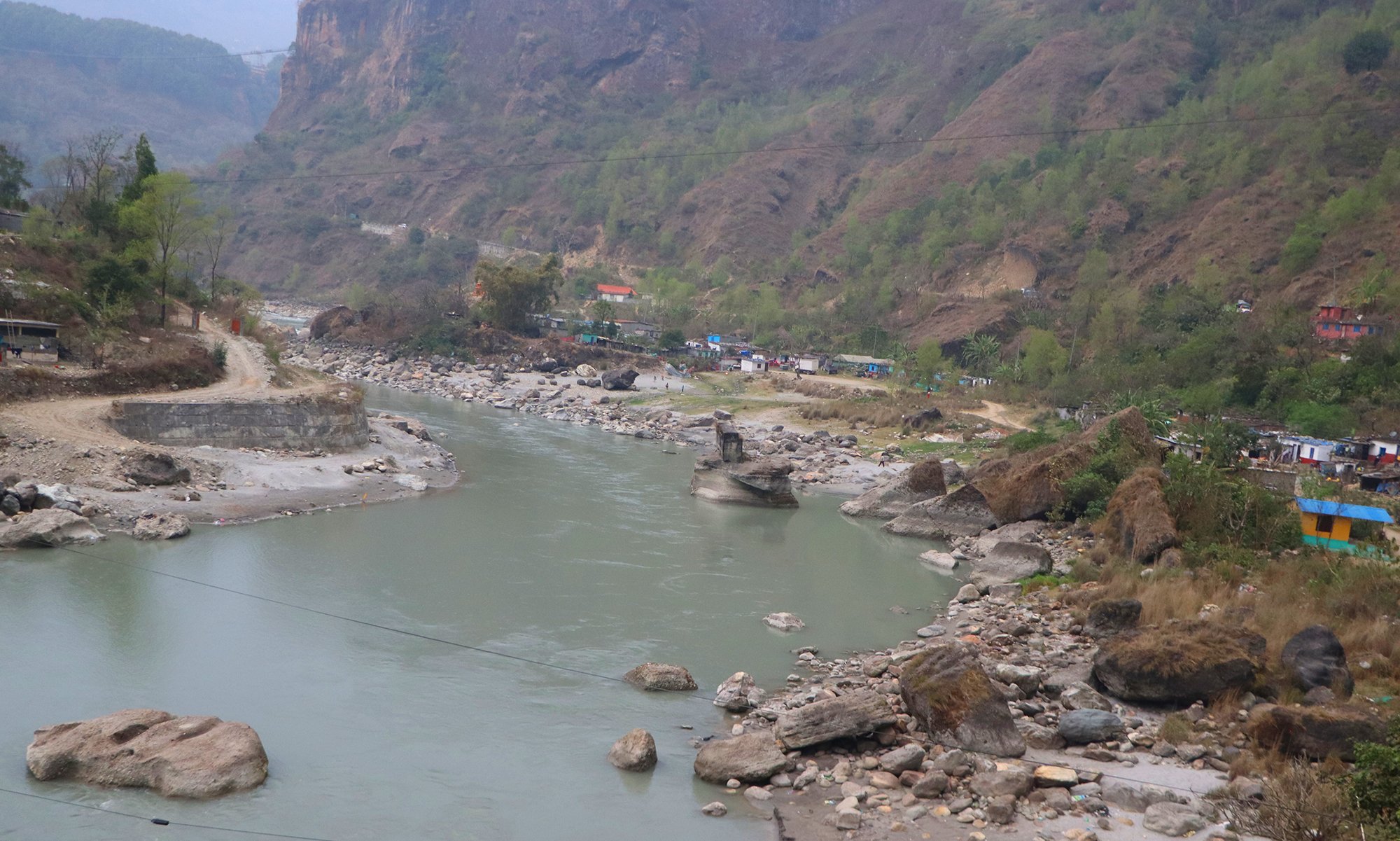
They are worried about being displaced due to the excavation of riverine materials using large machines in the Kali Gandaki near the settlement. During the monsoon season, there is a fear that the river might enter the settlement. The locals, caught between a massive cliff above and the grip of the Kali Gandaki below, are only used as a 'vote bank' during elections.
The Gandaki might wash away the settlement, where will we go?
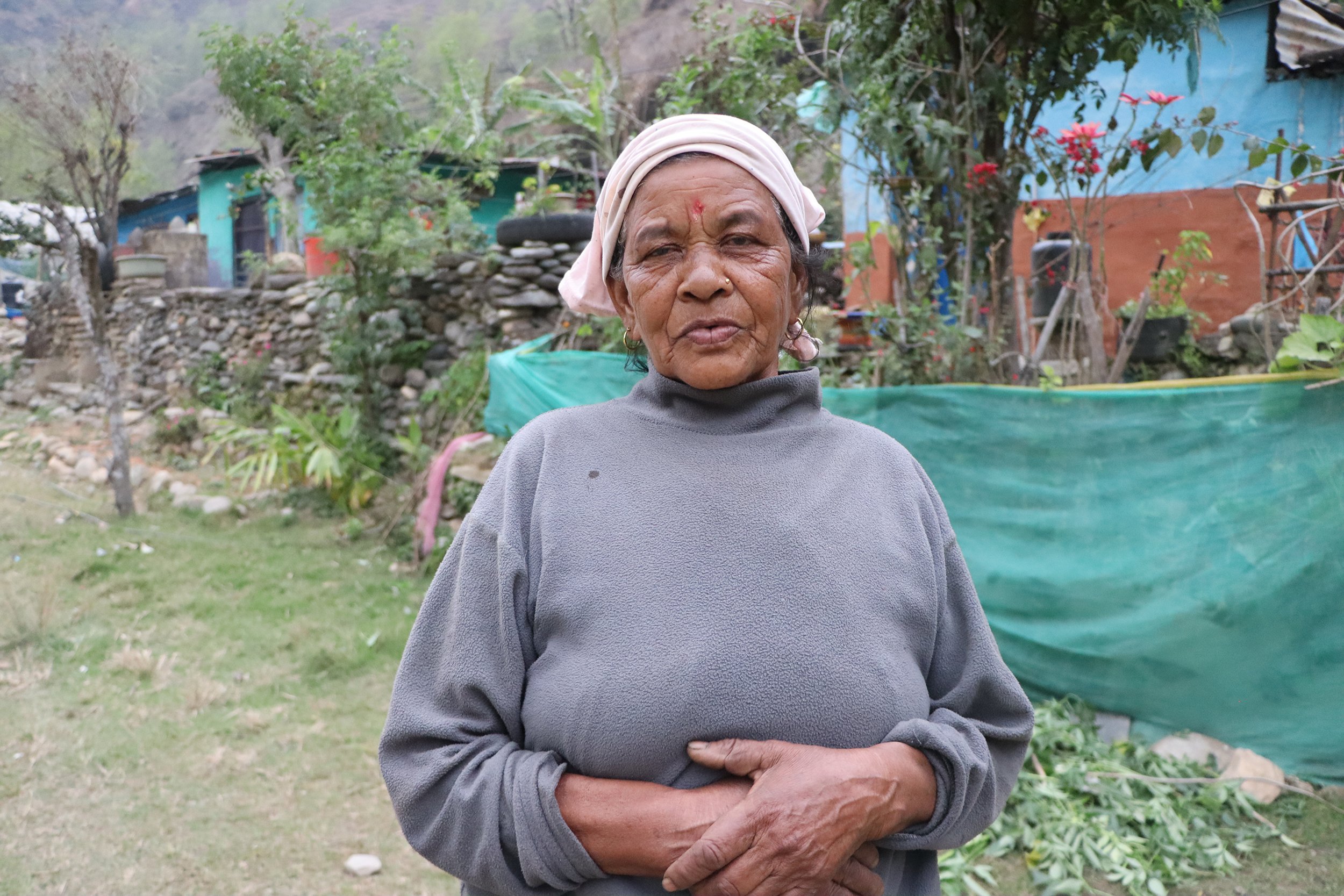
The state has failed to stop the illegal exploitation of the Kali Gandaki. Pramila Bhandari Gauchan, 65, a local resident, stated that due to the river exploitation, they are forced to leave their homes during the monsoon due to the fear of the Kali Gandaki entering the settlement. Saying she has lived here for 32 years, she complained that in recent times, due to the exploitation of the Kali Gandaki, it has become impossible to live in their homes during the monsoon.
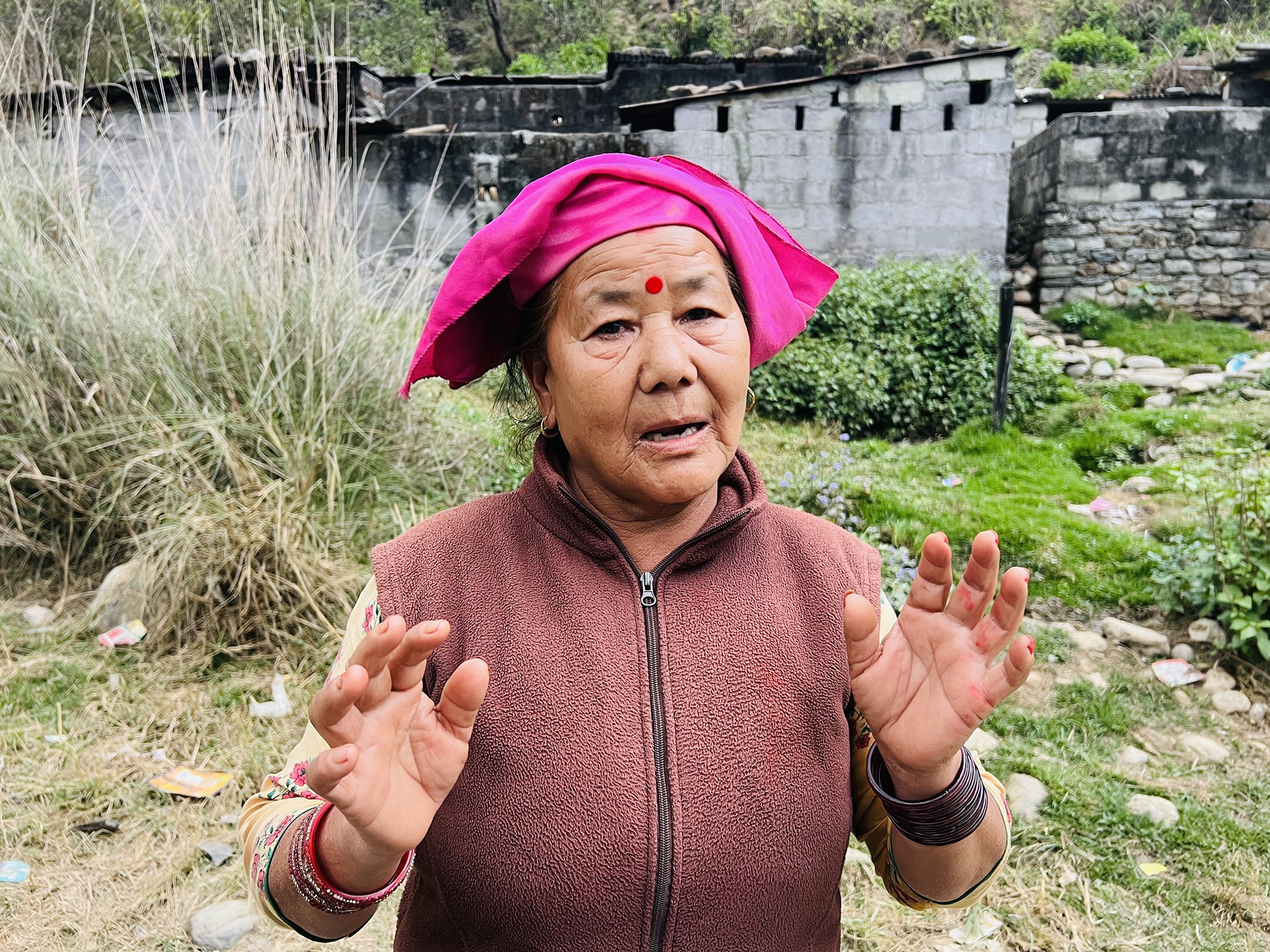
Gauchan said, 'The haphazard use of bulldozers in the Gandaki poses a risk that our very habitat will cease to exist. The settlement might be washed away. Where will we go now?'
According to Gauchan, in the past, the Kali did not swell up and reach high. She said, 'Since they started extracting sand and gravel using bulldozers, the Kali swells up and enters the settlement during the monsoon.'
She recounted that although leaders promise to protect the settlement when they come seeking votes during every election, they have done nothing so far.
'During elections, they ask for votes by saying they will do this and that. After winning the election, we don't know where they go. The people of this area are seeking settlement protection,' she said, 'They deceive us with many promises. We have been fooled many times.'
Sarita Majhi, 60, a local resident, complained that she has not received any support from the state. She mentioned that leaders only come to talk about development during election time but remain invisible otherwise.
She shared that they are forced to leave their homes especially during the monsoon due to the fear of erosion by the Kali Gandaki and the risk of the hill above the settlement collapsing and burying them.
Majhi said, 'We are all unsafe. There is no one to ensure our safety. Nothing will happen no matter whom we vote for. We are fed up.'
Majhi stated that the settlement would be safe if embankments were built along the Kali Gandaki.
Livelihoods Lost, Survival Becomes Difficult
Until a few years ago, the banks of the Kali Gandaki were the livelihood for the residents of the Majhi settlement, but nowadays, they are not allowed to extract sand and gravel from the banks. The laborers lost their livelihoods after the Pokhara High Court, Baglung Bench, issued an interim order in Jestha 2075 (May/June 2018) to stop the exploitation of the Kali Gandaki river.
Even though laborers were stopped from extracting riverine materials using shovels and spades following the interim order, the illegal exploitation did not stop. No agency could stop the illegal exploitation. The Majhi community suffered the consequences. Ganesh Majhi, 43, a local, shared that families who survived by extracting sand are now in trouble.
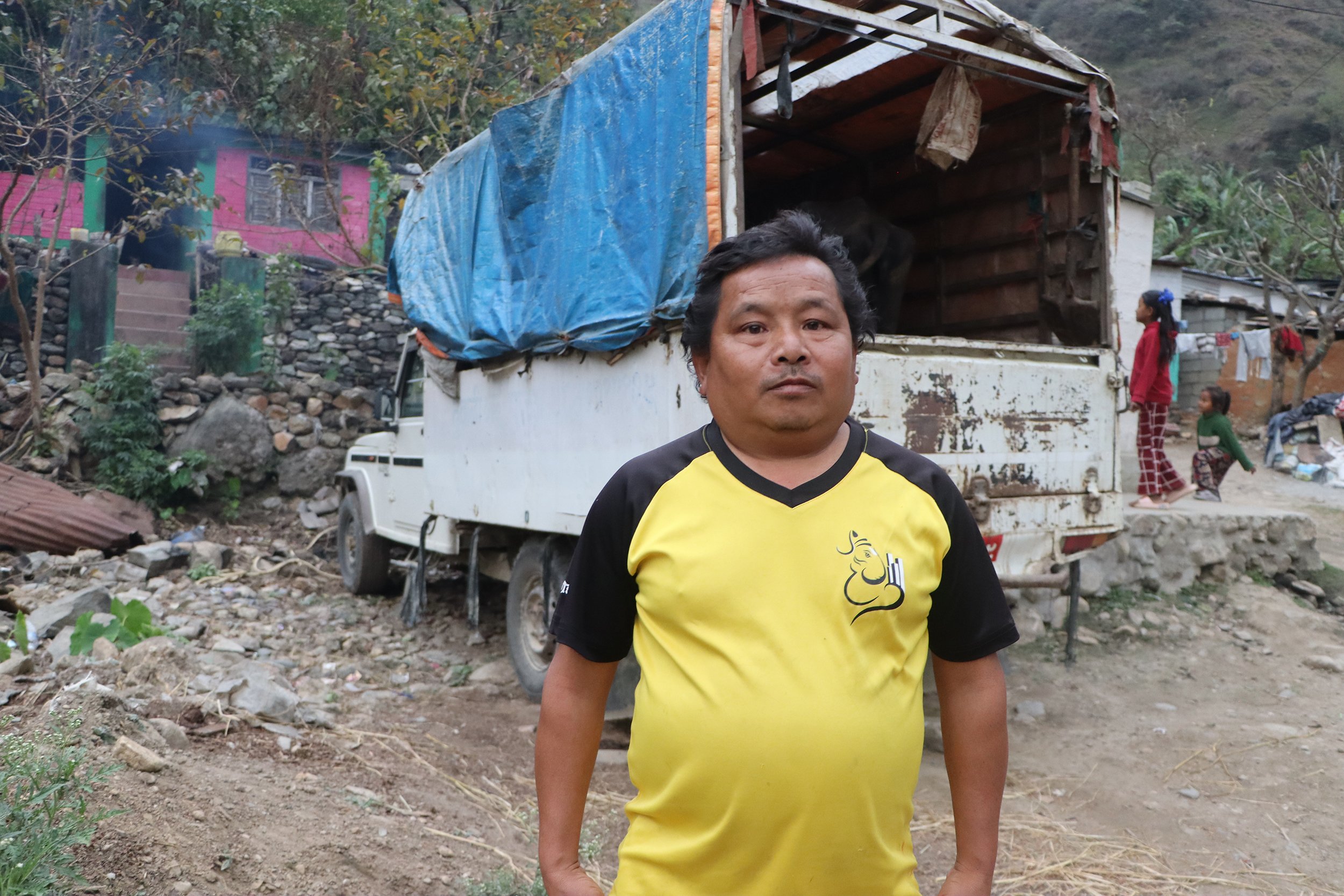
He said, 'Locals who used to earn their daily bread by sifting sand all day are now unemployed. Neither does the government provide employment nor any assistance. The youth are idle all day. If they were allowed to sift sand, they could at least manage to survive.'
Majhi accused the state of betraying those who made a living by sifting sand, as the state could not stop the contractors illegally exploiting the river. He stated that if they were allowed to sift sand in the Gandaki, many Majhis here would not have problems making a daily living.
Only Promises to Pave the Road
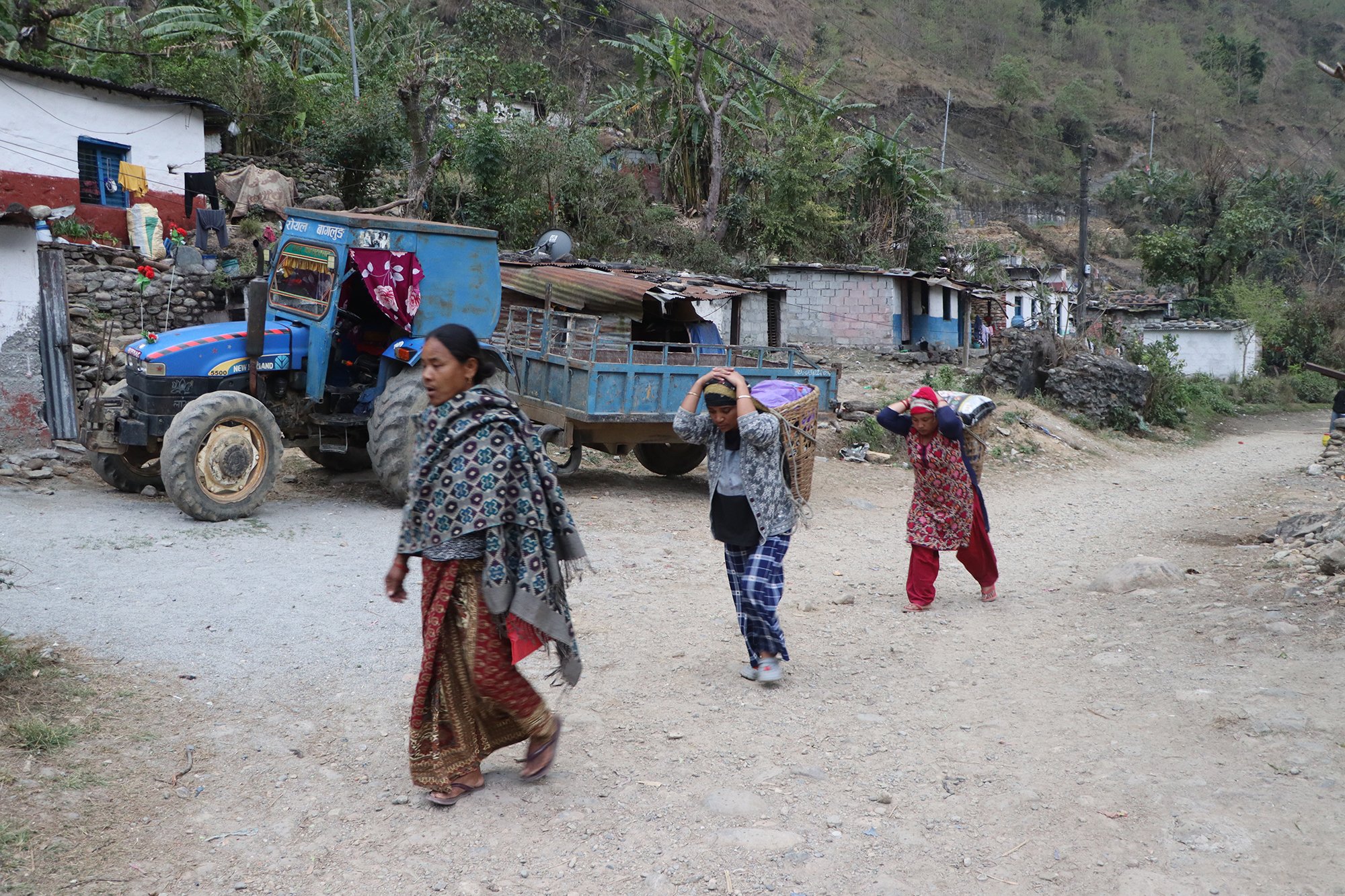
Leaders have also promised to pave the road in the Majhi settlement in many elections. The condition of the road inside the settlement remains miserable to this day. Local Ramchandra Kumal said that children often get injured by falling because the road in front of houses filled with gravel has not been upgraded for a long time.
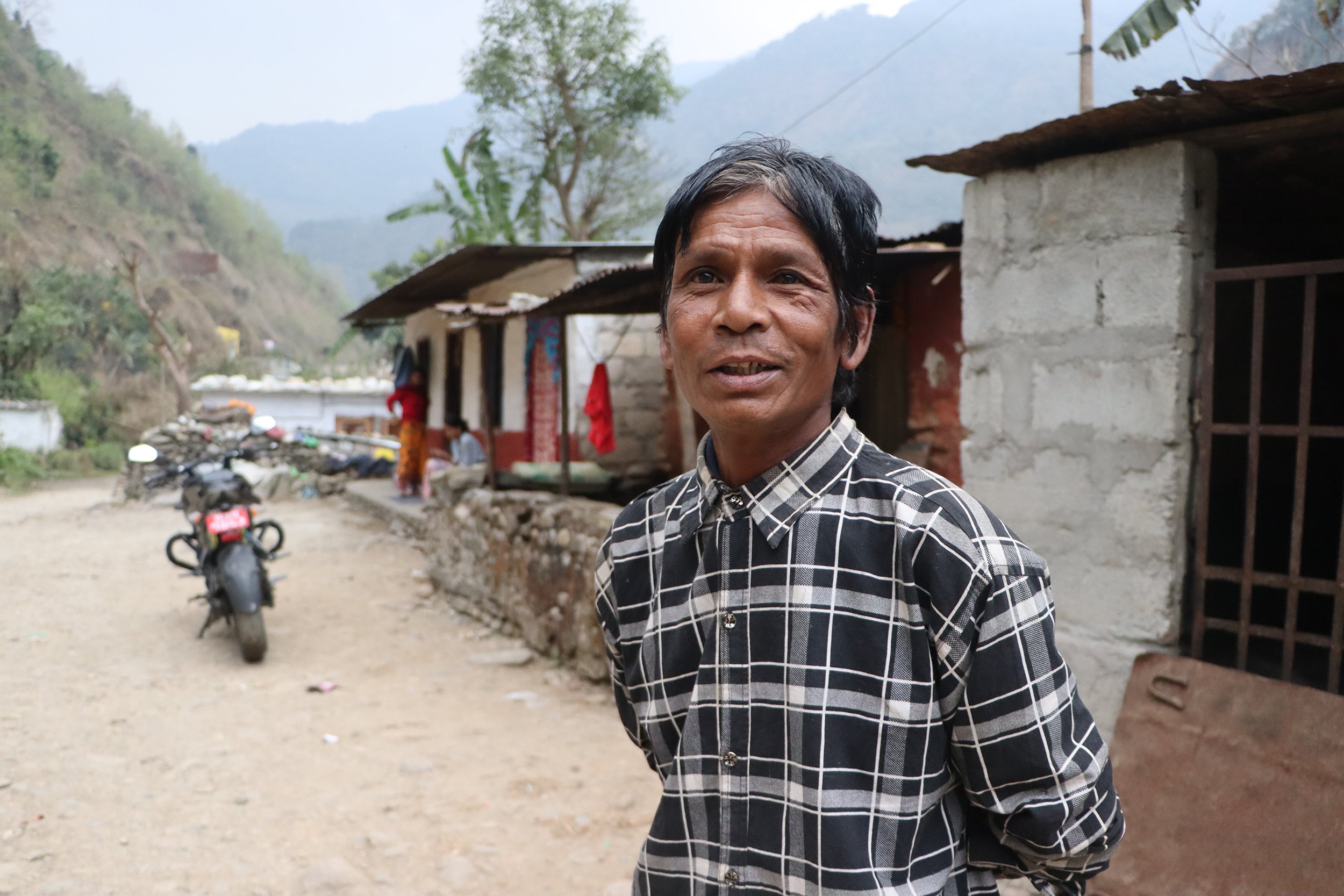
He complained that due to the poor condition of the road, pollution occurs in the settlement, and no one pays attention to it.
Kumal said, 'The road in the Majhi settlement is not very long. It's about one kilometer. Even that, they don't pave. During elections, they say, 'Vote for us, and we will pave it,' but after the election, no one comes.'
Kumal lamented that he has yet to find a leader who understands the problems of the citizens here. He stated that leaders only play games with the Majhi settlement, which is full of poverty and deprivation.
This specific news has been automatically translated by AI. As a result, there may be some inaccuracies or language errors.