Election Ground Zero: Chitwan-1 Shows Voter Hesitation Amid Generational Divide and Lack of Clear Alternatives

Bhandara. Bhandara, Rapti Municipality-5, Eastern Chitwan. The house of 82-year-old Nanu Maya Upreti is located in a settlement found just a short distance off the East-West Highway. Nanu Maya, who survived a complex disease like cancer, has seen her recent routine change.
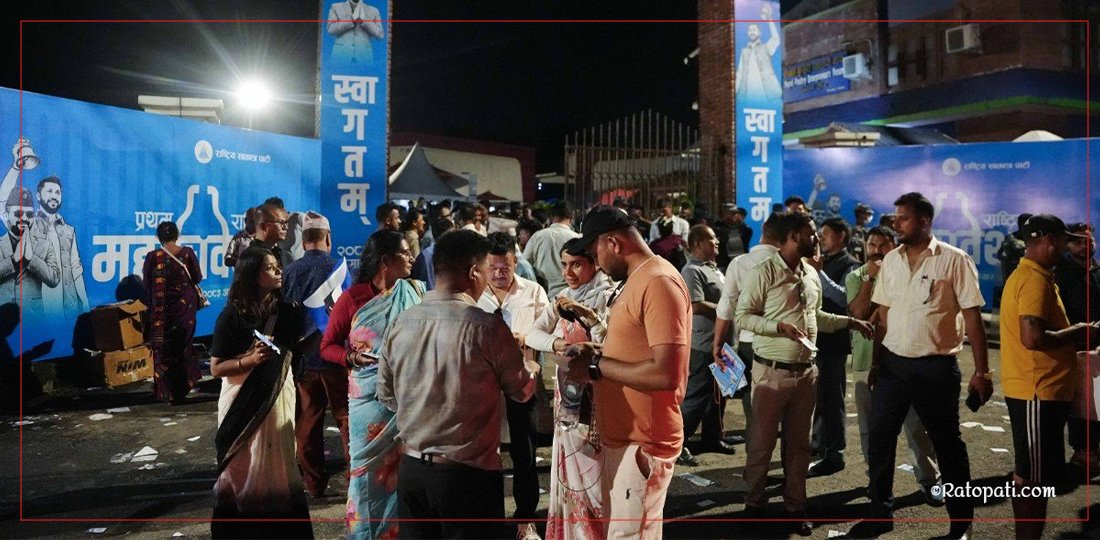
Previously confined to her doorstep and veranda, she is now keenly observing the election clamor echoing on the streets and the activities of political parties. Her interest is not merely a desire to watch the spectacle; it hides a serious political dilemma and the struggle of making a decision.
Nanu Maya is a traditional voter of the Nepali Congress. She spent a long period of her life casting her vote for the 'Tree' symbol. Having crossed eighty years of age, she has witnessed many elections, from the restoration of democracy to the republic. However, in the last election, her traditional pattern was broken. She gave her direct vote to Hari Dhakal of the Rastriya Swatantra Party (RSP).
Even as the election fervor reaches its peak, Nanu Maya's internal dilemma has not subsided. She has not yet made a firm decision on whom to vote for. 'Many people are still saying 'Ghanti' (Bell) repeatedly. My sons are also saying the same,' she says, 'I gave one vote to that party before, I don't know what I will cast now.'
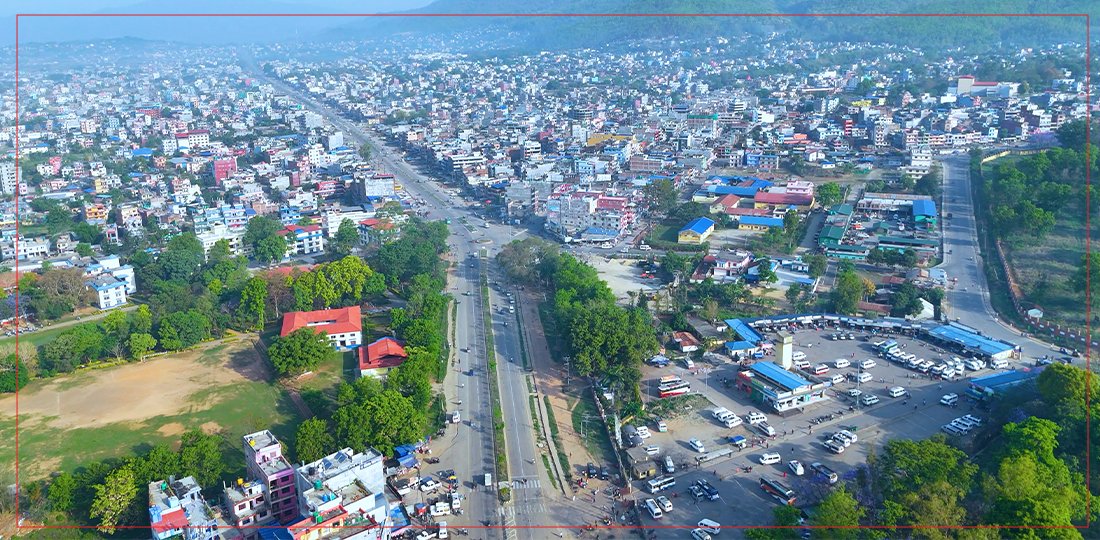
Nanu Maya is just a representative figure of this area. A similar psychology prevails in Constituency No. 1 of Chitwan, which begins after crossing the Tikuali forest from Bharatpur, the main city of Chitwan. The election heat in this constituency, which encompasses three municipalities—Ratnanagar, Rapti, and Khairahani—is no less intense than in Bharatpur. Voters here are closely monitoring various parties, candidates, and their election activities.
Situated between forests on three sides and the Mahabharat mountain range to the north, this area is not considered as prosperous in terms of urbanization as Western Chitwan. Despite immense potential, it has its own unique problems, which have the capacity to influence voter decisions.
The Challenge of Stopping Hari Dhakal and Lack of Alternatives
During the field visit to Chitwan-1, a strong influence of the 'Bell' symbol was visible among many voters encountered. Although he won by a large margin in the previous election, there were complaints from voters that MP Hari Dhakal had not achieved much. But despite this dissatisfaction, the majority of voters have openly favored the RSP again.
The main reason for this appears to be the inability of other political parties to offer a reliable alternative, rather than Hari Dhakal's popularity. Competing parties have failed to adopt a new face and an effective campaign style that attracts voters.
The traditional style and recurring faces of the old parties clearly show that voters have been unable to find an alternative. With no strong challenge from the opposition, analyses suggest that the election will be easier for Hari Dhakal than before.
Age Politics and Generational Battle
In this election, the debate over the candidate's age and generation is gaining more traction than the agenda. The narrative that RSP is trying to establish itself as a 'New Force' against Congress, UML, and Maoists as 'Old Parties' seems to be supported by the age and psychology of the voters in Chitwan-1. This national conflict between new and old is clearly reflected in the candidate selection here.
In this constituency, Rajendra Burlakoti is the candidate from the Congress, who is 66 years old. Similarly, Dawa Lama, the candidate from UML, is also around 66 years old. Meanwhile, Dr. Krishnaraj Pant of the CPN (Maoist Centre) is in the 61-year age bracket. This age gap of nearly two and a half decades appears to have a significant impact on voter psychology.
For them, Hari Dhakal's youthful vigor is more attractive than the past contributions of Rajendra Burlakoti or Dawa Lama. However, some voters participating in the survey mentioned Burlakoti's personality and long political contribution.
UML's Ethnic Equation and Maoist's Intellectualism
UML seems to have adopted a strategy of securing its core cadre votes while capitalizing on the ethnic equation. Especially in the upper belt of this constituency, connected to the Mahabharat range, there is a significant settlement of the Tamang community.
According to statistics, the Tamang community constitutes 12 percent of the population in this area. UML has fielded Dawa Lama from the Tamang community to attract this vote bank. However, the dissatisfaction of a faction within UML due to influential leaders like Surendra Pandey not getting the ticket appears to be a potential setback for UML.
On the other hand, CPN candidate Dr. Krishnaraj Pant is banking on winning based on his intellectual persona. Having a PhD in Economics, he introduces himself as an economist and development planner. Pant, who is the nephew of UML leader Surendra Pandey, hopes to draw votes from UML supporters who are displeased because his uncle did not receive the ticket.
However, this situation is not visible on the surface. In this constituency, which previously defeated leaders like Surendra Pandey and Dr. Bishwa Poudel, Dr. Pant's intellectual influence is not apparent. Except for a limited number of voters who have traditionally voted for the Maoists, other independent voters view RSP and Congress as alternatives.
Meanwhile, another young candidate, Bikash Kami 'Snehi', is also in the field to woo the Gen Z voters. Due to his distinct campaign style, flexible new voters seem to be attracted to him.
Candidates' Agendas and Voter Apathy
During the field survey, we spoke with candidates from all major political parties in this area. All of them presented agendas concerning solutions to the specific geographical and social problems of this region.
The main agenda of the candidates is primarily to solve serious issues such as improving the supply of agricultural inputs, seeds, and fertilizers, market management, and human-wildlife conflict. However, voters did not seem to pay much attention to any candidate's agenda.
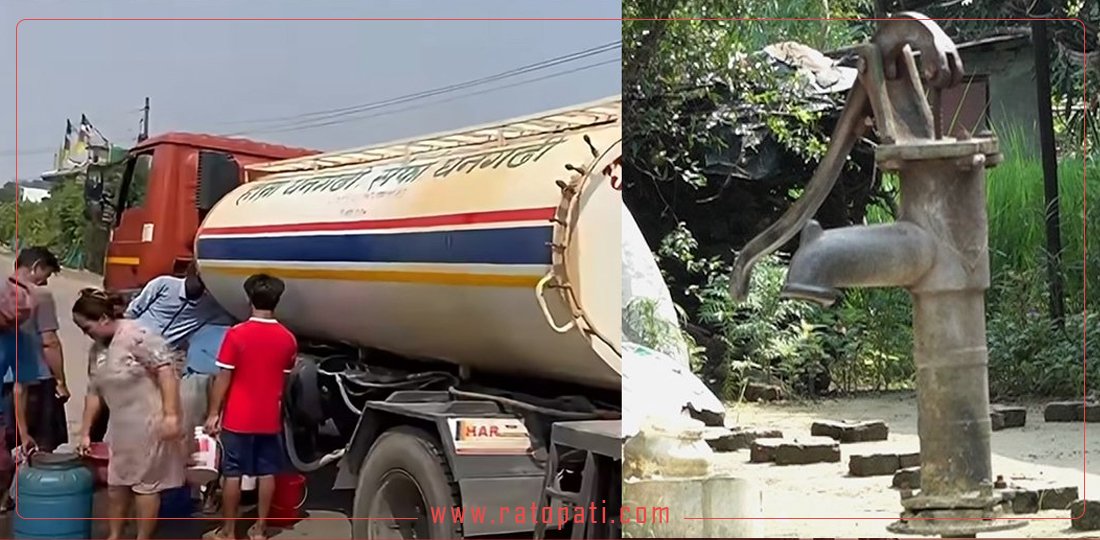
The three municipalities falling under this constituency are predominantly agricultural areas. Being located north of the Chure range, there is an extreme shortage of irrigation here. While water is available through tube wells and taps in the highway areas, the water table is very deep in the upper regions. This forces farmers to depend on rainwater. Furthermore, the problems of not getting fertilizer during the planting season and not finding a market for the harvested crops are equally pressing.
The biggest and most frightening problem is the human-wildlife conflict. Especially the southern part borders the Chitwan National Park. Elephants, rhinos, and wild boars emerging from the park not only destroy crops but also cause human casualties. Local residents have been demanding the construction of a strong concrete wall along the park boundary for years. Candidates are campaigning by prioritizing these issues, besides infrastructure like education and health.
However, voters appear to be more focused on traditional voting patterns, national trends, and the external appearance or personality of the candidates, rather than a concrete plan for solving problems. They seem to be making decisions based on national trends rather than local needs.
This specific news has been automatically translated by AI. As a result, there may be some inaccuracies or language errors.
_Yq85YOxh21.jpg)