
Iran Retaliates After Alleged Joint Israeli-US Strike Kills Supreme Leader Khamenei, Signaling Potential Escalation

Tehran. Tehran has responded immediately after Israel and the United States jointly attacked Iran, killing Supreme Leader Ayatollah Ali Khamenei and other senior officials. Iran stated that its retaliation is targeted at Israel and US-affiliated military sites across the region, including American military bases in the Gulf states.
This initial clash poses a key question for regional capitals and world markets: will this be limited to a cycle of retaliatory strikes, or will Iran's attack capabilities, allied forces, and pressure on shipping and energy infrastructure turn it into a prolonged campaign?
At the heart of this question lies Iran's missile arsenal and other platforms and tools capable of inflicting damage on the US and others.
- Why does it look different this time?
Unlike the 12-day war waged by the US and Israel on Iran in June 2025, Khamenei's assassination appears to have convinced Tehran that this conflict is a war for the survival of the Islamic Republic. According to Tehran, a delayed or restrained retaliation could be viewed as weakness and might invite further attacks.
On Sunday, Iranian President Masoud Pezeshkian stated that avenging the killing of Khamenei and other senior officials is the country's 'duty and legitimate right'. But in what ways is Iran taking this 'revenge'?
- Iran's Missile Strategy: Arsenal, Range, and Tactics
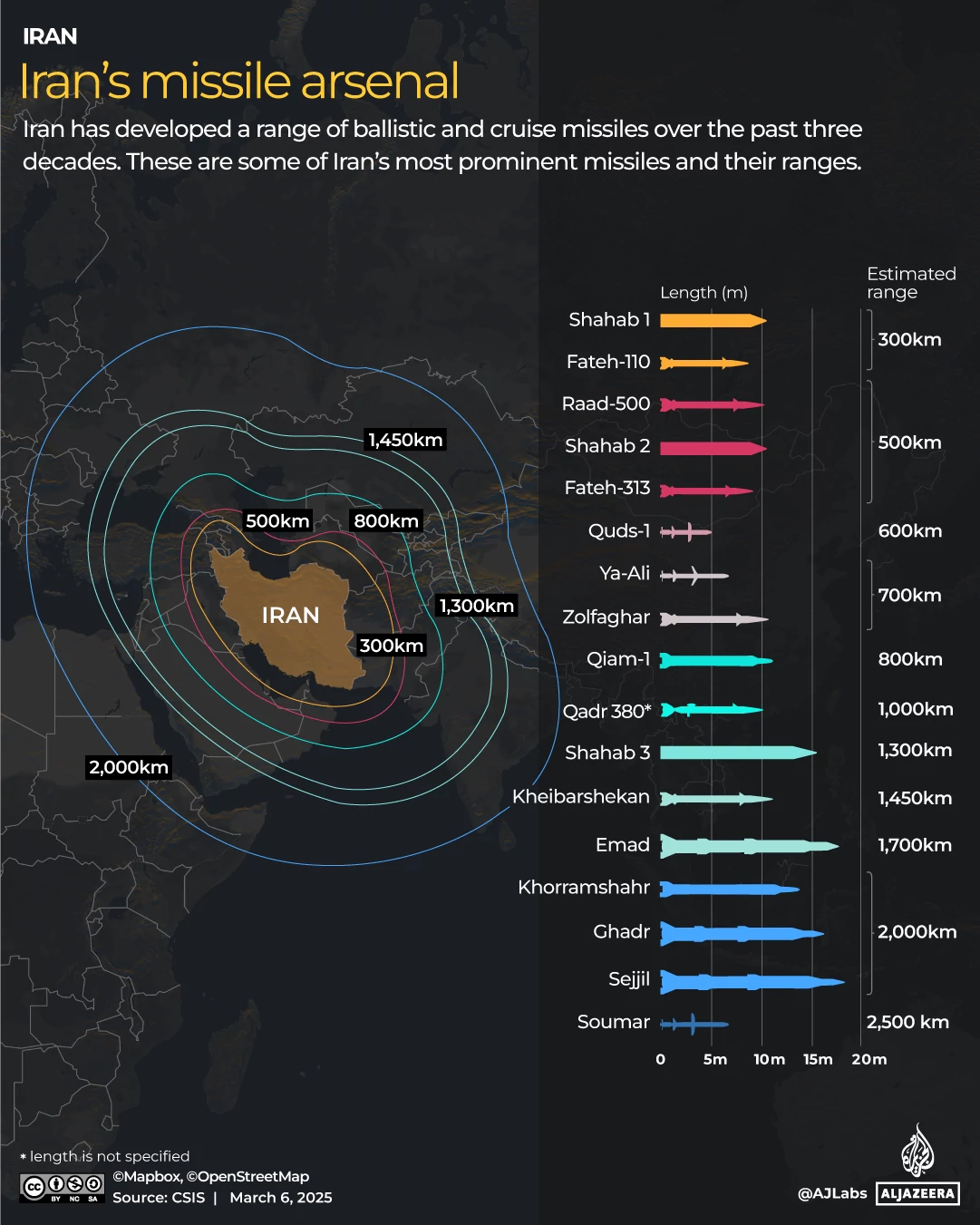
Iran's missile power is central to how it fights and signals intent. Defense analysts call it the largest and most diverse missile force in the Middle East, comprising ballistic and cruise missiles, designed to give Tehran the ability to reach targets even without a modern air force.
Iranian officials portray the country's missile program as the backbone of its defense, as the air force relies on aging aircraft. Western governments argue that Iran's missiles fuel regional instability and could support the delivery of nuclear weapons in the future, a claim Tehran denies.
The longest-range Iranian ballistic missiles can travel between 2000 km (1,243 miles) and 2500 km (1,553 miles). This means these missiles can reach Israel, US-affiliated bases across the Gulf, and much of the region. However, contrary to claims by Trump and some of his close associates, these missiles cannot reach the United States.
- Short-Range Missiles: The First Strike
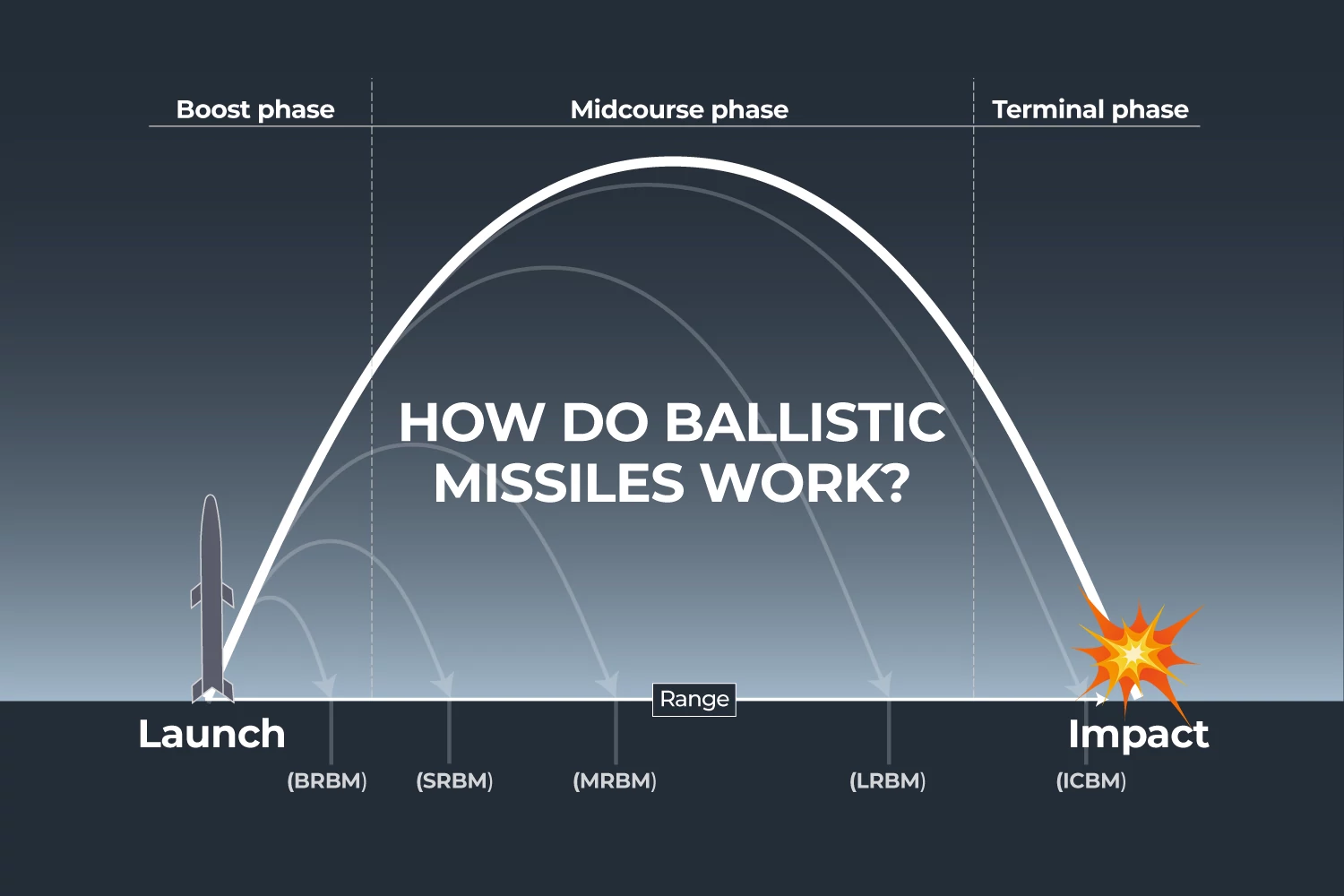
Short-range ballistic missiles, around 150-800 km (93-500 miles), are designed for close military targets and rapid regional strikes.
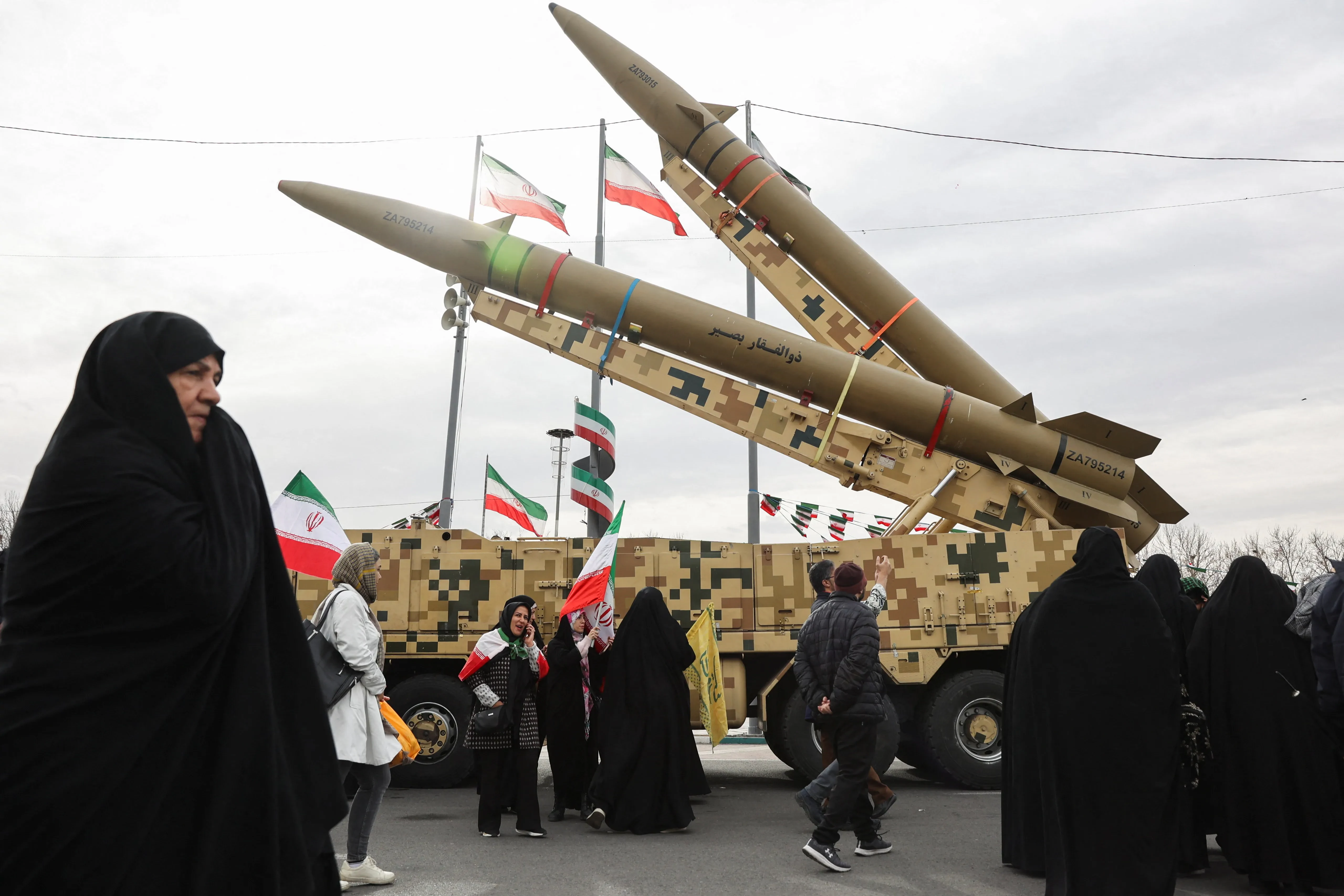
Key systems include variants of Fateh: Zolfaghar, Qiam-1, and older Shahab-1/2 missiles. Their short range can be an advantage in a crisis. They can be launched on short notice, reducing warning time and making pre-emption more difficult.
Iran used this strategy in January 2020, when it launched ballistic missiles at the Ain al-Asad airbase in Iraq following the US assassination of its most prominent general, Qasem Soleimani. That attack damaged infrastructure and injured over 100 US personnel, demonstrating that Iran could impose a high cost without matching US air power.
- Medium-Range Missiles: Changing the Map
If short-range missiles are Iran's response for rapid strikes, medium-range ballistic missiles, around 1500-2000 km (900-1200 miles), are the means to turn the retaliation into a regional equation. Systems like Shahab-3, Emad, Ghadr-1, Khorramshahr variants, and Sejjil form the basis of Iran's long-range strike capability, along with newer designs like Kheibar Shekan and Haj Qasem.
Sejjil is distinct as a solid-fuel system, which generally allows for faster launch preparation than liquid-fuel missiles. This is an advantage if Iran anticipates offensive strikes and requires surviving, responsive options.
These medium-range missiles bring a wide arc of targets within range, including Israel and US-affiliated facilities in Qatar, Bahrain, Kuwait, Saudi Arabia, and the United Arab Emirates, broadening both Iran's target list and the region's risk exposure.
_NApa8p7uuc.jpg)
- Cruise Missiles and Drones: The Low-Flying Problem
Cruise missiles fly low, can hug terrain, and are often difficult to detect and track – especially when launched with drones or ballistic salvos designed to overload air defense systems.
It is widely assumed that Iran possesses land-attack and anti-ship cruise missiles, such as Soumar, Ya-Ali, Quds variants, Hoveyzeh, Paveh, and Rad. Soumar has a range of 2500 km (1,553 miles).
Drones add another layer of pressure. While slower than missiles, they are cheaper and easier to launch in large numbers; one-way attack drones can be used in successive waves to exhaust air defense systems and keep airports, ports, and energy sites on high alert for hours, not minutes. Analysts say this saturation strategy is likely to become more prominent if the conflict deepens.
- Underground Missile Cities: Surviving the First Strike
The sheer number of missiles is significant, but in a sustained conflict, the main question is how long Iran can keep firing after absorbing strikes.
Tehran has spent years hardening parts of its program in underground storage tunnels, hidden bases, and protected launch sites across the country. That network makes it difficult to quickly degrade Iran's launch capacity, forcing adversaries to assume that some capability will survive even after large initial waves of attacks.
For military planners, that survivability means that deciding to strike further into Iran's missile infrastructure risks a long exchange rather than a short, decisive campaign.
_emYRkN4Onh.jpg)
- Strait of Hormuz: Disruption Without Formal Blockade
Iran's resistance strategy is not limited to land targets. The Gulf and the Strait of Hormuz, through which a large volume of the world's oil and gas trade passes, offer Tehran a quick route to shake global markets.
Iran can threaten naval forces and commercial shipping using anti-ship missiles, naval mines, drones, and fast-attack craft. It has also displayed hypersonic systems like the Fattah series, claimed to have very high speed and maneuverability, although independent proof of their operational status is limited.
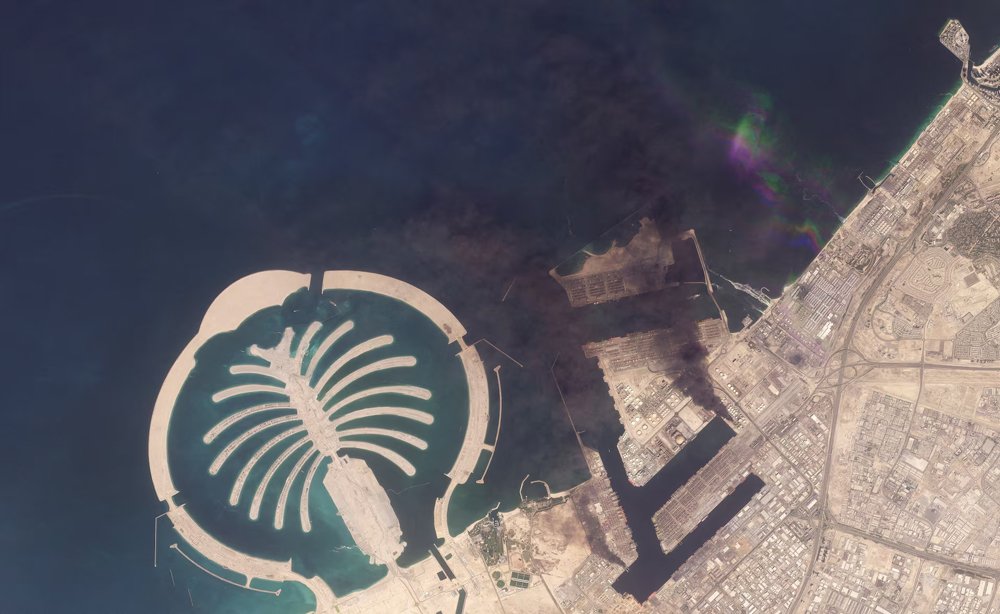
Shaking markets does not require a formal blockade. Radio warnings attributed to Iran's Revolutionary Guard Corps (IRGC) have already affected ship traffic and raised war-risk insurance, as tankers have been stopped outside Hormuz. The IRGC also claimed to have attacked three US and UK-affiliated oil tankers near the Strait of Hormuz.
The Danish container shipping group Maersk stated on Sunday that it had suspended all ship traffic through Hormuz.
- US Forces in the Gulf: More Firepower, More Targets
Washington has increased naval and air assets in the region, described by officials as the largest concentration of US firepower near Iran in years. This strengthens attack and air defense capabilities, but it also increases the list of potential targets.
US forces are spread across many countries and rely on a network of bases, logistics hubs, and command centers that cannot all be defended equally, all the time. Military analysts say that breaching defense systems at some locations could change political calculations in Washington, increase pressure on regional neighbors, and raise the cost of keeping the conflict limited.
- Tehran's Message: No Limited War
Iranian officials have long warned that any US or Israeli attack on Iranian soil would be viewed as the start of a comprehensive war, not a limited operation. After Khamenei's assassination, that message has become even starker.
The IRGC has promised further retaliation, and Iran has signaled a campaign rather than a single dramatic strike: continuous launches toward Israel, and threats of action near US-affiliated facilities in several countries, as well as on and around major trade routes, as highlighted by Iranian media.
The conflict could also expand through Iran-affiliated groups like Lebanon's Hezbollah and Yemen's Houthis, both of whom condemned Khamenei's assassination and signaled alignment with Tehran.
This specific news has been automatically translated by AI. As a result, there may be some inaccuracies or language errors.







_ke6hmvuewe_XLPTtgxmKE.jpg)