Nepal Airlines General Manager Discusses Engine Repair, Record Passenger Numbers, and Future Plans
_83NLoowVTE.jpg)
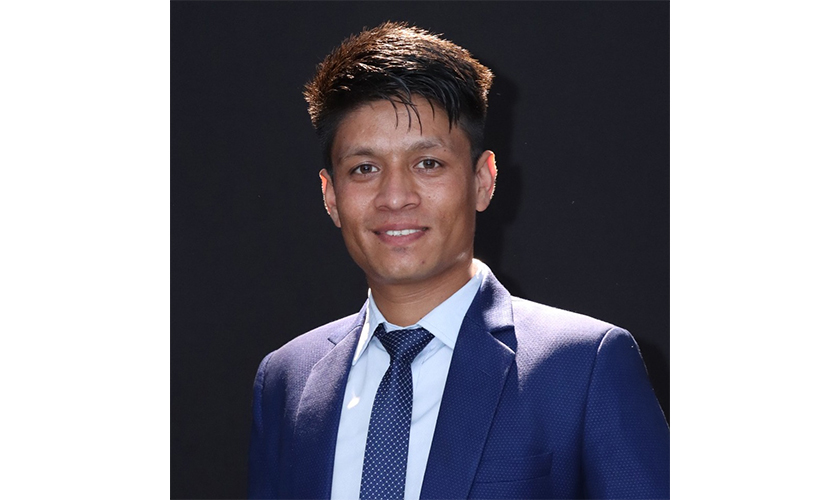
Kathmandu. General Manager of Nepal Airlines Corporation (NAC), Amritman Shrestha, has completed nearly three months in office. In this short period, he succeeded in repairing and bringing back an aircraft engine that had been stranded in Israel. The corporation has also set a record by carrying the highest number of passengers on international routes, surpassing even foreign airlines.
What is the corporation doing regarding other issues? Ratopati's Anish Mijar interviewed General Manager Shrestha regarding the current status of the corporation, the resolution of the Israel engine dispute, managerial and administrative reforms, debt management, the privatization debate, and future business plans. Here is the edited excerpt:
It has been about three months since you took charge as the General Manager. How are you advancing the corporation's work during this period?
Immediately upon assuming the role of Executive Director (General Manager), my first priority was to retrieve the aircraft engine that had been stranded in Israel for a long time. The Prime Minister had also assigned me the responsibility for this.
I had committed to the government that I would bring this engine back, no matter what. The engine was sent for maintenance at Israel Aerospace Industries Ltd. (IAI).
Accordingly, I engaged in continuous correspondence and repeated bargaining with Israel. After nearly two months of relentless effort, they were convinced. Upon their conviction, I initiated the payment process for the engine repair.
About two years ago, two engines of the corporation's narrow-body Lumbini aircraft were sent to Israel for maintenance. The pending payment of approximately 280 million Nepali Rupees for the maintenance of those same engines, which had been held up for a year and a half, was cleared.
We have to compete with large airlines. We currently have only 4 aircraft. Yet, we are providing maximum service with these aircraft. In previous years, passenger numbers were low due to aircraft grounding and breakdowns.
We requested a significant discount from them. As a result, they provided a discount of up to nearly 1 million US dollars on the total amount. Relations had deteriorated because the previous payment was not made. They insisted that we would not be allowed to operate the leased engines by December.
I managed to get an extension, and the engine repair immediately began. During the bill verification, we also negotiated and received a discount on the overrun cost (expenses exceeding the estimate). The engine has now arrived, been installed, and the aircraft is flying. This success is due to the teamwork of myself and the entire staff.
According to data published by Tribhuvan Airport in January 2026, Nepal Airlines carried the highest number of passengers, surpassing even foreign airlines. What was the managerial strategy behind bringing a long-stagnant organization to this level so suddenly?
The main factors are the willpower, honesty, and selflessness of the people working. When leadership changes, ideas, work, and duties all change.
I had a pre-existing plan on how to improve the corporation after I took the leadership role. Another important factor is that I brought some changes to the reservation system.
_hekzbRlXt9.jpg)
Previously, there was a problem where certain individuals would hold (block) seats, leading to empty flights. As soon as I controlled that reservation system, all passengers automatically started getting seats.
Passenger traffic automatically increased after making the ticketing system transparent. It appears that this single policy has made the airline the one carrying the most passengers.
In the past, political interference was often cited as the reason for the corporation's downfall. Currently, the government is closely monitoring and showing interest in the corporation's reform. How is coordination being maintained between the managerial role and political leadership?
The current government has given full support and cooperation to the corporation. After all, the corporation belongs to the Government of Nepal. I am currently working in a completely open environment without any pressure or coercion from anywhere.
It has been easier to work because of the government's support.
NAC has increased its market share amidst powerful international competitors like Qatar Airways and Air India. With the increase in passenger traffic, what are your plans for maintaining service quality continuously?
We have to compete with large airlines. We currently have only 4 aircraft. Yet, we are providing maximum service with these aircraft. In previous years, passenger numbers were low due to aircraft grounding and breakdowns.
_WNPzWbVrsE.jpg)
Currently, all four of our aircraft are operating at full capacity. I have also standardized and made the fares uniform and affordable for everyone. The reason our aircraft are full, even when other airlines' planes are full, is partly due to the small number of aircraft we possess.
Therefore, to handle passenger demand and meet market needs, adding more aircraft is the only option.
There was discussion about operating the corporation under a PPP model for privatization. In your view, what modality seems feasible: strengthening the corporation from its current state or moving towards privatization?
We have initiated efforts to reschedule debt repayment and arrange to pay the remaining amount in 75 installments. If this 75-installment proposal is approved and we receive a soft loan, repaying the debt from the profit earned by adding more aircraft will not be difficult.
In my opinion, the corporation can be improved even by following the current modality. Privatization is not necessary. However, for that, we need to secure a soft loan instead of high-interest rates.
The Civil Aviation Authority of Nepal (CAAN) has received a soft loan from the government for airport construction. We are also eligible to receive one. Why should NAC pay a high interest rate of 9-10 percent only when purchasing aircraft?
No airline worldwide buys aircraft by paying 9-10 percent interest. They acquire them on lease at 2-3 percent interest rates. If we swap the current debt by taking a soft loan, the corporation can make a profit and progress in its current state.
The corporation's debt burden has reached 50-52 billion. What concrete financial roadmap do you have for repaying this?
Initially, we took a total loan of 34 billion from the Employees Provident Fund and the Employees Trust Fund. But because the principal and interest were not paid on time, it has been capitalized, reaching 50-52 billion now.
If the government waives the penalty and interest that could not be paid when the aircraft were grounded during the COVID-19 period, the debt burden will decrease from 50 billion to about 48 billion.
Furthermore, we have initiated efforts to reschedule debt repayment and arrange to pay the remaining amount in 75 installments. If this 75-installment proposal is approved and we receive a soft loan, repaying the debt from the profit earned by adding more aircraft will not be difficult.
Managerial irregularities and a lack of internal good governance have been observed in the corporation. What steps are you taking to end factionalism within the bureaucracy and establish a transparent working style?
When I joined, I made it clear that discipline and work ethic are required. In my view, all employees are equal. I do not engage in factionalism based on 'this is my person, that is his person.'
_JIcZN0rnXe.jpg)
Improvements have been seen as I work with the feeling that all employees belong to me. My plan is to end the practice of employees staying in the same department forever and to train them in all departments on a rotation basis.
There is a plan to upgrade lower-level employees and send those who haven't received training for training, which will ensure career development for everyone and bring effectiveness to the work.
Although there are air service agreements with 42 countries, the corporation remains confined to limited destinations and limited aircraft. What are your upcoming plans regarding the purchase of new aircraft and expansion to new destinations?
To develop the national flag carrier, we must add more aircraft. The more aircraft the national carrier brings in to carry passengers, the more the country's tourism sector develops, dollars flow in, and employment is created.
We have created a timeline plan to add 4 aircraft within one year and 6 aircraft within three years. We are increasing frequencies to profitable sectors.
Currently, there are 5 flights per week to Doha; the plan is to increase this to 7 flights every week. Flights to Delhi are 7 per week; the plan is to increase this to 14. Flights to Dubai are planned to increase from 5 to 7 every week.
We will also increase flight frequency to Guangzhou. Procedures are underway for new destinations to South Korea, Oman, and Dhaka. Furthermore, a committee has been formed for flights to Sydney, Australia. Airbus, the aircraft manufacturer, is conducting the technical study for this route.
Our clear strategy is to use our wide-body aircraft for flights to Australia and Japan, and the incoming narrow-body aircraft will cover nearby destinations like India, Doha, and Dubai.
This specific news has been automatically translated by AI. As a result, there may be some inaccuracies or language errors.