The Contrasting Journeys of Blessing Muzarabani and Brian Bennett Fueling Zimbabwe's T20 World Cup Resurgence


It might seem like fast bowler Blessing Muzarabani, who stands over two meters tall, only needs shoes to step onto the field. However, when he began his career, he truly only had those shoes.
Along with him was a woman ready to do anything for his success: his grandmother.
Muzarabani grew up with his cousin in the densely populated Highfields area, a place where many gems of Zimbabwean cricket have been polished. His childhood was marked by scarcity. Zimbabwe's fielding coach, Stuart Matsikenyeri, told ESPN Cricinfo, 'He was a very humble person. His story is one of patience, hard work, and love, especially from his grandmother.'
After starting to play cricket in his youth, Muzarabani failed to make the Zimbabwe Under-19 team but was selected for the Rising Stars Academy. This was the development wing of the first-class team of the same name, which had a short run. Under the guidance of Tatenda Taibu and with Matsikenyeri's involvement, they toured England in 2017. Matsikenyeri says, 'It was from then that he started finding his rhythm at the senior level.'

And by then, he was almost contracted elsewhere. 'I know Surrey coach Alec Stewart saw him playing for the county's B teams and showed interest in him. If he hadn't been tied to the academy contract, they could have signed him then. That contract was the only reason he couldn't go.'
Towards the end of the same year, Muzarabani made his Test debut in South Africa, a forgettable pink-ball Test that ended in a day and a half. By January 2018, he had also made it into Zimbabwe's white-ball squad. But Rising Stars was not financially sustainable, and as the 2018-19 season approached, there were rumors they would not participate in the next season. It was then that Muzarabani opted for a Kolpak contract.
Matsikenyeri said, 'He made that contract with very good intentions. It was the best time for him to develop. Sometimes leaving home is not always bad, and from an employment perspective, it was justified.'
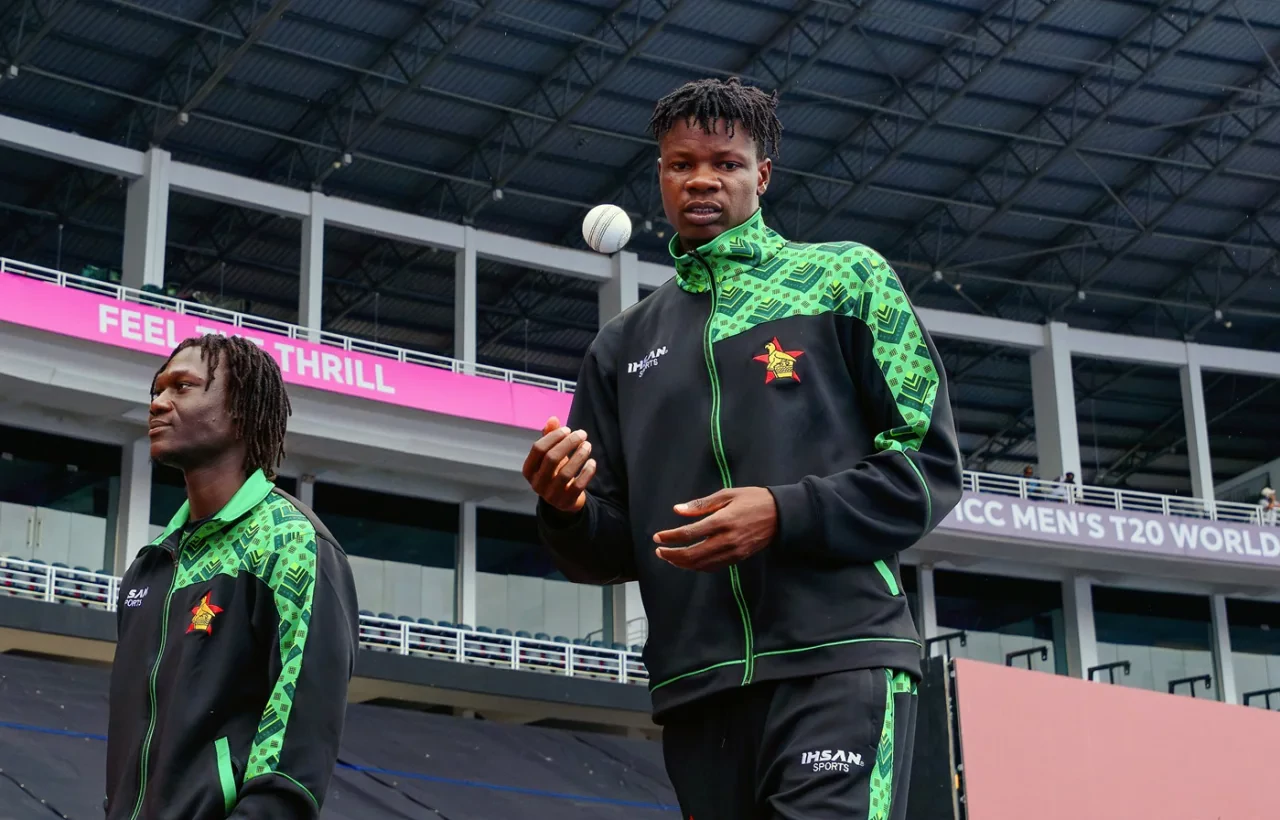
Muzarabani always stated that the allure of learning to bowl in English conditions and a stable income brought him to the UK, with the intention of returning to Zimbabwe. He proved right on both counts.
In the first part of his stint with Northamptonshire, he played List A cricket with Jason Holder, where his learning began. 'He used to praise Jason Holder a lot, especially regarding how a tall bowler should bowl in England. He learned a lot from there and shaped himself as a professional player,' Matsikenyeri said. 'He learned many lessons from a professional environment. When he returned, the change in him was clearly visible.'
In December 2020, as the UK exited the European Union, Kolpak contracts ended. Muzarabani returned to the Zimbabwe squad that November and has been a key part of the team ever since. Although it is difficult to measure success given Zimbabwe's major failure to qualify for the 2024 T20 World Cup, Muzarabani has proven excellent. Since the 2024 tournament, his economy rate was the third-best among pace bowlers who have bowled at least 50 overs in this format, conceding less than seven runs per over.
His ability to extract bounce is evident, but he also maintains a tight line, giving batters no room to play and forcing them into mistakes. This was clearly seen in the match against Australia in this T20 World Cup, where his career-best performance of 4 wickets for 17 runs came from a very clever back-of-a-length plan. He tempted the batter into playing a pull shot but gave no chance for the shot to succeed. 'He takes his craft very seriously. His confidence is growing,' Matsikenyeri said.

As Muzarabani propels Zimbabwe forward, his celebrations become more energetic, yet he remains just as humble. Matsikenyeri said, 'He is shy. He doesn't like to talk much. He shows through his work and takes responsibility. He doesn't jump up and say 'I will do this,' but he naturally goes and does it.'
He is close to the top of the list of highest wicket-takers in the T20 World Cup, currently tied for second place, four wickets behind Sadley Van Schalkwyk. But reaching the top spot is not his main motivation.
'He is not paying attention to that. His focus is on how to keep his body healthy and be fully fit for the next game. He is not thinking about where he stands in the tournament. He is thinking, 'Now we are going to India, the conditions there will be different, what should I do?' This is a time for him where he is only focused on what is important to contribute to the team tomorrow and the day after.'
For Muzarabani, the team has become as important as family. His grandmother passed away a few years ago and never got to watch him play in an international stadium. Although he has no one in the stands to cheer him on, 17 million Zimbabweans support his every step. He represents those people who have made something out of nothing and shown what can be achieved on the world stage.
At the other end of Zimbabwe's excellent campaign is a batter who no one has managed to dismiss yet: Brian Bennett, who followed a very traditional path to success in sports.
He studied at Peterhouse, one of Zimbabwe's most prestigious boys' boarding schools, and then spent a year at Kingswood College in South Africa, where he was coached by former first-class cricketer Andrew Birch. There was never a question of 'if' he would enter the national team, only 'when,' and his performance has been astonishing.
In just 77 international matches across all formats, Bennett has already hit four centuries and 13 half-centuries. He has climbed to fourth place on Zimbabwe's list of highest T20 run-scorers. He has been responsible for anchoring Zimbabwe's batting line-up by showing aggression at the right time.
Brendon Taylor told ESPN Cricinfo, 'I don't know if there are enough words to praise this young player. At just 22, he has made waves in world and Zimbabwean cricket. He is very calm and much more mature and talented than his age.'
Another advantage young Bennett had was that his family could afford private coaching fees. Taylor, who coached him, knows him well. Taylor recalls telling the teenage Bennett, 'Be ready because I think your entry into international cricket could be very soon.' When that time came, Bennett performed even better than Taylor expected.
Taylor said, 'Brian has a certain difference that we haven't seen in Zimbabwean cricket for years. He is a reactive batter who watches the ball coming at him and has a wide variety of shots. He can play fast bowling easily, and his style of playing spin is also improving rapidly.'
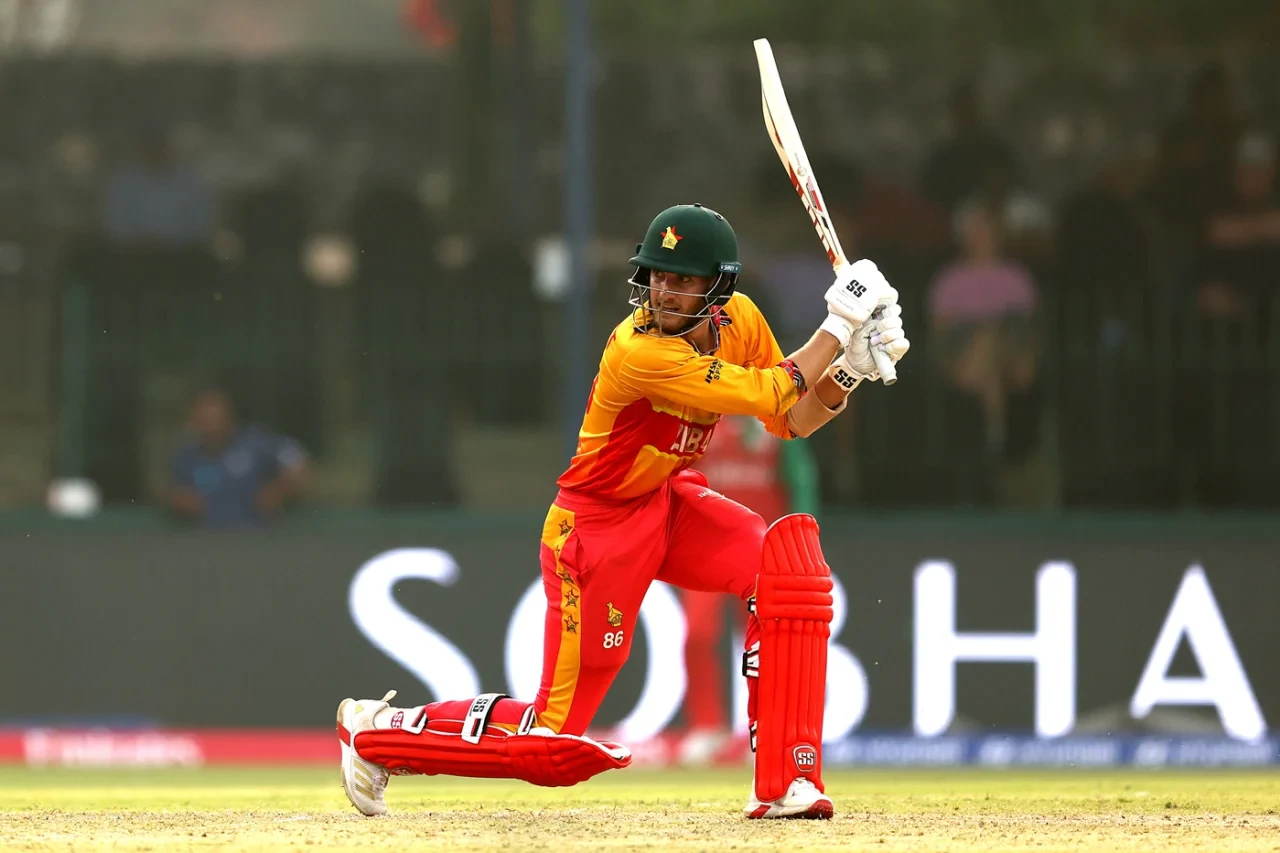
Against Oman, he looked very aggressive, scoring 48 runs off 36 balls, where he displayed upper-cut and paddle sweep shots. Against Australia, he appeared a bit cautious, scoring only five runs off his first 12 balls to gauge the pitch conditions. As soon as he got an opportunity, he accelerated, scoring 64 runs off 56 balls.
Then, he batted brilliantly against Sri Lanka, completing the target of 180 runs as if it were routine work for Zimbabwe every day. Bennett's ability to remain calm under pressure sets him apart, and Taylor believes Zimbabwe can build its future based on this. 'He doesn't get flustered and remains very calm at the crease, a temperament that transfers to other members of the team,' Taylor said.
At 40, Taylor himself is learning from Bennett. 'We can all learn something from him and his batting style. We can only wish him well and we are very excited about his future and what he will do for Zimbabwean cricket. That will be very special,' he said.
How is Bennett handling this sudden attention? Just like Muzarabani, by paying as little attention to it as possible. 'I compare him to the young Craig Ervine, who speaks little but is excellent,' Taylor said. 'He is very loyal to his team and his thinking is very mature. His family is also here with him, and it is clear they are a very close family. He has received good support from his parents. He is a favorite among everyone in the team, his nature is humble, and he also has a good sense of humor.'

Bennett's parents are in Sri Lanka watching the team's games, and his mother was interviewed after the match against Australia. She said, 'This is our first time accompanying him to the World Cup, and we are very proud parents.'
Those 17 million Zimbabweans who love Muzarabani also do not stop talking about another thing Bennett did besides batting. The flying catch he took against Oman, running forward and diving, became the subject of many memes.
This is one of the things that will ensure Zimbabwe remains talked about even after the final ball of this tournament is bowled. It has brought back the respect to their cricket that was lost for decades.
'People are saying 'Zimbabwe is back,' but perhaps for the first time, they are truly present here. The entire picture of their complex, scarred, and struggling society can be seen from top to bottom in this World Cup playing-11.'
Muzarabani's and Bennett's life journeys may be completely different from each other, but what matters most is how they stand together in the middle of the field in this tournament.
This specific news has been automatically translated by AI. As a result, there may be some inaccuracies or language errors.