Major Nepali Parties Unveil Manifestos Ahead of General Election, Highlighting Divergent Views on Recent Unrest

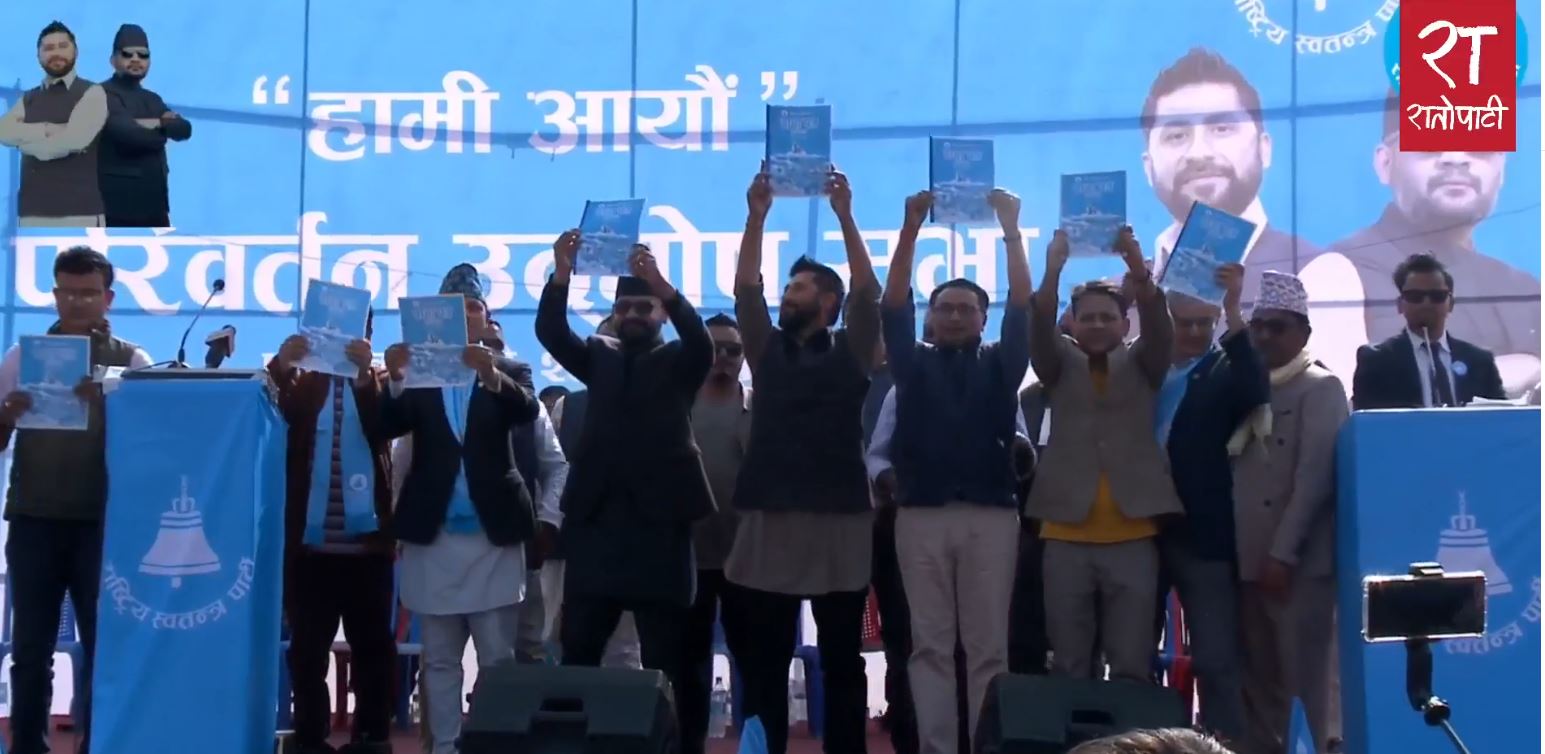
Kathmandu. The Nepali Congress, CPN-UML, and Rastriya Swatantra Party (RSP), the main contenders for leading the government after the House of Representatives election on Falgun 21, all unveiled their manifestos on Thursday. Coincidentally, the three parties released their respective election manifestos as the nation marked 75 years since the establishment of democracy.
However, Congress termed its document a 'Pratigyapatra' (Pledge Paper), UML a 'Ghoshanapatra' (Manifesto), and RSP a 'Wachapatra' (Promise Paper). Congress and UML released their electoral commitments from Kathmandu at the same time. RSP unveiled its Promise Paper from Surkhet, the capital of Karnali Province. RSP's promises are titled '100 Bases for Policy Departure for Transformation'.
Presented under the main slogan 'Resolution to Establish the Situation,' this Promise Paper outlines our clear vision and action plan for good governance, transparency, economic reform, job creation, education, health, infrastructure development, and building a prosperous Nepal.
This Promise Paper expresses a firm commitment to move the country towards stability, prosperity, and good governance through system reform and result-oriented governance, keeping the trust of the people at the center.
Claiming ownership of the 'Janjati Uprising' (or 'Genji Uprising' as referred to in the text) that occurred in Bhadau (month), RSP, seeking to establish itself as an alternative political force, committed to implementing the report of the high-level investigation commission.
Party Chairman Rabi Lamichhane warned that no one should 'bother' when the people are awake. 'Democracy does not need to be contracted by any leader or party. The people will safeguard democracy. We have faith in democracy. When the people are awake, they cannot be bothered. RSP sought to stop the country from turning into hell right before our eyes. We will fulfill the promises made to the people after forming the government,' he said.
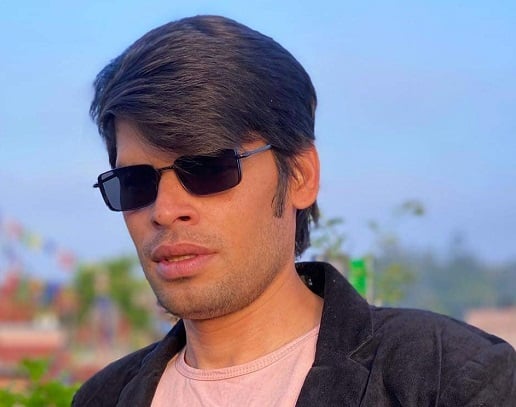
Balen Shah, proposed as the future Prime Minister from RSP, did not express anger towards any party or leader in his brief speech. He questioned why Karnali, which resembles heaven, has not yet become one. He stated that if his government is formed, they will work firmly in favor of good governance and prosperity.
'Many leaders have come to exploit the pain, poverty, and suffering of Karnali. Very few leaders have understood that poverty; no one has yet. The leaders of the Rastriya Swatantra Party want to become those who understand that,' he said. 'Let us take your dreams with us. Today, we have started carrying those dreams through the Promise Paper, announced from Karnali. From today onwards, all those dreams will be our dreams.'
Meanwhile, former Prime Minister and UML Chairman Oli, who was ousted following the Janjati Uprising, described the events of Bhadau 23 and 24 as destruction caused by a conspiracy of domestic and foreign elements. During the Janjati incident, 76 people lost their lives, and billions worth of public and private property were destroyed. However, as the head of the government at that time, Oli has not yet taken responsibility for the incident. At the manifesto release event, Oli instead raised six serious questions.
Here are the 6 questions raised by Oli regarding the Janjati Uprising:
1. Before Bhadau 23, was the country developing or deteriorating? Or was an imaginary narrative of a deteriorating country created to spread anger in society?
2. Who infiltrated the Janjati demonstration on Bhadau 23? Who forced the youths, who were returning home after the peaceful demonstration concluded as per the organizers' announced program, to move towards the prohibited zone?
3. Was the incident of Bhadau 23 spontaneous or a premeditated conspiracy? Or was it violence instigated by infiltrators to prepare the ground for the destruction on Bhadau 24?
4. The Janjati demonstrators had no demands regarding the government, the constitution, or the system. Why was the House of Representatives dissolved, attacking the system itself, as if fulfilling demands that never existed?
If the plan was merely to form a government favorable to oneself or hold elections, why were commercial establishments burned down? Why were private properties of ordinary party supporters across various districts from east to west looted, vandalized, and set on fire simply because they held a certain ideology?
6. If it was political revenge, why were the state security personnel performing their duties attacked?
It is evident that Oli, put forward as the future Prime Minister from UML, prioritized only the destruction of Bhadau 24. In his capacity as the head of government, he does not appear ready to accept the Janjati Uprising. In its 80-page manifesto, UML has continued the slogan 'Prosperous Nepal, Happy Nepali' that Oli put forward in 2074 BS. UML has highlighted the good work done during the four times it was in government.

'Criminal elements are committing crimes against the country under the guise of 'new forces'. I urge all voters to recognize such forces in time,' he said.
Oli interpreted the recent collaboration among major parties as an honest attempt to end political instability. He claimed that the alliance of major parties was not a cause of crisis but rather a step taken to stop the cycle of instability. He alleged that the Janjati Uprising was aimed at attacking the system from the streets after failing to overthrow the government through constitutional means.
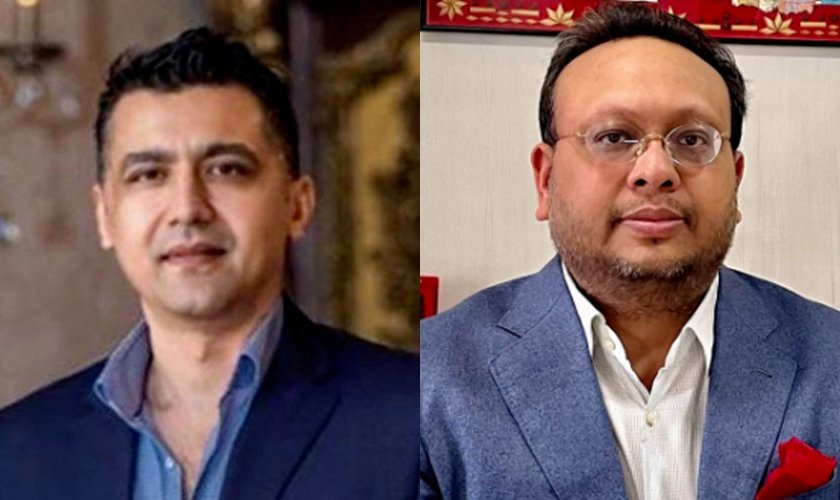
Similarly, Gagan Thapa, who rose to leadership in Congress after ending Sher Bahadur Deuba's dominance through a special general convention, admitted that suppressing the Janjati Uprising was a failure of the then-government. Former Chairman Deuba faced severe criticism for not withdrawing support from the Oli government even when 23 Janjati protestors were killed on the same day, as Congress was a main component of the government.
While presenting the party's Pledge Paper, Chairman Thapa said, 'As Congress was the main partner in the government during the time of the Janjati movement, the party is ready to take responsibility for the administrative and political errors made at that time. I publicly apologize to the relatives of the youths who lost their lives during the movement,' he said.
Listening to the statements of Oli, Balen, and Thapa, it appears that the power struggle between two opposing poles will intensify after the election on Falgun 21. Since Oli and Balen are competing from Jhapa-5, one of them is likely to be out of the race for Prime Minister. Regardless of whether Oli or Balen wins in Jhapa-5, one pole has a strong possibility of leading the future government. Meanwhile, Gagan Thapa, who contested from Sarlahi-4 after leaving his former Kathmandu constituency, is facing a tough challenge from influential RSP leader Dr. Amresh Kumar Singh. If Thapa wins and Congress has the standing to form a government, although the Pledge Paper does not clearly state how they will address the events of Bhadau 23 and 24, they have pledged to address the demands raised from the streets.
However, analyst Dr. Bhesh Raj Ghimire suggests that regardless of who leads the government after Falgun 21, the power struggle between the two extremes is likely to intensify. He believes the Bhadau Janjati movement must be analyzed from two perspectives. He analyzes that Congress can steer the power struggle between the two poles towards a middle path. Ghimire stated that Chairman Thapa must be prepared to coordinate leadership by addressing both these issues.
'If the Nepali Congress has the courage and bravery, they should state that we are morally responsible for the incidents of Bhadau 23 and 24. An investigation and action should be taken regarding both incidents,' he said. 'His activities suggest he might say this.'
Here is his view:
Extreme political polarization seems to be taking hold. CPN-UML is also a party established after a long struggle. It has its own values. The Nepali Congress, needless to say, was born out of leading various movements. Likewise, there are new parties like Rastriya Swatantra Party and others.
Whatever the case, regardless of what anyone says, the Janjati movement has two aspects. One aspect is that our children spontaneously ran a campaign against bad governance, to establish good governance, and to reduce corruption. But there is doubt about this; we don't know how the investigation commission's report will turn out. It will certainly bring out some facts. It is too hasty to speculate on what kind of report will come before that. But we must accept the state of bad governance at that time.

Then there is the issue of destruction—we cannot turn a blind eye to the aspect of destruction either. It would have been much better if a responsible party like UML had said that we are morally accountable as we were in government for the situation the state created when the children came out against bad governance and leadership incompetence. Why couldn't they say that? They are unable to say that.
On the other hand, there are parties that have overlooked the incident of the 24th. There are parties like the Rastriya Swatantra Party. Wasn't the country on the verge of collapse on the 24th? If the country collapses, where will we do politics? Who will we hold accountable? Who will we demand good governance from? The country was on the verge of collapse at that time too. A situation was created where people, including you and me, had to be afraid.
International powers, geopolitical maneuvering—these things are suspected. This cannot be kept outside of suspicion. But UML has fueled that suspicion more, while normalizing the incident of Bhadau 23. This is the regrettable part. And, the Rastriya Swatantra Party also says they will sort out the 24th issue. Structures connected to the nation's identity are not built for decades.
We are not devaluing the incident of the 23rd; what if our own children were involved? We are concerned about that. The state is saddened by that. The government must take moral responsibility. Congress is also participating in the government led by UML. Those who are in power must take responsibility. But the incident is not just the 23rd and 24th; the incident was a long-running campaign against bad governance and disorder. The incident of the 23rd was like a state-sponsored massacre, while the 24th was a situation where the country itself was about to be destroyed. It is regrettable that UML expresses a balanced role by suggesting an investigation into geopolitical, international power struggles, or instigating elements here, while new parties completely ignore the 24th and old parties treat the 23rd as nothing. This irony shows polarization in politics, a kind of political polarization.
In such developing countries, consensus-building politics and building an egalitarian society require consensus building. It doesn't matter who is in power or in opposition. If one party is in power for one term, it might be in opposition the next. But these parties' fighting, the rigid, almost fundamentalist ideology they have adopted, cannot lead the country to the right destination, when we should be moving forward in a framework of national consensus and an inclusive model, combining the ruling and opposition parties.
If the Nepali Congress has the courage and bravery, it should state that we are morally responsible for the incidents of Bhadau 23 and 24, and that the incident of the 24th must be investigated and action taken. I don't know if they have said it, but their activities suggest they might. It is a state of accepting criticism and acknowledging mistakes along with consensus building. If Gagan Ji, the party chairman, says that, then he is a great leader. Citizens will trust that he can lead the state.
We have gone so far for cheap popularity that the graph of democratic norms and values is declining in Nepal right now. But the graph of populism is rising, and the graph of anarchism is rising. This might be a global trend too. But we can solve these problems in a participatory and consensus-based political scenario to build an egalitarian society, staying away from such a situation in Nepal. But the statements made for political polarization, the ideology forcefully imposed on the people—the Nepali people will not accept this.
This specific news has been automatically translated by AI. As a result, there may be some inaccuracies or language errors.
_B4r5wRpkmN.jpg)