Former Vice-Chairman of NPC Praises UML Manifesto as a Complete 'Economic Ecosystem'


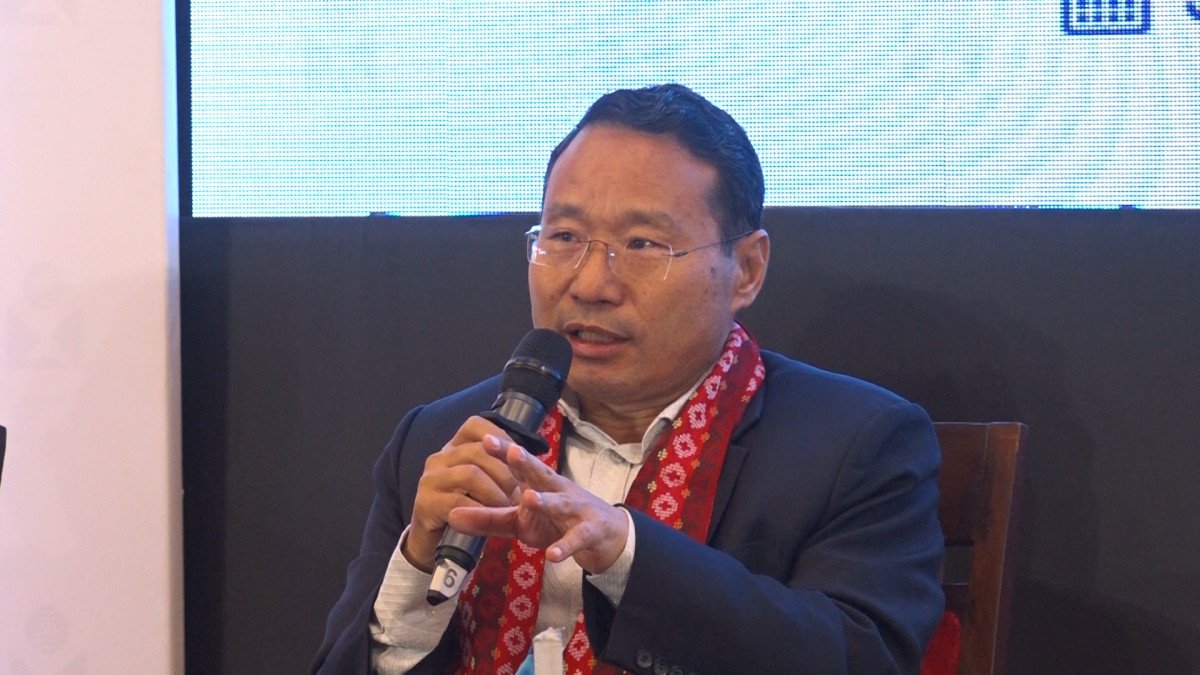
Kathmandu. Former Vice-Chairman of the National Planning Commission (NPC), Prof. Dr. Shivraj Adhikari, has interpreted the election manifesto of the CPN (UML) not merely as a political document, but as a complete 'economic ecosystem'.
Dr. Adhikari claimed that the 25 points included in the UML manifesto are mutually complementary and will advance the country's economic development as an integrated chain. Although some have criticized UML's agendas as being distribution-oriented and high-cost, Dr. Adhikari argued that these programs will ultimately transform into productive investments.
According to him, facilities mentioned in the manifesto, such as the digital card and dollar card, will directly support export promotion and digital job creation. He clarified that although these programs may appear costly in the initial phase, they will yield significant long-term economic benefits.
Discussing Nepal's economic growth target, Dr. Adhikari stated that there are technical bases to achieve a 'nominal growth rate' of 8 to 9 percent. He mentioned that the current expenditure should be understood as a foundation, which will later create a channel to increase national income by supporting other sectors.
Dr. Adhikari's analysis suggests that the main reasons behind the migration of Nepali youth abroad are not just the lack of jobs, but also the lack of dignified work and social security. He expressed confidence that if education and health are made free and high-quality as per UML's plan, a dignified life will be possible even with Nepali wages, creating an environment for people to stay in the country.
Emphasizing the need to view industrial development in connection with the overall ecosystem, he asserted that UML's integrated economic plan would be effective in increasing production and employment.
This specific news has been automatically translated by AI. As a result, there may be some inaccuracies or language errors.

_htFaNqpIDJ.jpg)