Former RSP Lawmaker Santosh Pariyar Discusses Party Switch, Governance, and Caste System on 'Talk Forward' Podcast

Kathmandu. He was active as a social activist and taught at college. Santosh Pariyar emerged as a politician through the Rastriya Swatantra Party (RSP) in the previous election. As one of the 21 RSP lawmakers, he presented himself forcefully in parliament, which established him well in Nepali politics.
The House of Representatives election is scheduled for the upcoming Falgun 21, fueled by the momentum of the 'Genji' movement held on Bhadra 23 and 24. Santosh, who became a proportional representative from RSP last time, is now a candidate for the proportional seat from the new party Pragatisheel Loktantrik Party (PrLoPa), formed after the Genji movement, having switched parties. He was the chief whip for RSP in the then House of Representatives and left the party following the Genji movement.
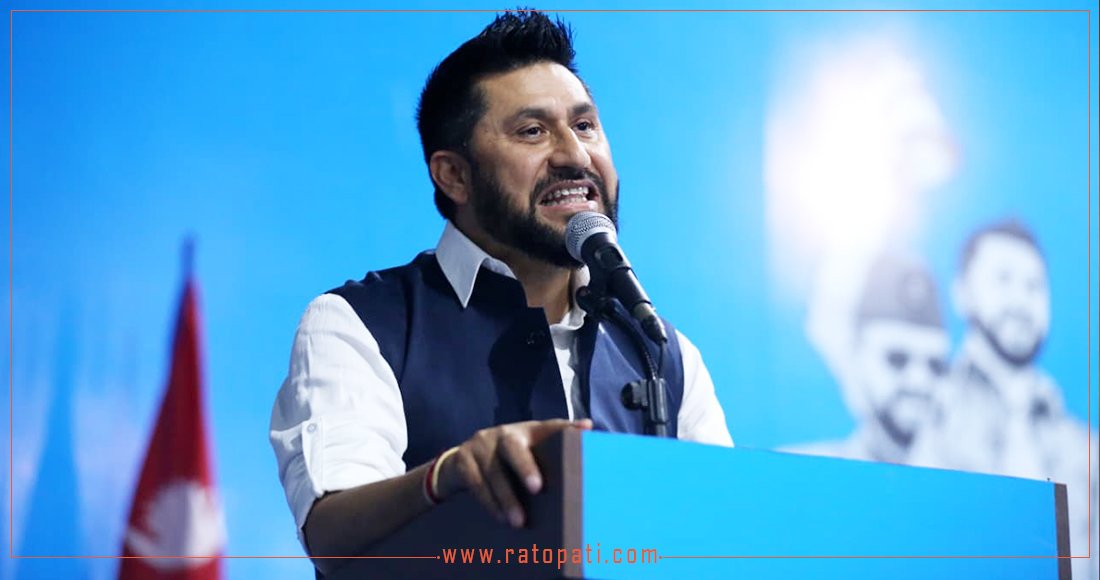
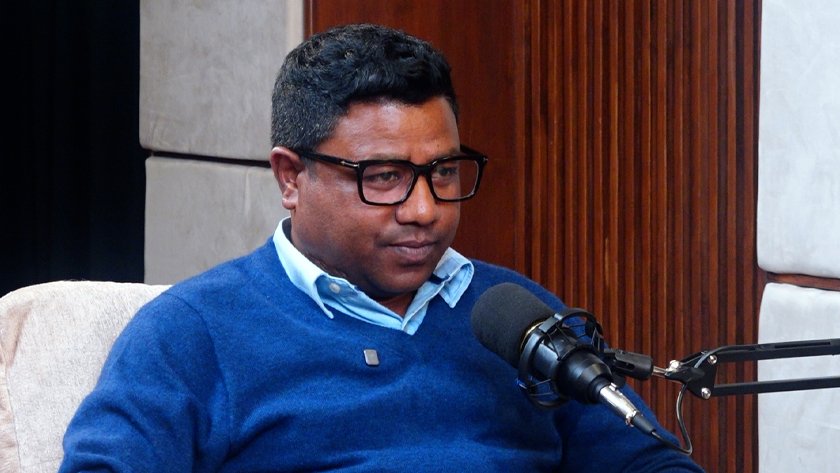
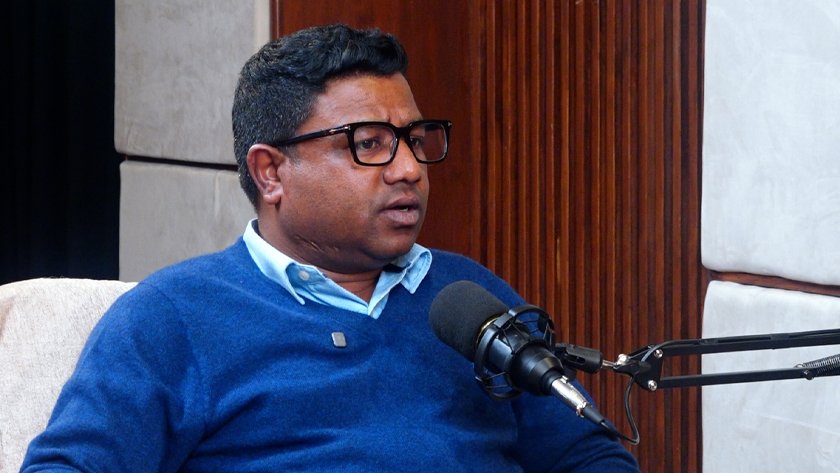
When Santosh arrived for an interview on the Ratopati Podcast 'Talk Forward,' he was immediately asked: Do you regret leaving the RSP?
"Not at all, under any circumstances. I am on a journey to build a broader alternative force," he replied. "Many people ask me this question, and some even accuse me of being an 'opportunist.' But my politics is not for my personal gain. My politics is for the nation, the community, and the marginalized citizens," he tried to clarify further. "While in RSP, I did get opportunities, but I did not find clarity on the issues of Nepal's diversity, marginalized communities, and social justice."
Currently the Chairman of the Executive Council and Spokesperson for the Pragatisheel Loktantrik Party (PrLoPa), Santosh Pariyar was interviewed on the Ratopati Podcast 'Talk Forward' focusing on the upcoming election, Nepali politics, and society. Here is the edited excerpt of the interview (the full video can be viewed):
It is the season for colds and coughs. This common health problem usually resolves with simple treatment. The general election for the House of Representatives is being held on Falgun 21 to treat the political health of the country. Will this election improve the country's health?
This is a very metaphorical question. In essence, every election is held to improve the country's political health. The objective of every election since 2015 has been to improve political health. However, if we look at past precedents, the results have not been as expected. Nevertheless, we must go to elections to keep democracy alive, protect the constitution, and safeguard the sovereign rights of the people.

Today, we are heading to an election in a somewhat different and uncomfortable situation. This is not an election in our regular and natural rhythm. It would have been pleasant to complete five years of work and go among the people. But various incidents and events have brought us to this point. As a democrat and a believer in constitutionalism, the election is important. But it cannot be asserted that the election alone will solve all the country's political problems. The situation is not normal, the actors are the same, and the political culture has not changed. Nevertheless, there is no alternative to elections to adapt the situation and find a way out.
This election is being held on the strength of the Genji movement. Can this election address the demands and spirit of the movement?
The parliament and government to be formed must address the legitimate issues of the Genji movement—good governance, ending corruption, employment at home, and a sense of ownership that 'this country is ours too.' However, the precondition for the Genji movement was not elections. Their demand was for reforms in state governance.
Nevertheless, the forces emerging from the next election must be honest towards those demands. The way the Genji movement questioned the existing parties and leadership has called for new leadership and a new style.
You were previously in the Rastriya Swatantra Party (RSP) and also served as a lawmaker. Why did you leave that 'flourishing' party and choose the new party PrLoPa?
Many people ask me this question, and some even accuse me of being an 'opportunist.' But my politics is not for my personal gain. My politics is for the nation, the community, and the marginalized citizens. While in RSP, I did get opportunities, but I did not find clarity on the issues of Nepal's diversity, marginalized communities, and social justice.
During my tenure there, I continuously strived to make the party inclusive and social justice-oriented. I was one of the two people who wrote the resolution passed at the RSP's Jaleshwor meeting, where inclusiveness was incorporated. But the core character and documents of the party marginalized the millennia-old oppression of Dalits, and the issues of the poor and laborers. Opposing corruption and populist slogans alone will not build a nation. When I saw that I could no longer contribute further to the nation and my community while staying there, I left that opportunity and chose a risky new path. For me, ideology is more important than position.
Your manifesto includes 'Directly Elected Executive President' and 'Fully Proportional Electoral System.' What is the guarantee that this will bring political stability?
This is a subject for a very broad debate. The fully proportional electoral system is not particularly problematic if implemented honestly. However, our experience does not show that the form of governance (directly elected executive) itself guarantees stability. Look, even when there was a two-thirds majority government in this country, parliament was dissolved. Even with a majority government, it went to mid-term elections.
Therefore, not just the system, but the tendency and culture operating that system must also change. But since the public is fed up with the current parliamentary arithmetic (the game of forming and breaking governments), our conclusion is that we must move to a system where an executive is elected for at least five years. However, as a student of political science, I say that the system itself is not a magic wand, but changing the form of governance seems necessary to end the current instability.
Dr. Baburam Bhattarai filed his candidacy in Gorkha and then withdrew it. Has this affected your party, or does it bring some benefit?
Dr. Baburam Bhattarai is our guardian. He has long advocated that the new generation should move forward. He was not initially planning to contest the election this time. Later, he filed his candidacy at everyone's request. But later, he withdrew, saying, 'I will not limit myself to winning or losing in one constituency; I will assume national guardianship.'
It is true that his withdrawal caused a psychological impact on the party for some time. There were also rumors outside that he was shown the 'lollypop of becoming President.' But a leader of his stature is not someone who clings to the lure of any position. He made this decision voluntarily. We are moving forward under his advice and guardianship.
The unity between Kulman Ghising-led 'Ujyalo Nepal Party' and RSP was dissolved. Then there was talk of cooperation between Ujyalo Nepal and PrLoPa, but it didn't happen. Why?
The concept of 'Ujyalo Nepal' belongs to our party leader Janardan Sharma when he was the Minister of Energy. I had many personal discussions with Mr. Kulman Ghising. He is a person carrying good potential. But he chose a slightly different path. Therefore, cooperation with him was not possible. He seems to be in the shadows now, which is due to his own decisions. Sometimes this happens if one fails to make judicious decisions in politics.
It seems your main enemy right now is the CPN (UML/Maoist Center), as you seem to criticize them more than others. Why?
That is not the case. Ideologically, we are close to the CPN (Maoist Center). There is similarity in the issues they raise and our perspective. But we disagree with the kind of alliance and political practice they are currently engaged in. It is not a good sign that a leader with the history of Comrade Prachanda has to struggle so much just to become the third or fourth force. Our concern, not enmity, is that they have dulled their revolutionary edge.
What is PrLoPa's political line? Center, Left, or Right?
We are 'Center to Left.' Looking at Nepal's objective situation, ethnic discrimination, class gaps, regional oppression, and gender inequality, we must maintain a leftist inclination. But we fully believe in democracy, constitutionalism, parliamentary sovereignty, and the supremacy of the citizen. That is why we call ourselves 'Progressive Democrats.'
You have also stated that the caste system is the root of the main problem in Nepali society. Is the situation of caste discrimination still the same?
The main problem of Nepali society, and South Asian Hindu society, is the 'caste system.' It is not just social discrimination; it is also a political and economic system. Caste has created class here.
A Brahmin friend of mine used to say, 'You were born in Kathmandu, educated, while I am a woman from the far-west; I am more oppressed than you.' To some extent, what she said might be true. But caste discrimination exists at every level. I may have studied in Europe-America, be pursuing a PhD, but even today, when I go looking for a room in Kathmandu, I have to hide my caste or lie. Even if my qualifications elevate me, my social status is still kept low by my caste. What an irony.
Therefore, the caste system is one of the main reasons why Nepal has not developed. It does not allow us to come together or cooperate. Unless we dismantle this patriarchal and caste-based structure, Nepal will not truly develop.
Elections are becoming increasingly expensive. How difficult is it for new parties?
Yes, elections have become very expensive. This prevents new people who are financially weak but have vision. But the Nepali people have a good habit: they give opportunities to newcomers in every change. If you look at the voting pattern since 1990, the people have always looked for alternatives.
It is difficult for us because we lack resources. We entered the field at the last moment. But to save democracy, one must be prepared to lose. We do not contest elections just to win. Our presence will voice the marginalized in parliament.
Why do you think Nepal has not developed as it should have?
My conclusion is that Nepal has not developed as much as it should have. And it will not develop until our social rigidities are broken. We carried out major political revolutions, but the cultural and structural rigidity of society remained the same. That is why even leaders who came from a massive movement like the Maoist People's War ended up in a place where they had to worship buffaloes. This is not just an individual's weakness; that societal rigidity brought them there.
What is your dream now?
My dream is that by utilizing the geography, resources, and manpower we possess, Nepal can become a developed nation in 10 to 15 years. But for that, honest effort, rule of law, and fostering a sense of ownership among all citizens that 'this state is mine' are necessary.
I do not want to make politics a profession. I am interested in writing and academia. I will remain active in politics for a maximum of 2-3 terms, as long as my contribution is necessary. If I cannot deliver results or if a more capable person comes along, I am ready to step aside. I will not cling to a position forever.
Video/Photo: Manoj Khadka
This specific news has been automatically translated by AI. As a result, there may be some inaccuracies or language errors.
_shBQSnE9IK.jpg)
_fkg5u05PqN.jpg)