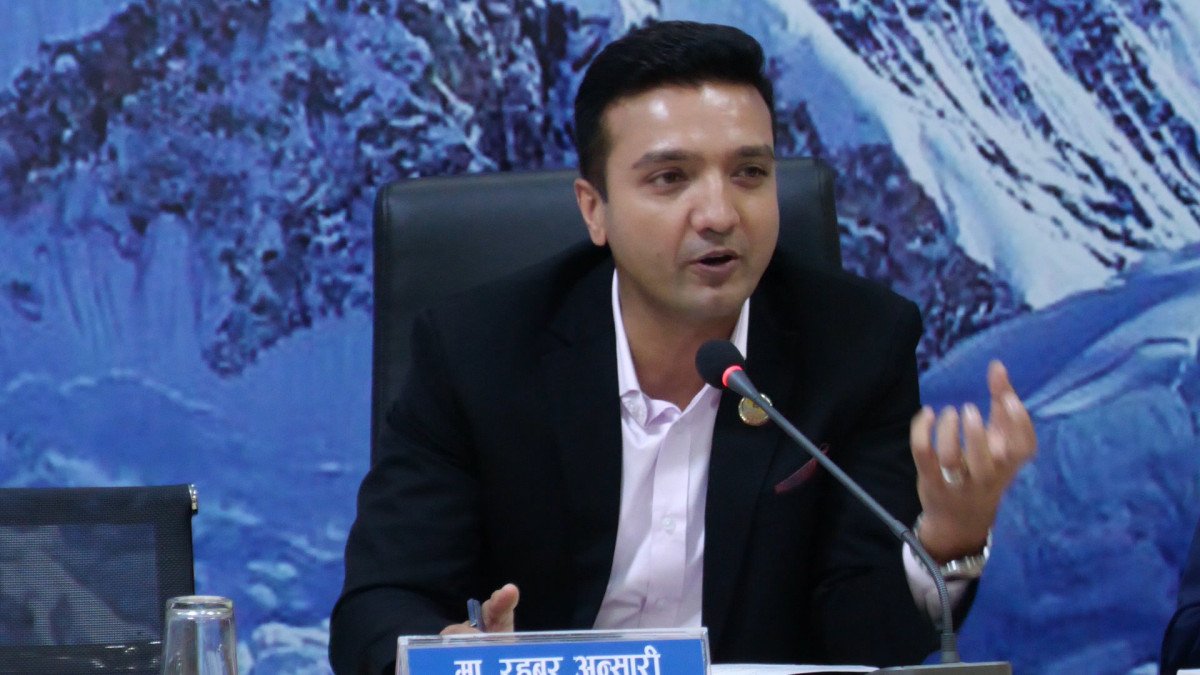
Central Bank Governor's Stance on Economy Contradicted by Official Data and Neoliberal Policies

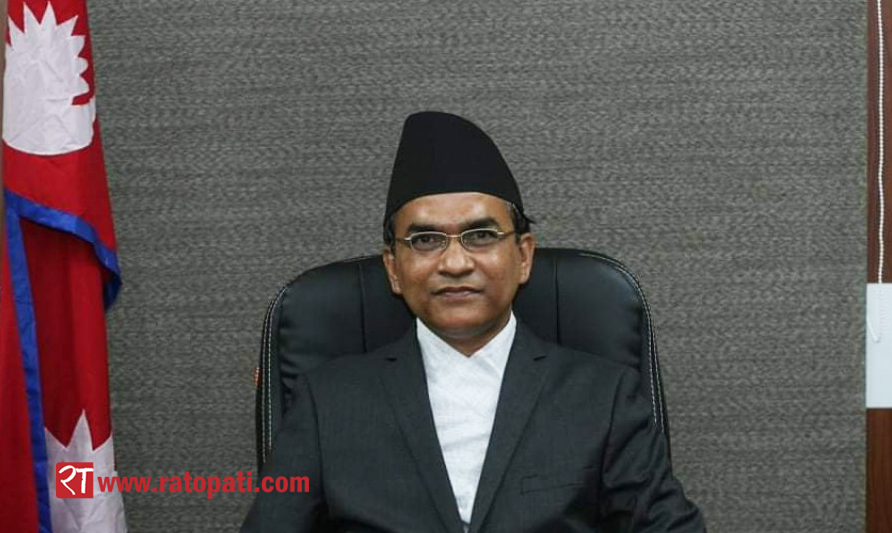
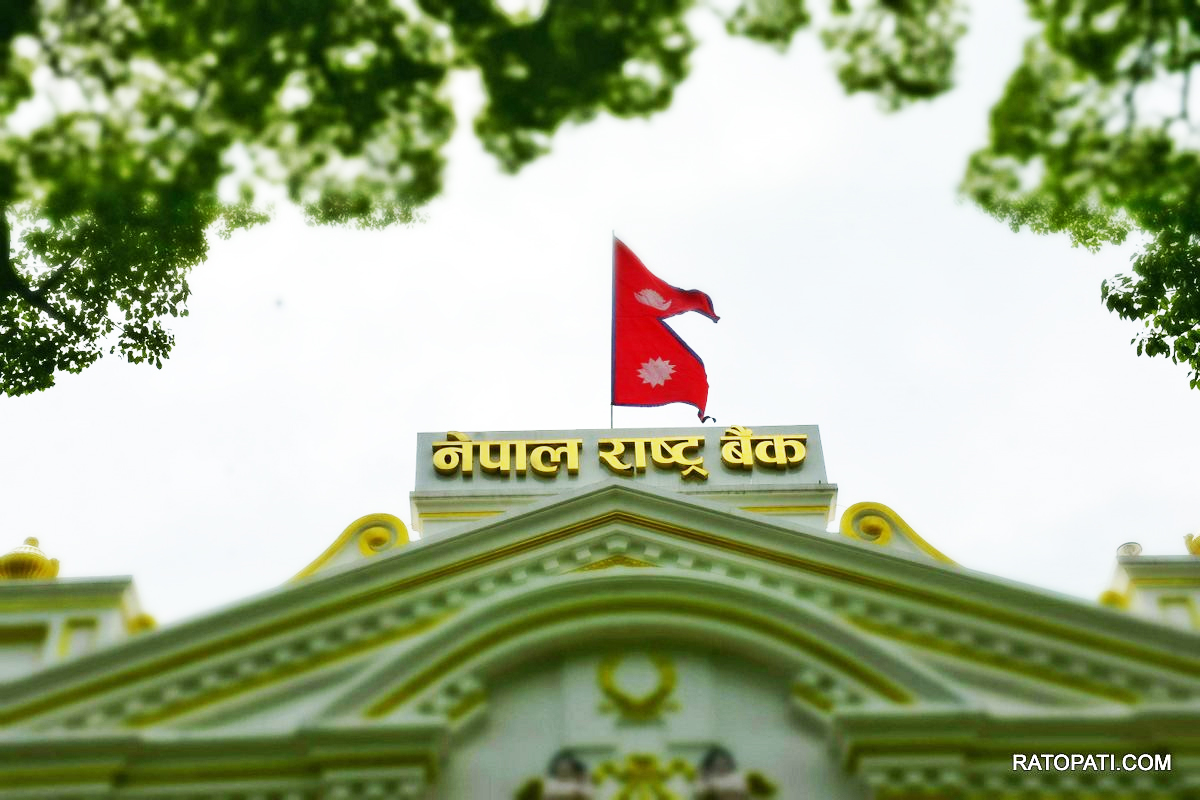
The Governor of the central bank is understood to be the chief leader of the country's economic and financial sector. The Governor is responsible for formulating and implementing monetary policy, regulating and supervising banks and financial institutions, ensuring financial stability, managing foreign exchange and exchange rates, acting as the government's banker and advisor, and having the authority to issue currency. Furthermore, the Governor plays roles in financial inclusion and consumer protection, international coordination, and liaison with international organizations such as the IMF, World Bank, and ADB.
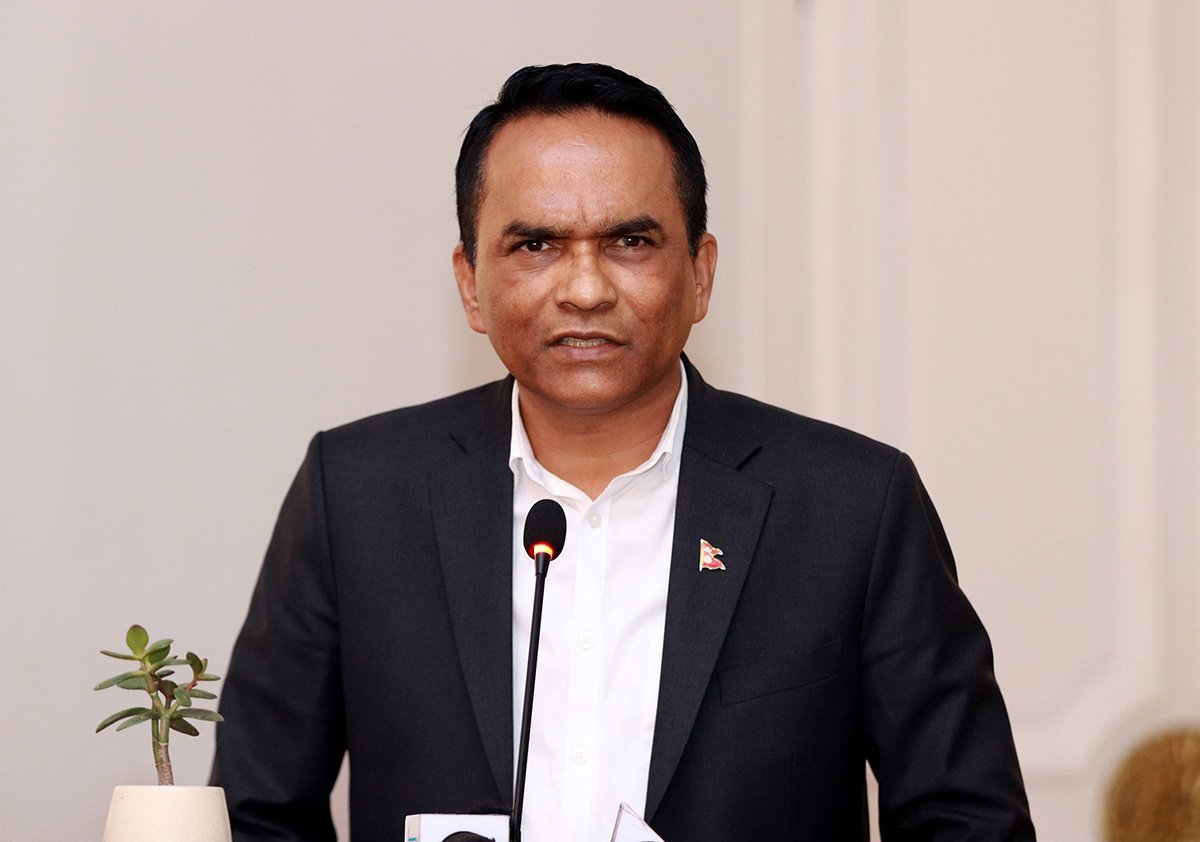
Therefore, in the context of Nepal, the Governor has historically been a person affiliated with the political party running the government. Following the completion of Mahaprasad Adhikari's term during the Congress-UML government, the current Governor, Dr. Bishwa Nath Poudel, a member of the Nepali Congress who was defeated in the last election in Chitwan, has taken office.
The events of Bhadra 23 and 24 have impacted all sectors in Nepal. The general public is gripped by psychological depression. The economic lives of most ordinary people are becoming difficult. In such a situation, the central bank governor needs to be more sensitive. Serious attention must be paid to the country's financial condition. Caution must be exercised in formulating the nation's monetary policy.
However, the current Governor, Bishwa Poudel, recounts a list of failures in Nepal's economy. He relies on arguments rather than statistics. He states that the 'ten-year conflict,' the 2072 earthquake, and the events of Bhadra 23 and 24 have created an environment where domestic and foreign investors are hesitant to invest. It seems he is more concerned about the lack of an environment for foreign investment than about the country's economic development.
His argument is that without domestic and foreign investment, the state lacks the necessary funds for development. Development can only occur through investment from private entities. This is currently lacking in Nepal. Development first requires large-scale infrastructure. If individuals or private domestic and foreign entities invest, they must receive a profit. Investment security and profit assurance are necessary. The state should not interfere in this.
Nepal is controlled by various economic and financial policies and regulations. Investors have been intimidated by movements and conflicts. So, how can development happen?
But, the surprising thing is that facts published by the central bank, which Poudel leads, contradict his arguments, stating that the state treasury currently holds the largest amount of money. According to the latest statistics published by the central bank, the total foreign exchange reserve was NPR 2,677.68 billion as of the end of Asar 082. However, this reserve has increased to NPR 3,201 billion.
According to the economics Poudel studied, if the foreign exchange reserve increases in this manner, the country's economic solvency increases. It easily covers imports, debt servicing, and emergency expenditures. The capacity to repay foreign debt improves. The currency exchange rate stabilizes. This is because the central bank can intervene in the market when necessary to control currency devaluation. It prevents imports from becoming expensive. Investor confidence increases. This sends a message to foreign and domestic investors that the country is economically secure. And Foreign Direct Investment (FDI) can increase.
And the capacity to face internal crises increases. This acts as a 'backup' for the country if problems arise due to natural disasters, economic crises, or international trade, and it prevents price increases. However, inflation is continuously rising. The foreign exchange rate, mainly the value of the US Dollar, is the highest.
The main reason for the accumulation of foreign exchange reserves in Nepal is remittances from foreign employment. According to the central bank, remittances increased by 35.6 percent in the first five months of the current fiscal year, reaching NPR 870.31 billion. As of Kartik, NPR 687.13 billion in remittances had been received. In the month of Mangsir alone, NPR 183.18 billion in remittances flowed in.
Furthermore, deposits in banks and financial institutions have increased by 3.9 percent, or NPR 281.89 billion. Total deposits reached NPR 7,545.77 billion by the end of Mangsir. However, credit flow has expanded by only 1.9 percent (NPR 102.24 billion). With credit flow sluggish compared to deposits, the economy is not gaining momentum.
Thus, currently, NPR 1,746 billion in funds—comprising foreign exchange reserves and liquidity in banks and financial institutions—remains unutilized in Nepal. The two facts mentioned above—the significant increase in foreign exchange reserves and the increased liquidity in private banks—refute the Governor's argument that development is hindered by a lack of sufficient funds in Nepal.
Poudel, who criticizes China as a communist authoritarian state, quotes Deng Xiaoping's statements from the time of the 1989 June 3 and 4 Tiananmen Square massacre when he implemented neoliberal economic policies: 'To be rich is glorious' and 'Let some people get rich first and let others prosper later,' saying that some people must be allowed to get rich first.
The ideological basis for Poudel's view lies with Friedrich Hayek and Ludwig von Mises after the Great Depression of the 1930s. They advocated for a market-oriented economy while opposing state intervention. From this, policies of privatization, liberalization, deregulation, and free-market competition spread worldwide.
That same outdated policy was introduced to Nepal in 047 BS by Nepali Congress economist Dr. Ram Sharan Mahat. That is called liberal economic policy. Poudel's thinking is the same. His argument is that there is no environment for Foreign Direct Investment (FDI) and domestic private investment in Nepal. He is very disappointed that the situation has worsened, especially after the Gen-Z protests. According to him, during the Gen-Z protests, delegations from abroad were coming for investment in the Foreign Investment Sector (FIS) in Nepal. The Gen-Z protests destroyed the investment environment.
After the entry of liberalism in Nepal, schools, hospitals, banks, insurance companies, and airlines were established through private and foreign investment starting in 1991. Therefore, he considers that period a good time for investment. Currently, Nepal operates under a neoliberal economic policy. According to neoliberalism, trade, industry/services should be privatized, trade, investment, and price controls should be removed, government rules and regulations should be reduced, prices should be determined by supply and demand, foreign investment and trade should be encouraged, and the state should only be a 'facilitator.' In fact, all parties currently in government, whether labeled 'leftist' or democratic, have embraced and promoted this policy.
The currently implemented neoliberalism has led to rising costs in service sectors like health and education in Nepal. With the advent of neoliberalism, health and education began to be commodified in the name of quality. Private banks and financial institutions have an uncontrolled grip on Nepal's financial sector. This has resulted in the assets of the poor, lower-middle, and middle classes—land, property, and houses—being piled up as collateral in these financial institutions. According to the central bank, 70 percent of the collateral kept for loans comes from houses and land.
Due to neoliberalism, no new state industries have been established in Nepal. Agricultural modernization has also not taken place. Traditional agricultural production is not even covering costs, leading to agricultural land being left fallow day by day. According to 078 statistics, 33 percent of the land is fallow.
Taking advantage of this exact situation, the government has introduced a Land Bank policy under the neoliberal framework. This land will fall into the hands of entrepreneurs operating with domestic and foreign investment. The lack of state industries and the failure to modernize agriculture mean that the labor force is forced to migrate abroad due to a lack of employment opportunities. The consumption of Nepali labor in industries established through foreign investment is negligible. These investments or industries have merely consumed Nepal's natural resources cheaply.
The largest portion of corruption in Nepal is accounted for by policy corruption. This policy corruption is perpetrated by those in power in the state. It often occurs when creating new laws and regulations. It happens when rules and regulations are made according to the wishes of domestic and foreign investors. This policy corruption opens the door to other areas of corruption. Bureaucratic capitalism plays a major role in this. Therefore, no individual or institution entering the current state system has remained free from corruption.
A Hollywood movie was released on December 19th. James Cameron's film 'Avatar Fire and Ice' depicts the war imposed by an organization called RDA, which is focused solely on exploiting natural resources against the indigenous people of Pandora. Although no company is named RDA, it characteristically resembles many current American companies that possess their own high-tech and modern armed forces, and the story is based on that event.
But does RDA currently represent the American private company Chevron in Venezuela? These companies, such as Chevron, ExxonMobil, and ConocoPhillips, were involved in the unilateral exploitation, leading the US to abduct the Venezuelan President and his wife. This incident clearly shows how far some will stoop to exploit and plunder natural resources.
Nepal has not been physically colonized. However, it has recently become a victim of crypto-colonialism. The main source of this is its domestic representatives inspired by Imperialist Crony Capitalism. Thus, the Governor's focus only on foreign and domestic private investment, his despair over the lack of investment environment even when the state has abundant funds for investment, represents a neo-colonial mindset.
This specific news has been automatically translated by AI. As a result, there may be some inaccuracies or language errors.