Kathmandu Air Quality Index Reaches 'Unhealthy for All' Level Amid Rising Pollution
_pDBceCw7FA.jpg)
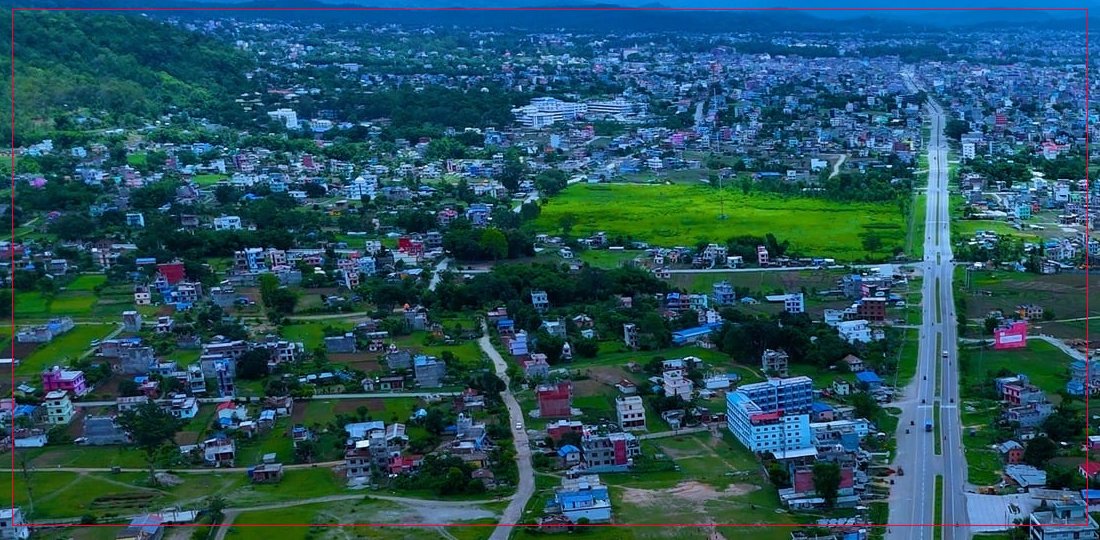
Kathmandu. Air pollution has increased in the Kathmandu Valley. The Air Quality Index (AQI), which stood at 178 on Monday afternoon, reached 191 by this afternoon. This level falls under the 'Unhealthy for All' category, which can particularly affect children, the elderly, and those with respiratory and heart conditions.
With this, the air pollution in the Kathmandu Valley has reached an unhealthy level today. According to the Air Quality Index (AQI), Kathmandu has been listed as the third most polluted city in the world today. Delhi, India, is listed first with an AQI of 229, and Lahore, Pakistan, is second with an AQI of 203.
Gyanraj Subedi, Director General of the Department of Environment, stated that pollution could increase further in the coming days if there is no rain. He mentioned that pollution levels remain high during prolonged dry weather because rain helps bring dust and particles in the air down to the ground. Director General Subedi informed that relevant bodies have been advised to effectively implement sustainable and environmentally friendly development measures.
According to environmental activist Barsha Parajuli, the rapid increase in vehicles in the valley, smoke emitted from diesel and petrol, dust rising from ongoing road and infrastructure projects, as well as forest fires and prolonged dry weather have increased air pollution.
"If control measures are not adopted in time, the situation could become more complicated," she said. Parajuli urged for timely awareness, warning that pollution could increase further if the weather remains dry. According to the index statistics, an AQI of up to 50 is considered good (green signal), and 51 to 100 requires caution (yellow signal).
Similarly, an AQI of 101 to 150 is considered unhealthy, affecting respiratory and heart patients. An AQI of 151 to 200 is unhealthy for all, 201 to 300 is very unhealthy, and an AQI above 300 is considered extremely hazardous.
According to the Air Quality Management Action Plan for the Kathmandu Valley, 2076 (Bikram Sambat), the Government of Nepal has a provision to consider an AQI exceeding 300 as a disaster. The action plan includes measures to mitigate such disasters, such as stopping waste burning, increasing the use of 'broomers' and 'vacuums' for road cleaning, and issuing public notices for special precautions for children, the elderly, and the sick.
According to the National Environment Policy, 2076 (Bikram Sambat), the government's strategy is to prepare and implement national standards related to the prevention of pollution from water, air, soil, noise, electromagnetic waves, radioactive radiation, and hazardous chemicals to reduce air pollution. It also mentions establishing quality monitoring centers in major cities, industrial areas, and pollution-risk zones to map air, water, and noise quality.
This specific news has been automatically translated by AI. As a result, there may be some inaccuracies or language errors.