High-Stakes Political Showdown in Kalikot as Former Maoist Comrades Face Off in Election
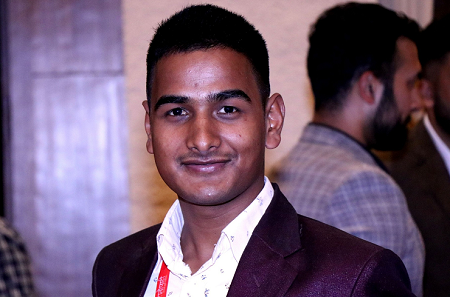

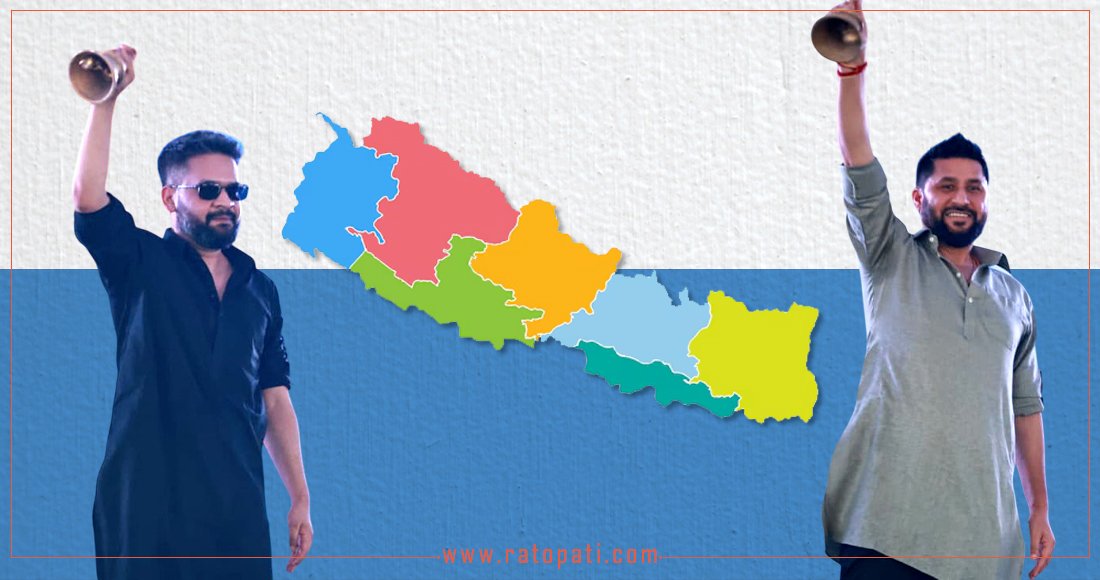
Surkhet. Among the 12 constituencies of Karnali in the House of Representatives, Kalikot is a center of significant interest this time. This is because Mahendra Bahadur Shahi and Khadga Bahadur Bishwakarma 'Prakanda', who were comrades during the Maoist insurgency, are facing each other in this constituency.
Prakanda, contesting a parliamentary election for the first time in 18 years, finds his former comrade Mahendra as his main competitor.
Harsabahadur Bam from the Congress, Nagendra Shahi 'National' from UML, and Prakash Neupane from RASP are also candidates here. However, the focus of discussion remains on Mahendra and Prakanda, both from the Maoist background.
Mahendra Bahadur Shahi, a candidate from the Communist Party of Nepal, is in the electoral arena for the fourth time. He is also the former Chief Minister of Karnali. Prakanda has entered the field carrying the CPN (Maoist Centre)'s rose symbol.
Politically, Prakanda is a senior leader compared to Mahendra Bahadur Shahi. During the war, Prakanda was one of the key leaders in the Bheri-Karnali region's party politics. After Shakti Basnet faced party action, he became a Central Committee member and the Bheri-Karnali Bureau In-charge during the war. At that time, he was also the head of the Bheri-Karnali People's Government.

Mahendra, on the other hand, was a combatant commander in the People's Liberation Army. Mahendra was at the forefront of the People's Liberation Army from the time the first guerrilla army was established in the former Karnali Zone. He was equally active in the party.
Having led from Military In-charge of Kalikot district to Battalion Commander, Brigade Commander, and Division Commander, he played a decisive role in major war fronts in Western Nepal.
After the peace process, Mahendra Bahadur Shahi remained in the army, while Prakanda entered parliamentary politics by securing strong votes in the 2064 election. At the center, he served as Minister for Women and Children and later as Minister for Tourism.
Before his term as a Member of Parliament ended (in 2069 BS), Prakanda left the party along with Biplav, expressing dissatisfaction with Maoist Chairman 'Prachanda'. After Prakanda adopted the path of rebellion again, Mahendra Bahadur Shahi saw a strong rise in the Maoist party in this constituency.
He wanted to enter party politics after not receiving a respectable position during the army integration. When the district's top leader left the main party, Prachanda put Mahendra forward to maintain the Maoist legacy in Kalikot.
Mahendra, who won the second Constituent Assembly election in 2070 BS amidst the Maoist split, became the Energy Minister in Sher Bahadur Deuba's government. During that time, he gained prominence by registering the impeachment motion against the Chief Commissioner of the Commission for the Investigation of Abuse of Authority, Lokman Singh Karki.
In 2074 BS, he moved to the Provincial Assembly and became the Chief Minister of Karnali. During the peak of the then CPN dispute, he emerged as a shrewd player in parliamentary politics by ensuring his position by making UML MPs, the largest party, 'floor cross'. Among the Maoists, Mahendra emerged as an influential leader after Janardan Sharma and Shakti Basnet in Karnali.
Currently, he is known as Prachanda's confidant and an influential leader in Karnali within the CPN (UML). On the other hand, Prakanda remains a second-tier leader within Biplav-led CPN.
Having considerable influence in the district, he started his election campaign from the home of a martyr's family in Khadachakra. A video showing the martyr's family weeping profusely and Prakanda also crying has been circulating on social media.
Prakanda, who claimed he would defeat Prachanda even if he came to Kalikot, made aggressive remarks targeting the CPN candidate in his first program.
'I don't see any development here other than the development we did after the 2064 election for all these major development projects. This Karnali Corridor was built by us, not by these loafers,' he said.
Prakanda also claimed to have initiated the work on the Khulalu Bridge to Kotbada Airport. Since Prakanda initially called his former comrades 'loafers', an exchange of accusations and counter-accusations is currently underway between Prakanda and Mahendra Shahi's factions in Kalikot.

Countering Prakanda, Mahendra said at a program in Palata, 'Is the Khulalu Bridge built by these loafers? You claim you built it, but I was the one who laid the foundation stone for that bridge!'
Stating that he inaugurated the bridge over the Karnali River by bringing a helicopter, Shahi accused Prakanda of saying anything to deceive the public.
Mahendra's group has adopted a defensive stance. Prakanda's group, meanwhile, is criticizing the ruling party for failing to achieve significant development in Kalikot despite having continuous representation, and is raising issues of caste and regionalism.
Other candidates are also raising questions against Mahendra Bahadur Shahi by making issues out of what Prakanda's group has raised.
The accusation against him from other candidates is that despite repeated candidacies, he has not provided proper development and solutions for Kalikot.
- Mahendra Talking About Development, Other Candidates Questioning Him
CPN candidate Shahi himself views this election as a challenge. Having secured an easy victory in the 2079 House of Representatives election, he faces the risk of Maoist votes being split due to the entry of his former comrade Prakanda into the field. Therefore, he has put forward the development work he accomplished in the district while serving as an MP, Minister, and Chief Minister as his agenda.
'Who brought the current development in Kalikot? You drive smoothly on the roads dug at my initiative, and then you abuse me,' Shahi said, 'When there is nothing to say 'vote for me because I did this work,' there is no point in opposing by making personal attacks.'
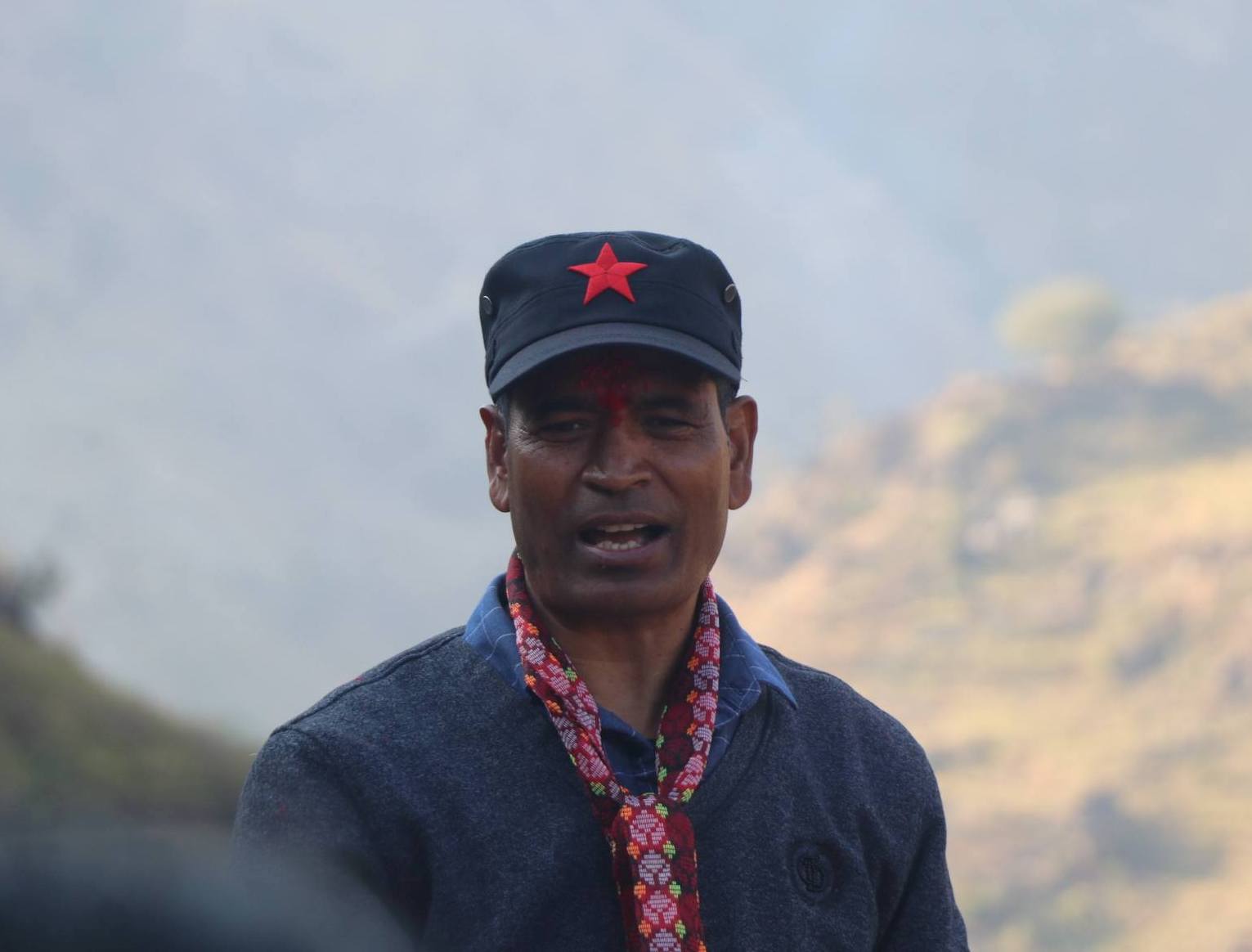
He stated that the argument that Mahendra did nothing in Kalikot is incorrect. He mentioned that when he was the Energy Minister, electricity reached Kalikot even when Dailkeh was not electrified.
However, he noted that other parties and his opponents use the electricity supplied through his efforts to criticize him on social media.
Shahi said, 'When I was the Chief Minister, a budget never seen before came to Kalikot, and hundreds of projects were built. Many strategic projects have moved forward, and it is our responsibility to complete them.' He states that he has re-entered the electoral arena with that objective.
Nevertheless, Maoist candidate Prakanda claims that despite his long absence from the electoral field, Kalikot has not seen proper development.
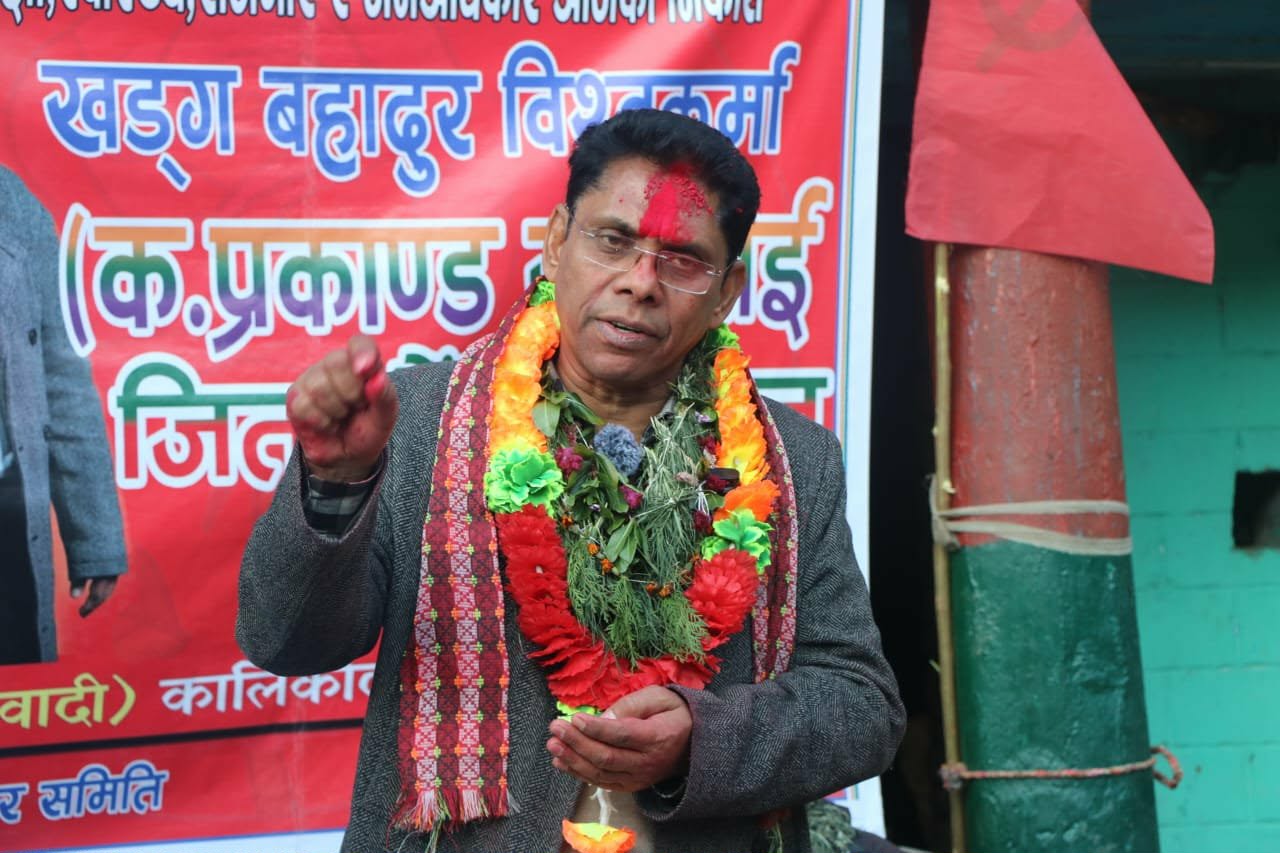
'The projects we initiated in the early days have not been completed; what have these people done until now?' he asked, 'There is no reason for me to lose the election; the people of Kalikot will elect us.'
He pointed out that the Kalikot section of the Karnali Corridor has not been upgraded even after 18 years.
Similar to Prakanda, Congress candidate Bam and UML candidate Shahi also argue that Mahendra has not properly developed the district despite winning elections repeatedly.
- Will the Clash Between Shahi and Prakanda Benefit UML—Congress?
In Kalikot, which has a voter base of 84,600, Mahendra Bahadur Shahi of the Maoists won the 2079 election by securing 23,727 votes in the direct election. That vote included the Congress alliance.
In that election, Nagendra Shahi of UML secured 16,718 votes. In the proportional representation category, the Maoists (now CPN) received the highest 14,229 votes, while UML received 12,564, Congress 10,585, and Unified Socialist (now CPN) received 2,053 votes.
Adding the votes of Maoist—Socialist, the total proportional vote for the CPN reaches nearly 19,000 here.
Looking at the votes received by parties at the ward level, the CPN is the first party. The Maoists received 18,347 votes and the Socialists received 3,503 votes in the local level elections at the ward level.
Congress received 12,820 votes and UML received 12,613 votes. Based on all the election results of 2079 and organizational strength, the CPN is the strong party in Kalikot. However, due to the candidacy of Prakanda, a former comrade and influential leader, CPN leaders fear that a significant portion of their votes might cross over.
Prakanda also claims that he will receive Maoist votes, and on the other hand, there is talk that he will secure a large number of ethnic votes. It is analyzed that the decisive vote of the Dalit community in Kalikot might go to him. Prakanda's own team is making this issue a campaign point.
Previously, Jeevan Buda had filed an independent candidacy within the CPN. Following Prachanda's directive, he not only withdrew his candidacy but also became Mahendra's election commander. However, there is discussion within CPN circles whether Mahendra will receive strategic support from Buda's faction.
In a situation where RASP, Prakanda, and even other parties need to draw votes from the CPN, if internal betrayal occurs, Mahendra's election could become challenging, it is assessed.
Nevertheless, it appears that the Congress and UML might benefit from the prestige battle between former Maoist leaders Mahendra and Prakanda. UML has fielded its long-time candidate Nagendra, while Congress has put forward Harsabahadur Bam.
This specific news has been automatically translated by AI. As a result, there may be some inaccuracies or language errors.