Economic Paradox: Liquidity Surplus Fails to Spur Investment Amid Low Demand


Kathmandu. A strange and contradictory situation has emerged in the country's economy. On one hand, there is a flood of investable funds (liquidity) in the banking system. Interest rates are continuously falling, and foreign exchange reserves have reached an all-time high. On the other hand, there is no demand in the market, and the private sector is hesitant to invest.
The government's development expenditure (capital expenditure) is in a dismal state. Despite the Nepal Rastra Bank implementing monetary tools with the expectation that the economy would become dynamic, the expected results have not materialized.
While the external sector of the country's economy appears capable, the internal economy is failing to gain momentum. Around 12 trillion rupees of investable funds are piled up in banks and financial institutions.
The interest rate on bank deposits has dropped to a maximum of 5.1 percent, and the average interest rate on loans disbursed by banks and financial institutions has now fallen to 7.12 percent.
However, the private sector has been unable to benefit from this liquidity and low interest rates in real estate, the stock market, or general investment. The main reason for this is the weak morale of the private sector, which has prevented an environment conducive to further investment.
With capital piling up in the banking system, interest rates have been continuously declining. The Nepal Rastra Bank is forced to withdraw funds from the market through deposit collection auctions and standing deposit facilities.

However, recently, the central bank has started postponing its long-term liquidity absorption plan, anticipating an increase in credit demand in the market.
The Nepal Rastra Bank, which adopted a policy of absorbing liquidity through long-term bonds for one year in the month of Poush, did not sell any bonds in Magh. However, this flexibility by the central bank has also failed to inject enthusiasm into the market.
- Liquidity Pile-up and Falling Interest Rates
Currently, approximately 800 billion rupees of excess liquidity is piled up in the market. According to the latest data from the central bank, the total deposits of banks and financial institutions have reached 77.7 trillion rupees.
The Credit to Deposit Ratio (CD Ratio) has dropped to 74.35 percent. According to banking regulations, banks can lend up to 90 percent of their deposits. This means there is about 12.6 trillion rupees of investable funds in the banking system. Excluding the funds withdrawn by the central bank through various instruments, more than 800 billion rupees remain piled up in the banks' vaults.

As liquidity increased, banks sharply reduced deposit interest rates. With most banks cutting rates for the month of Falgun, the maximum deposit interest rate has dropped to 5.1 percent.
Looking at the data up to the end of Poush, the weighted average lending rate has also decreased, but even the cheaper interest rates are failing to attract the private sector. The failure of bank investment to flow into productive sectors is causing significant problems for economic growth.

There is money in the banks, and interest rates are low, but businesses are unwilling to take loans. This is because demand for goods and services in the market is sluggish. Shops are closing down, and existing industries are unable to operate at full capacity.
Business leaders state that the inability of industries and businesses to operate at full capacity is due to the weak morale of the private sector. They mention that the morale of the private sector, which was weakened after the 'Gen-Ji' movement, has still not recovered.
Former President of the Federation of Nepalese Chambers of Commerce and Industry (FNCCI), Bhawani Rana, says there is a world of difference between looking at Nepal's economy from the outside and experiencing it from within. She states that the main problem currently visible in the market is weak morale. 'Businesspeople are afraid to invest. Market demand has dropped sharply. One reason for the seemingly good statistics is the decrease in imports, which itself signals a shortage of industrial raw materials and reduced consumption,' she explains.
She noted that instead of investment increasing with lower bank interest rates and easier liquidity, the opposite is happening. She believes the main reason behind this is the contraction of the market. She mentioned that the general consumer's purchasing power has decreased amidst rising inflation, and the halt in the construction sector has affected everything from cement and rebar to retail shops.
Businessman Rajendra Bhandari also states that the private sector is not in a position to borrow even when bank interest rates are low.
‘Even if the bank offers money at 5 percent interest today, the private sector is not in a position to invest because the environment for safe investment does not exist. Businesspeople's morale has not recovered after the movement,’ Bhandari says, '‘Our loan disbursement system is based on collateral, not on a 'project basis'. Banks do not trust without land or property, which has halted innovation and production.’
Ganesh Karki, President of the Independent Power Producers' Association, Nepal (IPPAN), stated the necessity of channeling the piled-up capital into productive sectors. He suggested that investing the capital accumulated in banks in the hydropower sector would be ideal in the current situation.
He said, ‘The government needs to increase capital expenditure to make the economy dynamic, and the capital piled up in banks is suitable for investment in the hydropower sector. This is because new sectors like information technology cannot absorb a large investment of around 50 billion rupees at once, but a single hydropower project has the capacity to consume it easily.’
He opined that increasing investment in hydropower would boost industries like cement and rebar, as well as create thousands of jobs in hotels and restaurants. He claimed this would also revitalize the domestic economy. For this, he added, the government must immediately open Power Purchase Agreements (PPAs) to unlock investment doors.
Slight Improvement in Revenue, Disappointing Expenditure
The other aspect of the economy, government fiscal management, has become even more complex. The status of both government income and expenditure is weak up to the end of Magh of the current fiscal year 2082/83.
According to the Office of the Auditor General, the government collected a total revenue of 664.02 billion rupees by the end of Magh. This is 3.45 percent higher than the same period last year. However, it is only 81.61 percent of the target set by the government.
Examining the revenue heads reveals some interesting yet worrying trends. Customs duty and Value Added Tax (VAT) show increases of 7.53 percent and 7.63 percent, respectively. This signals that the import-dependent economy is moving somewhat dynamically. However, Income Tax, which measures the internal health of the economy, has seen a decline in collection.
Compared to last year, Income Tax has shrunk by 0.81 percent to 154.66 billion rupees. A decrease in Income Tax directly means that the profits of businesses and companies have decreased, and individual income has contracted.
The expenditure side is even more dismal. By the end of Magh, the government had spent only 15.62 percent of the budget allocated for development construction, i.e., capital expenditure. Spending only 63.72 billion rupees out of the allocated 407 billion raises serious questions about the government's efficiency. Meanwhile, current expenditure, which goes towards employee salaries, allowances, and administrative work, has already reached 47.62 percent of its target.
Economists' Analysis: 'Economy on the Wrong Track'
Economists interpret this contradictory picture shown by the statistics as a serious warning sign. Economist Dr. Ramesh Paudel suggests that both the government and the private sector have lost their way.
According to Dr. Paudel, the government is complacent by accumulating foreign exchange reserves instead of stimulating the economy by increasing development expenditure.
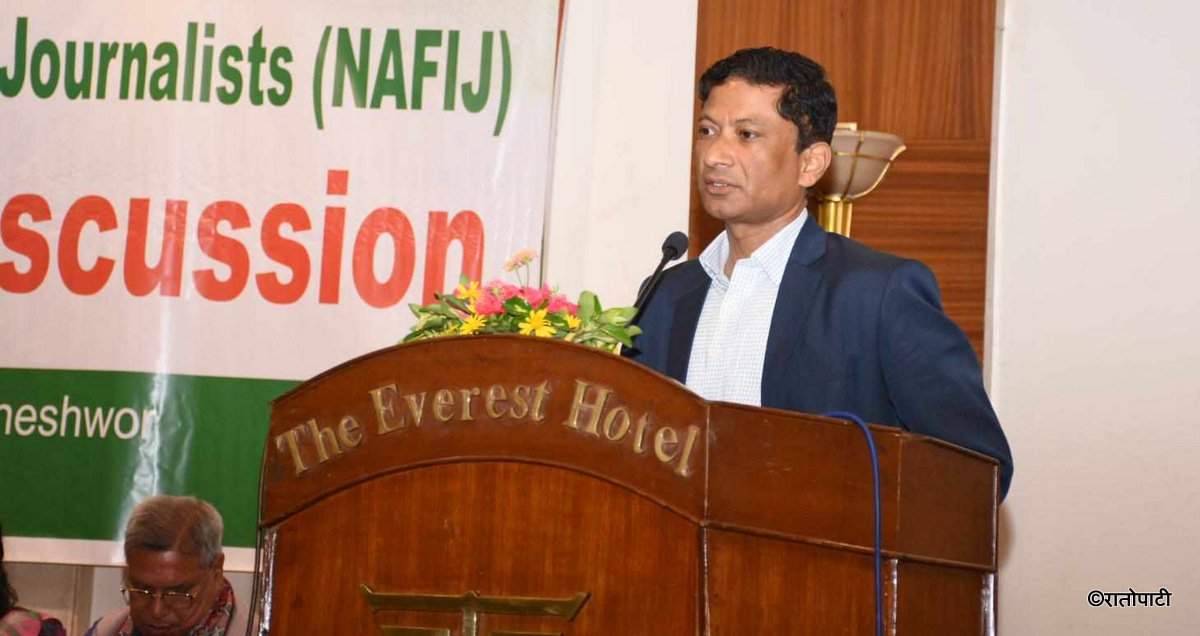
‘In international practice, reserves sufficient to cover 5 to 6 months of imports are considered adequate. But keeping more than a year's worth of import cover in the vault without spending on development is not wise,’ says Dr. Paudel. ‘If the government increases its capital expenditure by just another 100 billion rupees, the economic growth rate could increase by 1.5 percent to reach 6 percent, but the government appears to lack the plan and the will.’
He accused the private sector of being more focused on trading and interest rate games than on manufacturing industries. ‘The private sector's confidence has not recovered since Covid. Businesspeople have only been preoccupied with seeking cheap interest rates and trading,’ he analyzed.
Furthermore, according to economist Keshav Acharya, Nepal's economy is currently trapped in a remittance cycle. He states, ‘Remittances come in, which increases consumption and trade. Increased consumption boosts imports, and imports increase revenue. The economy is running only on this cycle. Its contribution to production and job creation is almost nil.’
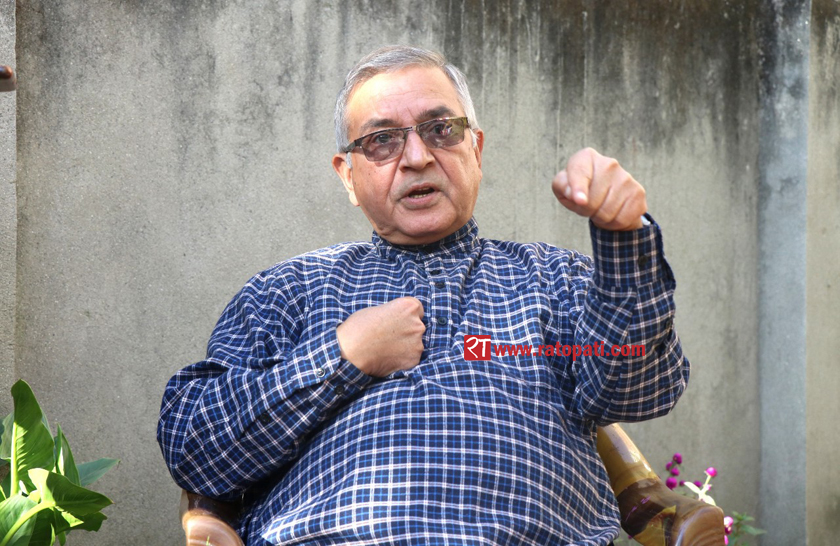
Acharya pointed out that greater risks are hidden in the banking sector. He mentioned that an audit of the 10 largest banks, based on IMF suggestions, showed the non-performing loan ratio averaging between 7.5 to 8 percent, indicating that the banking sector's balance sheet is not as secure as it appears. Economist Acharya stated that although revenue from customs and VAT has shown some improvement due to increased imports, the overall economic situation remains worrying.
He said, ‘The loans taken by the government appear to be going towards current expenditure rather than capital expenditure (development construction). Capital expenditure is not meeting targets, but current expenditure is increasing.’ He asserted that low development spending and rising routine expenditure are not good signs for the economy.
Acharya's analysis suggests that the agricultural sector, which contributes significantly to the country's Gross Domestic Product (GDP), is also not doing well this year. Similarly, the industrial sector has been severely affected. Businesspeople are afraid to add investment or expand operations. He pointed out that the flight of the younger generation abroad and the inactivity among business owners have worsened the industrial environment.
Youth Exodus and Production Crisis
Beyond the debate on statistics and monetary policy, another human factor directly affecting the economy is the mass exodus of youth. According to businessman Rajendra Bhandari, the main challenge currently is the departure of about 2,500 young people daily.
‘If the human resources available to mobilize our resources leave the country, how can production happen?’ Bhandari questions. ‘People leaving means not only a lack of job creation here but also a decrease in local market demand. Remittances are coming in, but they are only being spent on consumption. We have failed to convert that into capital formation.’
When Will the 'Wait and See' End?
Nepal's economy is currently stuck in a wait-and-see mode. Investor morale has been dampened by stock market volatility, rumors of political changes, and policy ambiguity.
Liquidity is currently easy in the banking system. The central bank is also trying to keep interest rates at the lower bound of the interest rate corridor by adopting flexibility. Although the market is being kept stable by the arrangement of a 2.75 percent interbank interest rate and a 5.75 percent policy rate, the lack of increased credit demand is a matter of concern.
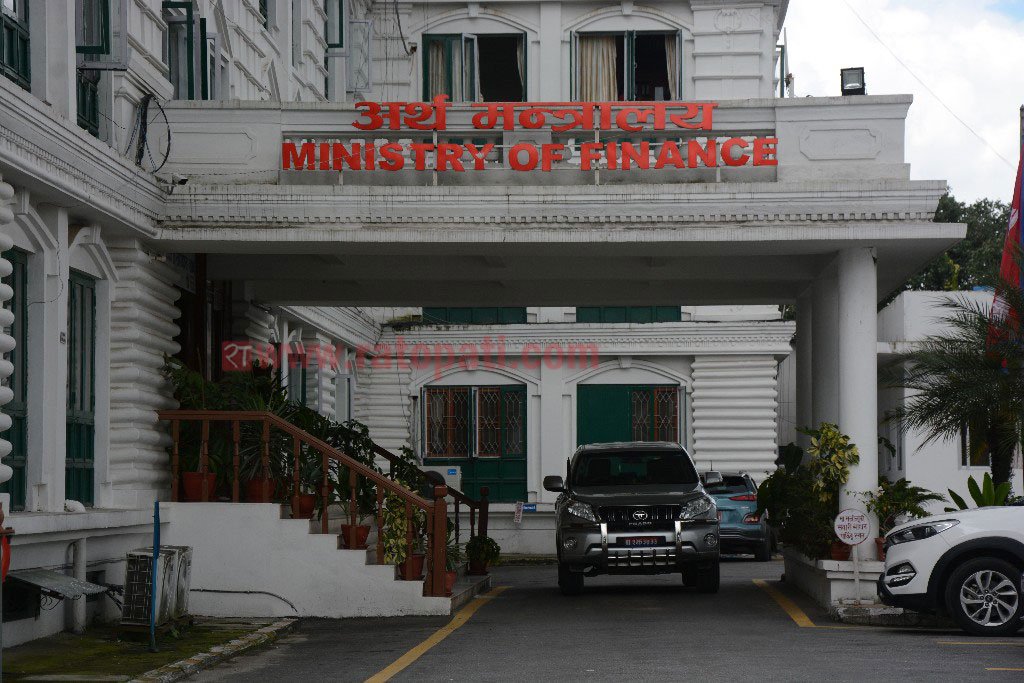
Monetary policy alone cannot fix the economy now. For this, the government must aggressively increase capital expenditure. Only if the government spends on roads, bridges, and infrastructure construction will the demand for cement, rebar, and construction materials increase, which in turn creates jobs.
Furthermore, unless the collateral-based lending system is reformed to shift towards project-based lending, small and medium enterprises are encouraged, and concrete policies are introduced to link remittances to production, the 800 billion rupees of liquidity will remain piled up in banks, and the trend of youth migrating abroad will not stop.
As Dr. Paudel stated, ‘The remittances sent by the youth are sustaining the prestige of the economy, but internally, the engines of the economy have rusted.’ Repairing this requires structural change, not just patchwork fixes.
This specific news has been automatically translated by AI. As a result, there may be some inaccuracies or language errors.