Expert Analysis: Understanding the Causes and Solutions for Kathmandu's Winter Air Pollution Crisis

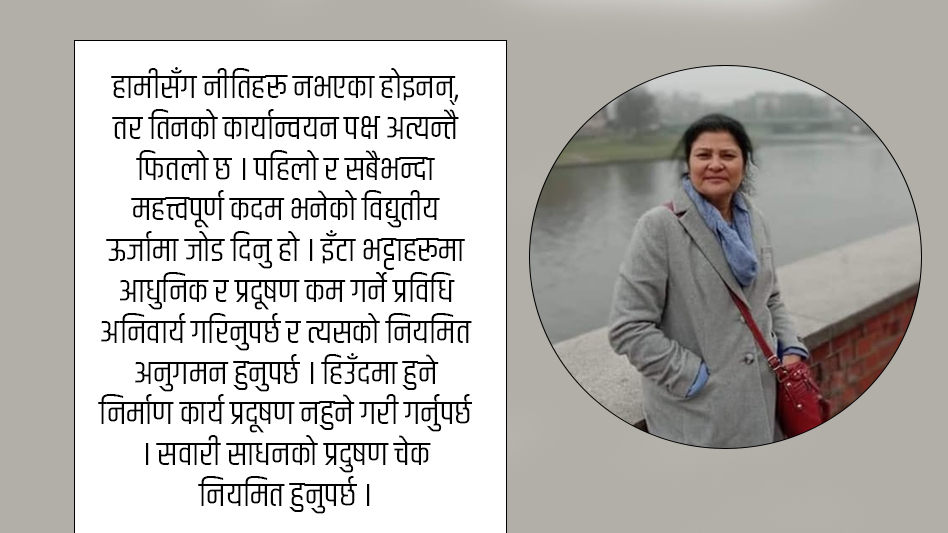
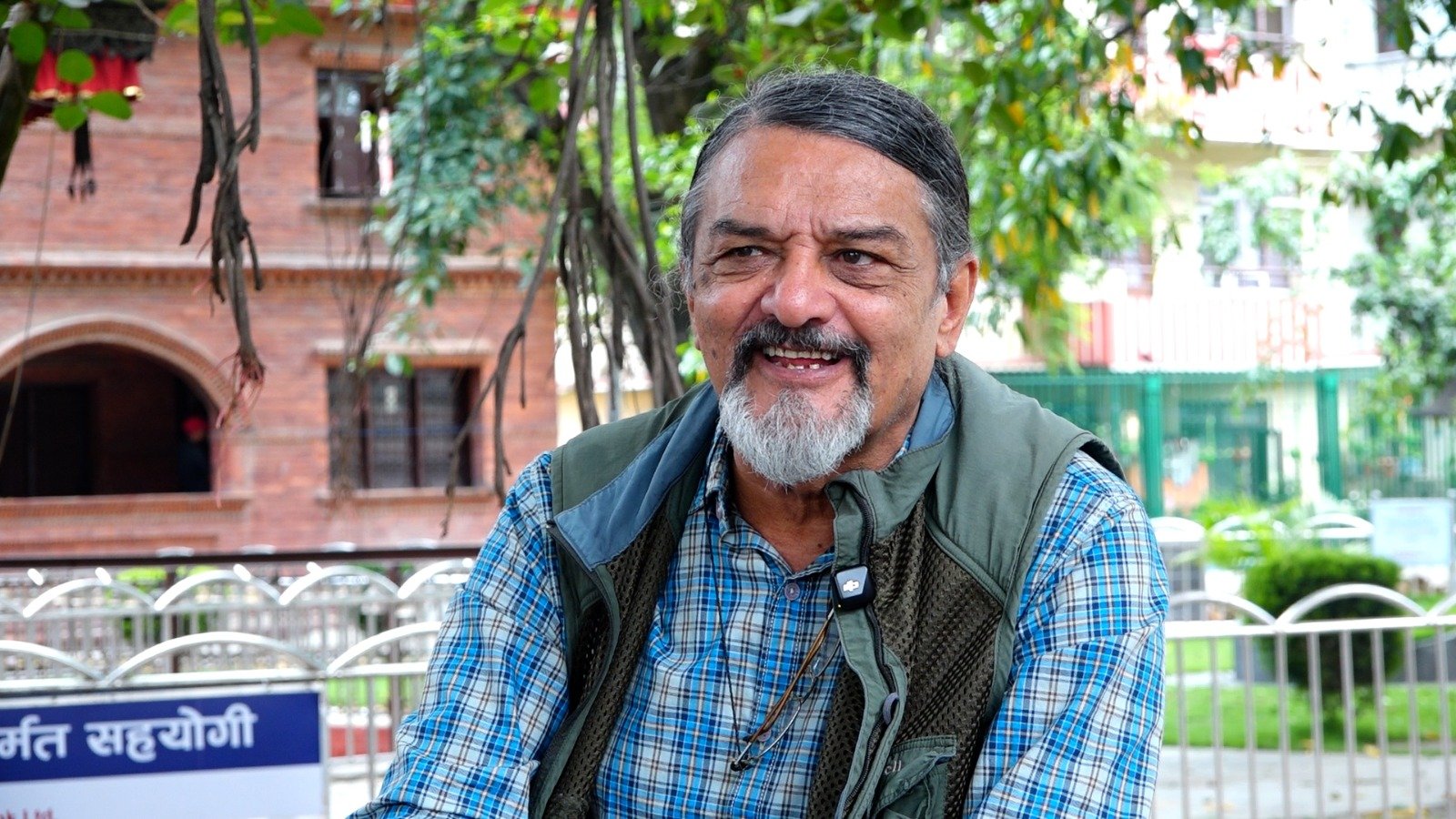
As winter begins in Nepal, discussions around air pollution intensify. Specifically, the hazy skies over the Kathmandu Valley and the resulting respiratory problems have become a regular occurrence. In this context, Amrit Chimariya of Ratopati interviewed Prof. Dr. Regina Maskey, Head of the Central Department of Environmental Science at Tribhuvan University.
- Why does the sky over Kathmandu become so murky and polluted as soon as winter sets in?
Both human and natural factors are responsible for the increase in air pollution during winter, but the environmental changes occurring during this season make it more severe. The main scientific reason for this is 'Thermal Inversion'. Under normal conditions, as altitude increases, the temperature should decrease, causing the warm air near the ground to become lighter, carry pollutants upwards, and thus clean the air.
However, in winter, the exact opposite process occurs. The ground surface becomes very cold, and a layer of warm air settles directly above it. This acts as a 'natural stopper' or lid on the atmosphere. Consequently, smoke and dust particles emitted from vehicles, factories, and other sources at the ground level cannot rise. These pollutants remain trapped in the lower layer where we breathe. This is why pollution levels reach their peak, especially in the morning and evening.
- Does Kathmandu's geographical structure further complicate this problem?
Absolutely, the structure of the Kathmandu Valley is like a bowl. It is surrounded by hills on all four sides. This type of geographical structure obstructs the natural flow of air. During winter, wind speed is very low, which prevents clean air from entering and prevents polluted air from escaping.
Because the hills trap the pollution, the valley turns into a 'pollution pit'. In the summer months, pollution dissipates due to strong winds and rainfall, but the dryness and stagnant air of winter allow the problem to persist for weeks. When there is no rain, the fine particles suspended in the air cannot be washed away and remain in the atmosphere for months.
- According to your study and analysis, what is the contribution of local sources versus external sources to the pollution in the Kathmandu Valley?
My analysis and various research studies show that 60 percent of the pollution in the Kathmandu Valley is due to locally generated dust and smoke. Vehicle emissions, road dust, and particles from construction activities are the main contributors. Additionally, about 15 to 20 percent of the pollution comes from nearby cities or areas surrounding the valley. The remaining 15 to 20 percent of pollution is due to external or transboundary causes.
This means that if we can control the pollution generated within our own vicinity, we can achieve significant improvement. However, the situation is different in the Terai-Madhesh region, where most pollution is found to be caused by transboundary sources, especially industrial emissions from India and smoke resulting from the burning of agricultural residue.
- Speaking of local sources, which sector is causing the most damage to the atmosphere?
Among local sources, the transportation sector accounts for the largest share. Old and poorly maintained vehicles emit large amounts of 'black carbon'. This smoke remains in the stagnant winter air for a long time. The second major source is brick kilns. The main season for brick production in Nepal starts in winter, precisely when the atmosphere is already in a vulnerable state.
The coal used by brick kilns around the valley and the resulting smoke mix directly into the atmosphere. Furthermore, during winter, people light fires in open spaces to ward off the cold or in the name of waste management. The toxic gases released from burning waste seriously affect public health. Moreover, many construction activities take place in Nepal during winter, causing a sharp increase in the concentration of large dust particles like PM10 in the air.
- You mentioned transboundary pollution; how is it affecting Nepal?
During winter, the wind direction is often from the southwest to the northeast. This directly means that smoke generated from industrial activities, large factories, and the burning of straw or agricultural residue by farmers in India's Indo-Gangetic Plain is pushed towards Nepal. This pollution travels through the districts of our Terai, reaching the hilly valleys and Kathmandu. Sometimes, the thick fog in the Terai is not just water vapor but also a mixture of pollutants arriving from outside. Although this is beyond our control, it suddenly degrades our air quality.
- The sky appears even hazier towards the end of winter; does forest fire also play a role in this?
In Falgun and Chaitra (mid-February to mid-April), as the dryness increases further, forest fires begin to ignite in various forests across Nepal. The massive plume of smoke from these fires covers the entire sky. This significantly reduces visibility and even affects air travel. Forest fire smoke contains carbon monoxide and other harmful particles, creating a life-threatening situation for people with respiratory illnesses. Therefore, while thermal inversion and local smoke plague the beginning of winter, forest fires push pollution to another extreme point towards the end.
- What can be done to mitigate air pollution?
It is not that we lack policies, but their implementation is extremely weak. The first and most important step is to focus on electric energy. Modern, less polluting technology must be made mandatory in brick kilns, and they must be monitored regularly. Construction activities during winter must be managed in a way that minimizes pollution. Vehicle pollution checks must be conducted regularly.
- What should be the role of the state in monitoring and public awareness?
The number of air quality monitoring stations is still insufficient. We need to establish such centers in every major city and industrial area to provide the general public with real-time information about air quality. When air quality reaches hazardous levels, the government must establish a system to issue early warnings, such as a 'Health Emergency'. It is also necessary to manage winter construction activities scientifically.
This specific news has been automatically translated by AI. As a result, there may be some inaccuracies or language errors.