Rastriya Swatantra Party Pushes Balen Shah as Future PM Amidst Populism Debate
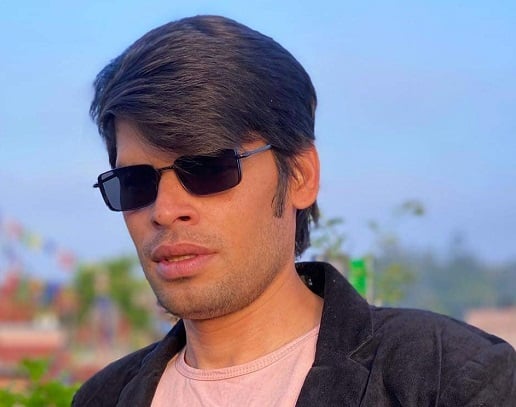

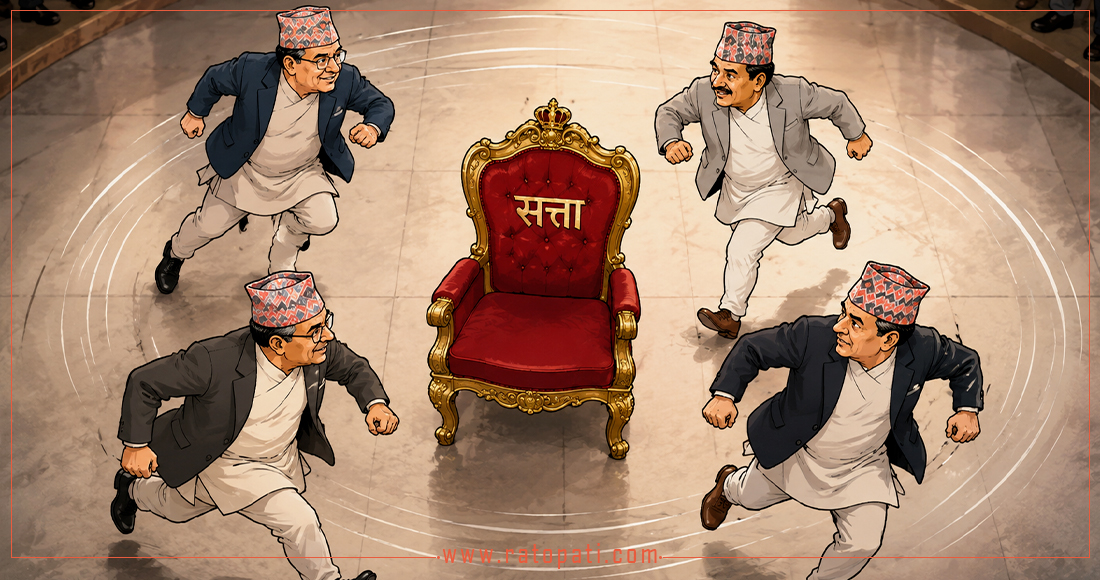
Kathmandu. The Rastriya Swatantra Party (RSP) is aggressively campaigning for the upcoming general elections, positioning Balen Shah as the next Prime Minister. The RSP, which secured 1.13 million proportional votes and 21 seats in the 2079 elections while still forming the party, is now aiming for 151 seats in the upcoming elections scheduled for Falgun 21. Critics in political circles allege that the rise of the RSP, which claims to be an alternative political force, is based on populism rather than any ideological or theoretical foundation.
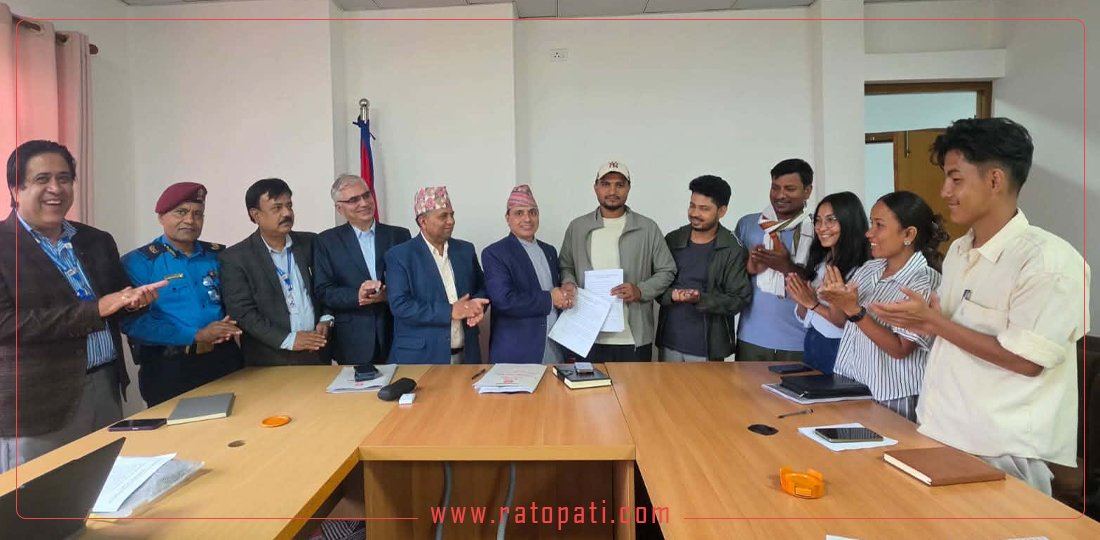
The RSP appears to have made a strategic 'move' to secure a single majority through the electoral process following the collapse of the popularly elected government during the Gen-Z protest on Bhadra 23 and 24 last year. Balen is currently touring the country to build an electoral atmosphere in their favor, capitalizing on the public disapproval of the Congress and UML parties, which are seen as tarnished due to the alleged killing of 23 people by the then Oli government during the Gen-Z protest and their failure to protect state assets nationwide. After completing his campaign in the East-West region, he is now traveling through various districts of Madhes Province. The RSP seems to have proposed Balen as the future Prime Minister because party chairman Rabi Lamichhane faces legal hurdles to becoming PM due to ongoing cases related to cooperative fraud, organized crime, and money laundering. The RSP reached a 7-point agreement with the Balen faction on Poush 13.
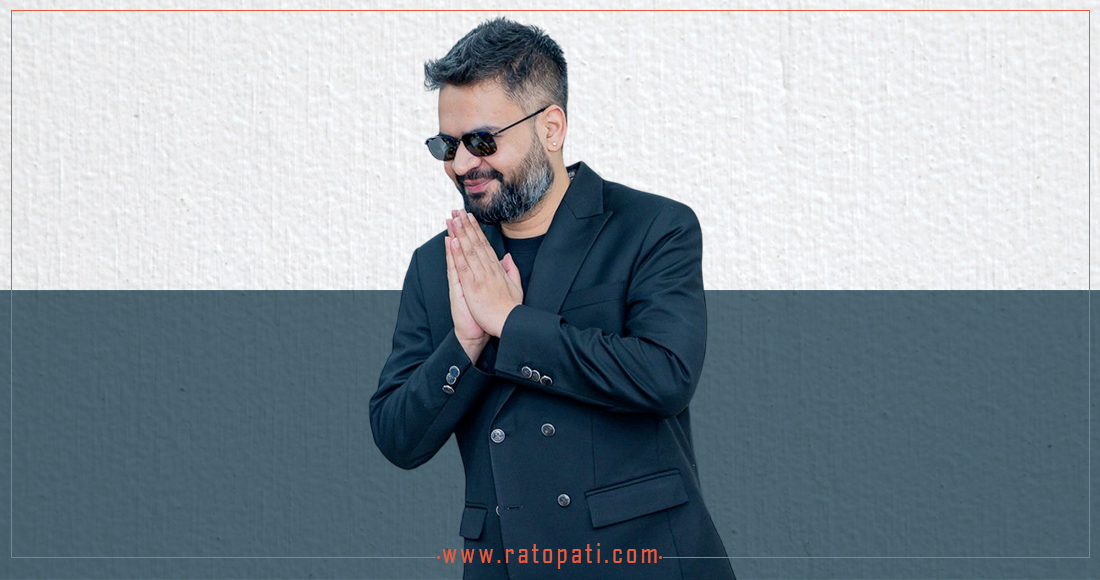
Balen, who entered politics with a background in engineering, was elected Mayor of Kathmandu Metropolitan City in the 2079 local elections as an independent candidate, securing a massive number of votes. Before that, he was not widely known, but he won by a significant margin of 23,426 votes in the core areas of the Nepali Congress and CPN-UML, defeating established candidates like Congress's Sirjana Shrestha and UML's Keshav Sthapit. His victory garnered widespread attention across the country.
After winning the mayorship, he became visible in public discourse through social media, commenting on the activities of the federal government. He further boosted his popularity graph by weaponizing the growing public disillusionment with traditional political parties and the governments led by them. Within three years, he became so popular among the youth that a narrative was created suggesting that there is nothing beyond Balen.
_n4p7MWhnmq.jpg)
Rabi, encouraged by Balen's rise in the core Newar community settlement in Kathmandu, formed a party under his leadership to challenge the traditional parties. Rabi, who had no prior political background, succeeded in establishing the RSP as the fourth force in parliament in a short time and became the Deputy Prime Minister and Home Minister of Nepal. Following the Supreme Court's ruling on his dual citizenship issue, he lost all his positions just 42 days after taking office. In the by-election held in Chitwan Constituency No. 2 on Baisakh 10, 2080, he won by securing even more votes than in the previous election.
Claiming that the state has treated him with vindictiveness and prejudice, he appears to be pursuing populism rather than an agenda to secure a majority in the elections. Among the candidates fielded in 110 proportional and 165 direct constituencies, most are popular faces. The RSP has embraced the Gen-Z movement and incorporated the Bibeksheel Sajha Party, considered a key player among various youth groups and alternative politics. It had also reached a seven-point agreement to bring in the faction of former Energy Minister Kulman Ghising, known as a capable administrator. However, the plan to include Ghising failed due to disagreements over position sharing.
Why is Populism Dominating Politics?
What is the main reason for the rise of the RSP as an alternative political force in a short time, challenging established parties like Congress, UML, and CPN, which emerged from major political revolutions like those in 2007, 2046, and 2062/63? Why have leaders who endured years of hardship and imprisonment become discredited? Is the existence of parties born from the sacrifice of thousands in jeopardy? Should emerging parties like the RSP be called populist parties or not?
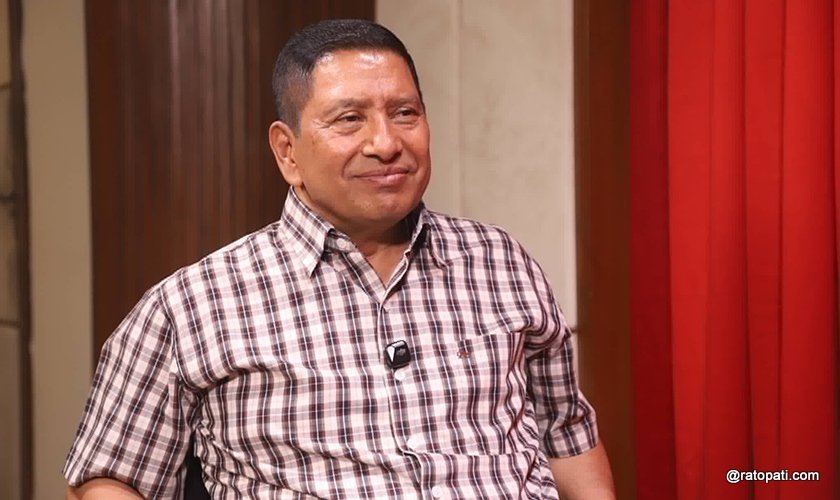
Political analysts have varying arguments regarding the focus of new parties on popular faces rather than embracing agendas, ideas, and principles. Analyst Keshav Dahal presents two or three arguments for the RSP's rapid popularity. His first argument is that since the 2062/63 movement, there has been a debate for the past decade—coinciding with the Constituent Assembly elections—that the era of old parties and their old agendas is over.
'The influence of old ideologies that brought us this far is over. The agendas and political goals in Nepal changed after 2062/63, so parties must reorganize according to the changing circumstances. If they cannot reorganize, a new politics, an alternative politics, is necessary,' says Dahal.
Dahal analyzes that this debate led to the formation of public opinion through Dr. Baburam Bhattarai's Naya Shakti Party and Bibeksheel Sajha Party. However, he concludes that these two new parties also failed to address public expectations. His second point is that the democracy is gradually shrinking into a party-centric and leader-centric system due to the inaction of the old parties themselves.

'Public sentiment against the old parties grew. People became disillusioned, thinking that these old forces are useless and cannot lead the next generation. The debate started on whether reorganization or displacement of these parties is necessary,' Dahal says.
Dahal analyzes that if the previously formed alternative parties had seized the space created by these debates, Naya Shakti and Bibeksheel Sajha would have emerged as strong alternative political forces in the new political landscape. He suggests that the RSP entered the vacuum because those parties failed to play a leading role when external circumstances were highly favorable and demanded new, alternative politics.
'When they failed to step up, naturally, some party needed to emerge. The Rastriya Swatantra Party entered that vacuum,' Dahal says. 'It attempted to address the disillusionment seen in other parties. Voters endorsed it through ballots, thinking that the RSP should be given a chance over other parties,' he adds.
Even the CPN (Maoist Centre), which emerged as a major party in the first Constituent Assembly elections in 2064, gradually saw growing dissatisfaction as it failed to perform according to public expectations. The Maoists, who launched an armed insurgency in 2052 against corruption, disorder, misgovernance, poverty, and economic backwardness, entered peaceful politics after the 12-point agreement in 2062. The second Jana Andolan (People's Movement) of 2062/63 overthrew the monarchy, establishing a federal democratic republic. However, 18 years after the establishment of the republic, the Maoists, considered agents of change, became focused on power politics by aligning with the old guard of Congress and UML, leading to extreme public frustration. This frustration then exploded in the form of the Gen-Z protest.
_aiPRLcqCgA.jpg)
Political scientist Sucheta Pyakurel states that the rise of Rabi and Balen is based on popularity. In an interview with an online channel, Pyakurel mentioned that the RSP 'folded' Balen's popularity.
'Balen emerged like a phenomenon. The Rastriya Swatantra Party capitalized on it and brought it into its fold. But how will the Balen factor impact the RSP? Balen has currently only brought a phenomenon. We still need to see what his presence in the RSP will be like and how strong that force will be,' she said.
She further added, 'In a situation where political 'consumerism' and 'populism' are increasing, there is an implicit fashion of viewing voters through the lens of consumerism. These influences suggest that Balen is popular, voters want Balen, and therefore the RSP onboarded Balen. If this consumerism continues to be fed, it is uncertain whether it will lead to a 'terrain of majority' or something else.'
However, analyst Keshav Dahal presents five criteria to determine whether the RSP is an alternative party or not. He argues that a new party is not automatically alternative just because it is new or its members are young. He asserts that the RSP is not an alternative based on these five standards.
First, it must be new in terms of ideology; only then can it address today's needs. Dahal argues that a party can be called ideologically alternative if it proposes something new as an alternative to liberal democracy or traditional socialism.
Second, what is the agenda addressing the current time? We talk about poverty, corruption, development as a necessity, self-respect, and prosperity. 'How are all those things achieved? Or what is Nepal's current crisis? What agendas must be adopted to solve that crisis? What were the old parties unable to address? If the agenda is defined by what the new party should adopt, then it is alternative,' he says.
Third, he suggests looking at the intra-party practice of alternative politics. 'The criticism against old parties is that some leaders have been chairmen for 30 years, internal democracy is not strong, people cannot question, and cadres are like robots, creating a party without self-respecting and sovereign members. If an alternative party does not have strong internal democracy, how can it build a new culture?' he asks. 'But if we look at the RSP, it has not strongly practiced internal democracy; it does not appear transparent or liberal. Therefore, looking not just at the agenda but also at the internal democratic process, it does not seem to meet expectations.'

Fourth, the process of leadership formation. How were the leaders made?
'If we look at how Rabi Lamichhane became the chairman and how Balen became a senior leader, we find no process of endorsement. How did the cadres endorse them? From where did the chairman emerge? Did he hold a convention? Where are the members involved in the party's decision-making process? If we look at where the chairman, general secretary, and senior leaders are involved in making decisions, it is nowhere to be seen,' Dahal says. 'Therefore, if we look at that standard or parameter, it is not alternative.'
Fifth, Dahal states that political culture must be examined. 'How did alternative politics bridge the large gap seen between leaders and the public in recent Nepali politics? It is adopting the style of the old leadership,' he says. 'Therefore, the RSP does not appear different from the old ones. Thus, looking at these five standards, the RSP is not new.'
He argues that it has emotionally stirred the public's frustration and created a wave, but it has failed to engage in serious discourse on alternative politics. 'It has not been able to capture that discourse. That's why I feel the RSP is not an alternative party,' he says.
Dahal asserts that because it lacks any agenda, the RSP could ultimately lead the country toward another disaster.
'It looks like junk food, which can bring a major disaster,' he says. 'If our politics remains detached from agendas, if we only focus on faces, and if our goal only extends from one election to the next, it will not solve our crises.'
This specific news has been automatically translated by AI. As a result, there may be some inaccuracies or language errors.