Migration and Neglect Plague Remote Nepali Villages Lacking Basic Amenities

Barahatal (Surkhet). The Bheri River flows below, while fertile plains lie above. Due to a lack of irrigation, most land remains barren. Wheat crops, which require cool temperatures, are withering due to insufficient water. Paddy cultivation is impossible. The wheat and maize produced do not last even a month. With no other means of employment or income in the village, locals lock their doors and head to India to make ends meet.
This is the story of settlements like Banbari and Milan Tole in Barahatal Rural Municipality-4, located about 40 kilometers from Birendranagar.
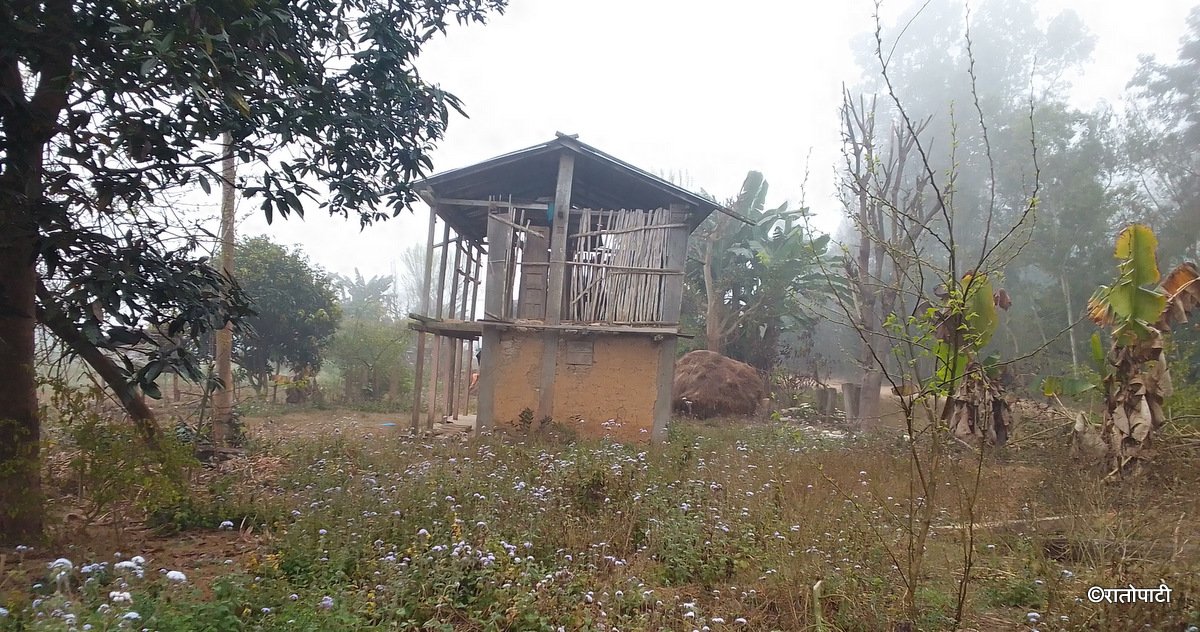
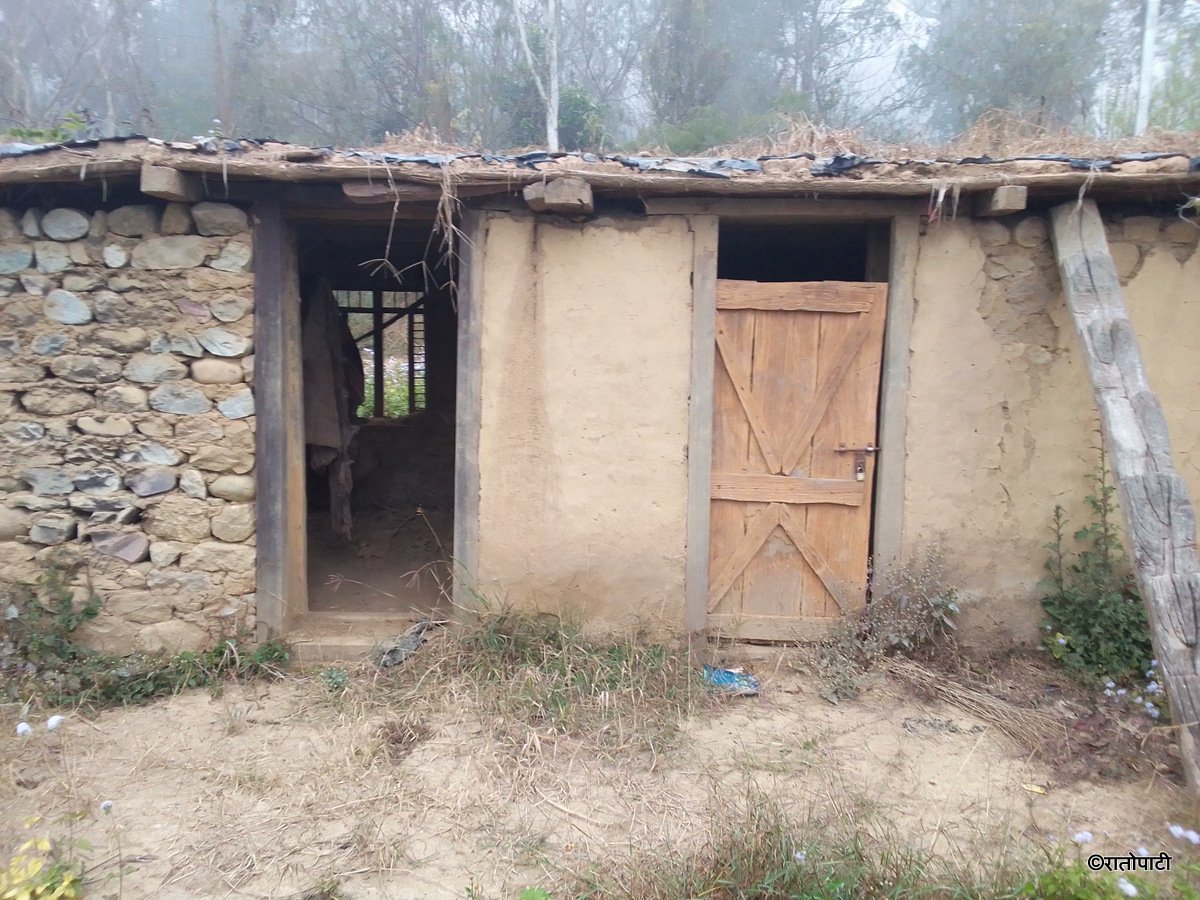
There are over 50 houses in these two settlements. Nearly 22 houses were found deserted. Some of those who went to India have not returned for a long time, leading to the collapse of 5 houses due to dilapidation. Most houses are made of wood and have thatched roofs. These houses collapsed because they leaked when it rained, as there was no one to maintain them.
Banbari Tole alone has over 20 houses, 8 of which are locked. These too are in a dilapidated state. In Milan Tole, out of 29 households, 14 houses are empty.
It is difficult to find the younger generation in these settlements, which are predominantly inhabited by Gurung and Magar communities. Young couples have gone to India to earn money, while the elderly are left to look after the children.
“We cannot sustain ourselves by staying in the village; we have to earn money. Money doesn't come if we stay home, so everyone has gone abroad,” says local Durgabahadur Gharti, “Some of those who left their homes came back for Dashain and Tihar, and then left again.”
The destination for employment for most here is 'Kalapahar' (India). Recently, some are also going to places like Bengaluru, and some have gone to third countries.
Madan Gharti (32) went to Saudi Arabia three years ago. He returned only a few days ago. He only came back to Nepal after losing his job at the company.
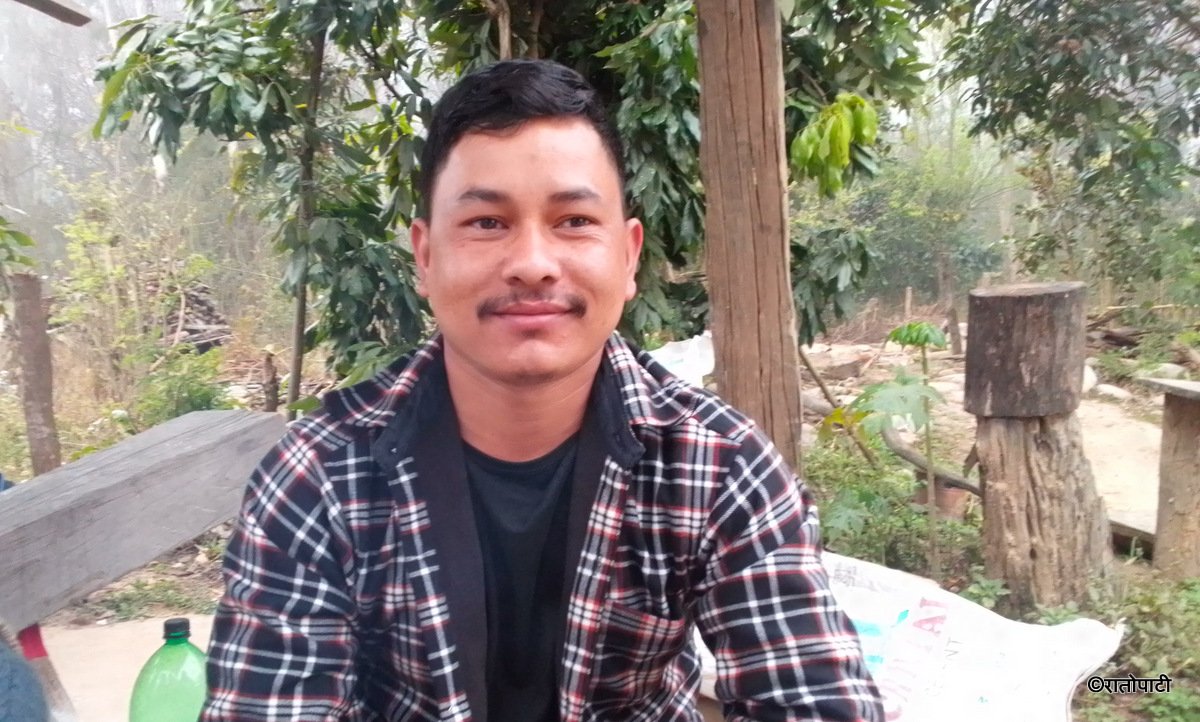
“Things are not as expected in another country, but with some money earned, I built a small house; it was just enough for my children's education expenses and household costs,” he said. “We have to buy everything to eat.”
With the money he earned abroad, he built a single-story house with concrete blocks and a tin roof. “It is hard to find youth in the village these days; everyone went to India, and some went to Surkhet (Birendranagar).”
The House of Representatives election is taking place on Falgun 21. Although its impact should be visible here now, these riverside settlements have remained untouched. Gharti adds, “Election news appears on mobile phones, but there is no network here.” According to him, the mobile network is unavailable from 7 PM until sunrise.
Gharti explains that those abroad have to wait for daylight hours just to call home.
No Electricity or Irrigation, Monkeys Harass Children and the Elderly
Birendranagar, nearby, is advancing on the path of development. However, these villages in Barahatal, adjacent to Birendranagar, are still outside the reach of basic necessities determined by the state.
Communication, drinking water, irrigation, and electricity are the main problems here. Some time ago, a plan was initiated to bring water from the Bheri River via a lifting system for irrigation. The goal was to bring the water to a hillock in the forest some distance from the river and then supply irrigation to the settlements.
However, the project remains stalled without completion due to the lack of electricity, and the problem of drinking water persists. Taps have been installed in homes, but water does not flow. Gharti says they are still forced to drink water from the Bheri River.
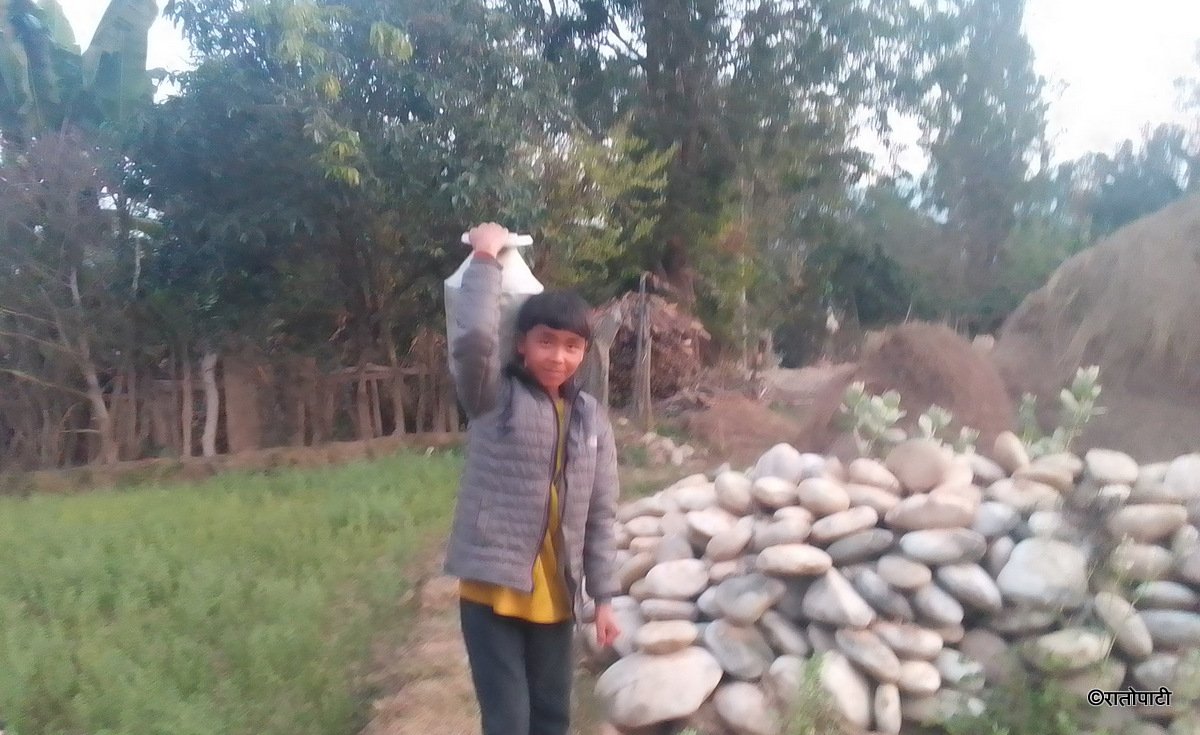
Binod Gurung studies in Grade 8. Beyond that, his daily routine involves carrying pots to the Bheri River in the morning and evening. Meeting him while fetching water from the Bheri in the evening, he said, “I have to finish school quickly and rush to fetch water; I cannot send the elderly.”
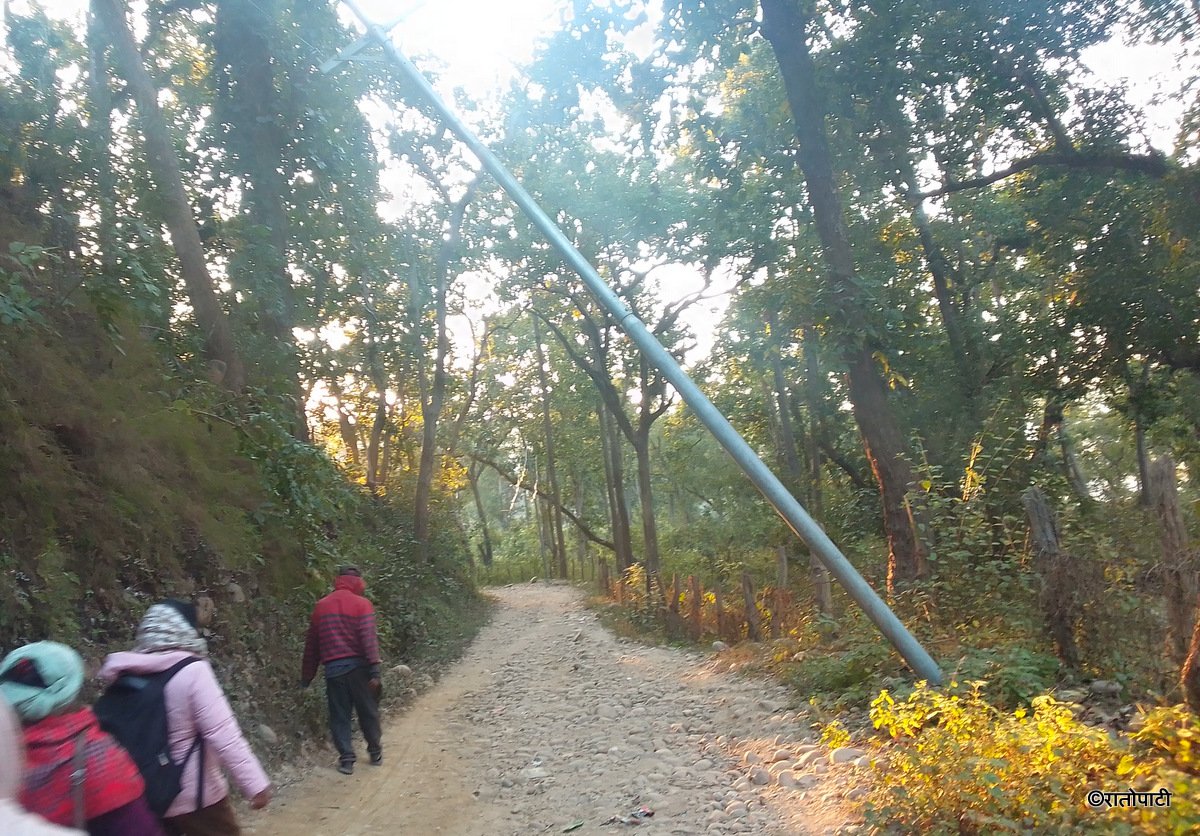
Electricity poles were installed here under a electrification plan from the year 2078 BS (Bikram Sambat). But electricity has not reached them yet. “The leaders who came asking for votes earlier promised electricity would come soon; neither the electricity came, nor the leaders,” said local Devisara Gurung (40). “The poles have fallen; when will it arrive?”
The village is mostly inhabited by the elderly and children. There is dense forest above the village, and the empty houses are surrounded by bushes, causing monkeys to enter homes and cause trouble.
“The monkey watches from the tree, waiting for people to leave the house,” said Laxmi Thapa Magar (46), pointing towards the forest. “If we leave the house, they come and take everything.”
She mentions that it is a struggle to protect even the vegetable crops planted near the house from monkeys. “It is very troublesome here, sir! If we try to farm, there is no irrigation; the crops planted in the dry season don't last a month,” she says. “The wheat is about to bear grain, and monkeys come and eat everything. Last time, they dug up and ate the maize in the field; it is very difficult to protect the maize that has started to sprout.”
Only Laxmi’s elderly couple remains at home. Her younger son is in Malaysia, and the elder son is in Simla, India. They only have their younger son's daughter (granddaughter) with them.
Her husband and she look after the granddaughter when she goes to school and take care of the house.
Locals here are troubled even protecting the food grains bought from outside because at least one person must stay home to scare away the monkeys.
“If we try poultry farming, we have trouble protecting them from jackals; whatever we do, it’s just hardship,” she says.
The plight of local Ganjbahadur Gharti is similar. “Those who went abroad send money for household expenses; some deposit it directly into the accounts of moneylenders in the market (Birendranagar),” he says. “The moneylender sends the necessary items by vehicle.”
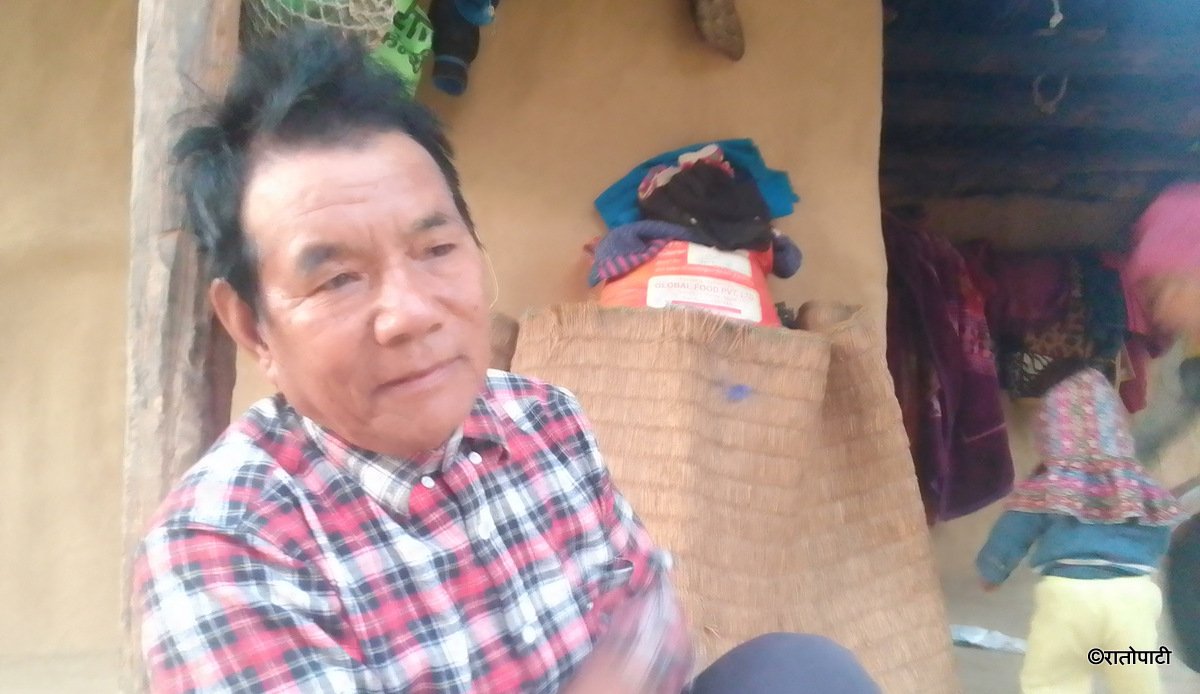
Ganjbahadur himself says he cuts thatch grass from the forest and sells it to buy rice. “If there was water, we would plant paddy; the fields are barren, and we have to eat rice bought from the market,” he adds.
In terms of government jobs, two people from here are in the Nepal Army. Those who have studied beyond Grade 10 mostly reside in Birendranagar.
Since most parents take their children along for employment, the number of children attending school is low.
These settlements are completely dependent on Birendranagar for all food items, from salt and oil to rice. Some take a vehicle early in the morning to Birendranagar and return home in the evening with supplies.
Before the 2050s BS (Bikram Sambat), these settlements depended on Chisapani for food grains. In 2048 BS, a footpath construction started with the support of the World Food Programme, leading from Hurke towards the Bheri River bank in the south.
Now, that footpath has been transformed into a road, connecting from the Bheri River bank at Kureni, along the right side of the river through Vanbhari, Milan Tole, and the head of Sajhghat, towards the west, connecting to Jyamu in Panchapuri.
Although a rough road reached there in 2064 BS, it was not upgraded properly afterward.
The narrow road, dusty in the sun and muddy when it rains, has always caused hardship for the locals. Now, blacktopping work is underway on the 17-kilometer stretch from Hurke to the Bheri River bank at Kureni, at a cost of 61 crore 59 lakh 30 thousand rupees, through a partnership between the central and provincial governments.
Khadka Krishna/Shyam, Shankar JV Kathmandu, aims to blacktop the 17 km road from Hurke to the Bheri River bank by the upcoming Ashar 17. Before that, there is still a 10-kilometer distance to reach the settlements.
Ward Chairman of Barahatal-4, Bir Bahadur Sijapati, says efforts are being made to blacktop that section in the future as well. Currently, one small vehicle and one bus operate there. The bus carries all the necessary food supplies for these villages.
Although a road has reached the side of the Bheri River, settlements like Taranga and Simlepani on the other side of the river remain unconnected to the road.
They Promised Land Titles But Never Delivered
Because these are remote villages, neither candidates visit them nor do the locals have much interest in the elections.
Ganjbahadur (66), who moved to Banbari Tole from Ratikhola in Dailekh in 2040 BS, is unaware of the election. Having voted for UML, Maoist, or Congress in the past, he said, “Previously, they used to come asking for votes, promising to give us land titles; they are not coming now.”
Being without land titles is another problem here. They complain that even after filling out forms for land title distribution previously, they have not received them yet. There are over 150 voters here.
This specific news has been automatically translated by AI. As a result, there may be some inaccuracies or language errors.