Tourism Industry Leaders Urge Political Parties to Prioritize Sectoral Reforms in Election Manifestos


As political parties gear up to finalize their manifestos for the upcoming elections, how should issues concerning the tourism sector be incorporated? Amidst the crackdown on entrepreneurs, the ripple effect of the fake rescue controversy, and policy complexities, what should be the agenda of the parties?
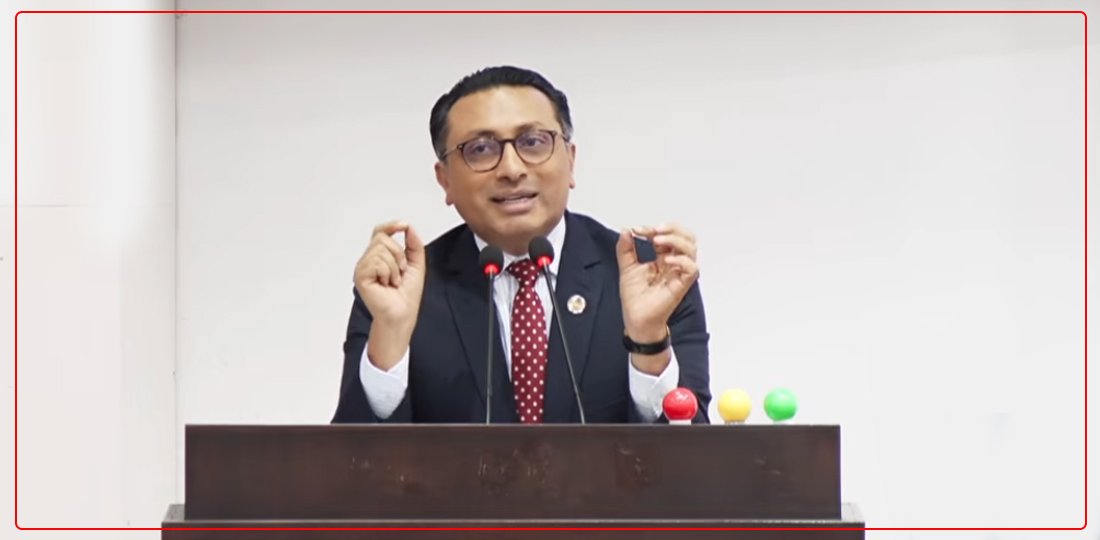
We spoke with Achyut Guragain, former President of the Nepal Association for Tour and Travel Agents (NATTA), focusing on these very issues. Presented below is the edited excerpt of the conversation with Guragain–
- As the House of Representatives elections draw near, how do you think political parties should address the tourism sector in their manifestos?
Firstly, tourism itself is an extremely sensitive subject. Political parties must place this issue prominently in their manifestos. The laws and regulations formulated by the state must be contemporary, and necessary amendments should be made to them.
The main problem right now is the state's perspective. Entrepreneurs are being harassed without evidence. If there is proof, action must be taken; there is no doubt about that. However, the act of creating terror without evidence must stop. Policies and regulations must be entrepreneur-friendly. Parties should not just mention tourism in slogans in their manifestos but present a clear roadmap on how to elevate it practically. They should come forward with a clear vision, stating, 'We will do this for tourism, and this for health.'
- Is it true that the current government and state agencies do not understand the plight of tourism entrepreneurs?
Absolutely. Many call the current government a 'Gen-Z' government, but the government itself is currently confusing people. Is the priority right now to conduct elections or to imprison tourism entrepreneurs? There is no alignment on this.
The state is constantly exploiting entrepreneurs. On one hand, they collect entry fees from tourists, charge fees for National Parks, and collect money for trekking permits, but where are the facilities for entrepreneurs? Entrepreneurs have invested billions. Five-star hotels are opening, international chain hotels are arriving. Investment has been made through bank loans, but if you look at hotel occupancy, it has dropped to 40 percent.
In such a situation, the state never supports entrepreneurs. Regardless of which government comes to power, the perspective towards entrepreneurs has not changed.
- Is your complaint that the state only seeks to collect taxes from the tourism sector but does not facilitate it? What complexities exist in the tax system?
Yes, there is a huge contradiction in the tax system here. For example, a tourist entering Kathmandu Durbar Square has to pay one thousand rupees, but no VAT bill is issued for it. Yet, the state asks entrepreneurs to pay VAT on all money received in the bank. If the state's own agency does not provide a VAT bill, how can entrepreneurs show that expense? This forces entrepreneurs into a situation where they have to hide accounts.
On one hand, they don't issue VAT bills, and on the other, they demand VAT on all transactions. There are many such loopholes that put entrepreneurs in difficulty. Our political leadership only listens to what the bureaucrats say and does not study the issues themselves. Policies are being made without understanding the practical difficulties, causing entrepreneurs to suffer.
- It is said that there is also hassle in the business registration and operation process? What needs to be done to improve this?
This is what we have been saying for many years– a One Door Policy must be implemented. Currently, a business owner has to get a license from the central bank, a license from the Department of Tourism, visit the Department of Industry, and go to the Company Registrar. Arrangements must be made for all these tasks to be done in one place. Entrepreneurs are ready to pay fees to the state, but procedural hassles must be removed.
After registration, the state should conduct regular monitoring. It should check whether taxes are being paid and what the VAT situation is. But, the practice of harassing someone as 'illegal' based on a complaint driven by personal vendetta or whims is not right.
- What improvements do you see as necessary in visa fees and procedures for tourism promotion?
We are also far behind in visa policy. Based on my 35 years of experience, the Government of Nepal should make Nepal 'visa-free' for all tourists coming for at least two years. The country will not become rich by taking a visa fee of 30-40 dollars from tourists. Rather, when tourists come to Nepal, they stay in hotels, eat, travel, which allows entrepreneurs to earn and pay taxes to the state.
Currently, after the Philippines made it visa-free, it is difficult to find rooms in hotels there. Waiving visa fees will cause a sharp increase in the number of tourists. Another point is the discriminatory policy. For example, Chinese tourists have free visas, but when Taiwanese tourists arrive, they are considered Chinese, yet they have to pay a visa fee of 30 dollars. Moreover, they only get a 'single entry.' Whereas Chinese nationals get 'multiple entry' on the same pass. If a Taiwanese tourist wants to go to Bhutan or India from Nepal and return, they have to get a visa again. Such cumbersome procedures discourage tourists. We must be able to offer incentives to tourists.
- You initially tried to link the issue of 'fake rescue' with the crackdown on entrepreneurs. Are you implying that foreign companies are trying to defame Nepal's tourism sector?
You have raised a very correct point. There is a big conspiracy behind the rumors of fake rescues and the recent crackdowns. In the past, foreign companies would come to Nepal, do their own bookings, guide themselves, and take all the profits. They only used Nepali agencies as 'ground handling agents' (porters or assistants). They treated Nepalis like servants.
But times have changed now. Nepali companies have become capable. We have the language, skills, equipment, and experience. Nepali companies have started successfully completing large 'expeditions' (mountain climbing) and treks. As Nepalis become capable and start taking away the market share of foreign companies, they are getting nervous.
Therefore, they are currently trying to build a narrative that 'Nepali agencies are thieves, they do fake rescues, it is unsafe here.' This is so that foreign tourists will book directly through foreign companies. Some incidents may have certainly occurred, but it is not right to call the entire process of chartering helicopters and treating the sick 'fake.'
If a foreigner gets sick, is treated, and returns home, how can that be called fake? The state has failed to understand this conspiracy. It appears the state itself is working to establish the agenda of foreigners by branding its own entrepreneurs as thieves.
- How should the balance between environmental conservation and tourism development be maintained?
This is also a very important aspect. The indiscriminate use of bulldozers and the construction of hydropower projects are destroying tourist destinations. Rivers and streams are becoming polluted. Hydropower projects have been built on some of the world's best rafting rivers, drying up the water. Foot trails have been damaged.
Snowfall has stopped in the Himalayas, and the Everest region has become a garbage dumping site. How should this be managed? The attention of political parties should turn towards this. Tourists will only come if the environment is kept clean. If the natural assets required for tourism are destroyed, whom will we show to earn money tomorrow? Therefore, the foundations of tourism should not be demolished in the name of development.
This specific news has been automatically translated by AI. As a result, there may be some inaccuracies or language errors.
_OpOYENSORc.jpg)