Rastriya Swatantra Party Gains Momentum in Madhesh Province Ahead of Elections, Analysts Debate Vote Splitting

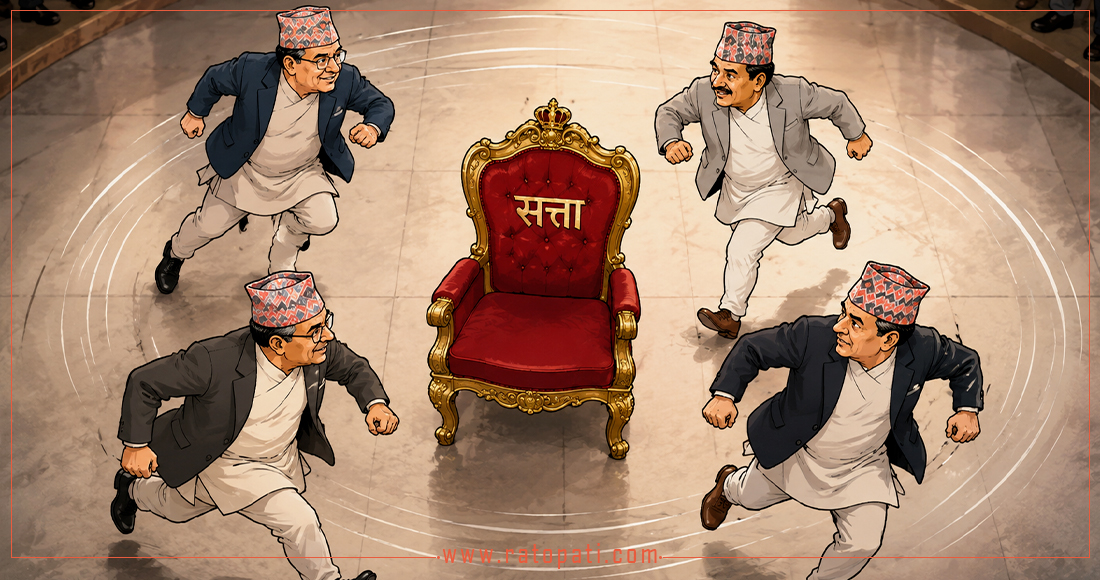
Kathmandu. The Rastriya Swatantra Party (RSP), which had a minimal presence in Madhesh Province during the 2079 elections, is now a topic of discussion there. The RSP's 'craze' has sharply increased after bringing former Kathmandu Metropolitan City Mayor Balendra Shah (Balen) as a senior leader and announcing him as the candidate for Prime Minister. Speculation has begun regarding which party the RSP will draw the most votes from in Madhesh in the upcoming House of Representatives election on Falgun 21.
The RSP has put forward Balen as the future Prime Ministerial candidate with the slogan, 'The son of Madhesh is becoming the Prime Minister.' This has created a wave in Madhesh, and citizens across the country are flocking to Balen. Whether it is Mahottari or Darchula, Balen's consistent craze is visible everywhere.
The discussion surrounding Balen and the RSP is currently more intense in the Terai-Madhesh region than elsewhere. Political analysts suggest that the RSP, having a weak organization in Madhesh Province, has adopted a strategy to attract votes by fielding Balen, who is of Madhesi origin, as the Prime Ministerial candidate.
The RSP claims it will become the number one party if Madhesh supports it. Ratopati asked some Madhesh-based civil society leaders, political workers, and intellectuals which party the RSP would draw the most votes from. The majority responded: CPN-UML.
Political analyst Shriman Narayan says, 'Given the activities of CPN-UML in the country, and the fact that Balen Shah is contesting from Jhapa-5, it is clear that the RSP will draw the most votes from CPN-UML.'
He analyzes that UML's votes could go to the RSP because the Gen Z movement occurred due to UML, 75 Gen Z members sacrificed their lives, and Parliament was dissolved twice.
CPN-UML is currently the largest party in Madhesh, with a strong organization in every constituency. However, political analyst Narayan states that Madhesi voters are angered by the recent statements made by UML Chairman KP Sharma Oli and Secretary Mahesh Basnet regarding Madhesh.
Janakpur civil society leader Satyanarayan Sah believes that votes from both democratic and leftist camps could be attracted towards the RSP. 'I think it will be a mixed outcome. Votes from both democratic and leftist camps will be attracted to the RSP. However, it can be estimated that the most votes will be drawn from Madhesh-centric parties,' he says. He understands that voters fed up with the conduct of Madhesh-centric parties might also shift towards the RSP.
Bharat Bimal Yadav, who has worked in Madhesh politics for a long time, suggests that the RSP could draw votes from every party rather than just one. 'Looking at the wave for the RSP in Madhesh, it can cut a little bit of votes from every party rather than one specific party,' he says. 'The RSP will draw votes from every candidate except the top leaders. Balen is the main factor in that.'
Journalist Pankaj Das states that the RSP will draw the most votes from Madhesh-centric parties. 'With the narrative being built that a son of Madhesh is becoming Prime Minister, supporters of Madhesh-centric parties are now leaning towards the RSP. UML's cadre votes won't go anywhere, but dissatisfied Congress votes have a chance of going towards the RSP,' he says.
Many believe that the dissatisfaction within the Nepali Congress after Gagan Thapa became President through a special general convention might reflect in the elections, with dissatisfied votes potentially going to the RSP, as Deuba faction leaders have not openly supported Gagan.
Former Vice-Chairman of the Policy and Planning Commission of Madhesh Province, Sohan Sah, says, 'The RSP poses a challenge to Madhesh-centric parties. But there is no proven basis for whose votes it will cut; however, it seems the RSP will draw CPN-UML's popular votes.'
He notes that the current situation shows a populist wave that will affect everyone. 'Specifically, the biggest impact will be on CPN-UML, followed by Madhesh-centric parties,' Sah says.
Pramod Jaiswal, who has special knowledge of Nepal's geopolitics, argues that the votes of the larger parties will naturally be drawn more. According to him, the RSP might draw the most proportional representation votes from CPN-UML. For direct elections, he estimates it could cut votes from Janamat and JSP Nepal.
Janakpur journalist Birendra Raman Madhu says that with the youth leaning towards the RSP, the votes of Janamat and JSP Nepal will be drawn significantly.
Sarlahi journalist Royantal Mandal assesses that the RSP wave will have a greater impact on the votes of Janamat and JSP Nepal. 'Janamat Party has a large youth base; it seems like a Gen Z party. Looking at the current RSP wave, those votes appear to be converting,' he says.
Saptari journalist Shyamsundar Yadav also states that the RSP will draw the most votes from Madhesh-centric parties. Another journalist, Pratima Chaudhary, says the RSP could draw the most votes from CPN-UML, followed by Congress.
Kathmandu journalist Ramsukul Mandal, however, claims that the RSP will not significantly affect the votes of Madhesh-centric parties. According to him, the RSP might draw the most votes from CPN-UML and Congress. Another journalist, Alok Tiwari, seems to agree with Mandal's view. Journalist Ramkumar Kamat says the RSP could draw the most votes from CPN-UML in Madhesh.
JSP Nepal leader Dr. Surendra Jha claims the RSP will draw the most votes from CPN-UML. 'The fight currently appears to be between RSP and UML. All the anomalies and irregularities in this country are due to UML, so its votes will go to the RSP,' he says. Another JSP Nepal leader, CP Singh, claims the RSP will draw votes from the three major parties.
Rashtriya Mukti Party General Secretary Anil Mahaseth says the RSP could draw the most votes from CPN-UML due to Balen. Balen is contesting against UML Chairman and former Prime Minister Oli, which is having an impact nationwide. Mahaseth argues that this is why UML votes will be drawn more in Madhesh. EE. Surendra Narayan Yadav, who is politically active in Saptari close to the RSP, claims the RSP will draw the most votes from Janamat Party in Madhesh, followed by votes from UML and Congress.
Balram Yadav, a candidate from Janata Democratic Party Nepal in Saptari-2, claims the RSP will draw the most votes from Janamat Party.
Deepak Sah, an RSP candidate in Sunsari-4, says the RSP will draw votes from all parties. 'But it also depends on the influence of the leader; in the constituency where a particular leader has influence, the votes of parties will be split accordingly,' he says.
Santosh Mehta, a candidate from Rashtriya Mukti Party in Sunsari-2, also claims the RSP will draw the most votes from CPN-UML. 'Conflict is visible between UML and RSP in the country, which is why the most votes are seen to be drawn from UML. After that, votes from Madhesi parties, then Congress and RPP, will be drawn,' he says. Dr. Bobby Singh, a JSP Nepal candidate in Saptari-4, claims the RSP will draw votes from Congress and Janamat Party.
This specific news has been automatically translated by AI. As a result, there may be some inaccuracies or language errors.