Energy Experts Urge Political Parties to Prioritize Implementation-Focused Manifestos Ahead of Elections


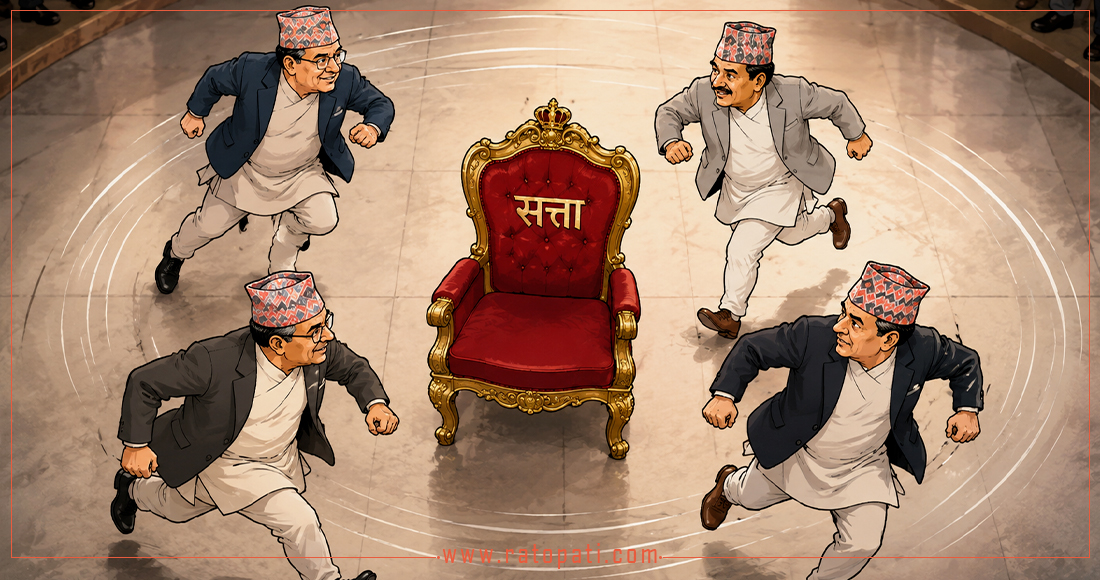
Kathmandu. The nation is on the verge of the House of Representatives elections, where candidates from various political parties are reaching out to voters. Concurrently, parties are busy drafting their respective election manifestos. Energy experts and business leaders have suggested that manifestos should prioritize the energy sector and focus on implementation-oriented plans.
Experts suggest that in this election, taking place amidst a changed scenario following the Janji movement, major ruling parties must formulate plans that prioritize the energy sector and ensure the implementation of projects already initiated by the government.
The private sector is increasing pressure for the energy sector to be recognized not just as a means of lighting but as the engine of the economy, demanding special priority in the manifestos.
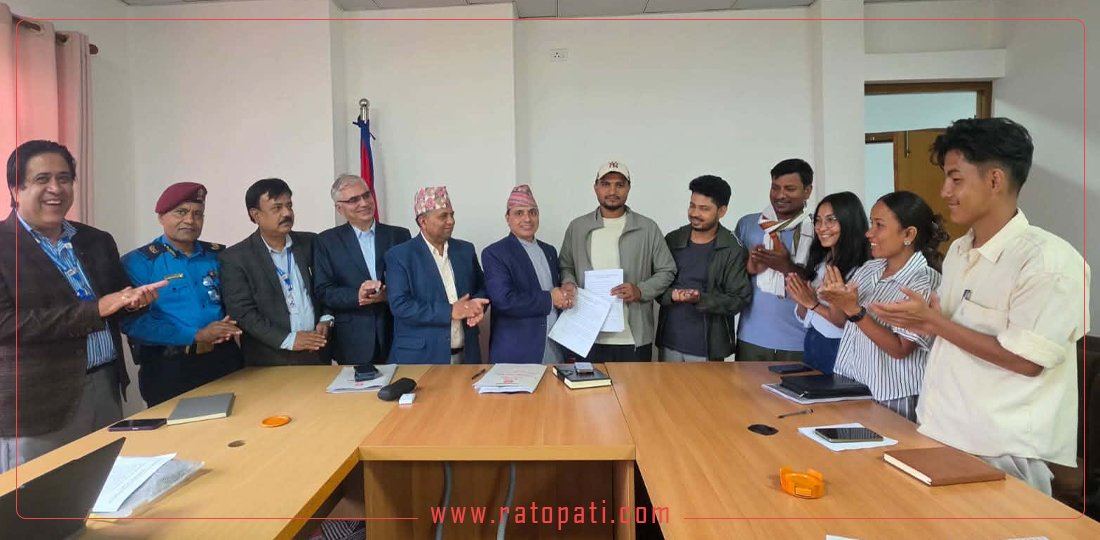
The Independent Power Producers' Association, Nepal (IPPAN) has submitted suggestions to parties including Nepali Congress, CPN-UML, CPN (Maoist Centre), and Rastriya Swatantra Party (RSP) before the release of their manifestos, setting the primary condition that Nepal must be declared an 'Energy-Friendly Nation.'
According to Ganesh Karki, President of IPPAN, future plans should not be limited only to electricity production but must focus on energy security and the utilization of 100% green energy. He emphasized the need to amend the Electricity Act of 2049 to implement the concept of 'multi-buyer and multi-seller.'
He stated that policies must be formulated to include the private sector in electricity trading, transmission, and distribution, as Nepal Electricity Authority (NEA) is currently the sole buyer. Furthermore, he demanded that the government immediately open up Power Purchase Agreements (PPAs) to achieve the target of producing 28,500 MW by 2035 as per the Energy Development Roadmap-2081, declare an 'Energy Crisis' to meet the Net Zero target by 2045, and implement the Public-Private Partnership (PPP) model for large projects.
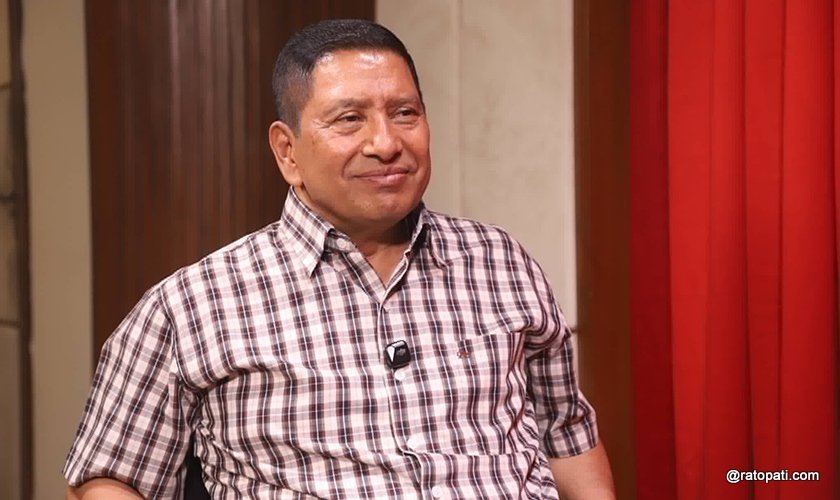
Former Energy Secretary Devendra Karki opined that the upcoming election manifestos should focus on implementing old commitments rather than adding new and ambitious targets for the energy sector. He suggested creating a conducive environment for the private sector to operate rather than increasing production targets based on speculation about water flow. According to Karki, parties should prioritize plans announced by previous governments but left unimplemented in their manifestos.
'The government has already announced plans to produce 28,500 MW and improve transmission lines and distribution systems,' Karki said. 'Nothing new is needed; it is sufficient to focus on the effective implementation of these very subjects.' He asserted that there is no point in spreading impossible dreams of 50,000 or 80,000 MW, noting that even with a stable government for five years, 50,000 MW will not be achieved. Instead, he suggested bringing concrete plans to work within the range of 20-25 thousand MW. Karki also stressed the need to involve the private sector in electricity trading, not just production. Additionally, he suggested tightening regulation alongside facilitation to control some of the chaos seen in the energy sector. Karki stated that the upcoming manifestos must be implementation-oriented, and parties should focus on transmission line construction, distribution system improvement, and increasing domestic consumption.
Policy Exists, But Intent is Flawed: Private Sector Grievance
The private sector has been complaining about 'policy existing, but intent being flawed.' IPPAN President Ganesh Karki stated that manifestos must include commitments to remove the unstable character of political parties and the cumbersome processes of the bureaucracy. According to him, investors require policy stability more than money or tax exemptions. Karki mentioned that investment in the energy sector, where approximately NPR 13 trillion has been invested, is insecure due to the compulsion of navigating 16 ministries to build one hydropower project and the situation where projects that passed Environmental Impact Assessment (EIA) in 2077 have still not received permission to cut trees today.
He urged parties to abandon the tendency of saying one thing while in power and another while in opposition, emphasizing the need for a stable government that lasts five years. He expressed concern that billions of private sector investments are at risk when cabinet decisions are not implemented. Similarly, Deepak Shrestha, Vice President of the Nepal Chamber of Commerce, stated that investors are discouraged by the double standards in EIA and obstructions at the local level.
Past Manifestos: Big Dreams, Weak Implementation
Past manifestos have shown big dreams for the energy sector, but their implementation has been weak. In the 2079 elections, Nepali Congress aimed to produce 10,000 MW of electricity in five years, increase per capita consumption to 1,200 units, provide 50 units of free electricity, and ensure 50% of households use electric stoves.
Likewise, CPN-UML targeted 6,500 MW production in five years and 15,000 MW in ten years, promising 50 units of free electricity during the monsoon and 30 units during winter, along with 100% electrification within two years. Both parties emphasized replacing gas and promoting electric vehicles, but these ambitious plans remained confined to paper. However, efforts were made to introduce the Energy Development Roadmap-2081. The private sector currently recalls the bitter reality that projects worth 36,000 MW are on hold awaiting PPAs and transmission lines, while electricity worth 11,600 MW is going to waste due to a lack of transmission lines despite having PPAs. According to the Water and Energy Commission, although Nepal has a total potential of 120,000 MW, only about 3,300 MW has been produced so far. 190 projects worth 5,700 MW are under construction, and 958 projects worth 36,336 MW are in various stages of construction.
The Way Forward: What Should the Manifesto Look Like?
The demand from IPPAN and the private sector is clear: upcoming manifestos must provide a clear timeline on 'how to do it,' not just 'what to do.' The compulsion of running to 16 ministries must end, and a system where all processes are completed through the Ministry of Energy should be established. Given the agreement to export 10,000 MW to India in ten years, policy stability is indispensable to encourage domestic investors and attract the required investment of NPR 62 trillion.
IPPAN President Karki stressed that production alone is not enough; transmission line construction must happen at a war footing to deliver the produced electricity to consumption points. He stated that strong commitments are necessary in the manifesto to resolve land acquisition and forest-related problems.
He suggested that parties should bring concrete plans not only to focus on exports but also to provide cheap and quality electricity to domestic industries and replace petroleum imports. The private sector has already invested about NPR 13 trillion in Nepal's energy sector, which includes public shares and bank deposits.
This specific news has been automatically translated by AI. As a result, there may be some inaccuracies or language errors.