New Parties Intensify Electoral Competition in Panchthar's Sole House of Representatives Constituency

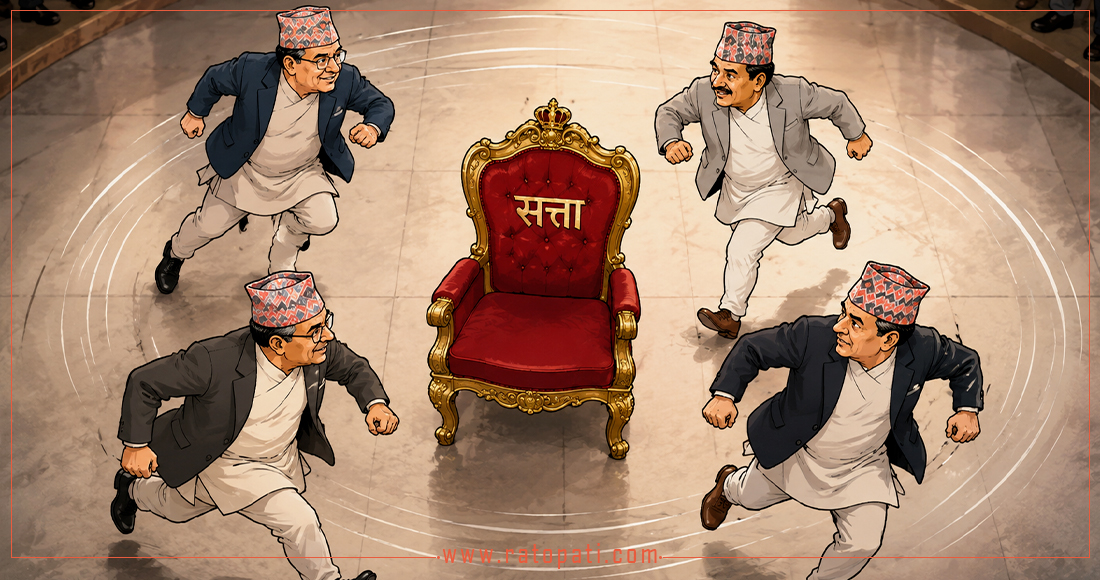
Panchthar. The influence of new political parties has made the upcoming election for the House of Representatives constituency in Panchthar interesting. Fifteen political parties' candidates are competing in the election for the House of Representatives seat scheduled for February 21st.
The growing influence of new political parties among voters signals a multi-faceted competition in Panchthar. Competing in Panchthar are Narendra Kumar Kerung of the Nepali Congress, Aindrasundar Nembang of CPN-UML, Harkabahadur Nembang of the Communist Party of Nepal, Mahendra Bikram Thamsuhang of the Rastriya Swatantra Party, Tej Kumar Kurumbang of the Rastriya Prajatantra Party, and Machindra Prasad Beggha of the Janata Samajbadi Party Nepal.
Furthermore, Prakash Kafle of the Pragatisheel Loktantrik Party, Hastaraj Sherma of the Shram Sanskriti Party, Laxuman Tamang of the Nepal Workers' Peasants Party, Bijay Nembang of the Communist Party of Nepal (Maoist Centre), Ramkumar Tumrok of the Mongol National Organisation, Bhanubhakta Phiyak of the Sanghiya Loktantrik Rastriya Manch, Narendra Prasad Kurumbang of the Nepal Janamukti Party, Tek Bahadur Subba jointly representing Rastriya Parivartan Party Ujyalo Nepal Party, and Mitra Limbu of the Rastriya Mukti Party Nepal (single election symbol) are in the electoral contest.
In the House of Representatives election held on Mangsir 4, 2079 BS, Basant Kumar Nembang of CPN-UML won in Panchthar after a thrilling competition. The margin between Nembang and Bhimraj Angdembe, the candidate from the then-alliance including the Congress, was only 46 votes. Nembang secured 32,135 votes, while Angdembe received 32,089 votes.
In that election, Kamal Bahadur Chemjong of the Rastriya Prajatantra Party received 1,578 votes, Premraj Lawati of the Janata Samajbadi Party Nepal received 1,274 votes, and Jasbahadur Yonghang of the Sanghiya Loktantrik Rastriya Manch received 1,011 votes. Other candidates received less than one thousand votes.
In that election, UML was also the leading party in Panchthar under the Proportional Representation system. UML received 26,592 votes, while Congress received 19,044 votes, the then CPN (Maoist Centre) received 12,169 votes, the then CPN (Unified Socialist) received 3,387 votes, RPP received 2,442 votes, Rastriya Swatantra Party received 1,948 votes, JSP Nepal received 1,711 votes, and Sanghiya Loktantrik Rastriya Manch received 1,640 votes.
In both elections since the implementation of the federal system, the competition between Nembang of UML and Angdembe of Congress saw many voters seemingly under their influence. However, with Nembang undergoing treatment due to illness and Angdembe being on the proportional representation closed list, their competitive presence is absent, leaving the inclination of voters towards which party and candidate remains uncertain, necessitating waiting for the election results.
UML faces the challenge of maintaining its legacy, having been the leading party in both the 2074 BS and 2079 BS elections in Panchthar. UML, which defeated the alliance candidate in 2079 BS, appears focused on consolidating its vote bank. Congress, which failed to elect any candidate in both previous elections, is keen on securing a victory this time.
Congress is attempting to convey the energy gained from its General Convention to the voters. Following the merger of the then Maoist Centre and Unified Socialist, the Communist Party of Nepal has also established itself as a competitive force in Panchthar. The CPN appears encouraged as it has succeeded in incorporating many identity-focused individuals.
However, in Panchthar, the Rastriya Swatantra Party, Shram Sanskriti Party, Ujyalo Nepal Party, and Rastriya Parivartan Party are primarily challenging the major parties. Candidates from these parties are influencing the voters of the main three parties respectively. As these three parties claim victory and conduct election campaigns alongside organizational building in villages, the true strength of the main parties remains uncertain.
Pressured by the influence of new parties, candidates from all parties, including the main ones, are reaching out to villages to meet voters. As candidates prepare the electoral atmosphere by visiting wards, neighborhoods, and settlements, voters are also becoming enthusiastic about casting their ballots. Panchthar has 143,408 voters. There are 76,078 male voters and 67,330 female voters.
This specific news has been automatically translated by AI. As a result, there may be some inaccuracies or language errors.