Political Showdown in Dailekh-1: Former CPN-UML Allies Face Off After Party Split


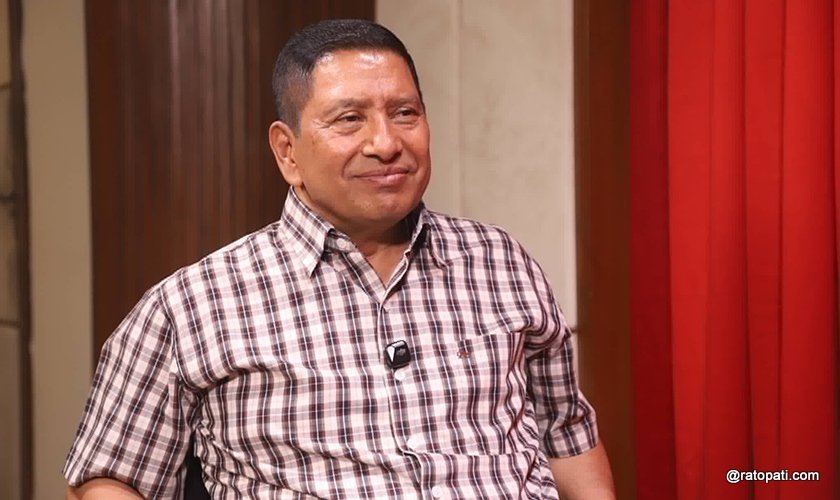
Surkhet. If anyone dominated CPN-UML within Dailekh since the 1990s, it was leaders Rabindra Raj Sharma and Ammar Bahadur Thapa. Sharma, a founder of CPN-UML Dailekh, started contesting parliamentary elections from 2048 BS. Thapa contested the Jivisa (District Development Committee) membership election as an independent leftist in 2049 BS. After joining CPN-UML, Thapa and Sharma shared a deep friendship and collaboration for nearly two and a half decades.
Sharma was defeated by Congress's Ganesh Bahadur Khadka when he contested the elections in Dailekh-1 in 2048 BS and 2051 BS.
Until 2051 BS, Nepal Workers' and Peasants' Party (NWPP) had influence in Dailekh, and the electoral competition was mainly between Congress and NWPP. CPN-UML was limited to the third and fourth positions. Sharma of CPN-UML came fourth in 2051 BS. After that election, NWPP merged into CPN-UML. Thapa and Sharma played a key role in integrating leaders active in the NWPP and independent leftist movements into CPN-UML.
After that, CPN-UML, which became strong, started competing electorally with Congress.
After failing twice in parliamentary elections, Sharma contested and won the mayoral election of Narayan Municipality in 2054 BS. Thapa, meanwhile, was running the party as the Secretary of CPN-UML at that time. In the 2056 BS election, CPN-UML's Nar Bahadur Hamal defeated Congress's Khadka. In Dailekh-1, CPN-UML leaders competed against Congress's Khadka until the 2070 BS election.
In the 2064 BS election, Thapa was the candidate from CPN-UML. However, he was defeated by Congress's Khadka.
In 2070 BS, Thapa, again a candidate from CPN-UML, took revenge for the defeat against Congress's Khadka. In this election, Sharma was the electoral commander for Thapa. In the 2074 BS election, Thapa moved to the provincial level, while Sharma became the candidate for the House of Representatives. In that election, these two campaigned shoulder to shoulder.
Sharma, a candidate from the Left Alliance, won the election from Dailekh 1 (B) with 23,773 votes for the House of Representatives, and Thapa won with 12,567 votes for the provincial assembly. In that election, Congress supported Rastriya Prajatantra Party's (RPP) Deepak Kumar Shahi for the House of Representatives. Yet, Sharma won the election.
Thus, after collaborating in the same party for a long time, Thapa and Sharma stood on different sides after the CPN-UML split. Sharma remained in CPN-UML, while Thapa chose CPN (Unified Socialist).
The upcoming House of Representatives election on Falgun 21 will see Sharma and Thapa face off for the second time. Sharma has deployed the experienced Sharma to fight against him. Thapa is currently in the electoral arena carrying the 'Star' election symbol of the Communist Party of Nepal (CPN).
When the dispute within the then CPN reached its peak in Karnali Province, Thapa stood against CPN-UML. He 'crossed the floor' against the CPN-UML decision and joined the game to save the government of Mahendra Bahadur Shahi, who was the Chief Minister from the then Maoist faction. CPN-UML took action against him. Shahi made Thapa, who played a role in saving his government, a Minister of Physical Infrastructure for six months. Thapa, who led CPN-UML Dailekh for the longest period of 14 years, joined the Unified Socialist along with Madhav Nepal's faction after the CPN-UML split.
They, who were once the strategists in CPN-UML Dailekh, have a history of even becoming each other's electoral commanders. However, since the 2079 BS election, these two former colleagues have been in electoral confrontation.
In the 2079 BS election, Thapa of the Unified Socialist, supported by Congress and Maoist, defeated Sharma of CPN-UML by a margin of 852 votes. Thapa was elected with 18,297 votes, while Sharma received 17,445 votes.
The upcoming House of Representatives election on Falgun 21 will see Sharma and Thapa face off for the second time. Sharma has deployed the experienced Sharma to fight against him. Thapa is currently in the electoral arena carrying the 'Star' election symbol of the Communist Party of Nepal (CPN).
In this constituency, Congress did not field a candidate for the House of Representatives in the elections after federalism. In 2074 BS, Congress, finding it difficult to compete with the Left Alliance, supported RPP. In 2079 BS, when there was a CPN-Democratic Alliance at the center, Thapa got the ticket from the Unified Socialist.
This time, however, Congress has nominated young leader Basana Thapa as the candidate. Congress workers had not been able to vote for their own candidate and their own election symbol in a constituency that was once their stronghold for 10 years. She says that the candidacy of a female leader, after a decade, has boosted the morale of Congress.
On the other hand, former CPN-UML leader Nandakishore Basnet (NK) is in the electoral field from the Rastriya Swatantra Party (RSP). He was recommended as a candidate from CPN-UML.
But in the middle, he joined RSP and secured the ticket. He is also a well-known leader in Dailekh.
Ravindra Stressed by Two Former Colleagues!
Dailekh-1, which includes the district headquarters, comprises Narayan Municipality, Mahabu, Bhagawatimai, Dungeshwor, Naumule, and Gurans Rural Municipalities.
Sharma of CPN-UML, who was organizationally and popularly strong previously, is currently stressed by his own former colleague Thapa of CPN and Basnet of RSP. Thapa and Basnet, who have weak organizations, are expected to draw votes only from CPN-UML. Previously, Thapa won the election due to Congress votes. This time, he is unlikely to get Congress votes. However, Sharma does not consider Thapa and Basnet as his electoral competitors.
In this constituency with 79,701 voters, CPN-UML received the highest 16,313 proportional votes in the 2079 BS election. Congress, which did not get a direct ticket, received 15,837 votes, Unified Socialist received 3,166 votes, and Maoist received 2,645 votes. RPP crossed 1,000 votes.
Analysts argue that basing the electoral analysis on past votes this time may not be appropriate. However, in a rural district like Dailekh, it still holds significant meaning.
Sharma of CPN-UML, who was organizationally and popularly strong previously, is currently stressed by his own former colleague Thapa of CPN and Basnet of RSP. Thapa and Basnet, who have weak organizations, are expected to draw votes only from CPN-UML. Previously, Thapa won the election due to Congress votes. This time, he is unlikely to get Congress votes. However, Sharma does not consider Thapa and Basnet as his electoral competitors.
'The Star and the Bell are third and fourth; the competition is between CPN-UML and Congress,' Sharma told Ratopati, 'We will win the election.'
Meanwhile, Thapa (70 years old) of CPN stated that both Congress and CPN-UML would vote for him and that he would win the election. 'I am the most progressive in the development of this constituency, and I speak the most in parliament,' he said, 'I think Rabindra ji is third.'
However, if votes do not cross over from CPN-UML, the electoral field appears costly for him. CPN's weak base, and on the other hand, comments made by Thapa, who was the chairman of the House of Representatives Education Committee, regarding teachers while citing the Education Bill, have reportedly annoyed education sector leaders in Dailekh. Nevertheless, the challenge posed by one experienced and one new former colleague certainly adds pressure on CPN-UML's Sharma.
RSP candidate Basnet claimed that not only CPN-UML but also other parties would vote for him and that the bell would ring this time. Basnet is a hotel entrepreneur in Dailekh headquarters.
Basana Aims to Benefit from the Fight Between Former Colleagues
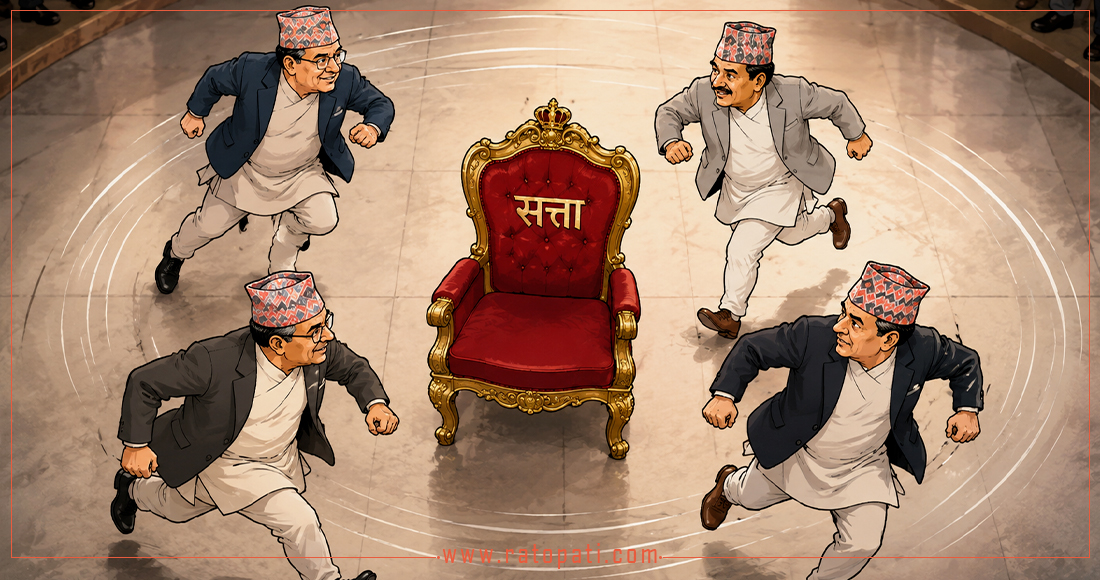
While three former colleagues have made the election a matter of prestige, on the other hand, Basana of Congress is strategizing to reclaim the past legacy amidst this situation.
She is the operator of Hotel Parking in the district headquarters and contested for the post of Deputy Mayor of Narayan Municipality in 2074 BS.
She emerged from Nepali Students' Union politics and is a well-known female leader. She has made the development work done by Congress in Dailekh in the past her electoral agenda.
'Congress has played a leading role in the development of this constituency so far, and as the only other female leader, I have sympathy from everyone,' Basana said, 'A strong organization is also the basis for Congress's victory.'
At one time, Congress's Ganesh Bahadur Khadka had influence here. He contested elections continuously since 2048 BS but was defeated in the 2070 BS election due to factionalism within the party. It is often mentioned in Dailekh that motor roads and electricity reached Dailekh during his tenure when he also served as the Minister of Physical Infrastructure and Transport.
He won the elections in 2048 BS, 2051 BS, and 2064 BS. Basana states that she will bring back that old legacy of Congress this time.
This specific news has been automatically translated by AI. As a result, there may be some inaccuracies or language errors.