Gen-Z Activist Ajay Sodari Discusses Movement's Goals Amidst National Elections


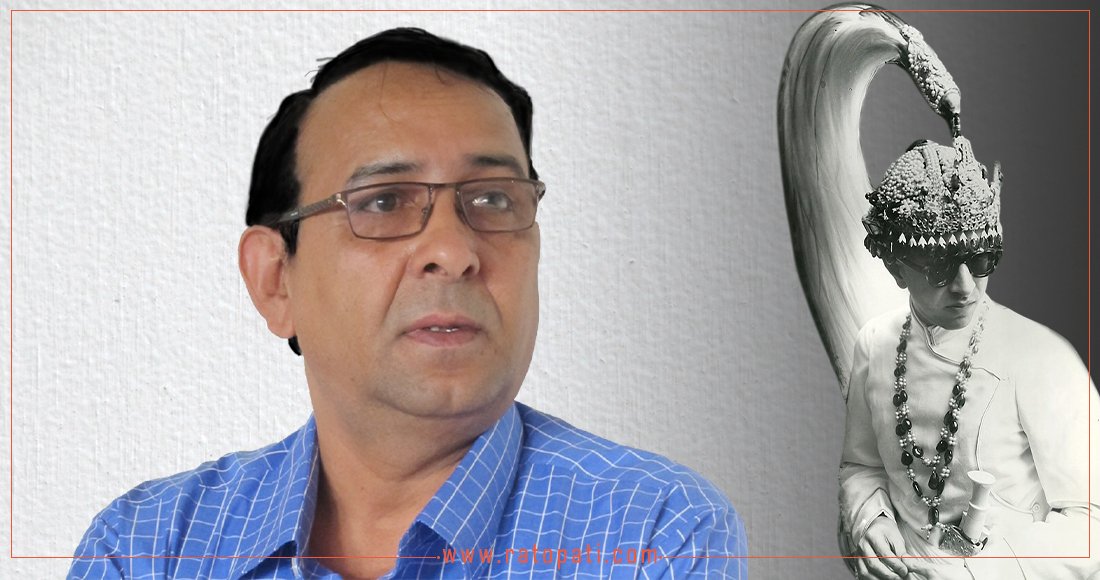
Kathmandu. As the country heads into the House of Representatives elections, some Gen-Z groups are on the streets demanding various concessions. They argue that elections held without addressing some of the issues raised by the Gen-Z movement will not yield a solution. Among them is Ajay Sodari.
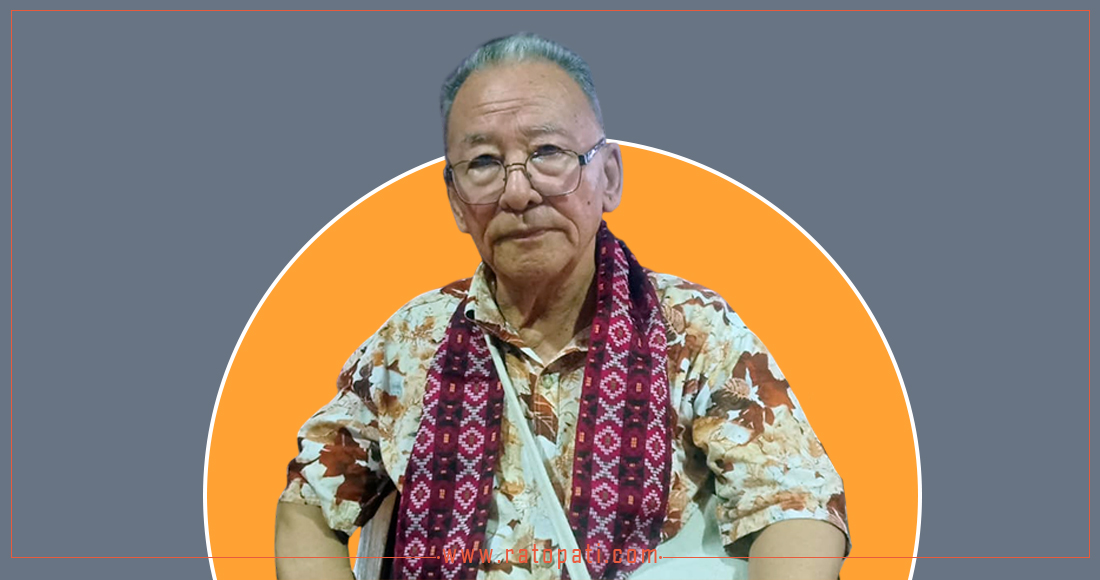
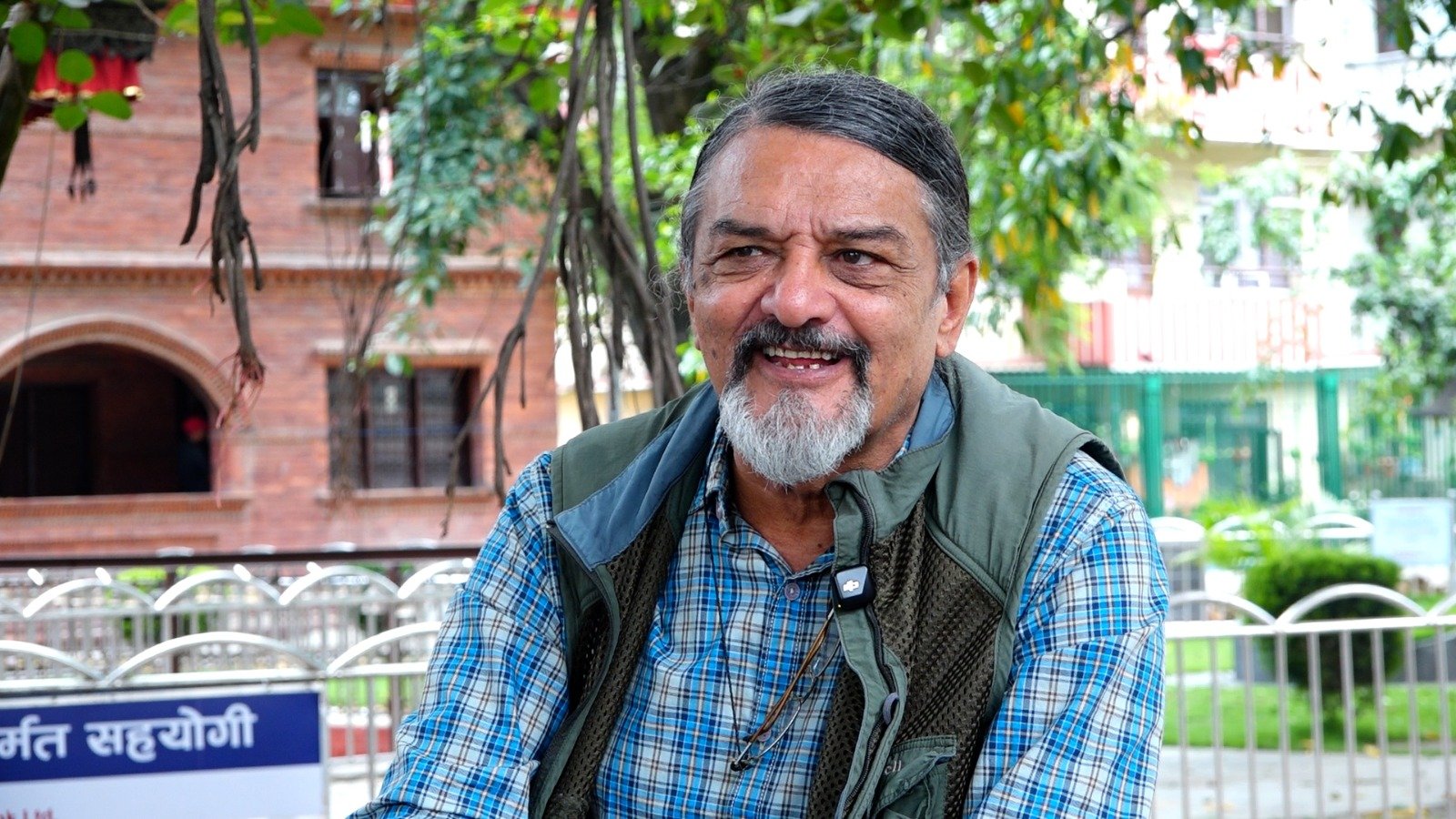
Sodari, the co-coordinator of the United Gen-Z Movement led by Coordinator Miraj Dhungana, is one of those who staged a hunger strike for 10 days in Maitighar, Kathmandu, with a list of demands. Sodari broke his fast after reaching a 6-point agreement with the government. Dhungana, who incited Sodari to fast in Maitighar, subsequently disappeared, leaving Sodari at the protest site. Sodari states that disciplinary action has now been taken against Dhungana. Ratopati's 'Warpar' engaged Sodari in a conversation focused on the demands of the United Gen-Z Movement, the elections, and related issues. Presented here is the edited excerpt of the interview (the full version can be viewed in the video):
- Among the Gen-Z on the streets, Gen-Z aligned with the government, pro-election Gen-Z, anti-election Gen-Z, and those demanding free shares from companies, which type of Gen-Z are you?
Regardless of the types of Gen-Z or the groups they belong to, the common demand for all Gen-Z is change, good governance, and the end of corruption. The end of injustice, oppression, unstable governance, and unemployment happening in the country.
- If the common demands and objectives are the same, why are the Gen-Z divided into so many groups?
The government divided the Gen-Z. The government itself did not allow the Gen-Z to unite. It prevented unity.
- How so?
By inviting some to Baluwatar, some to Singhadarbar, calling some the eldest son, and treating others like the son of a stepmother—doesn't that cause division?
- Your group is reportedly called the 'Fugitive Gen-Z Group'!
Our group's coordinator, Miraj Dhungana, is a designer of the Gen-Z movement. He initiated the idea that there should be a movement, voices should be raised, people should take to the streets, and the establishment should be held accountable. I was in South Korea at that time. I raised my voice from South Korea. We were ready to return to Nepal, advocating that youth living abroad should also come back.
- You claim to be the 'real' Gen-Z, is that right? Isn't Miraj Dhungana your coordinator?
Yes. Whoever, whichever faction, whichever group, whichever individuals carried the value and principles of the Gen-Z movement until the end, spoke for it until the end—that is the real Gen-Z. That is not hard to distinguish.
- Your coordinator Mirajji is called a fugitive. They say he fled the movement before, and now he has fled your protest in Maitighar?
It is up to him to answer about Mirajji's character. However, we united between 30 to 35 groups to form the United Gen-Z Movement Mobilization Committee. We made Mirajji the coordinator of that committee.
- But you yourselves have raised many questions about Mirajji!
In the interim, Mirajji fell short in how he should have led the movement and the strategy he should have formulated to establish the issues. He should not have left the streets until the end; he should have spoken until the end.
- He appears so unstable that he makes agreements with anyone. There are reports that he made a tactical unity with Biplav's party, and is now campaigning to elect an UML candidate. How do others perceive you after this?
We entered into a tactical unity with Biplav's party to take the movement forward in a broader manner, ensuring ownership across all generations. We have also formed tactical unities with cooperative victims, squatters, and loan shark victims. We have not joined any political party. Regarding Mirajji, it is true that he left the movement and fled.

- You were on a hunger strike in Maitighar, you were in the movement, but your coordinator disappeared. And yet you still consider him the coordinator, and expect others to recognize your group as Gen-Z?
We have expelled him. He was removed through disciplinary action. He fled the field without consulting us. The evaluation of that will certainly happen in the coming days. Everyone is observing it.
- You are not free from accusations either. There are reports that South Korea deported you for illegal activities?
I went to Korea with a visa obtained from the Korean Embassy through the EPS process. I worked and advanced socially. I even became the General Secretary of NRNA. In my capacity as NRNA General Secretary, I issued a statement the day before the Gen-Z movement began. I issued a statement from South Korea, as the NRNA General Secretary, demanding that the government not harass the Gen-Z movement in Nepal and not use batons against the protestors. A few days later, I came to Nepal.
Some individuals in Korea conspired against me in an organized manner, claiming I supported the Gen-Z movement. If I had done anything wrong in Korea, the Korean government would not have sent me back to Nepal; they would have jailed me. The law in Korea is very strict. If I had violated the law, I would be in a Korean jail. Those people writing and saying these things never even asked me.
- You fasted for 10 days. What were the demands for the hunger strike in Maitighar?
Our demands were the treatment and guarantee of life security for the injured before the election, the release of our detained comrades, and elections through a directly executive system. But we had to fast because they tried to hold elections without fulfilling those demands.
- Do you think the current Prime Minister Sushila Karki can fulfill those demands? Can this government amend the constitution? Can it make laws? Will your demands be met without that?
This government was not formed based on any article, sub-article, rule, or by-law of the constitution. It was a time of rebellion, a state of governmentlessness. Someone had to take charge of the country, and Sushila Karki stepped in. A government formed on the foundation of rebellion should have been able to guarantee change and good governance in the country. That was also its responsibility. But they couldn't do anything. Can a few parliamentarians coming from an election, a few people, change the form and structure of a country that couldn't be changed by rebellion, that couldn't be changed by sacrifice? Can they?
- Even if the government fulfills your demands, ultimately, it has to go to elections, right? And if the people give the mandate to the same parties again, isn't the situation the same?
We are never against elections. Elections must happen. But some legitimate demands must be met. Gen-Z detainees must be released. A strong, transparent, and impartial commission must be formed to investigate corruption. Environment must be created for the 8 million Nepalis living abroad to cast their votes. The judiciary, the courts, the Commission for the Investigation of Abuse of Authority (CIAA), and other constitutional commissions must be reformed before moving forward.
- When you say 'must be reformed,' you probably mean you want a share in the appointments, right?
We said that appointments should be made by ending the practice of sharing positions.
- There is a rumor that Gen-Z representation is needed in every state body, and even that shares in hydropower projects are demanded?
People like Sudan Gurung are demanding shares in various places, appointing their own people in various positions, and exploiting the state. They are demanding shares everywhere. We are against that.
The government's stance is that they have already reached a 10-point agreement with the group they officially recognized as Gen-Z. Yes, that is a matter of implementation.
- Who will implement that 10-point agreement, this government?
The coming government. Was a 10-point agreement drama staged by calling only the Sudan Gurung faction to Baluwatar, that too at 8 PM, and forcing a signature, and now everyone—Gen-Z, the public, political parties—must accept it?
- There is anarchy on your side too. Didn't you tear up the document right in front of the Prime Minister?
That day, there was also wrong manipulation. The initial modality for that day was an interaction between Gen-Z and the Prime Minister, an exchange of views. But suddenly, a 10-point agreement was brought in at night. Then, they made us clap and did not allow us to ask any questions. We were not allowed to say anything.
- Now you also have a 6-point agreement. So, you won't protest anymore, right?
We demand an all-party dialogue involving political parties, the government, Gen-Z, civil society, and journalists. This government could not fulfill the demands of the Gen-Z. We want everyone to take ownership of the 6 points so that they are implemented even when a new government comes in. Our point is that this government must gain everyone's trust, and that should be done with Gen-Z as witnesses. This agreement stipulates that this work must be done within 10 days. If not, there will be protests.
- What will you do now? Elections are happening. Manifestos from the parties are coming. Will you support someone based on that, or will you not vote at all?
We will decide our course of action based on what kind of environment the government creates in the all-party dialogue, whether some commitments are made as we requested, and whether those commitments materialize.

- If the demands are not met and things don't go as you say, will you remain in protest?
We will remain in protest.
- It's not a protest against the election, but a protest to fulfill your 6-point demands, isn't it?
We will not engage in activities to disrupt the election. We will continuously be on the streets regarding our demands and issues. We will continuously speak out. We will continuously raise our voices.
- You won't go to vote?
We will not go to vote, and even if elections are held in the future and a new government comes, we will raise these demands again.
- If you don't vote, and the old parties win the election again, won't the demands be left unresolved?
78 people died in the Gen-Z movement. More than 2,340 people were injured. The country is burning. There has been a loss of hundreds of billions. At least give the country a feeling of change. Republic came in 2062/063, multi-party democracy in 2046, and democracy in 2007. What came to the country after the Gen-Z revolt? Nothing came, right? Just one election came? Will that suffice?
This specific news has been automatically translated by AI. As a result, there may be some inaccuracies or language errors.