Political Parties Busy Finalizing Manifestos Ahead of Upcoming House of Representatives Election


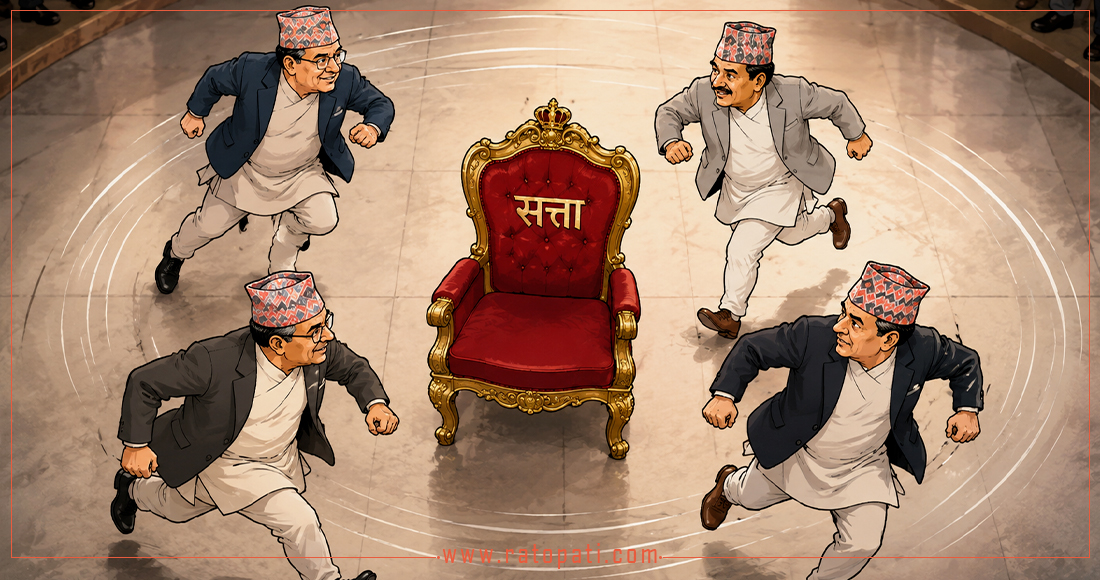
Kathmandu. Political parties are busy drafting their manifestos for the House of Representatives election scheduled for Falgun 21. Most parties are preparing to unveil their manifestos in the first week of Falgun.
In this context, we have attempted to examine the key issues highlighted in the manifestos of Nepali Congress, CPN-UML, the then CPN (Maoist Centre), and the Rastriya Swatantra Party (RSP) for the House of Representatives election held on Mangsir 4, 2079, three years ago. In that election, these parties ranked first, second, third, and fourth, respectively.
Congress released its manifesto titled 'The Resolve of Nepali Congress,' positioning it as the foundation for the protection of the constitution, stability, and prosperity, under the leadership of the Nepali Congress government.
UML released its manifesto titled 'Good Governance, Development, Prosperity, and Equality for Five Years: UML Will Do It,' presenting the slogan 'Prosperous Nepal, Happy Nepali.'
The then CPN (Maoist Centre) released its manifesto titled 'Breakthrough for Prosperity,' and the Rastriya Swatantra Party released its manifesto titled 'We and Our Promise.'
Here are the issues included in the parties' manifestos:
Nepali Congress
Congress committed to opposing any move challenging the democratic system, constitutionalism, and the rule of law, and pledged the full implementation of the constitution. Congress aimed to realize the vision of a 'Prosperous Nepal' envisioned by its founder, Bishweshwar Prasad Koirala, by providing a beautiful, happy life free from hunger, nakedness, and illiteracy to all Nepalis.
_JNGkJ3R13m.jpg)
Furthermore, Congress mentioned in its commitment to building an egalitarian, just, and inclusive society based on the ideals of democratic socialism, and to criticizing the previous communist alliance government for its attacks on the constitution, democratic system, civil rights, constitutional bodies, and the media, as well as the poor governance and corruption seen in COVID-19 management.
Congress put forward 5 ideological bases:
1) Developing a capable, accountable, and honest governance mechanism for the purification of democracy and good governance; reforming laws and mechanisms to control corruption; freeing public institutions from partisan interference.
2) Creating an enterprise-friendly environment to limit extreme poverty to a single digit; creating respectable employment opportunities at home while reducing dependence on foreign employment; developing a knowledge-based economy.
3) Providing integrated social security (health insurance, free treatment, education, employment, old-age allowance, etc.) from the state for citizens throughout their lifecycle from birth to death; ending social discrimination and promoting cultural tolerance and harmony.
4) Making the nation a zero-carbon emission country by 2045; developing a green economy; strengthening disaster management and early warning systems.
5) Adopting an independent and balanced foreign policy based on a non-aligned foreign policy while protecting national interests and self-respect; strengthening relations with neighbors and internationally.
Congress put forward 5 main agendas regarding the economy:
1) Replacing imports and promoting exports; controlling credit flowing to unproductive sectors to reduce inflation.
2) Practicing frugality in government spending; restructuring revenue administration; maintaining fiscal discipline.
3) Encouraging domestic production; internalizing technology; implementing the slogan 'Nepali Industry, Nepali Employment, Own Production, Own Trade.'
4) Upgrading technical education institutions to eliminate the shortage of labor supply in skill-based sectors; creating employment at home instead of foreign employment.
5) Generating 10,000 MW of electricity in the next 5 years; increasing per capita annual electricity consumption to 1,200 units; increasing the use of electric vehicles and stoves.
- 8 Areas Congress Declared as Priorities
Education: Ensuring access to quality, free, and technology-based education for all; increasing female literacy to 95%; ensuring internet access in 80% of schools.
Health: Free treatment for children under three and senior citizens above 73; bringing all citizens under the scope of health insurance within 5 years.
Enterprise, Employment, and Private Sector: Creating 1.25 million new jobs in 5 years; achieving a minimum annual economic growth rate of 7%; encouraging the private sector.
Science, Technology, Communication, and Digitalization: Building a 'Digital Nepal'; utilizing information technology in economic activities, good governance, and citizen services.
Agriculture: Developing agriculture based on modern technology; ensuring food security; increasing production by implementing land use policy.
Physical Infrastructure: Expanding access to paved roads, energy, irrigation, drinking water, and communication nationwide; completing ongoing national pride projects.
Tourism: Bringing in 2 million foreign tourists annually in 5 years; developing tourism infrastructure; promoting adventure and rural tourism.
Arts, Culture, and Sports: Protecting and promoting Nepali art, culture, language, and literature; developing the careers of creators and artists; making professional investments in the sports sector.
- Strengthening Federalism
Congress's view was to fully adhere to the principle of cooperation, coexistence, and coordination between the federal, provincial, and local levels, and to empower and make provincial and local governments effective by facilitating lawmaking.
- What Congress Included and Excluded in the Manifesto
To Do: Implementing federalism in line with the spirit of the constitution; controlling corruption; appointing to public posts based on merit and transparency; increasing domestic production and employment.
Not to Do: Dissolving the House of Representatives due to internal party disputes or conflicts between different parties; misusing public property; making any decision based on financial temptation or personal influence; encouraging caste discrimination, violence, or social ills.
- CPN-UML
UML placed in its manifesto the goal of preparing the foundation for socialism and ultimately reaching socialism by achieving socio-economic development and transformation under the guidance of People's Multiparty Democracy.
UML mentioned that the 'Prosperous Nepal: Happy Nepali' slogan it put forward clearly defined the destination of building a socialism based on Nepali characteristics to affirm the national aspiration.

It stated in the manifesto that the party's destination was the protection and promotion of national interest, stability, good governance, and development.
UML also reviewed and criticized its own situation. The party claimed achievements such as the concept of a welfare state, 'Build Your Village Yourself,' social security allowances, revenue exemption for land registration in women's names, post-earthquake reconstruction, and the publication of the new map by the governments led by UML. It accused the then Sher Bahadur Deuba-led alliance government of creating chaos, corruption, and anti-national activities in the economic sector at the time of the election.
UML committed to 20 tasks in 5 years:
Administration: Making state institutions capable and professional by removing excessive politicization; making the civil administration accountable to the people; building an effective monitoring structure for performance; operating the state prioritizing national and citizen interests; ending the situation where children of Nepali citizens are deprived of citizenship; resolving citizenship issues within 6 months and national identity card issues within 1 year, UML stated.
Putting forward the policy 'No one goes hungry, no one dies of hunger,' UML proposed increasing agricultural production and improving supply; establishing food storage in all municipalities; providing food security to 300,000 families annually through the Prime Minister Employment Program; providing food security to 100,000 families annually through the Food for Work and Cash Program; launching a 'Make in Nepal' campaign to promote domestic production and consumption; encouraging domestic products like food items, shoes, medicines, and cement; providing safe housing to the homeless and relocating unsafe settlements to secure locations; creating 500,000 jobs annually; and planning to raise the minimum wage for workers to NPR 25,000.
Bringing the policy of 'A Fully Literate Country and Enterprising Educated Youth,' it stated that the country would be fully literate in 2 years; operating at least 2 technical stream schools in all municipalities; ending the need to go abroad for higher education.
Putting forward the policy 'Healthy Nepal, Strong Citizen,' it stated that basic health facilities would be provided in all municipalities; free testing and medication for high blood pressure and diabetes for citizens over 60; free treatment for serious and incurable diseases; and bringing all Nepalis under health insurance within 5 years.
Regarding clean water and environment, UML stated that basic drinking water facilities would be provided to all households within 2 years, 10,000 liters of water would be provided free of charge monthly, and scientific waste management would be implemented.
UML brought a plan to achieve 100% population access to electricity in two years, providing 50 units of electricity free in the monsoon and 30 units in winter, and increasing electricity generation capacity to 6,500 MW in five years.
The UML policy was to connect every district headquarters to a strategic road network, construct paved roads connecting all municipal centers, and implement the concept of 'Organized Cities: Clean and Green Settlements.'
The plan for UML also included implementing the Digital Nepal Framework to provide government services through an online system, expanding the scope and benefits of social security, and providing state security from pregnancy to old age.
UML's goal was to ensure everyone has a bank account in two years; connect all adult individuals to financial transactions including banks, cooperatives, and microfinance in five years; provide micro-insurance services to small farmers and entrepreneurs; provide NPR 1,500 annually for sanitary pads or alternative means to women of menstruating age; and ensure 100% pregnant women receive regular prenatal check-ups and delivery assistance from skilled health workers.
- UML's 8 Priorities
National Security: Protecting national security, interest, and self-respect; protecting territorial integrity and sovereignty; modernizing and making security agencies like the army and police skilled.
International Relations: Foreign policy based on non-alignment, Panchsheel principles, mutual benefit, and respect; prioritizing neighborly relations; mobilizing the skills and capital of Non-Resident Nepalis.
Education: Construction of Madan Bhandari Science and Technology University, Defense University, and provincial universities; freeing the education sector from political interference.
Health: 'Healthy Nepal' campaign; promoting clean thoughts, positive thinking, healthy food, and regular exercise; free regular health check-ups for all above 40 years.
Information Technology: Digital Nepal Framework-2030; expansion of the Hello Sarkar system; e-governance; development of online journalism.
Good Governance: Use of information technology in public services; corruption control; respectful behavior and impartial service in government agencies.
Judiciary: Clean, impartial, and responsible independent judiciary; effectiveness of the Constitutional Bench; appointment of judges based on qualification and competence.
Youth and Sports: Educational upliftment of youth, skill development, arrangement for physical health, sports, and recreation; creation of youth employment.
- The Then CPN (Maoist Centre) (Now Communist Party of Nepal)
The then CPN (Maoist Centre), under the slogan 'Breakthrough for Prosperity,' stated its aim to advance towards a socialism-oriented inclusive democracy by protecting, implementing, and developing Nepal's unique democracy. Claiming credit for all changes, including the anti-Rana struggle, the movement against the Panchayat system, the People's War, and the People's Movement of 2062/063, Maoists mentioned building a 'Scientific Socialism' based on Nepali specifics, distinct from traditional bourgeois democracy and the Soviet model of socialism, ensuring individual freedom, democratic rights, and healthy competition.
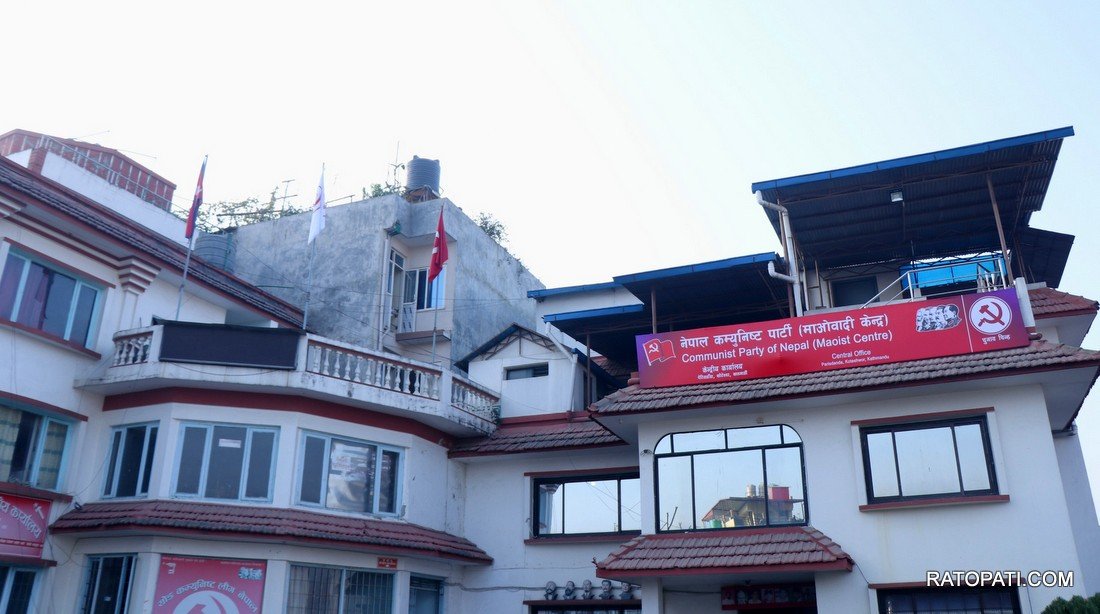
Completing the peace process by expediting the work of the Truth and Reconciliation Commission and the Commission of Investigation on Enforced Disappeared Persons was included in Maoists' manifesto. Maoists stated that the current alliance formed against the anti-constitutional regressive steps taken by the 2074 communist alliance was a product of the immediate situation, and its policy was to make it successful for the protection of the constitution, political stability, and prosperity.
Maoists committed to fulfilling 9 tasks in the manifesto:
1) Prioritizing the protection and strengthening of national sovereignty, territorial integrity, independence, interest, and self-respect.
2) Amending the constitution to establish an executive presidency directly elected by 51% of the votes at the federal level and directly elected provincial chiefs at the provincial level for stability, peace, and prosperity. Proposing a Federal Parliament with a House of Representatives of 165 seats and a National Assembly of 55 seats, and a Provincial Assembly of 330 seats.
3) Amending the current mixed electoral system to a fully proportional inclusive electoral system to make the election process clean, less expensive, and inclusive.
4) Ensuring fully proportional representation in the House of Representatives and Provincial Assemblies based on ethnic population (clusters).
5) Ensuring 35% female representation based on ethnic clusters (Khas Arya, Indigenous Nationalities, Dalit, Madhesi-Terai, Tharu, Muslim) and at least 10% representation for laborers and farmers.
6) The President and Provincial Chiefs to be directly elected through universal adult suffrage.
7) The date of elections, the start and end of terms to be fixed in the constitution.
8) Adopting a foreign policy based on national interest, zone of peace, Panchsheel, and non-alignment. Diplomatic efforts to reclaim encroached lands including Kalapani, Lipulekh, and Limpiyadhura. Keeping Nepal free from foreign military activities.
9) Making every province an autonomous economic unit; constructing provincial ring roads, new industrial zones, and cultural cities in all provinces.
- Key Policies for Transformation
Maoists mentioned in their manifesto the optimal utilization of natural resources such as land, forests, water, minerals, and biodiversity; increasing state investment in education and health, improving management and regulation, and creating an environment for accessible and quality service delivery; enacting the Federal Education Act within six months of the new government formation; making education up to Grade 12 free and compulsory; making Science, Technology, Engineering, and Mathematics (STEM) education compulsory from the secondary level; developing a research-oriented education system; constructing basic hospitals in every municipality and specialized hospitals at the provincial level; providing free treatment and health insurance to the poor, destitute, and helpless; and making the country self-reliant in medicine production; developing eco-friendly sustainable infrastructure in every village; ending caste, regional, gender, linguistic, and cultural discrimination.
They also planned to establish a robust social security system for citizens of all age groups and classes; form a High-Level Administration Reform Commission to restructure the administration system; launch a public participation campaign against corruption; create 2 million jobs and self-employment opportunities for youth within 5 years; establish a National Employment Authority; encourage youth returning from foreign employment to start enterprises at home; promote commercial agriculture through land consolidation and block farming; establish collective farms, end the practice of leaving arable land fallow; establish modern industrial centers in provinces and industrial villages in municipalities; prioritize industries based on domestic raw materials; encourage export-oriented industries; and provide tax exemptions to new industries employing more than 200 people.
Maoists' plan also included generating 10,000 MW of electricity within 5 years, reducing the cost of electricity production, providing free electricity for irrigation, launching a 'One House, One Tap' program for drinking water; rapid development of science and information technology and promoting innovation in every sector; establishing a separate Ministry of Science and Technology; investing 1% of the Gross National Product in science and technology; building safe and identifiable cities; conserving heritage; developing new smart cities; community housing projects; constructing underpasses and flyovers; maintaining liquidity and interest rate stability in the financial sector; and motivating banks and financial institutions to invest in projects that increase production and employment.
Maoists also stated that the principle of proportional inclusion would be applied to all organs and bodies of the state, and quotas would be set for employment and nomination to positions of political benefit for Dalits, Indigenous Nationalities, Tharus, Madhesis, Muslims, women, gender and sexual minorities, persons with disabilities, and the injured and victims of the People's War.
Rastriya Swatantra Party (RSP)
RSP adopted the slogan 'Good Governance, Development, Prosperity, and Equality, Rastriya Swatantra Party: We and Our Promise' in its manifesto. It committed to advancing the country towards a constitutional socialism that respects individual freedom and human rights through a people-accountable, participatory, and inclusive democracy.

RSP also stated that its principles included the rule of law, equality with social justice, meritocracy and diligence, dedication to nation-building, zero tolerance for corruption, participatory democracy, individual freedom, and human rights.
RSP put forward 5 points to reform the electoral process:
RSP committed to implementing a system where voters can cast their ballots for the constituency of their permanent residence, regardless of whether they are in the country or abroad; determining the serial number of election symbols by lottery instead of using the vote count from the previous election when going to elections for a new mandate; mandatorily implementing the right to vote 'None of the Above' and the right to recall representatives; using electronic voting machines in national elections; and preventing parties that do not maintain a minimum of 33% female candidates in direct elections from participating in the electoral process.
RSP also put forward five points for good governance. These included making government services responsible, effective, and transparent; concluding domestic violence, sexual assault, and cases involving the elderly and children registered in District Courts within 50 days, and other cases within one year. Cases in High and Supreme Courts to be concluded within 6 months; implementing a 'Time Card' for all government services, penalizing employees who fail to provide services within the stipulated time and compensating service recipients; simplifying government paperwork and arranging for it to be filled out free of charge at the concerned office; and making political appointments in state bodies based on competitive capability without political prejudice, as mentioned in RSP's manifesto.
RSP stated it would adopt zero tolerance towards corruption. This included punishing those who fail to do or delay work required by law, as well as those who do what they should not, treating accomplices equally with the main perpetrators of corruption; enacting a law to encourage and protect informants providing information on corruption; and opening all corruption case files, including Lalita Niwas, Wide Body, COVID vaccine procurement, Yeti and Omni, 'Educate Daughters, Save Daughters' bicycle purchase, printing press purchase worth 70 crore, and the Budhigandaki Hydropower Project scandal, as per RSP's manifesto.
Some new arrangements were also proposed regarding social security. This included a 'Ration Card' system to provide basic food to families below the poverty line and operating food centers in every ward; implementing an hourly wage payment system by adjusting the minimum wage of NPR 15,000 with inflation; establishing a 'Karuna Fund' of NPR 5 billion for the rehabilitation of victims of human trafficking, domestic violence, abuse, and acid attacks; and launching a 'Child Protection Service' to safely keep children of orphaned or imprisoned parents away from abusive guardians.
Health Service at Home: Health services and government services would be provided at home for those who are paralyzed, unable to move, disabled, or elderly.
RSP's manifesto included making education from early childhood development programs to secondary level free and compulsory; providing teachers with timely and updated training, concessions on basic needs like family education, health, and transportation, and incentives based on students' multidimensional progress; establishing STEM centers in all seven provinces to produce 50,000 skilled personnel annually based on education; implementing a single payment system to make the state the sole payer for citizens' health expenses; establishing state-of-the-art laboratories and international-standard hospitals with specialized experts in every province, 50-100 bed hospitals in districts, basic hospitals with at least one doctor in municipalities, and community clinics with pharmacies at the ward level.
RSP planned to launch a 'One Ward, Many Businesses' scheme; register businesses free of charge within 48 hours; increase foreign investment by at least 15 times within 5 years; allocate a budget of NPR 10 billion to launch a campaign to establish Nepali products on the world map; and allow entrepreneurs with a turnover of less than NPR 2 million to self-declare without updated audits in the tax system.
Its plan included updating all procedural methods for infrastructure agreements and making the Public Procurement Act effective; building secure public digital infrastructure for rapid distribution and access; installing street lights, CCTV, and speed measuring devices on all highways and in main cities; and expanding the modern and reliable electric bus system in the Kathmandu Valley to other metropolitan and sub-metropolitan cities.
RSP's manifesto also included a provision that all financial institutions must mandatorily set aside 5% of their investable funds for Nepalis returning from abroad; mandatory allocation of 15% shares for Nepali citizens investing while residing abroad; and arrangements to seek skilled, secure, and high-paying employment opportunities in various nations through strong diplomacy.
This specific news has been automatically translated by AI. As a result, there may be some inaccuracies or language errors.