Review of Dr. Om Murti Anil's Book 'Jeevant Sambandha': A Deep Dive into Life, Loss, and Relationships
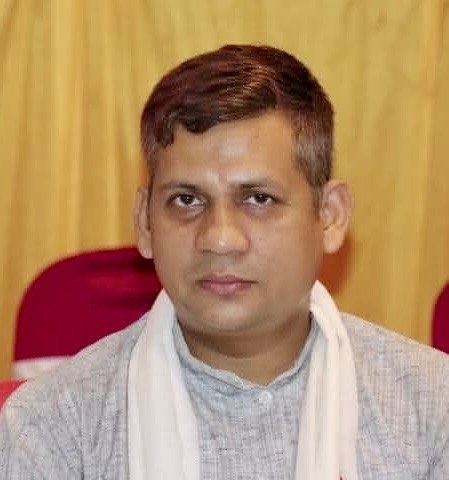

I read the renowned cardiac surgeon Dr. Om Murti Anil's book 'Jeevant Sambandha' (Living Relationships). Among the many good books I have read to date, I can place this one in the first position. While reading this book, at times I felt as if I were standing in the author's shoes and became emotional, at times tears flowed, and at times my eyes welled up.
I wandered back to the days of my childhood through youth. I felt happy in some places and disappointed in others. Feelings of regret and self-reproach surrounded me. I realized that I had failed to fulfill many responsibilities and duties in life, and that I had not seen the destination aligned with my life's goals. The lines and verses of this book tore away the curtains of some of my vague thoughts. Some rigid ideas also received good nourishment.
Although every person's life can be an unwritten novel in itself, the daily routines, journeys, or struggles of some people can be inspiring to others. They can be readable and thought-provoking. Capturing the birth, love, marriage, relationships connected by time and context, and their lifespan—their strength, influence, and impact—through the window of personal life and presenting them to the reader in a readable and memorable way is an art in itself. This creation, crafted by a doctor by profession who blends a strong, successful literary style with simple language, relevant subject matter, and profound messages, is very delicious and equally healthy.
This work can be seen as an artistic depiction created by someone specializing in medical science who connects science and spirituality, while overlooking the current global environment becoming increasingly individualistic, hedonistic, and materialistic due to science and technology. It incorporates the colors of the soul, spirituality, astrology, fate, future, mind, brain, customs, traditions, society and family, duty and responsibility, emotion, and reality.
Although the starting point of this book is the sacrifice of a father for his children and the dedication of a dutiful son to his father, it also attempts to dissect and treat some common misconceptions and notions held by people today. This work emphasizes the need to keep familial love and relationships alive by examining the various dimensions of happiness, joy, and relationships.
Death is eternal and undeniable after birth. The treatment methods used for living cannot always save everyone. As long as there is breath, there is hope. When humans cannot succeed, they call out to God. It is also seen that the doctor, who had measured the average lifespan of his own father, made a Herculean effort to save his father who was struggling on his deathbed and felt remorse as a defeated doctor for his failure. Nevertheless, it reveals the undeniable truth that nothing can stand against death, presenting the fact that he left no stone unturned in his father's treatment.
The book also attempts to explore the psychological aspects of an individual. It reveals the danger that accumulated mental pain and frustrations in a person can lead to serious health problems, presenting chemical, scientific, and emotional facts about crying and expressing pain. In the author's own words—
'The chemicals produced by crying are beneficial not only physically but also mentally and emotionally. Therefore, it is important to allow your feelings to be expressed rather than suppressed. Nature gives creatures sorrow and provides a way to relieve that sorrow simultaneously. In other words, crying is the primary means by which a creature expresses its pain. It acts as a balm to reduce pain. However, in some contexts, crying or lamenting is not considered good in society. This might be because people are unaware of the benefits crying has on the human body.
People should also be allowed to cry sometimes.
Crying out loud lightens the heart. The pain bottled up inside is expressed there.'
Along with some benefits of crying, the need to maintain patience and keep one's morale strong rather than weakening oneself by crying during times of crisis or struggle is presented as follows—
'In any situation, a person should not give up. Efforts must continue until the very end; this does not mean one should not cry.'
The author very poignantly presents the scenes and scenarios that revolve in the mind like movie scenes after the death or separation of an intimate person. Along with the loneliness that can cause mental problems, there is also a sense of self-satisfaction in having succeeded in guiding him towards the path of self-realization. He states that he tries to forget the pain of separation from his father through life realization, saying, 'The loneliness and life realization generated by the churning of my inner self have given me the strength not to be overwhelmed by the separation from my father.' Similarly, a relationship is presented in this way—
'Relationships are merely a means of living life.
Relationships are like clouds. Some are thick, some are thin, some are momentary, and some are long-lasting. Those cloud-like relationships do not surround us throughout our lives. Many relationships only watch from a distance. Clouds have the capacity to come only to a certain surface. Clouds also have their limits. They cover the sky from afar and observe the earth. Some clouds touch us by becoming rain, providing coolness to our lives.'
The feelings and thoughts expressed by the author in relation to the series of his father's treatments and various memorable moments and events from the past are thought-provoking for today's society and generation. The relevant use of sayings and verses from the Ramayana, Mahabharata, and Bhagavad Gita, as well as common proverbs, sayings, Nepali and Hindi songs and dialogues prevalent in society, used by his father for the successful expression of his ideas, is seen to have made the ideas even stronger. The justification of some customs and beliefs in society is questioned. It is mentioned that the extravagant feasts and donations after death have little meaning, while criticizing the common wrong notion of parents focusing on accumulating wealth for their children's future but paying little attention to character building, and children thinking they have fulfilled their duty by providing money and means of comfort for their parents' happiness.
The situation where the father reached the deathbed during treatment by his own son, a doctor, who had admitted him to a good hospital because of his financial stability and access to hospitals, makes one ponder. Instead of doing this, it seems it would have been better to ask about the father's last wishes in consultation with doctors and let him pass away in his own home. He presents his self-reproach as follows—
'This matter still haunts me today.
Although working day and night for my father's treatment was my duty, not my self-interest, after a certain point, we family members must also think—'What do our sick relatives really want? A life full of long suffering or an easy embrace with death in a short time?' Making such a decision only by relatives might also be an injustice to the patient.'
The book hints at the secret that even a doctor can have a premonition of some people's death, admitting that he guessed his father's different tone and behavior towards the villagers for the last time was an early sign of his death. He mentions the context where Swami Vivekananda and Abraham Lincoln also spoke of such premonitions.
The discussion about planning one's death, which might seem exceptional and absurd at first glance, is also presented in an interesting way in this book. The idea that just as one plans marriage, children, education, profession, career, and residence in life, one should also plan for death is presented seriously. Nowadays, most people from the upper-middle class, rather than the lower class, die in hospitals, but most people wish to pass away in the lap of their own family, in their own home or residence. Therefore, it is pointed out that it is appropriate for families to keep in mind whether the deceased had any last wishes, dreams, or desires that were ignored in the name of treatment. A philosophical perspective is presented that the secret of life and death understood by great souls, such as the Mahaparinirvana of Gautama Buddha, the Samadhi of Swami Vivekananda, the water samadhi of Shri Ram in the Sarayu River, the passing away of Shri Krishna in the forest, and the Himalayan journey and ascension of the Pandavas, can be found in various scriptures and religious books, suggesting that one should be able to plan for a peaceful and expected death just like any other plan in life, and that family and relatives should help fulfill it. To further clarify the concept of planning for death, the example of a Thai monk achieving Samadhi through meditation, a form of euthanasia, is discussed—
'To enter Samadhi or plan the end of life means to embrace death peacefully.
A person's death becomes restless due to reasons such as rushing at the time of death, still having the desire to live, being dissatisfied because something is incomplete or could not be done, or having guilt or regret about something in the mind.'
In situations where everyone except the patient knows the patient's probable lifespan, the reality is often not told to the patient until the very end, and the patient remains unaware, but there is rarely any discussion about whether this is justified. The author finds this very situation in his family during his father's treatment and death. He points out that the knowledge of what would have been good to do or what should not have been done only comes after an event has occurred, and at that time, it only leads to regret.
Some lines regarding the planning of death are worth pondering—
'In the case of patients suffering from chronic diseases, especially the elderly, when medical treatment cannot cure and only prolongs a life full of suffering for some time, family members should seriously discuss the patient's future plans.
It is appropriate to make decisions by understanding the patient's wishes and aspirations. Plans should be made by connecting the complexity of the disease, probable lifespan, and 'quality of life' with the economic, familial, spiritual, or practical aspects.
In this context, the famous dialogue of Rajesh Khanna in the Hindi film 'Anand'—'Mausi, life should be big, not long'—continues to influence many people's thinking.'
The author raises serious questions about children who neglect and become indifferent to the immense love and affection of their parents for their children, using it in various contexts, and seeks to explore the reasons for the growing emotional distance between parents and children. Recalling his father's loving gaze from the ICU bed, as in childhood, the extent of selfless love parents have for their children can be easily estimated from the following lines—
'Even in a semi-conscious state, parents try to show sympathy to their children, forgetting their own pain.
...When parents age, their only desire is to witness the progress, success, and achievements of their children. They have no other desire besides seeing their children's capabilities grow and careers develop.
....Parents always have something to give to their children, but most children do not feel that way. They feel, 'What do these elderly parents have to give me?'
....Parents may have less theoretical and technical knowledge, but the practical, familial, and social knowledge and experience they possess are sufficient for their children, which can prove useful to every child at any stage of life.
....We can learn a lot just by living with and talking to elderly parents, learning that we might not have gained even from expensive universities.
....No one wants to lose to anyone, but parents want to see their children win over them.'
The book 'Jeevant Sambandha' is like nutritious food for every young child and equally beneficial for parents. Emphasis is placed on the need for every child to develop not only bookish knowledge but also practical knowledge, moral conduct, knowledge of familial and social relationships, love, cooperation, and harmony, and for parents and family to play a good parental role for this. The first school for children is their own home.
It is indicated that the future of a child raised under the proximity and supervision of parents, who are the best teachers, with the family and society as the best book, will be good. The book also reveals the aspect of child psychology, stating that children can be motivated and encouraged towards positive actions through praise and appreciation. It emphasizes that parents must always be aware that an uncivilized family environment and parental addiction can endanger the future of children. The author stresses that instead of securing material wealth, it is more important to pass on good values and life skills to the children so that they become more responsible and self-reliant, emphasizing the need for the intergenerational transfer of values and skills.
The book 'Jeevant Sambandha' explores many dimensions of life and relationships. It mentions that blood relations have the power to not be broken even by physical distance, showing that even if a relationship is strained by a specific event, it can heal over time as a strong bond. It mentions that social relationships strongly influence an individual's attitude, just like blood relations, and emotional relationships in social connections are described as being of a higher order than blood relations, i.e., the best relationship.
Determining the effects of physical proximity, environment, and the brain on relationships, it emphasizes that breastfeeding, caregiving, and spending quality time together have a positive impact on relationships. It is mentioned that this cannot be bought with money, and sometimes emotional relationships provide great joy and satisfaction in life.
A person guided by emotion does not become mechanical. It is stated that if the right amount of emotion is mixed into behavior, human life is truly beautiful. The book also reveals the secret of fathers loving their daughters more and differently than their sons, presenting a common saying: 'For a daughter, there is no man greater or more respected than her father. Similarly, for a father, there is no one more loving and dear than his daughter.'
The author shares an example of successfully connecting an incompatible love relationship—one that crossed caste, religion, language, geography, and customs—into a marriage through prudence, discussing his own love affair and marriage. He also warns of the sudden and long-term dangers that can arise from neglecting relationships, family, and society in the name of one-sided love. Regarding love, true love can never fail under any circumstances.
Marriage may not be the only way to measure the success or failure of love. Haven't most famous love stories from different historical periods become immortal due to separation? Radha-Krishna, Meera-Mohan, Romeo-Juliet, etc.
After all, isn't love another name for sacrifice?
'The day a son gets married and a daughter-in-law comes home, the son's affection will be more towards the daughter-in-law than towards his parents.'
This attempts to challenge the common notion that a good marital relationship between a son and daughter-in-law means a change in behavior towards the parents. He asserts that if everyone fulfills their responsibilities and moves forward by understanding each other's feelings, there will be no problems in the relationship before and after marriage. He suggests that if mothers-in-law and fathers-in-law are given the status and respect of parents, and the daughter-in-law is integrated into a loving environment like a daughter, no such complaints will remain in any family. As the author himself says, 'Society expects a little too much, a little too soon, and a little unnaturally from a daughter-in-law.'
The author expresses the role of the son as crucial in maintaining the same harmonious relationship with his parents as before, stating, 'A dignified man does not try to hurt others' feelings through his behavior, even if there is no kinship. It is unimaginable that a son would use abusive language or mistreat his parents.' He also argues that a man who loves his parents very much also loves his wife very much, and it should not be generalized that loving one's wife means neglecting one's parents.
Another aspect that the book 'Jeevant Sambandha' seeks to highlight is the dire problem of increasing youth migration, leaving the elderly to languish in a desolate and lonely life in their old age. He states that it is best to return to one's homeland after achieving the objective for which one went abroad, without further greed, and contribute to society. While it is natural to go abroad for employment out of necessity, he argues that it is not appropriate for members of economically well-off families in Nepal to settle abroad. He suggests that the idea that it would be best if parents could send their children to a good country is like chopping off one's own feet, pointing out that many people sell their property in Nepal to choose a luxurious lifestyle abroad, and that society and family should discourage such tendencies.
The author is seen to have studied and contemplated the psychology of old age through his father even in his youth. Most children dream of earning wealth and property when they grow up and giving comfort to their parents. The common understanding is that comfort means luxury, i.e., material achievement, but he presents the idea that in the later stages of life, parents desire proximity to their children more than luxury and material comfort; a simple meal served with respect is enough rather than many kinds of delicious dishes; and they expect two soft words spoken with respect more than attractive and expensive clothes.
Similarly, he points out the need for children to understand the feelings of their aging parents, saying, 'When parents fall ill, they do not want treatment in expensive hospital cabins; they only want to see their children supporting them like a staff when their bodies are sick. When asked about their last wishes in the final moments of life, parents express the desire to breathe their last while holding their children's hands.' He cautions that many small words and statements can hurt parents' feelings, so one must speak thoughtfully. He also satirically notes that while keeping parents with them is for the children's happiness and satisfaction, most people misunderstand this and say, 'I am keeping my parents with me.'
Towards the end of the autobiography 'Jeevant Sambandha,' the author writes, 'This story is not mine alone; it is the shared story of all children and all parents. Every father is great for his children. We have read and heard many times that a father's stature is taller than the sky, but people only understand its essence when they become fathers themselves. The importance of that matter increases even more after the father's death. Every parent finds their happiness in the happiness of their children. They see their future in their children. They wish to be happy through the achievements they could not attain through their children.' He asserts that this is not just a dedication to his late father but also encompasses the contemporary feelings of the general public. This has become a powerful narrative that is readable and thought-provoking for readers of all ages, not just a monologue or presentation of private thoughts.
This story of self-criticism and self-struggle is hopeful in providing solace to the older generation and guidance to the new generation. It serves as a bridge emotionally connecting not only human relationships but also the geography, language, attire, customs, values, and beliefs of the Terai, hills, and the valley. It is considered a magical art that the author, with knowledge and experience in science and medicine, has conveyed to the readers through this autobiography the profound secret that good values, the construction of ideas, and harmonious family and social relationships can make life successful, rather than material comforts.
In medical terms, there might be an operation (surgery) for a disease or diagnosis. In reality, this book attempts to dissect and treat the problems seen in the thoughts, speech, behavior, ideas, and beliefs of common people, rather than just the problems within the book itself. Therefore, it would not be an exaggeration to call 'Jeevant Sambandha' a minor operation.
This specific news has been automatically translated by AI. As a result, there may be some inaccuracies or language errors.