Political Parties Campaign Without Manifestos Ahead of Upcoming Elections, Focusing on Key Agendas


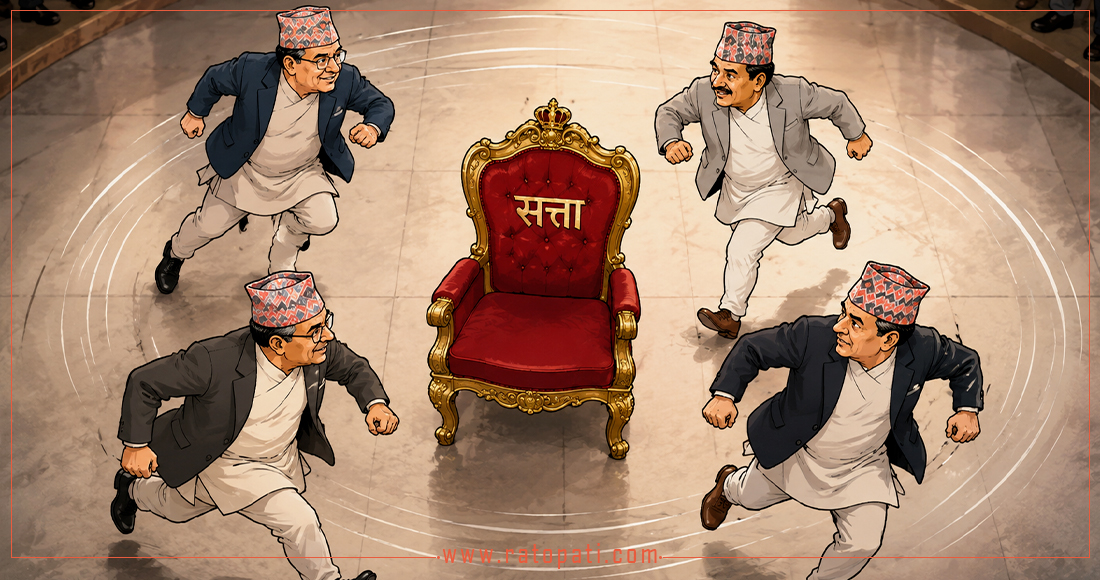
Kathmandu. Most political parties are heading into the elections scheduled for Falgun 21, following the Janji movement, without formal manifestos. The parties are currently engaged in wooing voters with various assurances.
The Rastriya Swatantra Party has emerged as a challenge to all parties as an alternative force across the country. In this situation, the Terai-Madhes-centric parties are also presenting their respective agendas and commitments to attract voters.
The Janata Samajbadi Party (JSP) Nepal is attempting to reassure voters by presenting 12 reasons under the banner of 'Why Vote for JSP Nepal?', while the Janmat Party is also working to woo the public by putting forward its long-standing agendas and issues. The Rastriya Mukti Party Nepal and the Nagarik Unmukti Party are attracting voters by championing the issue of identity.
The common agenda and issue among all parties is constitutional amendment. JSP Nepal and the Janmat Party have made constitutional amendment their main agenda, whereas the Rastriya Mukti Party Nepal and the Nagarik Unmukti Party are stating that the constitution should not just be amended but entirely rewritten.
JSP Nepal claims that the first and second Madhes uprisings brought Madhesi identity, equal rights, and state restructuring to the center of national politics, and that the party led this movement. JSP Nepal is prominently raising the issue in the elections that the Land Bill, introduced with the aim of pushing Madhes towards desertification, was withdrawn due to JSP Nepal's insistence. The party has also claimed to voters that it was responsible for resolving the citizenship issue. Furthermore, JSP Nepal has claimed that it has never prioritized government or power.
- Main Agenda: Constitutional Amendment
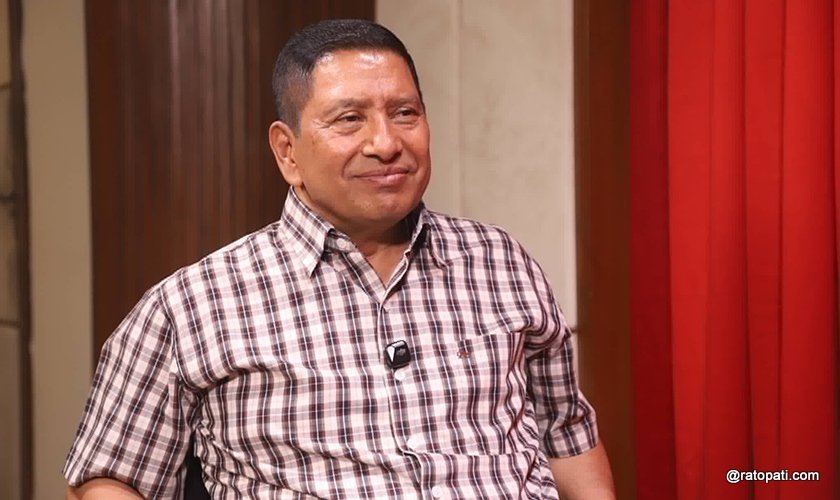
JSP Nepal General Secretary Ramkumar Sharma stated, 'The issues raised by the Janji activists were our issues. They were issues we had been raising for years. However, the new forces are moving elsewhere, abandoning the issues that fueled the movement.'
He claimed that JSP Nepal has been raising issues such as ending corruption, good governance, a directly elected executive head, and inclusivity in every state body since the beginning, and confirmed that they have put these forward as agendas for this election as well. Stating that the 2084 election is happening in 2082 and its main demand is constitutional amendment, he expressed hope that the government formed after the election would widely amend the constitution to incorporate the people's agendas, and that they are communicating the same to the voters.
He asserted that they have been raising the demand for constitutional amendment since 2072, and only now have all new and old parties agreed on it, stressing that all problems will be resolved only through constitutional amendment.
- Commitment to Bring 'Swaraj' (Self-Rule)
The Rastriya Mukti Party (RAMUPA) is assuring voters that it will establish a multinational democracy through complete constitutional amendment, ensuring self-determination, autonomy, and proportional representation for all communities. RAMUPA is telling voters, 'It should not just be a change of power, but also a change of consciousness.'
The party is committing to providing self-governance and self-determination rights to indigenous nationalities, Madhesis, Dalits, and backward regions, along with constitutional protection for the identity, language, religion, and traditions of every cultural nation.
RAMUPA Nepal has approached voters with the concepts of Gram Swaraj (Village Self-Rule), Ganarajya Swaraj (Republic Self-Rule), and Bahulrashtra Swaraj (Multinational Self-Rule). Gram Swaraj will ensure self-governance for local communities, while Ganarajya Swaraj claims to guarantee cultural federalism or regional/ethnic autonomy. Bahulrashtra Swaraj is stated to build a common national framework.
Keshav Jha, General Secretary of RAMUPA Nepal, claimed that their agenda is different from all other parties. He stated that since communism, liberalism, and socialism have all failed in the current situation, they have put forward the concepts of Swadeshwad (Nativism), Bahul Rashtravad (Multinationalism), and Communal Socialism. He mentioned that while all other parties are talking about constitutional amendment, they are advocating for the complete rewriting of the constitution.
- Claim of Introducing Madhes Internationally
The Janmat Party has put forward its achievements, including establishing the issue of racial discrimination, Dr. CK Raut raising the Madhes movement to new heights on international platforms through a 10-day hunger strike and non-violent agitation, publicizing the history of Madhes to establish it permanently, rescuing and bringing back citizens stranded abroad, establishing Madhes in international forums like the UN, UNPO, ICAPP, etc., and taking the oath in parliament in the Madhesi language.
Leaders of the Janmat Party have been saying that people should vote for their party because Chairman Raut is a renunciate who has distanced himself from worldly desires and is engaged in spiritual practice, and who entered politics in his youth after renouncing everything.
Chandan Singh, General Secretary of the Janmat Party, stated that they have made 'New Republic' their main agenda. He said that the way forward for the country is the New Republic, which is why they have made it the main agenda in the elections. He mentioned that the Janji movement was for the New Republic, an issue they have been raising from the beginning, and that they are contesting the elections with demands such as having a directly elected executive head, making provinces autonomous, placing local levels under provinces, and maintaining economic autonomy.
- Identity Issues
Abdul Khan, Vice President of the Nagarik Unmukti Party, stated that they are contesting the elections struggling for a community-based socialism. He said, 'Our main issue is identity; we have made an agenda that every citizen should get an identity based on geographical equality, and we are contesting the elections with this agenda.'
He stated that the country cannot move forward until identity-based communities are brought into the mainstream, and that every citizen must be strong for economic prosperity, a demand they will raise in parliament as they seek votes from the electorate. He also mentioned that constitutional amendment is necessary for all these actions, and they will pressure the new government formed after the elections to advance the issue of constitutional amendment.
This specific news has been automatically translated by AI. As a result, there may be some inaccuracies or language errors.