Experts Discuss Nepal's Infrastructure Development Challenges and Future Roadmap in Ratopati Roundtable


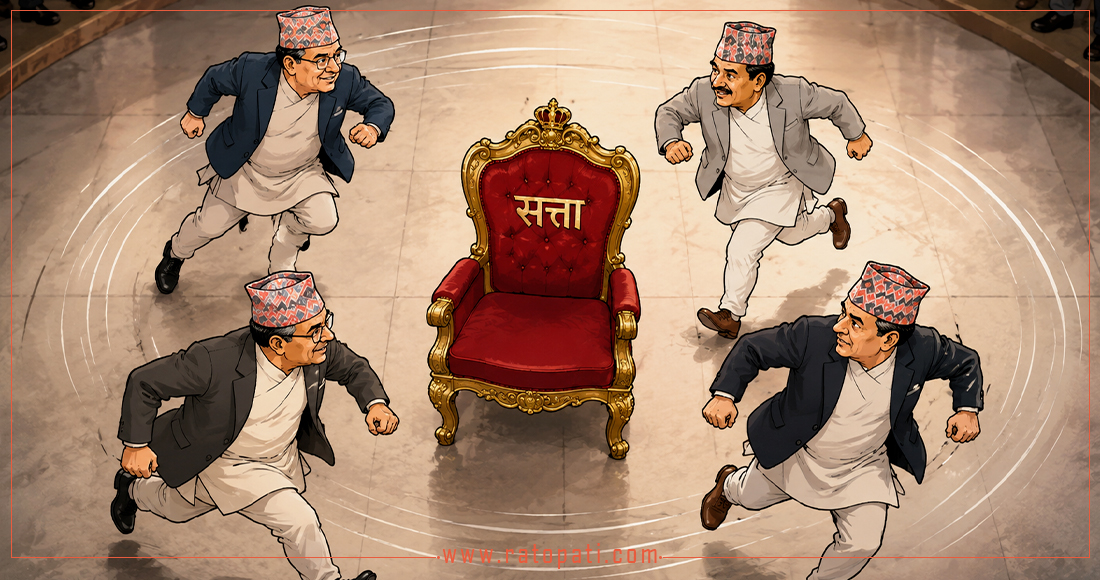
Kathmandu. The country is immersed in election fervor. As the House of Representatives election on Falgun 21 approaches, political parties are busy drafting their manifestos. There is widespread curiosity about what infrastructure plans parties will put forward this time, following past elections where they promised grand visions like railways, ships, and monorails.
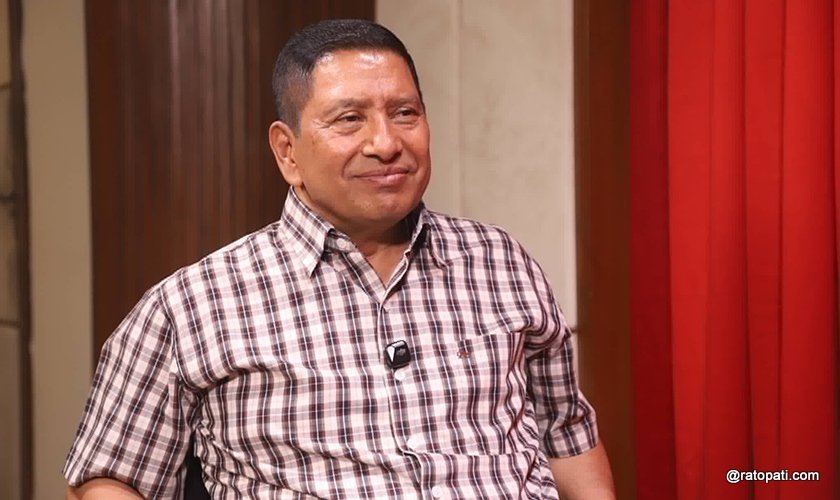
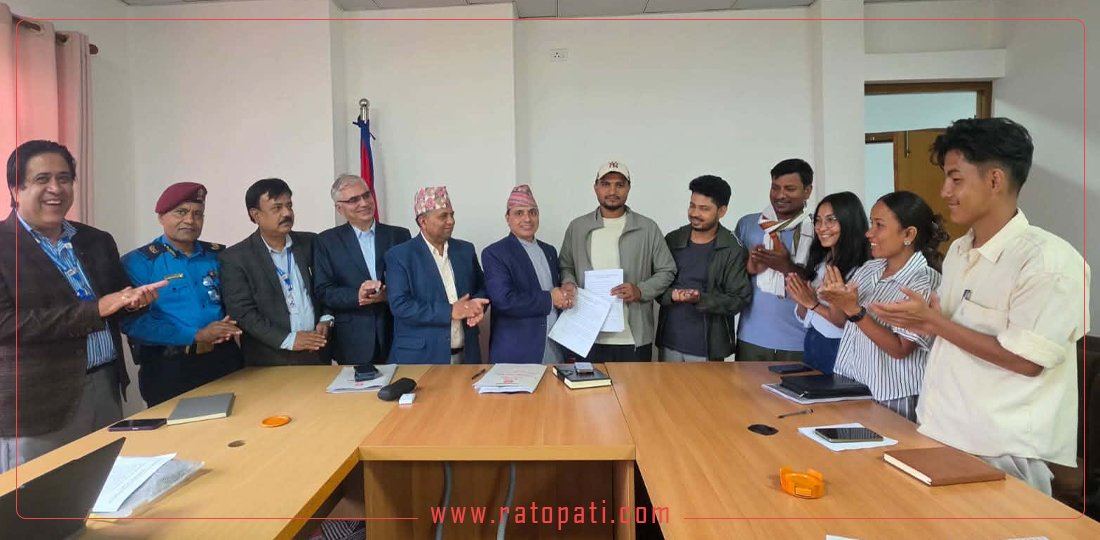
Ratopati held a 'Roundtable' discussion focused on the actual ground reality of Nepal's infrastructure development, existing problems, and the path forward. Presented here is the roundtable discussion featuring infrastructure expert Arjunjung Thapa, forest expert Sindhu Prasad Dhungana, and President of the Nepal Contractors' Association Rabi Singh.
- How do you analyze the overall current state of infrastructure in Nepal?
Arjunjung Thapa: In Nepal, particularly over the last approximately 32 years since the change of 2046 BS, there has been significant quantitative progress in the infrastructure sector. Regarding roads, although statistics mention 98,000 kilometers, the road network has expanded to roughly 100,000 kilometers. There has also been a major revolution in communication, and we have made significant strides in hydropower generation.
Currently, electricity generation has reached about 3500 to 3700 megawatts. However, challenges remain equally significant. Although 100,000 kilometers of roads have been built, only about 14 to 15 thousand kilometers have been blacktopped. Many roads we use are still at the 'dozer standard.' Our necessity now is to upgrade at least 30,000 kilometers of these unpaved roads to gravel or 'semi-blacktop' standard, and the rest to blacktop. If this is achieved, all-weather transportation facilities will reach the centers of all 753 local levels in the country.
Our main problem is the confusion over priorities. We have not been clear about whether to prioritize tourism, hydropower, industry, or agriculture. Plans are made, but their implementation lacks continuity. When South Korea started its Five-Year Plans in 1961, even with government changes, they did not alter approved plans by a single inch. The subsequent government implemented the plan passed by the previous government exactly as it was.
However, in our country, as soon as the government changes, plans from the previous administration are abandoned, and new priorities are set. This has scattered investment, lowered quality, and the public has not received the expected services. The private sector has already demonstrated its capacity by generating 3500-3700 megawatts in hydropower. If the government sets priorities and facilitates, this can be increased four to five times in 5-7 years. But we have lagged due to the lack of an integrated development concept. For instance, we have failed to develop a practice of looking at roads, hydropower, and forests together when developing tourism.
- From the perspective of forests and environment, what is the state of infrastructure development?
Sindhuprasad Dhungana: Speaking as a student of environmental science, the concept of development transformed into 'sustainable development' after the 1990s and the change of 2046 BS. The understanding was established that development is not just economic growth; social, cultural, and environmental aspects must also be balanced.

Nepal adopted this by introducing the Environmental Protection Act in 2053 BS. It is natural for 'linear projects' such as roads, hydropower, and irrigation to affect the environment and biodiversity. After hydropower generation, forest areas must be used to lay transmission lines. Since such projects affect biodiversity, the government has attempted to minimize this impact and limit the use of forest areas through legislation.
Overall, infrastructure in Nepal has not been built by completely destroying the environment. The development that has occurred has been done with an attempt to balance the environment, and it is proceeding in a reasonably appropriate manner.
- From the viewpoint of a construction entrepreneur, what does the picture of infrastructure development look like?
Rabi Singh: It is true that development construction gained momentum after 2048 BS with increased foreign aid and the 'exposure' of Nepalis. Many roads, bridges, hospitals, and airports were built. However, we failed in terms of quality and good governance. Our acts, laws, and regulations became non-implementable. All ministries and agencies created strict laws based on their own interests, which created obstacles to development rather than facilitating it.
Another major problem lies in our political leadership and electoral system. 'Strongmen' and influential figures dominated the selection of policymakers. The tendency was seen for the Prime Minister, Finance Minister, or Minister for Physical Infrastructure to hoard budgets in their constituencies rather than focusing on equitable national development. As a result, national highways are dilapidated, but four-lane roads are being built in the constituencies of influential leaders.
We chose 'interest-based' plans rather than 'return-based' ones. Although 100,000 kilometers of roads have been built, there is not a single reliable 'all-weather' road connecting the capital. Yesterday there was the Tribhuvan Highway; today there are 8 roads, but none can be used confidently during the monsoon. It was announced that hospitals and cold storage facilities would be built in every municipality, but only buildings were constructed, lacking services and manpower. Because plans are made only for economic benefit and commission, cattle graze at some airports where there are no airplanes.
The lack of proportional development has led to public frustration, which has also seriously impacted good governance.
- Looking at the state of infrastructure construction in Nepal, projects that should be completed in 1 or 2 years seem to be stalled for decades compared to other countries. What is the reason for projects not being completed on schedule?
Arjunjung Thapa: The main reasons are a lack of 'follow-up' and a lack of inter-agency coordination. When the government changes, the budget for old plans decreases, and new plans are added.
Let me give an example of the road expansion in the Kathmandu Valley. At that time, the Secretary in the Prime Minister's Office, Krishnahari Baskota, used to follow up on the work every two weeks, gathering all agencies including roads, forests, electricity, and water, making them swear an oath. Coordination was good then. But that mechanism is absent now. Outside Kathmandu, roads, forests, electricity, and administration sit like separate empires. There is no spirit of mutual cooperation. For instance, work on the Naubise-Mugling road is halted sometimes by gravel/sand issues, sometimes by electric poles, or sometimes by local disputes.
Recently, I visited the Kakarbhitta-Kerkhana road in Jhapa, where 40 kilometers of road construction is underway. Some thugs stopped the work. However, instead of facilitating, the District Administration Office issued a notice stating 'illegal soil was used.' Soil is needed for 'filling' on roads; can soil itself be illegal? It appeared that the administration and police were trying to gain some benefit by complicating the issue instead of resolving it. Work resumed only after public pressure. This tendency prevents contracts from being completed on time.
- How is the construction work proceeding? What are the reasons why projects being worked on are not being completed on time?
Rabi Singh: There are many reasons why contracts in Nepal are not completed on time. First, national pride projects are initiated impulsively without adequate budget and preparation, leading to issues like land acquisition and increased costs. Second, contracts become sick when the government awards them without allocating the necessary budget, when work does not adhere to the agreement, and due to negligence by the implementing agency. Third, when irregularities are encouraged, and due to the fear of the Commission for the Investigation of Abuse of Authority (CIAA) and non-implementable laws and regulations, contracts are terminated even after failing to complete on time, imposing further financial burdens on the state. Political leadership's irresponsibility, contractor negligence, the COVID-19 pandemic, and price hikes have also contributed to contracts not being completed on time. Furthermore, having many governments with differing views, the lack of laws tailored to geography, and the absence of political commitment add to the problems.
- There is a recurring complaint that forests have always been an obstacle to development. Is the Ministry of Forests anti-development?
Sindhuprasad Dhungana: The Ministry of Forests is a part of the Government of Nepal; it cannot be anti-development. However, there is a problem where one ministry does not acknowledge the existence of another. The Department of Roads only sees roads, not greenery. When we tried to plant trees according to the 'urban forest' concept during the Kalanki-Dhobighat road expansion, the Department of Roads did not agree.
There are certainly some legal complexities. There is a strict law prohibiting the construction of physical structures inside national parks. There are three conditions for using forest areas outside the national parks: the project must be of national pride or priority, it must not significantly affect the environment, and there must be no alternative outside the forest area.
The problem is that contracts are awarded without environmental studies and without looking at alternatives. The Forest Ministry does not stop work in places where cutting a few trees is unavoidable. But it is wrong to say one will build a road by destroying a national park or disturbing wildlife habitats. For example, it is natural for UNESCO and environmentalists to object when people insist on paving and widening the road from Kasara to Madi in Chitwan, which takes only 20 minutes to traverse. But in remote places like Rara or Khaptad, where people suffer, the Forest Ministry has never created an obstruction. The forest does not stop development; it makes development sustainable. Hydropower is clean energy, and the Ministry of Forests should be liberal about it. But engineers often disagree when asked to build wildlife-friendly infrastructure for roads and canals, claiming it increases costs. Environmental conservation is as essential as development.

- Recently, 66 sick contracts were terminated in a short period. Why do contracts become sick? Where is the systemic weakness that prevents this from being stopped at the beginning?
Arjunjung Thapa: I want to add an example that is almost certain to become 'sick' in the future—the Koteshwor Intersection or Flyover. Serious problems are already visible in this project, which is being built with a loan assistance of 32 billion from JICA. First, there is a dispute over land compensation. Out of 35 ropanis of land in Tinkune, compensation has been distributed for 11 ropanis, but 22 ropanis remain pending.
The court has ordered payment based on the current market price. If 5-7 billion is spent on compensation, the land will belong to the government, and the construction cost will drop from 32 billion to 21-22 billion, but the government and administration are hesitant to make a decision due to the fear of the Lalita Niwas case.
The second problem is the working time. The Civil Aviation Authority of Nepal (CAAN) has stated that only 3 hours of work will be permitted per day due to security reasons. The contractor must keep machinery and manpower ready for 24 hours, but work only happens for 3 hours. This drastically increases cost and time. This is proceeding without preparation. If the contract is awarded without finalizing compensation and managing working hours, this project is also certain to become sick.
Another problem is the 'discontinuity' of the budget. For example, the cost of the Kathmandu-Terai Fast Track is 213 billion. It is scheduled to be completed by Chaitra 2083 BS. So far, 84 billion has been spent. The remaining 130 billion must be allocated in two years, but if only 20-22 billion is allocated annually, the project will be extended by 5 years.
Similarly, for the Suryavinayak-Dhulikhel road, which has an 8 billion contract, 4 billion is needed annually, but only 740 million has been allocated. When money is not received, the contractor's cash flow and supply chain are disrupted, and the project becomes sick. Due to the tendency to award contracts under political pressure without preparation, contracts are awarded even when the construction site is not available, causing projects to be stalled for years.
- How are contracts reaching the stage of termination? Is this the fault of the construction entrepreneurs or the government?
Rabi Singh: Political instability and non-implementable laws and regulations are the main reasons for projects becoming sick. First, there is a lack of preparation. Land acquisition, tree felling, and utility relocation should be done by the government before awarding contracts. But officials and ministers hastily award contracts to claim credit during their tenure and dump all the risk onto the construction entrepreneurs' shoulders. Construction entrepreneurs have to run around themselves to cut forest trees and move electric poles. It is ironic that the army stated it took 42 months to cut 9 trees.
The private sector works quickly when its interests align, but it takes years when caught in procedural hassles. The second problem is the trap of the Public Procurement Act. Section 59 (3 and 8) of the Procurement Act stipulates that if a contract is terminated, the entire government budget amount will be recovered from the construction company. This is an impractical provision unheard of anywhere else in the world. Instead of forfeiting the performance guarantee and granting release upon contract termination, officials are afraid to terminate contracts due to the fear of losing their homes and property through recovery, so they keep extending the deadline. This causes contracts to remain in 'coma' for years.
Third, corruption and commissions have increased costs. If excavating one trip of sand costs 100 rupees, the tipper owner has to pay 2,000 rupees. Costs increase by appeasing political parties, local thugs, and the administration in between. Employees are also afraid to make decisions due to the fear of the CIAA and the Office of the Auditor General. Thus, projects become sick due to the lack of implementable laws and regulations and the absence of good governance.
- Are contracts becoming sick because the EIA report process takes months or years?
Sindhuprasad Dhungana: The forest is not responsible for contracts becoming sick. Problems arise if contracts are awarded without environmental studies or if attempts are made to acquire forest land without securing land rights. Even when I was the chief of a national park, there were compulsions like not being able to do what the law forbids and the court stopping actions.
The reason for making environmental studies mandatory is sustainable development. For projects passing through forest areas, the Ministry of Forests must get a cabinet decision to make the forest area available, which often leads to budget lapsing. In some cases, even after environmental studies are complete and land is acquired, permission to cut trees has been denied.
It is wrong to cut trees before a project starts, in places where there is no necessity. Even areas declared industrial zones have gone bankrupt. The weakness of consultants is also responsible for the delay in the environmental study process.
Although it was intended to be completed in 42 days when drafting the new Environmental Protection Act, it was delayed due to public consultation. The forest has not hindered development; rather, 22-23 thousand hectares of forest area have been made available for development. The provision for government projects to pay lease for using forest areas has been removed. There are calls to remove the provision of giving land in exchange for land and to unify the rule of planting 10 trees for every one cut.
- There have been demands to amend the Public Procurement Act. What exactly needs to be amended? How is it hindering construction?
Rabi Singh: The Public Procurement Act requires extensive reform. The entire Act should be repealed, and a new one should be introduced to facilitate infrastructure development. Not just the Procurement Act, but other related acts affecting it, such as the Forest and Environment Act, Local Act, and Financial Acts, must also be updated according to the times.
In the current situation, officials working in the physical infrastructure sector are forced to implement impractical things even if they know better, and they fear the Office of the Auditor General raising objections if they make payments according to the agreement. Therefore, it is necessary to make the laws and regulations practical and implementable. Once an entrepreneur signs an agreement, all parties to the agreement must fulfill their roles, but no ministry or agency should interfere in a way that complicates the implementing agency. Sustainable development is affected when all ministries pursue their own interests. Therefore, development goals cannot be achieved until the Procurement Act and other relevant acts are reformed to be implementable.
Elections are approaching, and parties are busy writing their manifestos. In past elections, parties announced grand dreams in their manifestos, from trains and ships to smart cities. But the implementation aspect has always been weak. What plans should be included in the upcoming manifestos?
Arjunjung Thapa: Parties should only announce 'achievable' plans for a 5-year term in their manifestos. While a long-term dream or master plan spanning 20-30 years is good, a concrete and realistic outline of what will be done within 5 years must be presented during elections. We are currently preparing a road master plan for 2025 to 2045. The priority now is to upgrade the existing 100,000 kilometers of roads. The commitment to complete pride projects like the Fast Track on time by providing adequate budget must be in the manifesto. Parties should resolve to end the practice of scattering budgets on small, fragmented plans, which extends projects for years.
- When discussing development, the issue of environmental destruction always arises. Why doesn't a sustainable development model appear in the manifesto where 'forests are saved and roads are built'? How can prosperity be achieved through forest areas?
Sindhuprasad Dhungana: Nepal has set a global example in forest conservation. Forest cover has reached 45-47 percent. Now, manifestos should include plans for 'achieving prosperity from forests' rather than just 'saving forests.' We can produce 110 million cubic feet of timber annually, but currently, only 30 million is being produced. Billions worth of timber and furniture are being imported from abroad, while Nepal's timber rots in the jungle. Therefore, policies for using and exporting our own timber must be introduced.
Under the green economy, non-timber forest products industries, carbon trading, wildlife farming, and ecotourism must be linked to economic prosperity. Climate finance should also be a focus. The Ministry of Finance needs to adopt a flexible policy to bring in international climate funds that Nepal receives for conserving forests. Parties should propose plans that include 'green roads' when building roads and 'open spaces and parks' when building cities. There is no reason for Nepal to be poor; we can transform if our natural resources are utilized correctly.
- Parties talk about an 'infrastructure revolution' in their manifestos, but issues concerning construction entrepreneurs are not included. What issues related to construction entrepreneurs and the construction sector should parties include in the upcoming manifestos?
Rabi Singh: Parties should bring implementable plans, not dreams like trains and ships. The first priority should be job creation. Currently, 5 to 7 lakh Indian workers are employed in the infrastructure sector. They take home 50,000 to 150,000 rupees monthly. But our youth are forced to go to the Gulf and Malaysia for 30,000-40,000 rupees.
Parties should bring concrete plans in their manifestos to displace Indian workers by imparting skills to Nepali manpower in the infrastructure sector and retaining youth in the country. Second, laws and regulations must be reformed. A commitment to create development-friendly and implementable laws and regulations, especially the Procurement Act, should be included. Third, resources must be utilized. Nepal is not only the second richest country in water resources in the world but also rich in 'river-based materials.' Bangladesh has no stones; they buy them expensively. We have an abundance of sand and stones in our rivers. If these are 'branded' and exported without harming the environment, the trade deficit can be reduced. Fourth, the construction industry must be protected. After COVID, the construction industry has shrunk to 33 percent of its capacity. The market worth 10 trillion rupees has fallen to 4 trillion. To prevent construction entrepreneurs from collapsing, payment assurance and a conducive business environment must be created. The next government must bring infrastructure policies that address the sentiment of the youth and create employment opportunities within Nepal.
This specific news has been automatically translated by AI. As a result, there may be some inaccuracies or language errors.