UML Faces Setback as Key Parties Reject Alliance Proposals for February 21 Elections


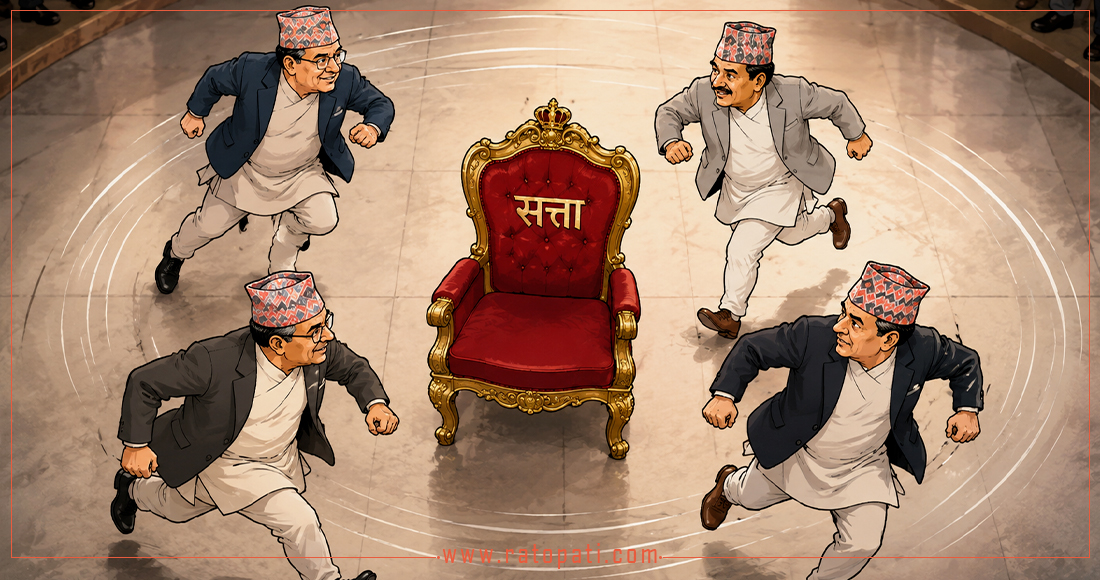
Kathmandu. The CPN-UML is facing difficulties after other parties rejected its proposals for electoral alliances in key constituencies for the House of Representatives elections scheduled for February 21. The UML's ambition to forge electoral alliances in specific areas, driven by UML Chairman KP Oli, appears unlikely to be fulfilled as both the Nepali Congress and the CPN (Maoist Centre) have rejected the proposals, putting the UML in a difficult position.
“The UML proposed electoral alliances in specific areas, but the CPN (Maoist Centre) has rejected the proposal,” CPN (Maoist Centre) leader Prakash Jwala told Ratopati. “Party Coordinator Prachanda and Co-coordinator Madhav Nepal have stated they will not go along with the UML's proposal.” A few days prior, Prachanda and Nepal briefed a party meeting about the alliance proposal from the UML, concluding that no alliance would be formed.
The Nepali Congress, UML, and CPN (Maoist Centre), which had filed their candidacies on Magh 6, announcing they would contest the elections alone, attempted to form electoral alliances in certain constituencies as the voting date approached. To this end, UML Chairman KP Sharma Oli had made proposals to former Nepali Congress President Sher Bahadur Deuba and CPN (Maoist Centre) Coordinator Pushpa Kamal Dahal 'Prachanda'.
Following the special general convention of the Nepali Congress, Gagan Thapa has taken over the party's leadership. However, Thapa has consistently been against electoral alliances. In this situation, even if Deuba is positive about an alliance, his standing within the party is weak.
Amidst discussions of electoral alliances, the Nepali Congress explicitly stated in a press conference that it would not form any coalition with any party before the election.
At a press conference held by the Nepali Congress Central Publicity Committee on Thursday, party spokesperson Devraj Chalise clarified that the Congress is entering the election alone with its candidates contesting in 165 constituencies, and thus, there is no policy to form an alliance before the election.
“The Nepali Congress will not form any kind of coalition or electoral alliance before the election. Now, the Congress will compete in the election solely on its own strength,” stated spokesperson Chalise.
Meanwhile, CPN (Maoist Centre) Chairman Prachanda has also briefed the party meeting that there will be no electoral alliance with any party. Quoting Prachanda, leader Rajendra Shrestha said, “The electoral atmosphere across the country is becoming favorable for our party. If everyone works harder, we will become the number one party. Currently, there have been no discussions about electoral alliances with the UML or the Nepali Congress.”

At a press conference held at the party office in Chyasal on Wednesday, UML Vice Chairman Ram Bahadur Thapa 'Badal' revealed that the party's policy is to seek electoral cooperation with political parties that stand against those who seek to destabilize the country.
“The party's policy is that electoral cooperation can be sought with parties that stand against those who seek to burn the country,” Badal had said. “In constituencies where parties are ready to stand against those who seek to burn the country among the 165 constituencies, cooperation can happen in a win-win situation in specific constituencies, considering the interests of both sides.”
In this context, Vice Chairman Thapa stated that an agreement had already been reached for cooperation with the Rastriya Janamorcha Nepal led by Janardan Sharma and Baburam Bhattarai.

“Cooperation may happen with others in some constituencies as well. Discussions are ongoing regarding that,” Thapa had said. “Efforts from all sides will continue until February 21, and some agreements for cooperation might be reached in a few places at the last moment.”
However, if the CPN (Maoist Centre) and the Nepali Congress do not change their stance by February 21, the UML's desire for an electoral alliance does not seem likely to be fulfilled.
Specifically, the UML is in favor of an electoral alliance with another party in Chairman Oli's constituency, Jhapa-5, and General Secretary Shankar Pokharel's constituency, Dang-2. In Jhapa-5, Balen Shah, a senior leader of the Rastriya Swatantra Party (RSP), is competing against Oli. Considering the growing wave for the RSP, Oli wishes to secure a victory by forming an alliance with either the CPN (Maoist Centre) or the Nepali Congress in his and General Secretary Pokharel's constituencies.
In the previous election, Oli had an electoral alliance with the Rastriya Prajatantra Party (RPP) in Jhapa. However, this time, the RPP has also stated it will not form an alliance. If both the RPP and the CPN (Maoist Centre) refuse an alliance, there is a fear that Oli might face a setback in the Jhapa election, and General Secretary Shankar Pokharel is also said to be facing a challenge in Dang.
This specific news has been automatically translated by AI. As a result, there may be some inaccuracies or language errors.