Nepal's Old Political Parties Face Existential Crisis After 'GenZ' Protests

Kathmandu. The Nepali Congress, which played a leading role in every political change since 2007 BS, has found itself in a defensive position by 2082 BS. The Congress party was established on Chaitra 27, 2003 BS, with the aim of establishing democracy in the country by overthrowing the 104-year autocratic Rana regime. The Congress played a significant role in leading the popular movements of 2007 BS, 2046 BS, and 2062/63 BS to establish a federal democratic republic. However, due to its failure to adapt to the times in the 75 years since the establishment of democracy, the Congress is facing the most serious challenge in its history.
The Congress became the biggest victim of the movement led by the GenZ generation on Bhadra 23 and 24. Although the Congress emerged as the largest party in the 2079 elections, Chairman Sher Bahadur Deuba failed to become the Prime Minister. He was accused of becoming a follower of either Prachanda or KP Oli in the lust for becoming Prime Minister.
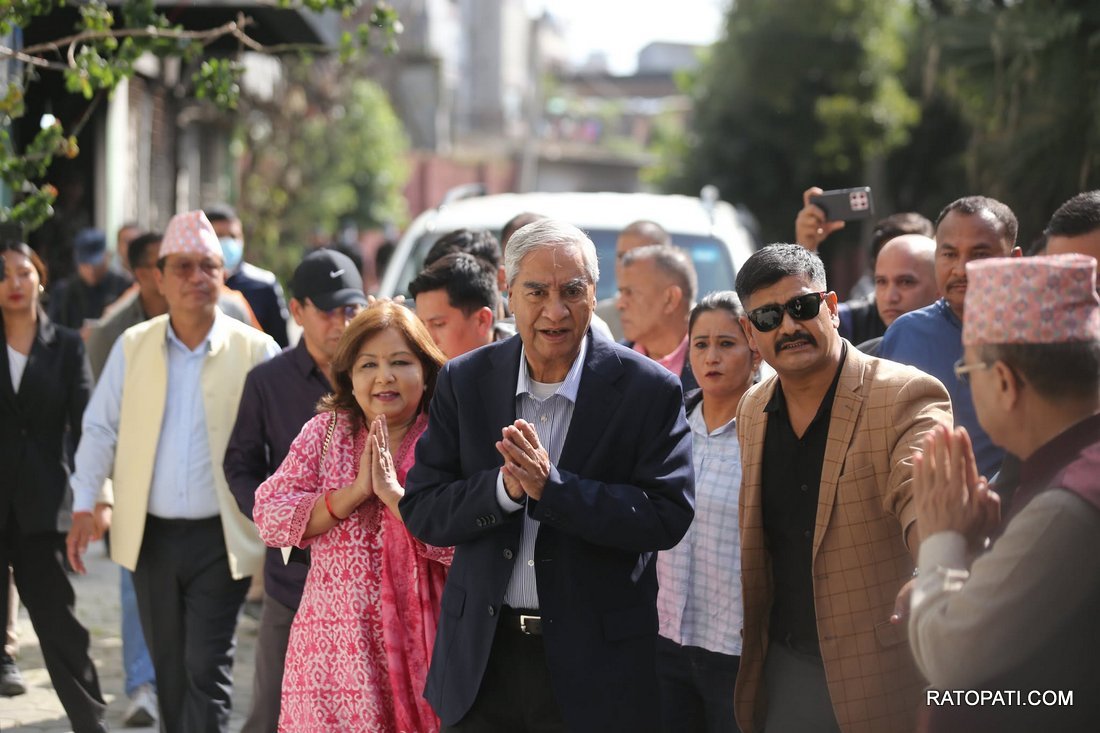
Deuba, who was recently serving as a 'waiting Prime Minister' after signing a 7-point agreement with CPN-UML Chairman Oli, and his wife Dr. Arzoo Rana, who was the Foreign Minister, were severely beaten at their residence during the GenZ movement. Although the Nepali Army managed to rescue the Deuba couple and take them to a safe location, their house was completely destroyed.
As the situation normalized, former General Secretaries Gagan Thapa and Bishwaprakash Sharma pressured him to step down from leadership within the party. They submitted signatures of 54 percent of the convention representatives demanding a special general convention towards the end of Mangsir. Towards the end of Ashoj, Deuba flew to Singapore for treatment after giving acting chairmanship to Deputy Chairman Purna Bahadur Khadka in a Central Committee meeting held at the party headquarters in Sanepa.

However, the meeting did not heed the demands of Gagan-Bishwaprakash and decided to call a regular general convention towards the end of Baisakh. Acting Chairman Khadka could not conclude the Central Committee meeting for a month. After Deuba returned to the country, he became active in politics again. Instead of resolving internal party disputes, Deuba appeared active in advancing the issues of parliament restoration and elections in alliance with the UML.
_fea29IJA1T.jpg)
Gagan-Bishwaprakash, dissatisfied with the party leadership's working style, called a special general convention in Kathmandu from Poush 27-29. The special general convention formed a new working committee under Gagan's leadership. The Election Commission recognized the working committee led by Gagan. After the Supreme Court refused to issue an interim order in favor of the Deuba faction, who had approached the court against the Election Commission's decision, he was simultaneously sidelined from power and party politics. To such an extent that Gagan did not even give a ticket to Deuba, who had been continuously winning from Dadeldhura since 2048 BS.
Although he did not suffer the same fate as Deuba within the party, UML Chairman Oli went down in history as the Prime Minister ousted from power through street protests. Oli, who became Prime Minister with the support of the Congress, could not sustain power. The stigma of the brutal killing of 23 GenZ members on Bhadra 23 is attached to him. He was forced to flee Baluwatar with the help of the army. Despite being the executive head, Oli failed to protect important state assets like Singha Durbar, the Parliament building, the Supreme Court, and public and private property. Having come to leadership from the party's ninth general convention in 2071 BS, he became very unpopular after the GenZ movement.
The CPN (UML), which considers itself the successor to the founding General Secretary Pushpa Lal Shrestha of the Communist Party established in 2006 BS, and its leadership are in the biggest crisis in history. Leaders pressured Oli to step down, citing huge damage to the party due to him. However, amidst criticism from all sides within and outside the party, Oli called the 11th general convention at the end of Mangsir. The general convention re-elected Oli as chairman for the third time.
_0nfhYUCjS9.jpg)
He initially hesitated to go to elections, declaring the government led by former Chief Justice Sushila Karki, formed on the strength of the GenZ movement, as unconstitutional. He went to court with the issue of parliament restoration, supported by the signatures of 165 MPs from the Congress and UML in the dissolved parliament. However, the UML was forced onto the field after all political parties agreed to go to elections.
Oli, who was preparing to go to elections in alliance with the Congress alongside the issue of parliament restoration, found himself in a difficult situation after Deuba stepped down from party leadership. There is discussion in political circles that the party could suffer significant damage in the elections amidst accusations of brutal repression of the GenZ and failure to protect state assets. It is estimated that the UML could suffer further damage as it has proposed Oli, a four-time Prime Minister, again as the future Prime Minister.

Not only the Congress and UML, but Pushpa Kamal Dahal 'Prachanda', the coordinator of the Communist Party of Nepal (formerly CPN (Maoist Centre) and Unified Socialist), who played a significant role in overthrowing the traditional monarchy through a decade-long armed insurgency and the 19-day popular movement, is currently in great crisis. Although he is less criticized compared to Deuba and Oli because he was not in power during the GenZ movement, Prachanda, who became Prime Minister three times by aligning with either the UML or the Congress, has been on a downward trajectory since the 2070 Constituent Assembly elections.
As the party continuously faced crises, he formed 'CPN' by uniting with 10 leftist components including Maoist Centre and Unified Socialist on Kartik 19. Prachanda, who went to the elections alone after 12 years, appeared very worried about the state of the party after the elections. Amidst increasing pressure within the then Maoist Centre to relinquish leadership after the GenZ rebellion, he called a special general convention in Mangsir for 'face saving'. However, after forming a new party by uniting with parties like Unified Socialist without holding the general convention, leaders including Janardan Sharma, Ram Karki, Haribol Gajurel, and Sudan Kirati left. Whether the CPN, established through the sacrifice of thousands of martyrs, ends with Prachanda or expands further will be decided by the upcoming elections.
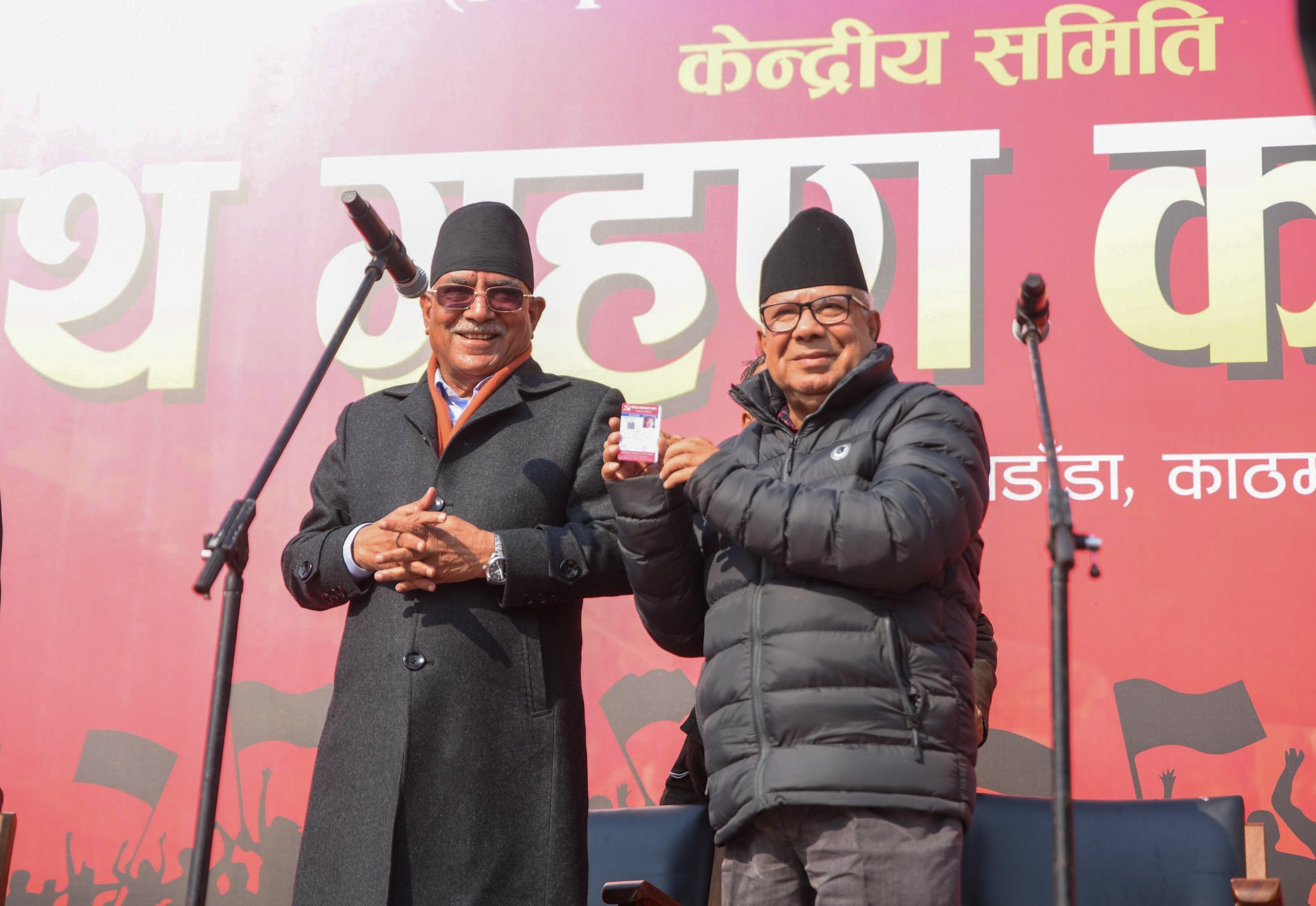
Not just these three parties, but all parties established alongside the political changes from 2007 BS to 2062/63 BS, including the CPN (Maoist Centre and Unified Socialist) led by Pushpa Kamal Dahal 'Prachanda', who played a crucial role in overthrowing the traditional monarchy through the decade-long armed insurgency and the 19-day popular movement, are in an existential crisis due to the GenZ movement. Interestingly, the Congress, which waged an armed revolution in 2007 BS, the UML in 2028 BS, and the Maoists who took up arms in 2052 BS, have become unpopular simultaneously for failing to deliver on public expectations regarding good governance, ending irregularities, social justice, and economic prosperity while remaining in power for a long time. Professor Krishna Pokharel states that the major three parties are in a major crisis due to the lack of strong internal democracy and the absence of a scientific method for leadership transfer and generational change. He specifically analyzed that the communists missed a huge opportunity when Oli and Prachanda were 'clueless' ('hussu').
“The communists had a great opportunity in 2074 BS. If the UML and Maoists, who formed a government with nearly a two-thirds majority by uniting, had continued it, the Nepali Congress would have been forced to form another alliance,” he told Ratopati. “Ideologically, there would have been a political force leaning left from the center, and one leaning right from the center. That would have put the country's politics on the right track. Many call Oli-Prachanda clever leaders; I call them clueless leaders. Oli and Prachanda missed capitalizing on that golden opportunity.”
After the promulgation of the Federal Democratic Republic Constitution in 2072 BS, Nepal's recent politics has centered around these three: Deuba, Prachanda, and Oli. To the extent that in the last ten years, party workers in local, provincial, and federal elections could not even vote for their respective election symbols. Another professor, Lokraj Baral, expresses concern that the republic itself could be in danger due to the power and struggle for authority among Deuba, Oli, and Prachanda.
_JPoryT35wX.jpg)
“It is a battle of personalities, self-centered politics. Whether it was Girija Prasad or others, now it is Oli Ji, and similarly Prachanda, Sher Bahadur—all are self-centered; internal party conflicts arose due to self-serving politics. The tendency to dislike challenges from others has become dominant. The current situation arose because politics became person-centric,” he said.
Professor Krishna Pokharel indicated that scenarios not seen before might emerge in the coming days. Pointing to the 'craze' seen for Balen Shah, proposed as the next Prime Minister by the new party Rastriya Swatantra Party (RSP), he said, “At one time, there was some attraction towards Prachanda in Nepali politics. The way youth and people of various age groups are following Balen now; people seem extremely eager to catch a glimpse of him.”
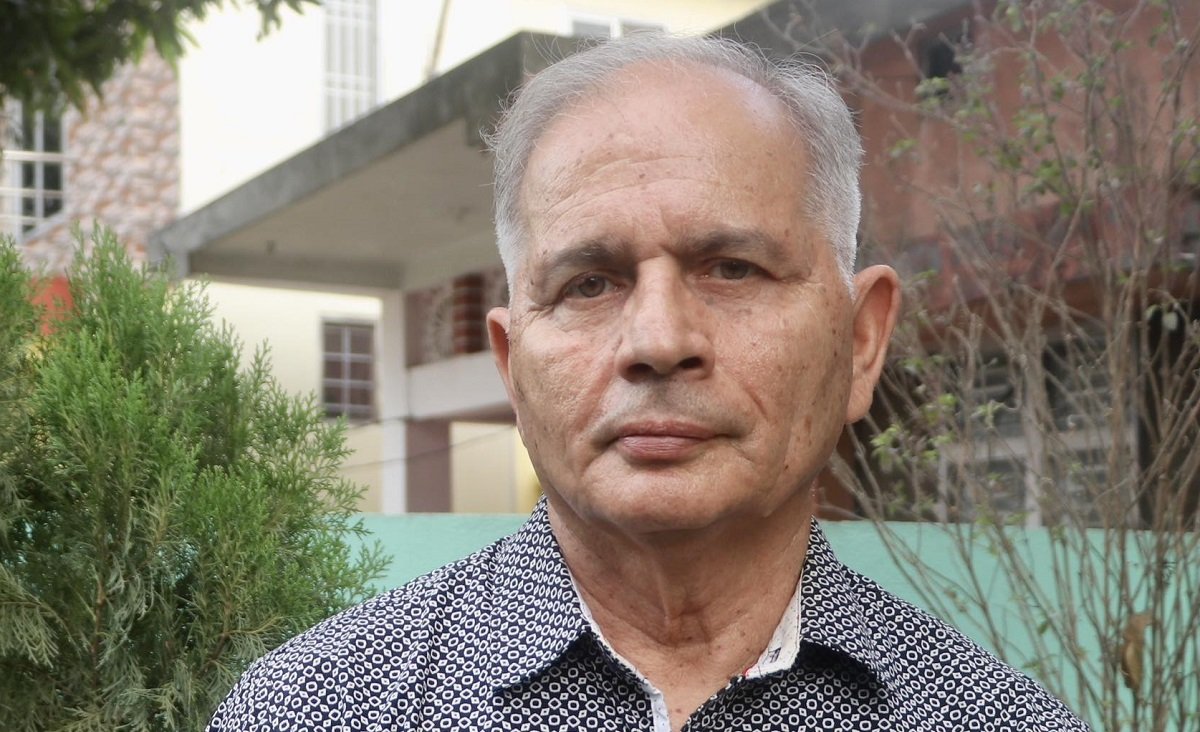
RSP appears poised to capitalize on the extreme disillusionment and apathy seen on a 'mass scale' towards traditional political parties. RSP, established in 2079 BS, was encouraged after securing 21 seats with 1.13 million votes in a short period. Amidst widespread public frustration, the GenZ movement erupted in Bhadra. RSP, claiming ownership of the GenZ movement, seems to be in the race to form a single-majority government in the upcoming elections. RSP has aggressively expanded its election campaigning nationwide with a strategy to secure a majority by utilizing popular figures from various sectors of society, rather than standing on the foundation of party ideology and policy.
Professor Pokharel suggests that older parties will receive 'political treatment' following the elections on Falgun 21 with the rise of new political forces. “In practice, the improvement must be reflected in people's lives. If that doesn't happen, ideology is not something to be chanted. The country does not progress by chanting ideology like reciting a Gayatri Mantra. Political parties needed treatment, and they will get that treatment in this election,” he said.
Looking back at the 75-year history since the establishment of democracy, Nepal has experienced political revolutions approximately every 10 years. The state has suffered great damage because governments formed after each revolution failed to institutionalize the change.
Revolution of 2007 BS
After the revolution of 2007 BS, a tug-of-war began between BP and Matrika within the Congress for the post of Prime Minister. The dispute between these brothers within the Congress dashed the dream of creating a new constitution through the Constituent Assembly. Although the Rana regime fell, a Rana-Congress government was formed under the leadership of Mohan Shamsher. Dissatisfaction grew within the Congress because the government was led by the very force against which the armed rebellion had taken place. Amidst internal dissatisfaction, Home Minister BP Koirala resigned. In 2008 BS, Prime Minister Mohan Shamsher resigned. After King Tribhuvan made Matrika the Prime Minister, internal conflict within the Congress increased.
Amidst the dispute, the party directed withdrawal from the government. However, Prime Minister Matrika defied the party's directive. A special general committee meeting of the party was called in Bishalnagar, Kathmandu, to resolve the dispute. Prime Minister Matrika was defeated in the meeting. The party directed the Prime Minister to resign and return within 24 hours on Ashadh 8, 2009 BS. But Matrika did not resign.
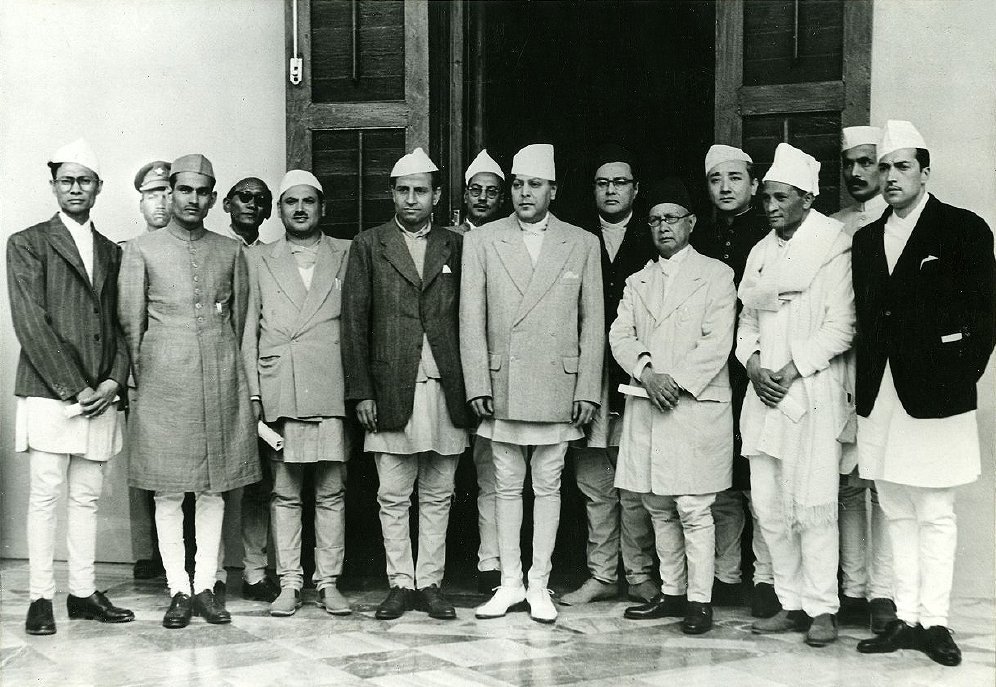
Since the decision was defied, Matrika and other leaders were disciplined on Shrawan 10, 2009 BS. After facing party action, Matrika resigned. The King made him Prime Minister again in 2010 BS after he announced the formation of a new Praja Party. Professor Krishna Pokharel states that at that time, the conflict between Matrika and BP's leadership was the main factor, rather than pressure from the palace and external forces (India). He analyzes that the palace and India gained influence later due to internal contradictions within the Congress.
“At that time, it was the clash between BP and Matrika, rather than external forces having room to play. In reality, there were three stakeholders in the 2007 BS revolution. One was the Nepali Congress, another was the King—who left the throne and went to India, believing it would help the revolution. And the third was India. Looking at the period from 2007 BS to 2017 BS, India dominated at one point. There was a situation where Indians sat in Nepal's cabinet meetings. At one point, things moved according to India's interests. Everyone had a share in the power game,” he said.
As the political transition prolonged, in 2014 BS, Dr. K.I. Singh rebelled with the support of disgruntled liberation army members and captured Singha Durbar. He captured Singha Durbar with the strength of the Rakshak Dal stationed there. Security forces were brought in from India to suppress the rebellion.
Amidst political wrangling, the palace became active. King Tribhuvan announced the withdrawal of the authority vested in him. Professor Lokraj Baral states that an agreement was reached to promulgate the constitution under his initiative.
“Mahendra carried it forward after Tribhuvan's demise. An agreement was reached to promulgate the constitution in 2015 BS, where the King's sovereignty would be vested in the King himself. The B.P. Koiralas gave up the idea of a Constituent Assembly because fighting the King was not possible at that time. Taking the most feasible path, the Congress accepted the 2015 Constitution. After Tribhuvan's death, Mahendra seized power on Poush 1, 2017 BS, and banned political parties,” he said.
King Mahendra's 'Coup'
The first general election under the Constitution of the Kingdom of Nepal 2015 was completed in 45 days from Falgun 7 to Chaitra 21. The Congress won 74 seats, or two-thirds majority, out of 109 constituencies. B.P. became the Prime Minister after the election. However, King Mahendra dissolved the B.P. government on Poush 1, 2017 BS, and banned political parties, imposing 30 years of autocratic Panchayat system.
Referendum
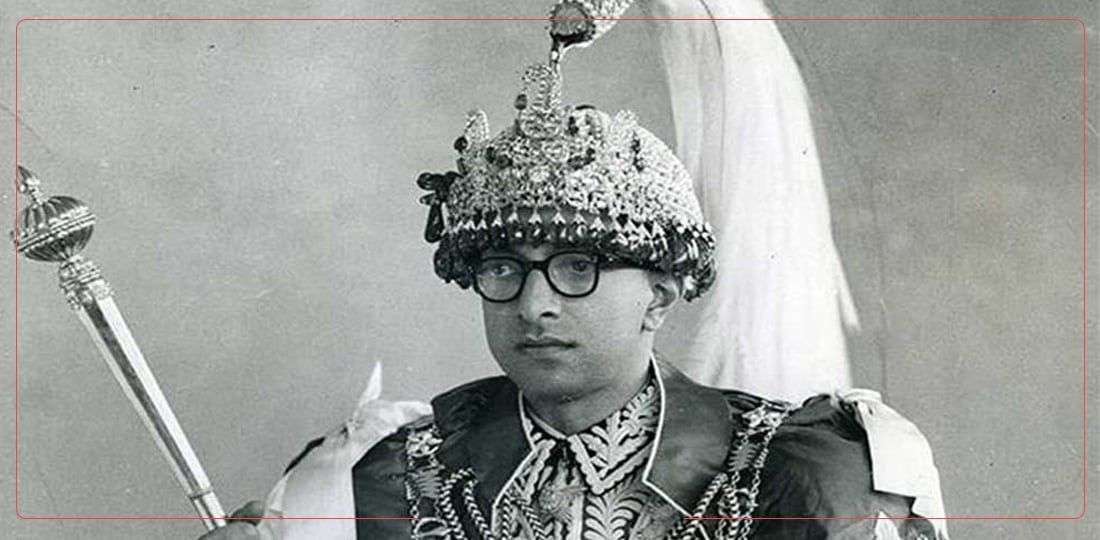
As political parties increased pressure against the Panchayat, King Birendra announced a referendum on Baisakh 20, 2037 BS. At that time, the reformed Panchayat system received 54.99 percent of the votes, and the multi-party system received 45.2 percent. The referendum was held against the backdrop of the student movement in 2036 BS. The Panchayat government held elections for the National Panchayat in 2038 BS and 2043 BS.
Restoration of Multi-party System
Even though it was a reformed Panchayat system, public anger against the system of governance did not cease. The peaceful popular movement that began on Falgun 7, 2046 BS, reached its peak on Chaitra 26. The autocratic Panchayat system fell due to the joint popular movement of the Congress and the United Left Front. General elections were held in 2048 BS. The Congress secured a majority at that time. However, the CPN (Masal) led by Mohan Bikram Singh, which espoused Maoist ideology, protested. The Maoists, who split from Singh's party, launched an armed insurgency against the royal regime in 2052 BS.
Before the Maoist People's War, in 2051 BS, Prime Minister Girija Prasad Koirala dissolved parliament and announced mid-term elections, citing internal party disputes. The UML became the largest party in the election. Professor Baral states that parliamentary distortions and political instability began from that point.
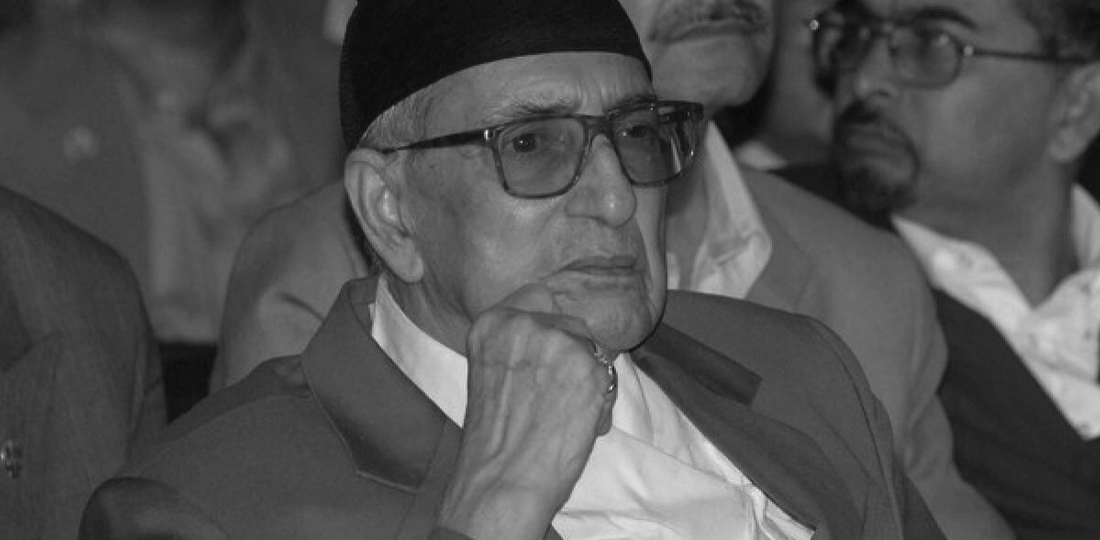
“There was groupism in the Congress between Ganesh Man, Krishna Prasad Bhattarai, and Girija Prasad in a 74/36 ratio. In 2051 BS, the vote on the congratulatory motion presented by Prime Minister Girija Prasad in parliament failed. This incident caused a rift within the Congress. Ganesh Man and Krishna Prasad sided together. Showing that dispute, Girija Babu dissolved parliament and announced mid-term elections,” he said.
Amidst power struggles on one hand and the Maoist movement reaching its peak on the other, elections were announced in 2056 BS. The Congress also won a majority that time. But the government could not sustain due to internal conflicts. On Jestha 19, 2058 BS, King Birendra's entire lineage was massacred in the Narayanhiti Palace massacre. Subsequently, King Gyanendra seized power on Magh 19, 2061 BS, dismissing the popularly elected government.
Popular Movement of 2062/63 BS
Angered by King Gyanendra's 'coup', the then seven parliamentary parties and the rebel Maoists reached a 12-point agreement on Mangsir 7, 2062 BS. Based on this, the popular movement of 2062/63 BS overthrew the traditional monarchy, establishing a Federal Democratic Republic in the country. In the Constituent Assembly elections of 2064 BS, the rebel Maoists emerged as the largest party. At that time, Madhes-centric regional parties like the Madhesi Jan Adhikar Forum and Terai-Madhes Loktantrik Party were established.
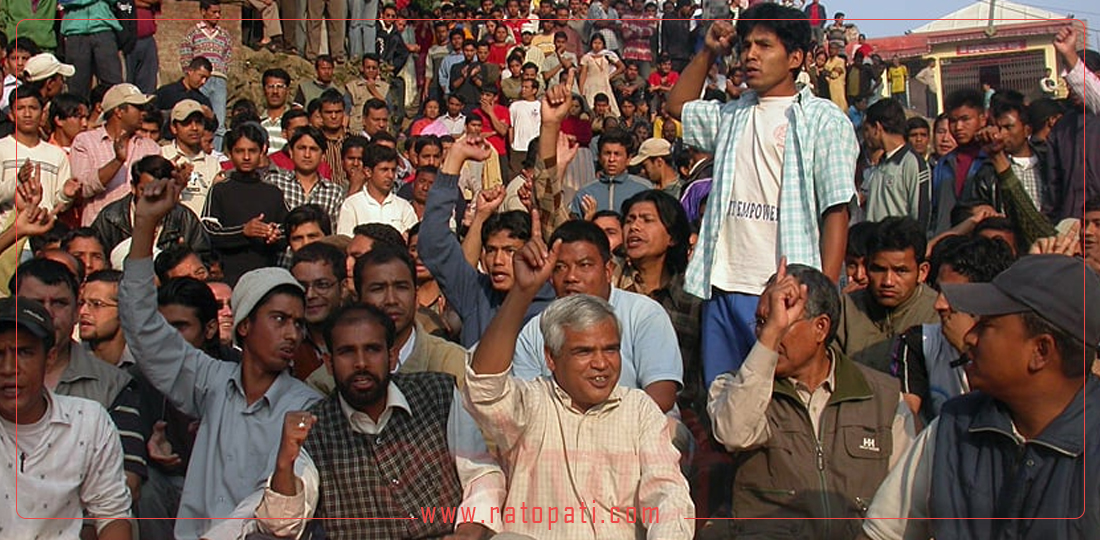
After the establishment of the republic, the Congress, UML, and Maoists, who were at the center of state power, faced accusations of failing to meet public expectations. Due to the parties' self-interest in power and struggle for authority, Nepal held Constituent Assembly elections twice, a rare occurrence globally. The Federal Democratic Republic Constitution was promulgated in 2072 BS, nearly 10 years after the establishment of the republic. In 2074 BS, the leftist alliance won with nearly a two-thirds majority. However, the failure to implement the constitution for 10 years since its promulgation has raised serious questions about the system itself. Because the major parties failed to work for good governance, social justice, and prosperity for 20 years after the fall of the monarchy, they became targets of the GenZ movement. The negative votes against the old parties, which have been in power for 34 years, seem likely to shift to the RSP, which was formed three years ago.
This specific news has been automatically translated by AI. As a result, there may be some inaccuracies or language errors.