The Pervasive 'Othering Culture': How Blaming Others Replaces Substance in Society


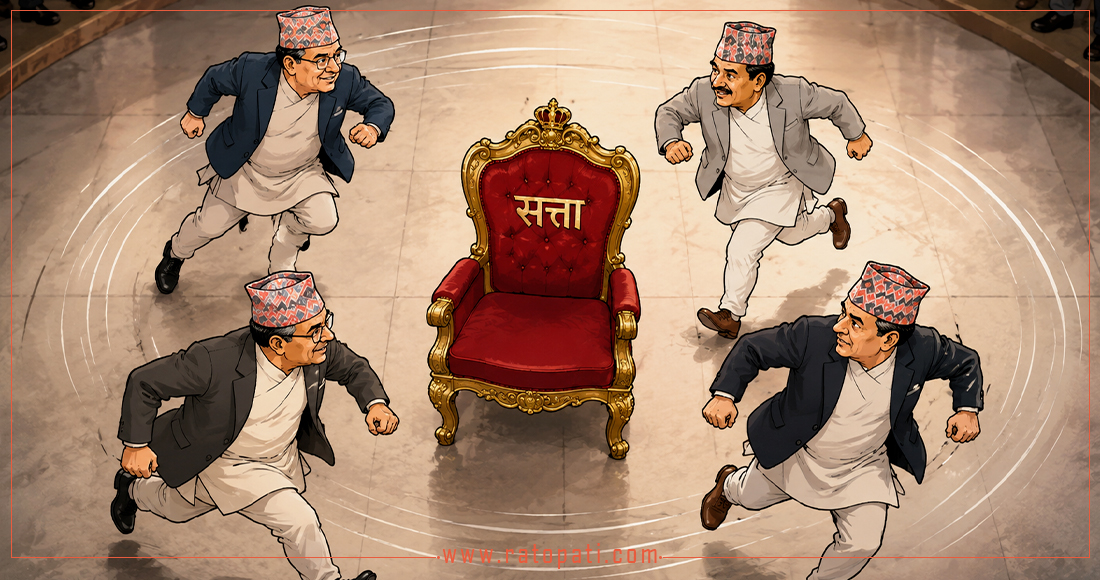
A deep and alarming psychology is currently dominating our society, which can be termed the 'Othering Culture' in sociological language. This refers to the tendency to seek validation by portraying others negatively, rather than by presenting oneself as good or by doing good work. Nowadays, the mindset of proving oneself right by pointing out the flaws of others, rather than strengthening one's own strengths, has become dominant.
This trend did not descend from the sky; it has trickled down from the upper structures of our state. If you look at the highest political levels, parties, leaders, and individuals are engaged in a game of establishing themselves not by showcasing their positive aspects, but by amplifying the negative aspects of others. This behavior at the leadership level has now permeated down to the level of the common citizen. This trend, nurtured in society for nearly two decades, is negatively impacting not only politics but all aspects of life.
Yesterday, the foundation of our society was extremely strong. Social values, harmony, cooperation, assistance, and mutual interdependence were our identities. However, ever since the psychology of preserving one's existence by portraying others as bad gained ground, those foundations have begun to shake. The elements that hold society together—harmony and cooperation—have weakened due to the tendency to criticize and point fingers at others.
Where ideology and principles are absent, 'Populism' finds a place. Populism focuses on momentary agendas and issues rather than philosophy or ideology.
This trend has now subtly infiltrated families, neighborhoods, and professional organizations. Instead of cooperation within an organization, a competition of 'I am good, the other is bad' prevails. An environment has been created where superiors blame subordinates and subordinates blame superiors, while shirking their own responsibilities and accountability. Ultimately, this is leading to the collapse of our social institutions.
Many people currently associate this trend only with celebrities or famous individuals. However, its roots are deeper. Where ideology and principles are absent, 'Populism' finds a place. Populism focuses on momentary agendas and issues rather than philosophy or ideology. Our socio-political structure has created a situation where whoever can create the most noise or introduce a new kind of issue dominates society.
It seems there is now a compulsion for anyone wanting to enter politics to first become popular. Whether they are a good businessperson, employee, social worker, or professor; everyone has to first become a celebrity to enter politics. When popularity displaces ideas and principles, healthy competition disappears from society, and a race to rise by undermining others ensues.
In-depth structural studies on this subject are still pending, but as a sociologist, I can say this: if we fail to address this trend of 'becoming good by making others look bad' in time, our social values and norms will continue to erode further.
(Based on an interview conducted by Kuber Giri with Sociologist Dr. Tikaram Gautam)
This specific news has been automatically translated by AI. As a result, there may be some inaccuracies or language errors.