
Nepali Congress Vice President Pushpa Bhusal Discusses Election Preparedness and Party Unity Under New Leadership

Kathmandu. The Nepali Congress elected officials and a Central Working Committee unanimously under the leadership of Gagan Thapa during the special General Convention held in Bhrikutimandap, Kathmandu, from Poush 27 to 30 last year.
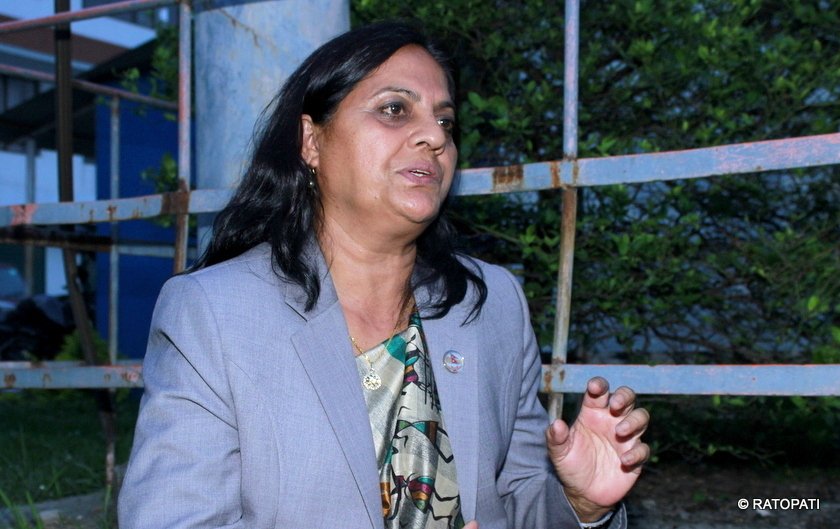
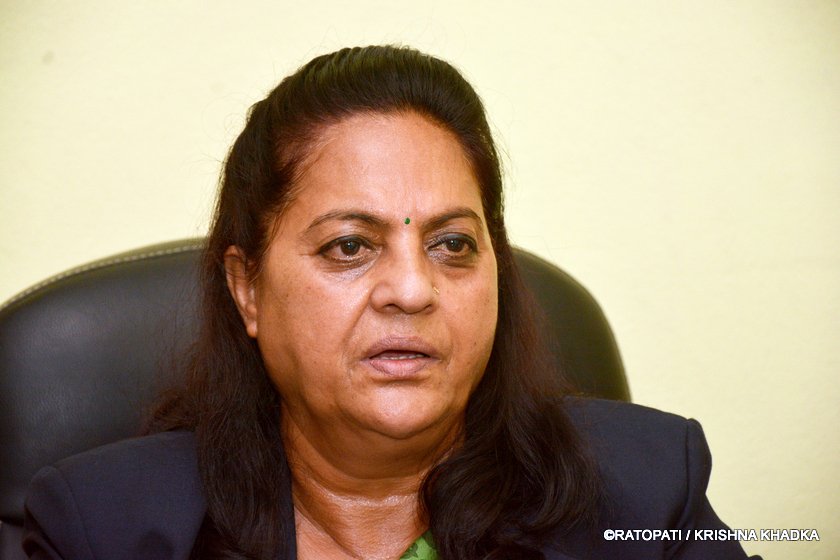
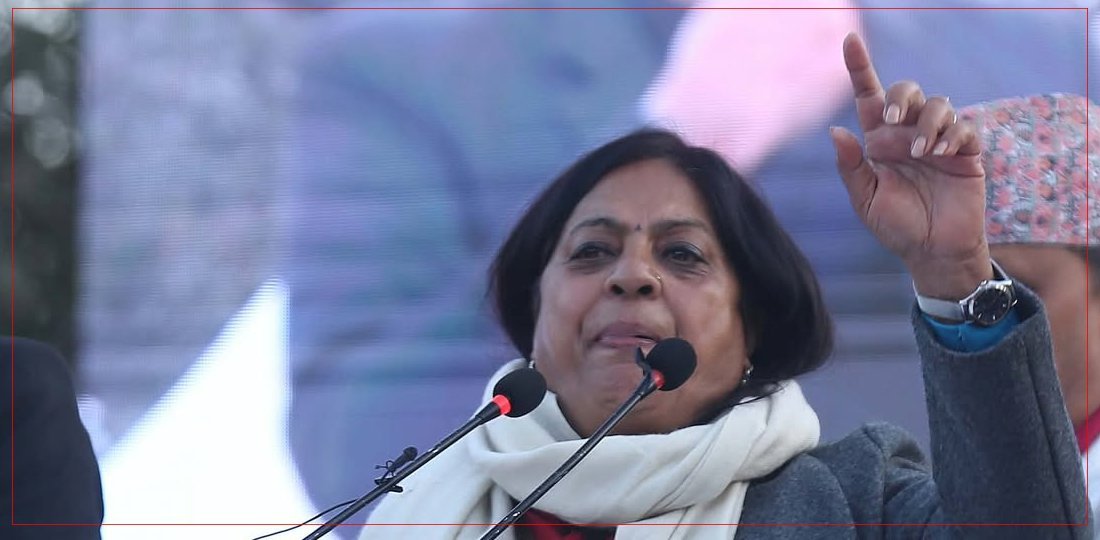
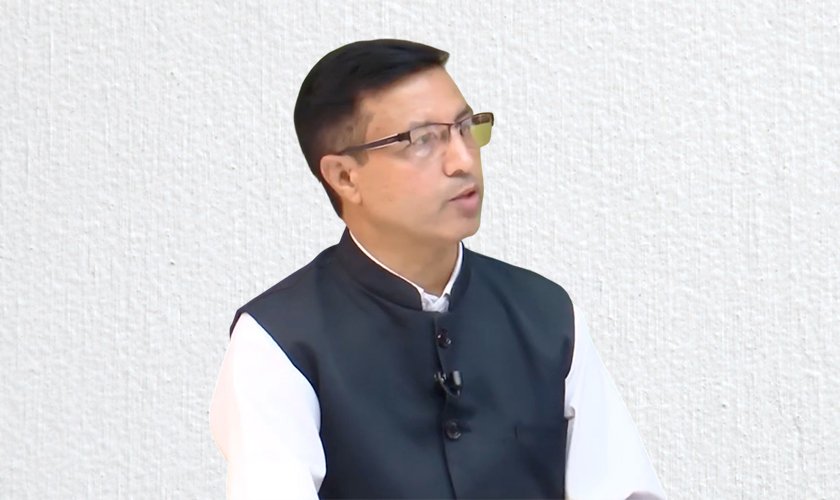
The faction led by former President Sher Bahadur Deuba and Dr. Shekhar Koirala has approached the Supreme Court challenging the convention that elected the Thapa-led committee. However, leaders from both the Deuba and Koirala factions are contesting the House of Representatives elections using tickets signed by Thapa. We spoke with Vice President Pushpa Bhusal regarding the ongoing efforts to resolve this dispute and the party's preparations for the House of Representatives elections scheduled for Falgun 21. Here is a summary of the interview conducted by Ratopati with her:
What preparations for the House of Representatives elections have been completed, and what remains pending?
The candidates selected by the party are currently on door-to-door campaigns. The Central Working Committee has issued circulars to form necessary committees for campaigning at the provincial, district, constituency, municipal, and ward levels. Circulars have also been issued regarding how districts should coordinate with the center. After the circulars were issued, we have dispatched representatives from the center to all 77 districts to gather information on the progress of the work as per the directives. Leaders are collecting information on the ongoing work through informational means or by visiting the sites, according to their assigned responsibilities.
In several districts, the center is also looking into problems faced by the candidates. Currently, the President, Vice President, and others are calling party members from various districts to discuss and provide necessary directives on how to make the election successful. The pre-election preparatory work is underway. Formal election rallies and the manifesto writing process are proceeding concurrently, starting from Falgun 4. We are currently soliciting suggestions from various organizations and individual experts at the party office regarding the topics to be included in the manifesto. That input is being channeled to the group writing the manifesto.
Currently, the main focus is on door-to-door campaigning and information gathering. Communication and information exchange are taking place with candidates, district presidents, and leaders/workers deployed in the districts from the center. A few days ago, the President held discussions with the leadership and candidates from all eight districts of Madhes Province regarding election preparations. The President is scheduled to travel to Pokhara tomorrow to discuss the party's situation in Gandaki Province. There, too, he will interact with party candidates, district presidents, and leaders/workers. Following that, there are plans to visit other provinces. Before Falgun 4, the President and Vice President will visit all seven provinces to hold dialogue and exchange information. That process has already begun in Madhes Province. On the other hand, the manifesto writing work is also progressing rapidly.
Although the Election Mobilization Committee and Publicity Committee have been formed, they have not been fully constituted. When will they be finalized?
The Election Mobilization Committee has been formed under the convenorship of Vice President Bishwa Prakash Sharma, and work has already commenced. Through this committee, we are coordinating with candidates and the party in every constituency through formal and informal means involving central leadership and distinguished personalities close to the party. Through the Election Mobilization Committee, the publicity campaign is rapidly advancing in all seven provinces through the party, sister organizations, and well-wisher organizations in various districts. Provinces are also forming publicity committees for election mobilization within their respective provinces.
The Election Mobilization Committee led by Vice President Sharma at the center is working in coordination with all 77 districts. The Publicity Committee, formed under the leadership of Party Spokesperson Devraj Chalise, is working to convey the party's achievements and perspectives to the general public through various media outlets. The Publicity Committee is conducting publicity through formal and informal teams.
The main problem seen in Congress elections is internal sabotage. What efforts is the transformed Congress making to prevent internal sabotage?
Firstly, we have fielded candidates with the 'Tree' symbol in all 165 constituencies. A decision was made not to form alliances on the eve of the election, and candidates were put forward in all constituencies. We believe that fielding candidates in all areas will reduce internal sabotage.
The Election Mobilization Committee led by Vice President Sharma at the center is working in coordination with all 77 districts. The Publicity Committee, formed under the leadership of Party Spokesperson Devraj Chalise, is working to convey the party's achievements and perspectives to the general public through various media outlets. The Publicity Committee is conducting publicity through formal and informal teams.
Secondly, the Central Working Committee has unanimously declared that the Nepali Congress's candidate for Prime Minister after the next election will be the party president, Gagan Kumar Thapa. Through the manifesto, we are trying to instill hope and confidence among democracy-loving voters across the country, civil society, media, and the national and international community that the Nepali Congress is a pillar of trust.
Through the manifesto, we are attempting to include agendas for strengthening the country's democracy, good governance, a corruption-free society, prosperity, development, agendas for the Gen Z generation, women's agendas, and topics connecting development with technology and investment. We are striving to reach voters with a manifesto that carries a clear agenda to move the country towards prosperity and transform society.
We have also realized that the election is proceeding differently than what everyone has been saying. We were conscious about finalizing candidates based on maximum consensus through dialogue during candidate distribution. Accordingly, we have fielded 106 new candidates. We engaged in dialogue with various groups while selecting candidates. However, there are also instances where leaders who should have become candidates could not. But I believe that will not be the priority. The structure of the Nepali Congress has now transformed. We, the youth, have taken the party's leadership and entered the election with a new vision and commitment.
Congress has not been able to form a single-party government since 2064 BS. Congress has had to answer for the impact of not having a single-party government. Therefore, this time, Congress needs to have its majority government proposal, new leadership, and new vision endorsed by votes in the election. The current election strategy is linked to the Congress's vision and the country's prosperity. The country's transformation is linked to the ideology of Congress. The country's transformation is linked to the plan of action adopted by Congress. We must have this endorsed by votes in the election.
Since we are moving forward by announcing the Prime Ministerial candidate, we need to gather the necessary votes to elect the Prime Minister in the House of Representatives. Currently, there is a wave across the country for a single-party government by Congress. Congress has received new leadership with a new vision from the special General Convention. The message being disseminated is that not only the party but also the country will change with determination, and this must be endorsed by votes, which excites us.
The message being conveyed is that Congress must be advanced in a way that enables it to form a majority government this time, not just from Congress members but from voters who believe in democracy. This, I believe, has made internal sabotage secondary. It is the paramount responsibility of every party leader, worker, and active member to support the new leadership, which is currently steering the election with a new vision to change the country. There is no room for sabotage there.
Therefore, the party is moving forward unitedly. There might be some disagreements or dissatisfactions in some areas, but the election is a higher priority than that. It is about the votes Congress will receive, the government to be formed tomorrow, and the work that government will do. Because the government tomorrow and the work it does is the path to establishing the Nepali Congress for the future generation.
All leaders, not just central leaders, are focused on how to manage the disagreements and dissatisfactions currently visible within the party. And we feel that it is necessary to show through our work that the party can instill credibility in the Nepali Congress for friends who are or will be associated with the party by achieving a majority in the upcoming election, rather than focusing only on the party itself.
The election strategy we have adopted to create attraction, instill belief, and increase confidence among the next generation in Congress has increased attraction among all voters, not just internal ones, but those observing from outside, urging them to make Congress the number one party, a party with a majority this time, and to see five years of work.
Because Congress is a party born from an ideological foundation, built with a strong organization, and one that has led every movement, it has endured a difficult journey from being a republic to a democracy. Today, leaders of other parties are eager to contest elections in this democracy. The opportunity for them to enjoy this democracy did not come all at once. It came through navigating ups and downs, enduring a difficult political journey, and through the great sacrifice, penance, and dedication of leaders. Now is the time to fulfill this system by providing various plans. We are going into the election with the main slogan, 'Let us change ourselves, and now we will change the country,' as there is no excuse left for Congress.
The message being conveyed is that Congress must be advanced in a way that enables it to form a majority government this time, not just from Congress members but from voters who believe in democracy. This, I believe, has made internal sabotage secondary.
While you are saying all this, new leadership has emerged in Congress through the special General Convention. Experienced leaders within the party are without responsibilities. What efforts are being made to accommodate them?
The special convention is a continuation of the party's statute. It is also the process it seeks. Therefore, by completing the statutory process, the special convention has elected new leadership.
Currently, on the eve of the election, many top leaders who have contributed ideologically and played a significant role in bringing the party to this stage are being engaged in dialogue by the President, Vice President, and all party leaders to convey a message of unity. Therefore, I believe that winning the party's candidates is the responsibility of the entire party. The election is proceeding through a regular process.
All top leaders have an equal responsibility to ensure the victory of the party's candidates in the election. Various discussions, dialogues, and meetings are underway to carry forward the message that all top leaders will unite to ensure the victory of the Nepali Congress candidates. I believe no leadership should remain outside of this.
Have there been any discussions to include leaders who were outside the Central Working Committee and Executive Committee formed by the special convention?
Before the election, we will work with the current office bearers included in the Executive Committee. They are currently ex-officio members, and the Executive Committee is not yet fully formed. The Central Committee is also not fully formed. Certainly, the Nepali Congress will have a huge responsibility on its shoulders after the election. We are aiming to form a majority government. The party's role does not end when the government is formed. The responsibility of running the government well and strengthening the organization remains with the party.
The preparation work for the 15th General Convention will commence again. On one hand, we will oversee the government, and on the other, we will prepare for the 15th General Convention. After the House of Representatives election on Falgun 21, we will complete the committee structure and provide opportunities to experienced leaders who have contributed to the party in the Executive Committee. That is their right. This is not a matter of giving or taking. We are in favor of sending a message that Congress is moving forward by including everyone. The party will proceed in that manner after the election.
Leaders who left the special convention have been alleging that the President and office bearers did not consult with them? Did they not ask for suggestions? Did they not show interest in meeting? Has there been no meeting or discussion so far?
The selection of candidates for the election was done through dialogue. Dialogue and discussion took place to include everyone who was outside when selecting candidates. You can see that in the candidates. Regarding some candidates being left out, there was a discussion about the need to field new candidates during the election period and the need to give opportunities to candidates who emerged through dialogue. That is also their right. Therefore, there was a situation where new candidates had to campaign for the 'Tree' symbol in 165 constituencies in a new way. Even after that, direct and indirect dialogue with them is ongoing. Before the election, no indication or message of any doubt is being sent.
The President Gagan Thapa mentioned in a program in Dhanusha that he had met and discussed with the former President. However, in response to a question asked by Ratopati, the former President's secretariat replied that there had been no discussion or meeting with them. What is the truth?
Dialogue and discussion are proceeding directly and indirectly, but the most important thing is that a message of unity must go out on the eve of the election. Accordingly, the President is currently moving forward with meetings and is focused on delivering that message. Therefore, I believe that the message of unity is the party's message. We will work in a way that sends the message that candidates and the general voters are demanding to make Congress victorious.
After the special convention, two distinct factions are clearly visible in Congress. What are you doing to end these factions and unite the party?
It is clear that this special convention is a continuation of the party's statute. There is not much need for debate on the continuation of the party and its statute. Secondly, we will move forward with preparations for the election and the 15th General Convention after the election. While moving forward with the preparations for the 15th General Convention, everyone will certainly have to sit together to prepare for the convention. Various committees will need to be formed, such as a committee to investigate active members, and various committees for convention preparations. For that, we will start working together in one place.
The priority now is the election. The message that there are any disagreements or any dissent should not reach anywhere in the election. That will negatively affect the party, the party's candidates, and the party's organization. We are conscious of that. Our current priority is how to ensure the victory of the candidates in the election and how to resolve any internal party differences.
Thirdly, conveying the message that the party is moving forward unitedly is among our priorities.
This specific news has been automatically translated by AI. As a result, there may be some inaccuracies or language errors.
_Eqo5W0NMVM.jpg)