Nepal's Upcoming Election Budget Soars to Estimated NPR 31 Billion Amid Rising Security Costs


In countries where democracy is institutionalized, general elections occur periodically. Most countries worldwide have a practice of holding elections every four or five years. While elections are fundamentally a democratic process, they also involve significant state expenditure. Furthermore, in situations like Nepal, where snap elections must be held, it places an additional burden on the state treasury.
The annual budget presented by the government does not typically account for election expenditures. The regular election date in Nepal was set for Mangsir 2084, but circumstances changed following the agitation in Bhadra last year, leading to the possibility of elections on Falgun 21. The country is currently gearing up for the elections.
The government estimates that the House of Representatives election will cost approximately NPR 31 to 32 billion. Prime Minister Sushila Karki stated this estimate during a program in Nawalpur on Wednesday. She mentioned that the government is managing the expenditure for the elections through foreign assistance and internal resources. According to her, the cost has increased due to a shortage of physical resources and technical preparations.
Based on Prime Minister Karki's statement, the expenditure for the upcoming election is projected to be higher than previous elections. Looking at Nepal's history of election spending, this rate has been increasing unusually every time.
The government spent NPR 110 million in the first general election of 2048 BS. However, by the time of the first Constituent Assembly election in 2064 BS, this expenditure had risen to NPR 7.5 billion. In the second Constituent Assembly election of 2070 BS, the expenditure increased to NPR 11.10 billion, and the Ministry of Finance had to allocate NPR 20 billion for the 2074 House of Representatives and Provincial Assembly elections.
Similarly, in the local level elections held in Baishakh 2079, the Election Commission spent NPR 5.04 billion. The total cost, including the expenses of the Election Commission and security agencies, exceeded NPR 15 billion.
Considering this rising trend in recent elections, the government estimates that the budget expenditure for the upcoming election will exceed NPR 31 billion. The Ministry of Finance is accelerating preparations for this.
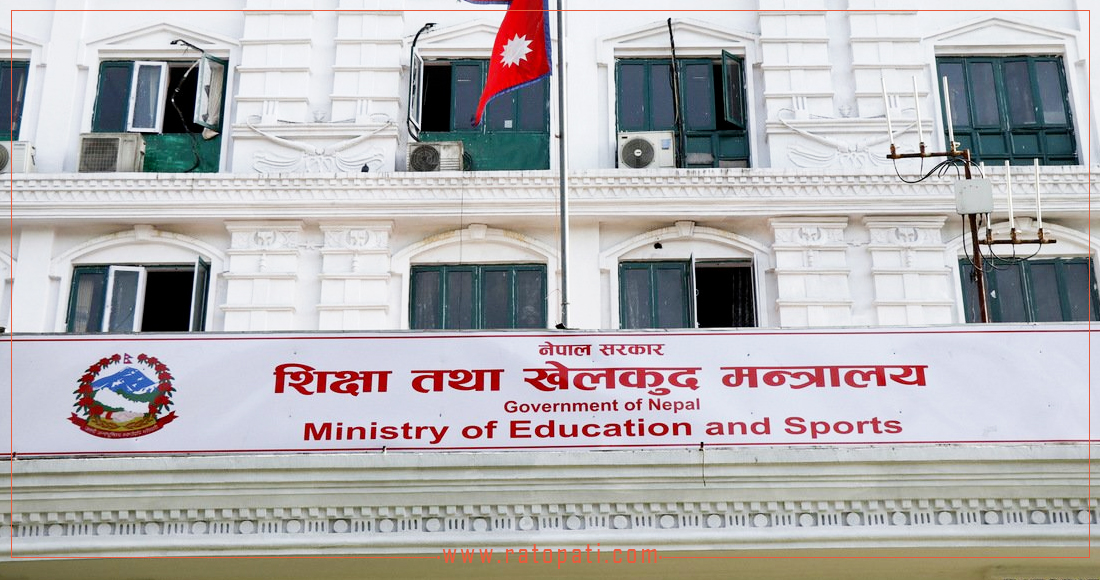
The Ministry of Finance has so far released NPR 19.21 billion for the upcoming elections. According to the ministry's spokesperson, Tankaprasad Pandey, this amount has been sent for election management and the mobilization of security agencies.
Of the total amount released, the Ministry of Home Affairs received the largest share of NPR 10.39 billion, while NPR 1.99 billion was allocated to the Ministry of Defense, and NPR 6.72 billion to the Election Commission.
Although the Election Commission initially proposed around NPR 27 billion, the government is currently ensuring resources based on an estimated expenditure of NPR 25 billion, according to spokesperson Pandey. He stated, 'The Election Commission will handle the matter of additional budget expenditure. The Ministry of Finance has approved the necessary budget for the elections,' adding, 'It is estimated that this amount, including assistance provided by foreign bodies, could reach NPR 31 billion.'
Graph of Election Expenditure Over 30 Years, From 11 Crore to 31 Billion
Looking back at Nepal's electoral history, the expenditure graph shows a continuous upward trend. The government spent only NPR 110 million in the first general election of 2048 BS. However, with political instability and changes in the system of governance, this rate of expenditure has doubled or tripled every time.
2048 General Election: NPR 110 million
2064 Constituent Assembly: NPR 7.50 billion
2070 Second Constituent Assembly: NPR 11.10 billion
2074 House of Representatives and Provincial Assembly: NPR 20 billion (of which NPR 10 billion was for the Commission and the rest for security)
2079 Local Level Election: NPR 15 billion (including security)
2079 House of Representatives and Provincial Assembly: NPR 18.05 billion (released), NPR 16.49 billion (spent)
For the upcoming elections in Falgun, although the Election Commission initially proposed NPR 27 billion, the government is moving forward with preparations ensuring resources for NPR 25 billion. However, the total expenditure, including other costs, is estimated to reach up to NPR 31 billion.
Over NPR 19 Billion Released from the Ministry of Finance
As the election date approaches, the Ministry of Finance is accelerating budget release. According to Ministry Spokesperson Tankaprasad Pandey, NPR 19.21 billion has been released so far for election management and security. This includes NPR 10.39 billion to the Ministry of Home Affairs, NPR 6.72 billion to the Election Commission, and NPR 1.99 billion to the Ministry of Defense.
This data from the Ministry of Finance clarifies that the government is prioritizing budget allocation to security agencies over the Election Commission. The Ministry of Home Affairs and the Ministry of Defense had demanded approximately NPR 20.5 billion for security purposes, which the government is providing gradually.
Security Expenditure More Expensive Than Commission's
Analysis of the last two major elections shows that NPR 28.5871 billion was spent from the state coffers. The Election Commission, the main body managing the elections, practices frugality in its administrative and management expenses, returning about 20 percent of the budget.
However, the expenditure of security agencies is close to 100 percent of the allocated budget. In the 2079 Provincial and House of Representatives elections, the Ministry of Defense spent 100 percent of its allocated budget, and the Ministry of Home Affairs spent 99.77 percent. This indicates that security arrangements are becoming more expensive in Nepal than ballot papers and the voting process.
Budget for Security Agencies
Nepal Police: NPR 4.02 billion
Nepal Army: NPR 3.44 billion
Armed Police Force: NPR 3.33 billion
District Administration Offices (All 77): NPR 314.6 million
Ministry of Home Affairs (Central Expenditure): NPR 310 million
National Investigation Department: NPR 69 million
Election Police: Backbone of Security and Major Expense
The government has continued the tradition of recruiting a large number of election police (temporary personnel) to ensure peaceful elections. This time, 149,090 election police have been selected and are currently undergoing basic training.
Of these, 133,980 will be deployed under the Nepal Police, and 15,110 under the Armed Police Force. As election police receive remuneration, allowances, and benefits for a short-term employment of 40 days, the total cost is estimated to reach around NPR 7 billion.
Election police will receive NPR 869.40 per person per day (NPR 34,776 for 40 days). The government will provide them with NPR 10,300 per person for ration and uniform allowance. Additionally, they will receive NPR 1,200 for snacks (NPR 300 per day for the 4 days of voting) and NPR 846 for transportation expenses.
For the elections, approximately 340,000 security personnel will be deployed, including 190,000 regular personnel from the Army, Nepal Police, Armed Police Force, and National Investigation Department, along with 149,000 election police.
Other Reasons for Increased Expenditure
Security is not the only factor making elections expensive. According to the Election Commission, other technical and managerial reasons have also increased the costs. When the election date is announced late, the Commission has to procure materials in a short period. In such situations, bypassing the public procurement process and purchasing materials through fast-track methods leads to higher costs.
If preparations are made to use Electronic Voting Machines, technology costs will increase. If the old paper system is adopted, delays in staff mobilization and vote counting will further increase expenses. Millions of rupees are also spent on printing and distributing voter ID cards and on publicity for voter education. During elections, security agencies and the Commission need to purchase a large number of new vehicles and repair old ones, which consumes a significant portion of the budget.
Elections are the lifeblood of democracy, but for a country with limited resources like Nepal, an expenditure of 30-32 billion every few years is quite burdensome. Although the Election Commission controls some of its expenses, the large portion spent in the name of security has constrained the state's capacity for capital expenditure.
This specific news has been automatically translated by AI. As a result, there may be some inaccuracies or language errors.