Bangladesh's Post-Uprising Political Landscape: Student Leaders Divided as Old Guard Returns

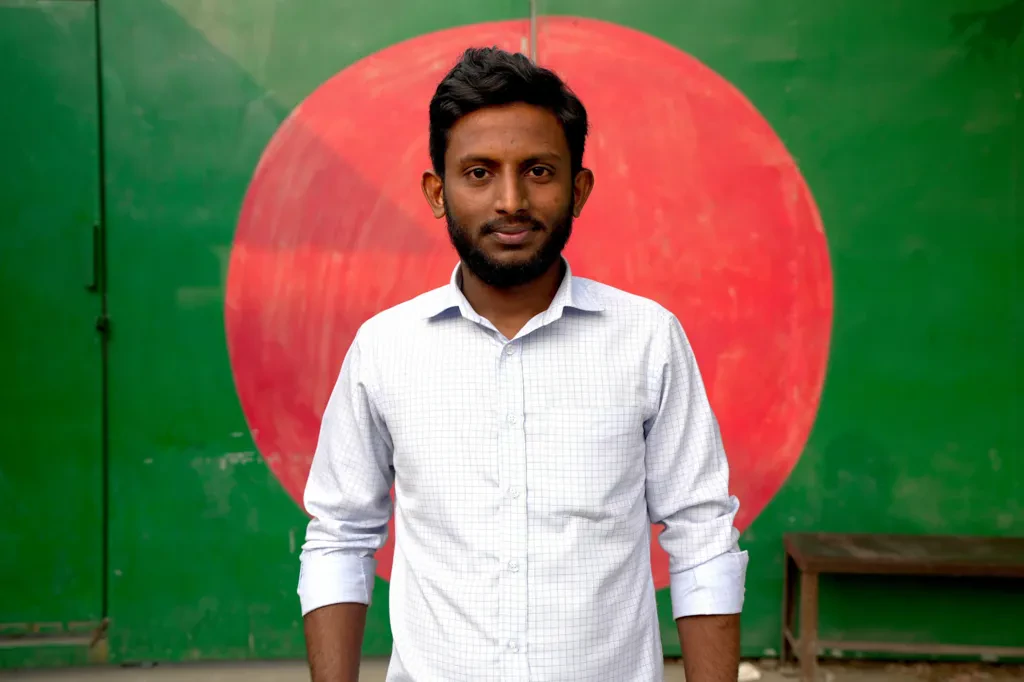
Dhaka. Relief Hossain narrowly escaped death while trying to save his friend during what is considered the bloodiest youth uprising in Bangladesh's history.
A video of him dragging his friend, Imam Hasan Taim Bhuiyan, who had been shot by police, to safety went viral during the revolution that ousted the country's rulers.
During the police crackdown on the demonstration held on July 20, 2024, 24-year-old Hossain and 19-year-old Bhuiyan took shelter in a tea stall in Dhaka. However, police dragged them out, beat them, and ordered them to flee.
It was during this chaos that Bhuiyan was shot. Seeing his friend fall to the ground, Hossain tried to drag him away, but the police did not stop firing. After being shot in his own leg, Hossain said, 'I had to leave him there.' Bhuiyan was later declared dead at the hospital.
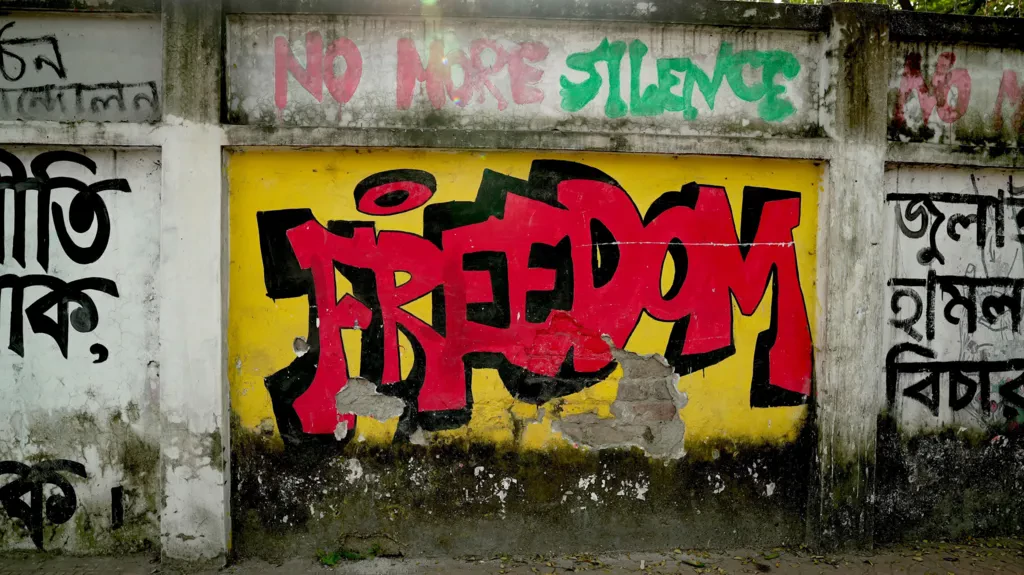
Such violence transformed the student-led protests into a nationwide mass movement, centered in the capital, Dhaka. Within two weeks, the government was forced out of power, and Prime Minister Sheikh Hasina was compelled to flee the country.
According to the United Nations, approximately 1,400 people died during the protests in security operations ordered by Hasina.
Hasina's fall signaled a new era. This uprising was considered the first and most successful among movements led by the 'Gen Z' generation worldwide.
In Bangladesh, some student leaders attained significant positions in the interim government and attempted to reshape the country for which they fought on the streets. After decades of rule by Hasina's Awami League and the rival Bangladesh Nationalist Party (BNP), their role in the country's future administration was anticipated.
However, as the general election scheduled for the following week approaches, the newly formed political party of the students is severely divided, and women who participated in the movement have largely been marginalized. With the Awami League banned, other long-established older parties are filling the void.
Hossain participated in the 2024 student-led protests. Initially, youth, both secular and religious, united to oppose the new quota system for civil service jobs. But later, the movement transformed into a 'common objective' to end 'autocratic rule.'
Nevertheless, Hossain told the BBC that the interim government failed to build the 'beautiful Bangladesh based on peace, equality, justice, and fairness' they had hoped for.
He is not alone in thinking the student-led National Citizen Party (NCP) is too inexperienced. Instead, he is influenced by another much older party, 'Jamaat-e-Islami.'
This is an Islamist party that had previously existed as a minor coalition partner. But with the Awami League banned, it is gaining momentum on the eve of the election scheduled for February 12.
Jamaat, established in 1941, has always been controversial due to its role during the 1971 Bangladesh Liberation War against Pakistan. Millions were killed and over 10 million displaced during that war. Some Jamaat leaders were accused of colluding with the then-West Pakistan.
But history does not significantly affect Hossain; he believes Jamaat has modernized. He says, 'Jamaat supported the comrades and students of the July uprising in various ways.'
Jamaat leader Shafiqur Rahman told the BBC that the party promises to end corruption and restore judicial independence. Although fulfilling these promises might be difficult in a country historically plagued by high corruption, these pledges attract many.
According to Toufique Haque, a professor at North South University in Dhaka, most young voters born after 1971 view Jamaat separately from its history and do not consider it taboo.
'This is a matter of generation,' he says, 'They do not want to get caught up in this debate.'
Professor Haque suggests that young voters see Jamaat as a victim of Hasina's rule, having been banned from politics with many of its leaders jailed.
Hossain is not the only one attracted to Jamaat. In student elections held at top universities across Bangladesh last September, Jamaat-backed candidates won by a landslide, seen as an indicator of the national mood.
Notably, for the first time since independence, an Islamist party gained control of the student union at the prestigious Dhaka University. This was the first major signal of trouble for student leaders in a country where nearly 40% of voters are under the age of 37.
- A Controversial Pact
The distrust towards the NCP is a major blow for the student leaders. Asif Mahmud, a former advisor to the interim government and currently the chairman of the NCP's election committee, 27, admits, 'We hoped to do much better.'
But he argues that circumstances were against them: 'Only two parties have led Bangladesh in the last 50 years... We are trying to prove ourselves.'
So, the NCP made a decision. In December, they announced a multi-party alliance with Jamaat-e-Islami.
Like Jamaat, the NCP has also promised to eradicate corruption. Its manifesto includes other promises targeting young voters: justice for the families of those killed in the uprising, lowering the voting age to 16, and creating employment through tax and economic reforms.
Mahmud argues that the NCP needed the support of Jamaat's grassroots organization, even if they disagreed on some issues. 'We have always said we are not an Islamist party,' he said, 'This is not an ideological alliance.'
However, only 2 out of the 30 candidates fielded by Jamaat to support the NCP are women. Jamaat itself has fielded over 200 candidates, all of whom are men.
This is a pact that senior female NCP members like Tasneem Zara have resigned from the party, calling it a 'moral red line.'
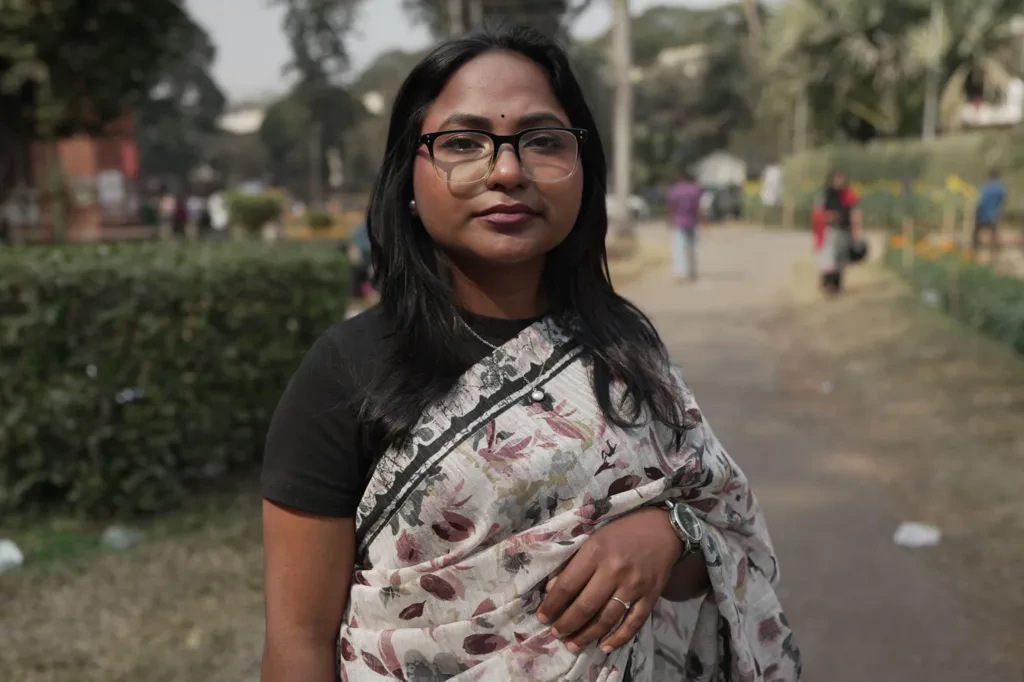
25-year-old student Seema Akhter, who helped lead the movement, says, 'They wanted to sideline us.'
Seema argues that despite women playing leading roles in the uprising, the interim government led by Mohammad Yunus remains male-dominated.
'Where are the Women?'
After the uprising, Seema and other female activists were targeted on social media.
'Some meme videos were very violent and disheartening,' she recalls, 'Our character was assassinated, we were trolled.'
Videos surfaced claiming to belittle their intellect, suggesting their marriage prospects were over, and some even attacked Seema based on her skin color.
Both parties deny sidelining women, attributing the low number of female candidates to Bangladesh's 'social structure.' Jamaat's Shafiqur Rahman expressed hope that this situation would change.
Seema dismisses this as a 'patriarchal excuse.'
She is leaning towards the BNP, which has nominated 10 women among its more than 250 candidates. She says, 'The lesser of two evils.'
- Will Dynastic Politics Prevail?
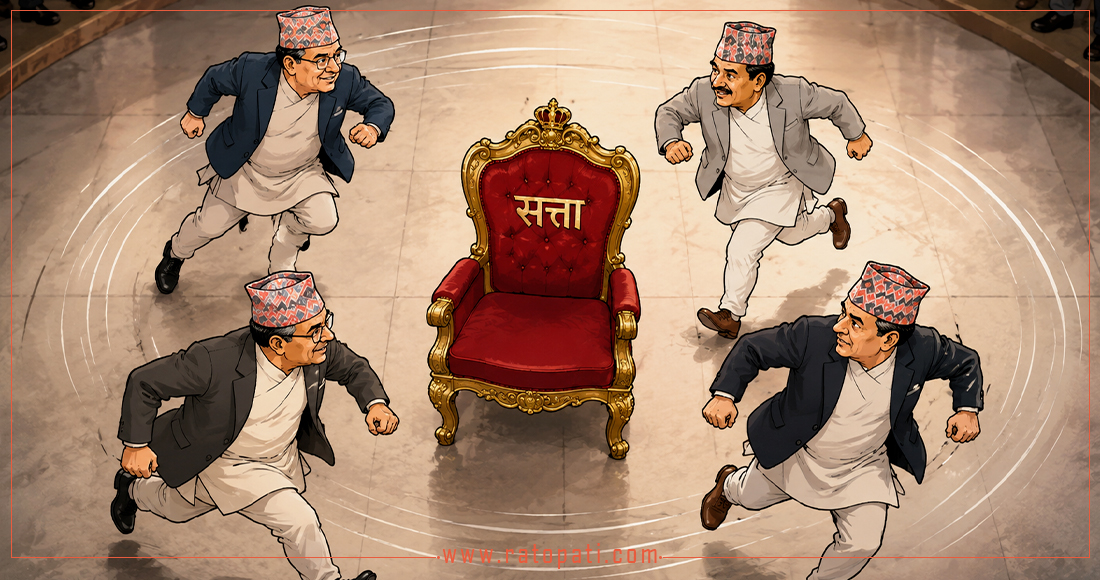
The NCP's weak support and the ban on the Awami League have benefited the BNP, which has rebranded itself as a liberal democratic force.
The BNP, having seen thousands of its supporters and senior members jailed during the Awami rule, is now the largest party in contention and is putting further pressure on the student party.
Like the Awami League (whose leader Hasina is the daughter of Sheikh Mujibur Rahman, considered the founder of the country), the BNP is also linked to political dynasty.
Its new leader, Tarique Rahman, is the son of the late Khaleda Zia, Bangladesh's first female Prime Minister. Zia herself came to power after her husband, a former President, was assassinated in a military coup.
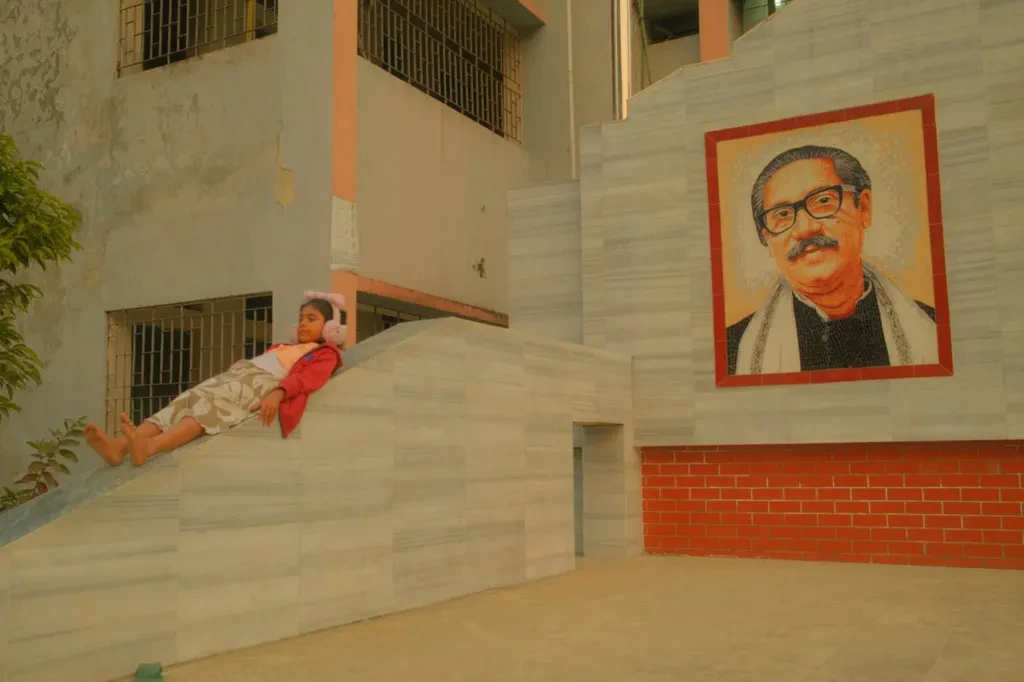
Former BNP Commerce Minister and current candidate Amir Khasru Mahmud Chowdhury told the BBC, 'Whether you come from a dynasty or not is irrelevant.'
Ironically, this cycle of dynastic politics has been made possible by the student-led uprising, which allowed Rahman to return home after 17 years in exile. Hasina's departure cleared the path for him and his mother to be acquitted of corruption charges, which they had claimed were politically motivated.
He criticized Jamaat for using religious sentiment to win votes and promised economic and democratic reforms. He also envisioned an 'Rainbow Nation' where a new national reconciliation commission would help the country move past division.
Hasina ruled Bangladesh for 15 years. While she achieved economic progress, she attempted to suppress the opposition through politically motivated arrests, enforced disappearances, and extrajudicial killings. Bangladesh's War Crimes Tribunal sentenced her to death last year for the 2024 crackdown.
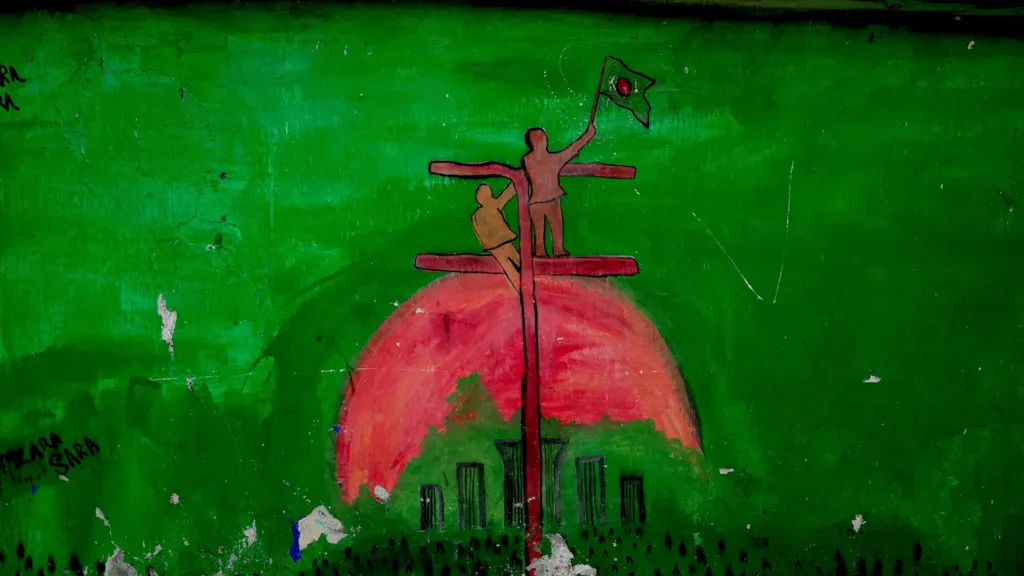
From exile, she has condemned the ban on her party. Many other senior Awami League leaders are taking refuge in India along with her, while some have been arrested back home.
When the BBC spoke to an underground district leader of the party, he said, 'A free and fair election is not possible while keeping the Awami League out.'
He warned that if Sheikh Hasina orders it, the party and its supporters would 'resist' the election. 'If she says people should not go to the polling centers, we will not go. If she says the election must be obstructed, we will obstruct it.'
He dismissed allegations by independent human rights organizations regarding politically motivated arrests and extrajudicial killings during her tenure as false and fabricated.
After the vote next week, the students will find out if their revolution and bloodshed were worthwhile.
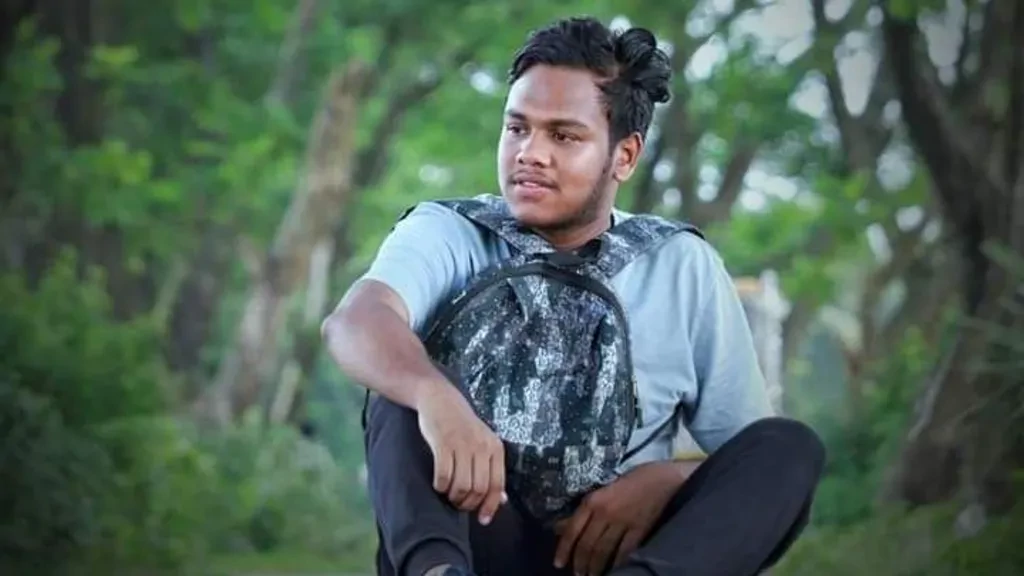
Near the Jatrabari flyover in Dhaka, where he lost his friend, Hossain is still awaiting the outcome of the case against all police officers.
Bhuiyan's own father is a police officer. When he identified his son's body, he called a senior police official and asked, 'Sir, how many bullets does it take to kill a boy?'
Hossain says the day his friend was shot still haunts him.
He watched that video eight days later when the internet service resumed in the country. 'My scream can be heard... I cried profusely.'
A year later, on August 5, he celebrated the first anniversary of Hasina's ouster with his other 'comrades of the uprising.'
But Hossain admits that their 'New Bangladesh' has not yet arrived. He believes it cannot happen until an elected government reforms the country.
He says, 'You cannot expect mangoes from a mulberry tree.'
This specific news has been automatically translated by AI. As a result, there may be some inaccuracies or language errors.