Electoral Heat Rises in Sindhuli-1, UML's Traditional Stronghold Faces New Challenges


Kathmandu. Electoral fervor is intensifying in Sindhuli Constituency No. 1, which the CPN-UML has long considered its 'base area'.
Its undisputed dominance was evident in the parliamentary elections from 2048 to 2074 BS. However, the election scheduled for Falgun 21 might yield a different result than in the past.
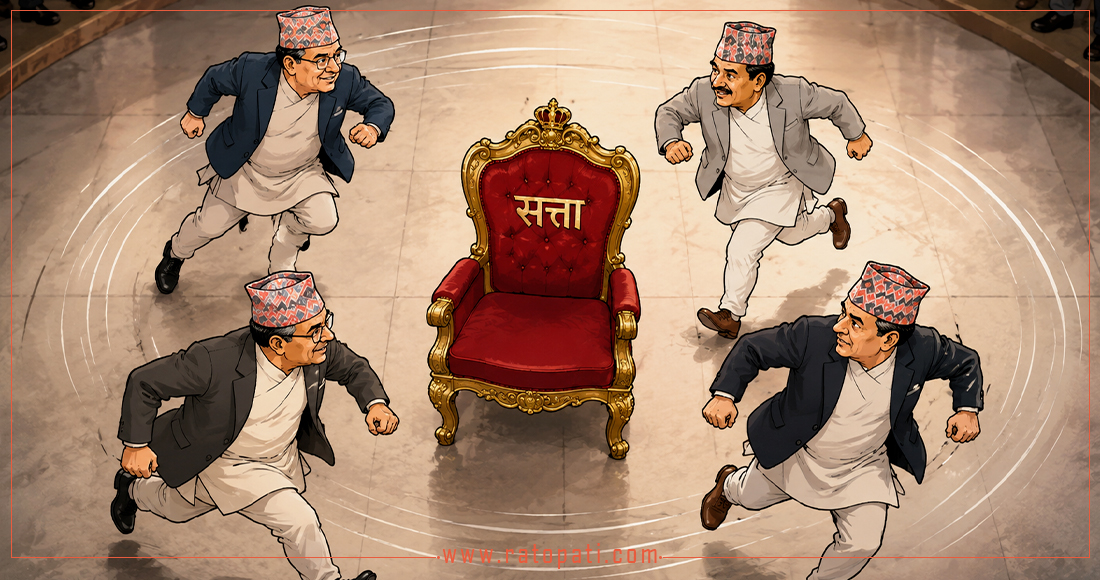
While UML, which has reigned supreme in Sindhuli-1 for 25 years, is aiming to maintain its legacy, the rise of new forces is certain to create a more interesting contest.
This constituency stretches from the Mahabharat mountain range to the flatlands of the inner Terai. Sindhuli-1 comprises three rural municipalities and two municipalities out of nine local levels. Golanjor Rural Municipality, Fikkal Rural Municipality, Tinpatan Rural Municipality, Dudhauli Municipality, and Wards 9, 13, and 14 of Kamalamai Municipality fall within this constituency.
In the 2079 elections, the Nepali Congress made its presence felt here, breaking UML's stronghold. In the 2074 election, UML's Ganesh Kumar Pahadi won from here with 32,529 votes, while Congress's Prem Chandra Dahal secured 22,389 votes.
UML also won both the Constituent Assembly elections in 2070 and 2064 BS. In 2070, Pahadi himself secured the victory, and in 2064, Bishamlal Adhikari maintained UML's legacy by defeating Maoist and Congress candidates. Similarly, Ganga Prasad Nepal won from UML in 2056 BS, and Madan Dhungel in 2048 BS.
Pressure on UML's Katuwal to Reclaim 25-Year Stronghold
Since 2048 BS, UML has only faced defeat in the mid-term election of 2051 BS and the House of Representatives election of 2079 BS in this area.
Dhungel won in 2048, Nepal in 2056, Adhikari in 2064, and Ganesh Kumar Pahadi in 2070 and 2074. Congress won in 2079, defeating UML's 25-year legacy. However, Congress's victory was bolstered by the five-party alliance, which brought them back to this constituency after 28 years.
The election results in Sindhuli-1 can be significantly influenced by the local level vote count. The data from the 2079 local level elections shows a mixed result in this constituency.
In the 2074 Provincial Assembly election, Shyam Kumar Ghimire and Pradip Kumar Katuwal faced off in Constituency 2(2), where Katuwal defeated Ghimire. In 2079, Ghimire took revenge for that defeat and secured a seat in the House of Representatives. Ghimire is from Congress, and Katuwal is from UML.
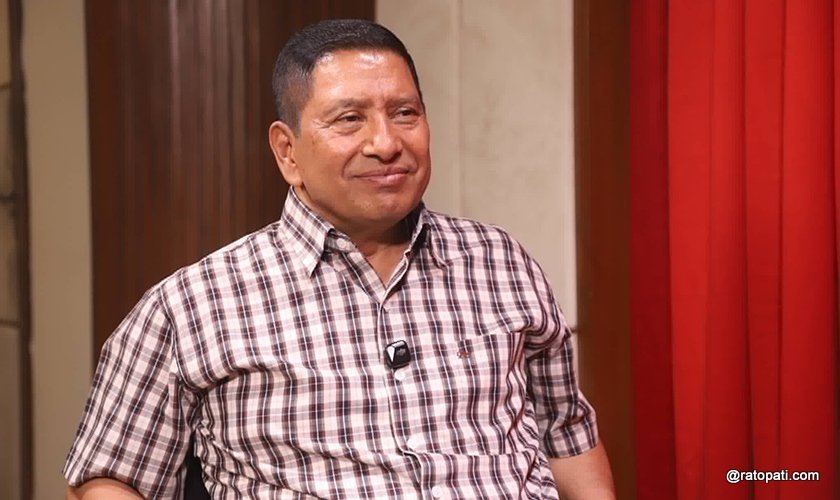
This time, UML has nominated Katuwal, a familiar face, for the House of Representatives. He briefly held the responsibility of the Ministry of Health when Asta Laxmi Shakya was the Chief Minister in Bagmati Province.
Challenge for Congress's Baral to Retain Legacy
Congress has put forward Ujjwal Prasad Baral this time. Baral is a leader who has been defeated twice before in the same constituency and is also a former president of Congress Sindhuli. He faces the challenge of continuing the winning streak started by Ghimire for Congress in Sindhuli-1.
CPN's Dekendra Subedi
Dekendra Subedi from the Communist Party of Nepal (CPN) is also in the electoral field for Sindhuli-1. Subedi is close to the Unified Socialist Party. Subedi, who is also an advocate, is contesting an election in Sindhuli-1 for the first time.
RSP, Independent, and Other Party Candidates
The votes secured by Menuka Thakuri in 2079 and the new wave sweeping across the country might cause losses for both UML and Congress due to the votes cut by RSP. In 2079, Thakuri received 2,692 votes from here. Now, her votes in the nationwide RSP wave carry significance here. Besides, Rastriya Prajatantra Party (RPP), CPN-ML, and other parties also have a presence here, which could potentially cut into the decisive votes of the major parties.
Ram Narayan Adhikari is contesting from Rastriya Prajatantra Party (RPP), Santosh Kumar Sunuwar from Rastriya Parivartan Party, Sushil Hamal from CPN (Marxist), Motilal Tamang from Ujyalo Nepal Party, and independent Amrit Bahadur Bishwakarma have registered their candidacies here.
Local Level Arithmetic
The election results in Sindhuli-1 can be significantly influenced by the local level vote count. The data from the 2079 local level elections shows a mixed result in this constituency. In Golanjor Rural Municipality, UML's Shankar Raj Baral won the chairperson post with 4,744 votes. In Fikkal Rural Municipality, UML's Parbati Sunuwar won the chairperson post with 4,062 votes.
Similarly, in Tinpatan Rural Municipality, Congress's Karna Bahadur Lama won with 9,239 votes. In Dudhauli Municipality, Maoist's Dinesh Adhikari won with 15,838 votes. Meanwhile, in Kamalamai Municipality, Congress's Upendra Kumar Pokharel was victorious with 14,187 votes.
There are 110,391 voters in Sindhuli-1. A total of 7,039 voters have been added across the district. Thus, there are 215,019 voters in the district across both constituencies.
Based on proportional representation votes, UML is the leading party here. In the 2079 House of Representatives election, UML received 22,349 votes, while Congress received 18,242 and Maoist received 12,381 votes. Thus, when parties contest individually, UML's organized vote base appears larger than others.
UML Appears Strong in Arithmetic
Although UML appears strong in arithmetic, the chemistry of the electoral field is different. Local leadership, internal conflicts within parties, and the psychology of new voters will be decisive in this election.
In the 2079 election in Sindhuli-1, the difference between the 30,391 votes secured by Congress candidate Ghimire and the 25,546 votes secured by UML's Katuwal was 4,845. However, the proportional representation vote result is different.
The combined proportional representation vote of Congress and Maoist here was about 30,623, which almost matches the votes received by the Congress candidate in the direct election. Although UML was the largest party alone in proportional representation, the alliance between Congress and Maoist broke UML's legacy.
Especially if RSP increases its vote share in the area considered UML's stronghold, UML will suffer further losses. If Congress's 'liberal vote' is cut, Congress could face a setback. The psychology of the more than 7,000 new voters added across the district could also bring mathematical changes.
The local level election results further confirm the mathematical complexity of this constituency. Among the five local levels in this area, CPN (Maoist Centre) won the Dudhauli Municipality with a significant vote of 15,838, while Congress maintained a strong hold in wards of Tinpatan and Kamalamai.
UML secured around 9,000 votes in Golanjor and Fikkal Rural Municipalities. Geographically, while UML appears strong in the hilly region, Congress-Maoist hold sway in Dudhauli and Tinpatan, which have larger populations.
However, the rise of new forces has made this arithmetic more challenging for the upcoming elections. The number of votes RSP, which secured 4,077 in proportional representation in 2079, cuts in the direct election this time will affect the results of the major parties.
Especially if RSP increases its vote share in the area considered UML's stronghold, UML will suffer further losses. If Congress's 'liberal vote' is cut, Congress could face a setback. The psychology of the more than 7,000 new voters added across the district could also bring mathematical changes.
In the upcoming election, all parties are contesting alone. Therefore, if UML can secure its proportional representation votes in the direct contest, UML could come close to winning again.
The arithmetic of Sindhuli-1 suggests that polarization of forces, rather than the unilateral dominance of any single party, will determine the outcome. UML has a fundamental base of organized and cadre votes of about 22,000 to 25,000. Congress and Maoist appear weaker than UML.
This specific news has been automatically translated by AI. As a result, there may be some inaccuracies or language errors.