Bajura Election Heats Up: Candidates Campaign Amidst Voter Skepticism and Shifting Alliances
Dhangadhi. As in other places, the hustle and bustle have increased in Bajura district for the House of Representatives election. Candidates are currently busy visiting villages and hamlets to seek votes.
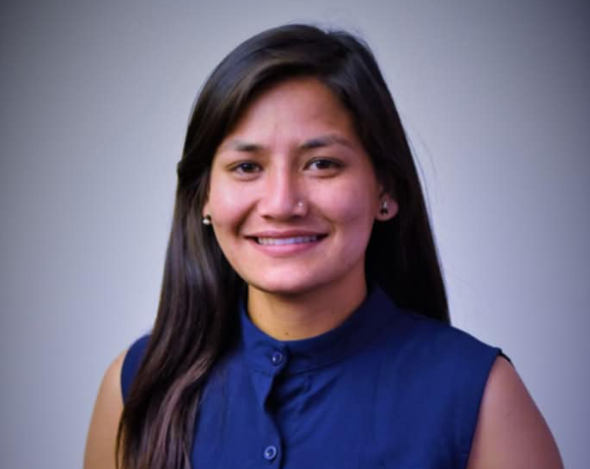
There are 8 candidates in the fray here, representing various political parties and independents. Brima Shahi from Himali Rural Municipality stated that candidates are meeting voters in every village.
‘The leaders are joining hands while asking for votes. In the past too, candidates used to come seeking votes like this during election time, but our plight remains the same, nothing has lessened. Once they win and leave, no one looks back at us,’ she told Ratopati.
Bajura is a remote mountain district facing numerous problems. Himali Rural Municipality is even more remote within this district, which lags behind in development due to geographical remoteness. Brima mentioned that they are deprived of basic facilities like roads and health services. She says she will vote for someone new and capable. However, she added that she has not yet finalized whom to vote for.
Brima also mentioned that voters here decide their votes after consulting within their neighborhoods. Clashes sometimes occur during elections in Bajura. She urged for the election to be conducted in a peaceful and dispute-free environment this time.
Man Bahadur Bika, a resident of Budhiganga Municipality, also stated that they will vote for someone who works in this election. Although the main competition in Bajura this time is expected to be among the traditional political forces, the presence of new and rebel candidates seems set to take the result to an interesting turn.
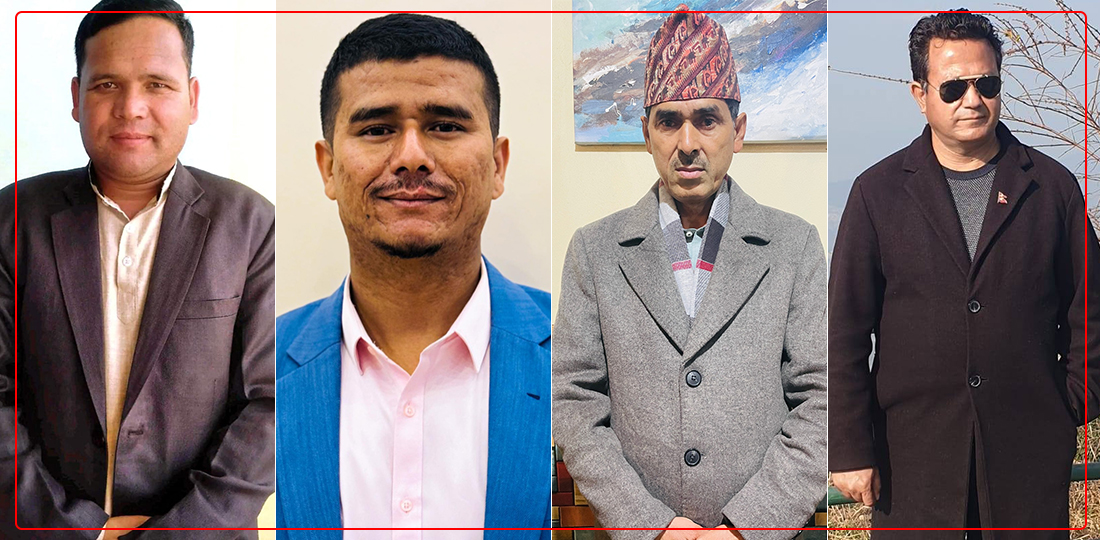
The ruling Nepali Congress has nominated 60-year-old Janak Raj Giri as its candidate this time. Giri has started his door-to-door campaign with a large presence of cadres after filing his candidacy.
On the other hand, 58-year-old leader Lal Bahadur Thapa is in the field representing the CPN-UML. Thapa has intensified his campaign with the agenda of Bajura's development and prosperity. CPN-UML cadres are seen actively creating a favorable atmosphere for him. The Communist Party of Nepal has nominated Prakash Shah as its candidate.
Similarly, 33-year-old young leader Hemraj Thapa has filed his candidacy from the Rastriya Swatantra Party (RSP). Hemraj, who has continuously raised his voice to connect the Far West with the center, is considered popular among the younger generation. The current favorable atmosphere for the RSP has become a strong point for him.
The Communist Party of Nepal (Maoist Centre) has nominated 39-year-old Bhupendra Bika (Luhar) as its candidate. Furthermore, 73-year-old Keshar Bahadur Shahi is the candidate from the Rastriya Prajatantra Party (RPP), and 40-year-old Deepak DC is the candidate from the Pragatisheel Loktantrik Party. The youngest candidate here, 30-year-old Upendra Bikram Shahi, has filed as an independent candidate, strategizing to draw the youth vote.
Among the major parties, the candidate of the Communist Party of Nepal, Prakash Shah, is a former central member of the CPN-UML, former parliamentary party leader of the Sudurpashchim Provincial Assembly, and a former minister. He left the UML and filed his candidacy from the Communist Party of Nepal.
Looking at Bajura's electoral history, the main competition has always been between the Nepali Congress and the CPN-UML. Past results show that the balance of power between both parties is almost equal.
In the elections of 2048, 2056, 2064, and 2079 BS, the Nepali Congress secured the result in its favor in Bajura, while the CPN-UML won in 2051, 2070, and 2074 BS.
Analyzing the results of the 2079 House of Representatives election, Nepali Congress's Badri Pandey defeated UML's Karna Bahadur Thapa by securing 31,786 votes. Thapa received 26,349 votes.
In that election, two youths lost their lives due to booth capturing and clashes, and the vote counting was also halted for a few days. At that time, the alliance led by the Congress took a wide lead from Himali, Triveni, Khaptad Chhededaha, and Swamikartik Khapar rural municipalities out of the nine municipalities.
Looking at the proportional representation votes in 2079, the Nepali Congress received 27,972 votes and the CPN-UML received 26,299 votes. The Maoist Centre received 1,979 votes and the Unified Socialist received 1,728 votes. Here, the RSP received only 235 votes and the RPP received only 178 votes.
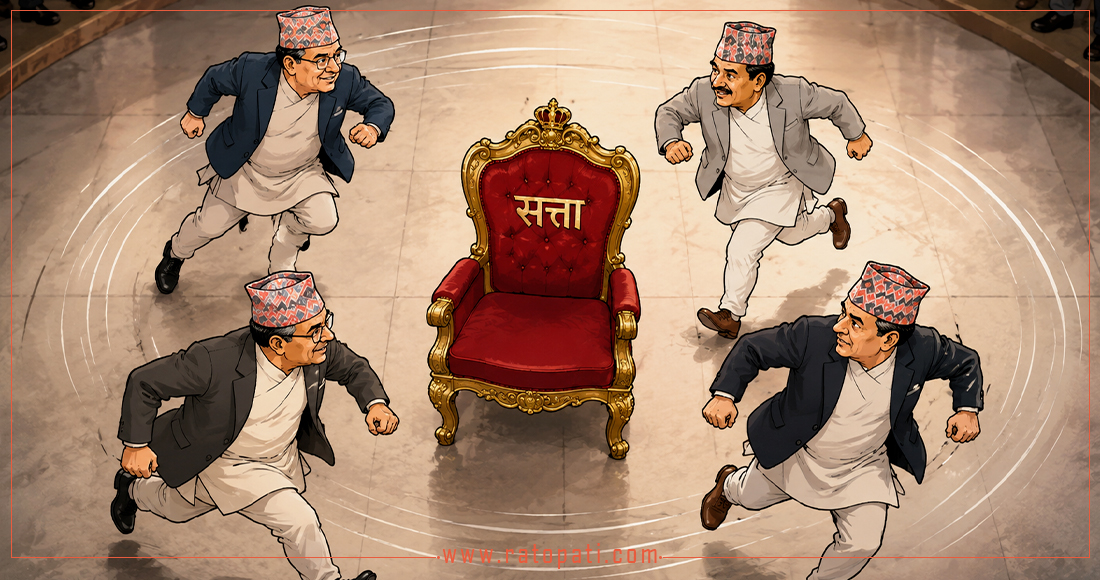
The equation has changed this time. Congress, which won the election with the strength of the alliance last time, is alone in the field this time, while the UML is aiming to regain its old prestige.
This time, the biggest headache for the UML could be its former leader Prakash Shah. The 53-year-old Shah is an established name in Bajura politics. Shah, who won the 2074 Provincial Assembly election from Bajura (2) by securing 18,186 votes, defeating Congress's Padam Shahi, served as the Minister of Internal Affairs and Law and Minister of Economic Affairs in the Sudurpashchim government for four years.
Having separated from the UML, alleging that CPN-UML Chairman KP Sharma Oli acted against the spirit of the Jaba Jaba (People's Multitude), he joined the Matribhumi Jagaran campaign led by Bhim Rawal. Shah, who has a strong hold within the UML organization, is still estimated to cut some UML votes. It is estimated that the votes cut by Shah could deal a blow to the UML candidate Lal Bahadur Thapa.
Pragatisheel Loktantrik Party candidate Deepak DC also poses a challenge to the major parties in this constituency. DC, born in Khaptad Chhededaha-3, Gudu, has a Master's degree in English and Political Science from Tribhuvan University.
Starting his political career from student movements in 2057 BS, he rose to the position of Central Deputy General Secretary of the Maoists after serving as the Sudurpashchim Chairman of All Nepal Revolutionary Students' Union (ANRSU). Recently, expressing dissatisfaction with the Maoist leadership, he started a new political journey.
‘We raised the issue of generational transition and handover in the party, but the leadership did not correct itself,’ DC said, ‘Now I want to go to parliament to speak for the voice of the grassroots people and to formulate policies for education, health, and employment.’
DC is estimated to influence the traditional vote bank of the Maoists. This could also cut the votes of the Communist Party of Nepal candidate Shah. Shah does not have strong support from the UML organization either. With Maoist votes being cut, and on top of that, not all UML votes coming in, and votes coming in the name of other goodwill and acquaintances being cut by a new party, Prakash Shah faces considerable challenges.
Similarly, it is not easy for Congress's Janak Raj Giri this time either. As the votes of the former Maoists and CPN (Unified Socialist) are likely to go to Prakash Shah, it is certainly a challenge for the Congress, fighting alone, to reach around the vote margin secured by the Congress candidate in the previous election.
The UML also faces challenges. Dissident factions within the party seem likely to vote for Prakash Shah. It is not easy for the UML to attract new voters to its side and resolve internal party dissatisfaction.
RSP candidate Hemraj Thapa appears set to challenge the major parties here. Votes from major parties are likely to be cut not only by the RSP but also by the RPP, the Biplav-led CPN (Maoist), and independent candidates.
Dhan Bahadur Bohara, a local teacher and analyst closely monitoring the political situation in Bajura, says this election will be different and more complex than the past. ‘In the past, the main competition was between Congress and UML, and voters were divided between those two parties, but this time there are many alternatives. Moreover, the parties are contesting alone,’ he said.
According to Bohara, the people of Bajura are no longer in a mood to vote just by looking at the party flag. He believes that whoever presents a clear roadmap for solving the region's geography, poverty, and deprivation is likely to win.
This specific news has been automatically translated by AI. As a result, there may be some inaccuracies or language errors.