Elections Heat Up in Sindhuli-2: Shifting Alliances and Internal Rebellion Challenge Communist Stronghold


Kathmandu. The fervor for the upcoming House of Representatives election on Falgun 21 is also increasing in Sindhuli Constituency No. 2. Sindhuli-2 is often referred to as the 'base area' of the communists.
Looking at the history of parliamentary elections from 2048 to 2079 BS, Sindhuli-2 shows a dominance of the left-wing, but this time's equation is different and more interesting than before.
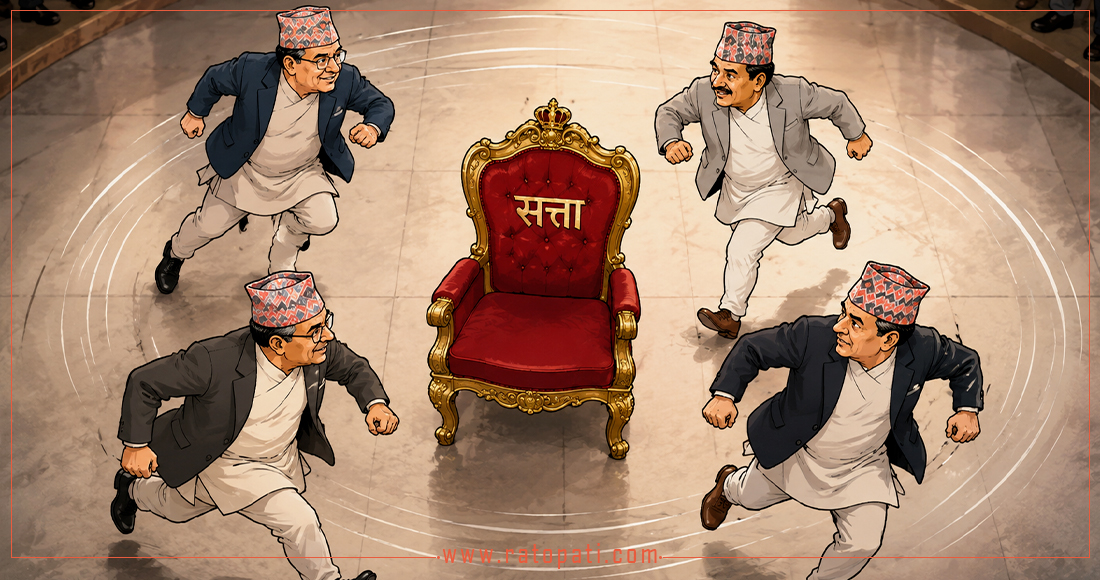
The upcoming election in Sindhuli-2 is certain to become more interesting and competitive due to decades-old political legacy and the rise of new forces.
There are 104,628 voters in this constituency. This time, the electoral outcome in this area has turned into a thriller movie due to the major parties, their rebels, and the emergence of new forces.
Sindhuli district comprises a total of 9 local levels, including 2 municipalities and seven rural municipalities, formed from the Inner Terai and hilly regions. Sindhuli-2 includes Hariharpurgadhi Rural Municipality, Marin Rural Municipality, Ghyang લેkh Rural Municipality, Sunkoshi Rural Municipality, and Wards 1-8 and 10-12 of Kamalamai Municipality.
Examining the election results from 2048 to 2079 BS, either the Nepali Congress or the left-wing parties (UML and Maoist) have held sway alternately here.
Recently, the left-wing forces, especially the CPN (Maoist Centre), have shown a strong grip. Out of the four major elections held since 2064 BS, the Maoists won three times (2064, 2074, and 2079), while Congress won only in 2070 BS.
Looking at the results of the last two elections, Sindhuli-2 appears to be a safe seat for the Maoist Centre, but in the upcoming election, rebels have added further challenge to the CPN.
In the 2079 election, Lekhnath Dahal (Rajan) of the Maoists won by a margin of 5,830 votes, securing 27,517 votes, defeating UML's Manoj Jung Thapa, who received 21,687 votes. The Rastriya Swatantra Party (RSP), emerging as a new force in this election, secured the third position with 1,553 votes.
In the 2074 House of Representatives election, Haribol Gajurel of the Maoist Centre also won in this constituency. He secured 30,0179 votes, while Congress's Narendra Jung Thapa was limited to 18,127 votes.
The electoral history of Sindhuli-2 has not always been consistent. In the general elections of 2048 and 2051 BS, Congress won consecutively here. Prakash Koirala was elected MP from here in 2048 BS, and Hemraj Dahal in 2051 BS. However, in 2056 BS, Shankar Nath Sharma Adhikari of UML broke Congress's legacy by winning. In the first Constituent Assembly election of 2064 BS, Chandra Prasad Gajurel of the then CPN (Maoist) won by a huge margin.
The equation changed again in the second Constituent Assembly election of 2070 BS. At that time, Congress's Mohan Prasad Baral defeated Maoist's Ganganarayan Shrestha, bringing Congress back to power.
End of Alliance and Single Contest
In the 2079 general election, there was a strong electoral alliance between Congress and the then Maoist Centre. Due to this equation, Maoist's Dahal won easily. But the situation has changed this time. The major parties—Congress, UML, and CPN—are all in the electoral field individually.
Manoj Jung Thapa of UML, who was defeated by a margin of 5,000 votes in the previous election, is again a candidate this time, aiming to regain his old prestige. The Maoist Centre is struggling to protect its stronghold. However, the old parties have fielded the same old faces as candidates.
The Maoist Centre (CPN) has also repeated its previous candidate. Congress has also placed its trust in established leaders rather than new faces. Nevertheless, with the parties competing individually, traditional vote division is certain, which could make smaller and independent candidates decisive.
Internal Rebellion within CPN
Sindhuli-2 is historically considered a stronghold of the Maoists. The CPN is in a difficult position this time due to rebel candidates. Rajan, who won the 2079 election, faces problems from rebels within his own party, alongside the new party.
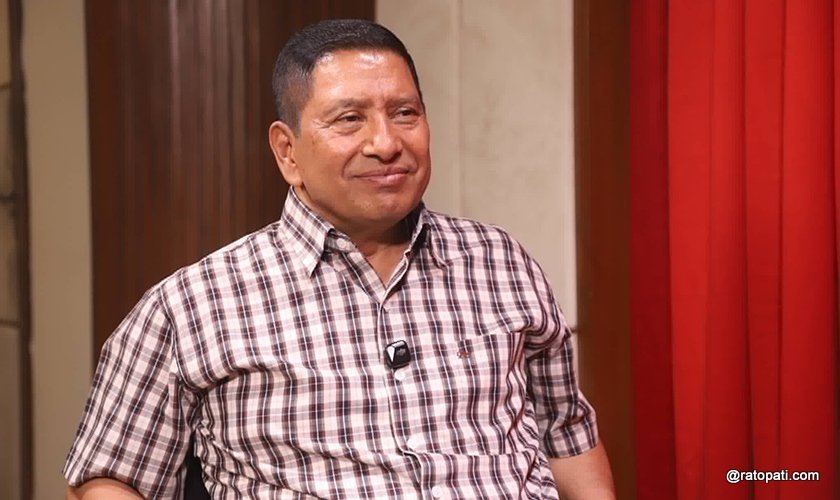
The internal dispute within the CPN surfaced after Maheshwar, a colleague of the official candidate Rajan, registered his candidacy as a rebel.
Maheshwar, who is also the founding chairman of Press Center Nepal, has the support of an influential faction within the party. Former heavyweight leader Haribol Gajurel, who won the election twice from this constituency and has served as a minister, has become Maheshwar's proposer, posing a significant challenge to Rajan.
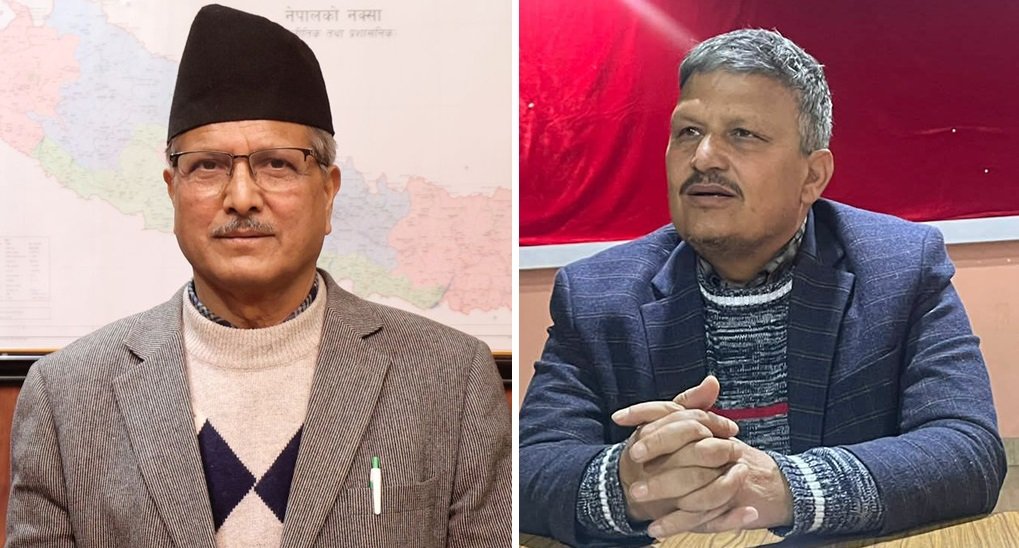
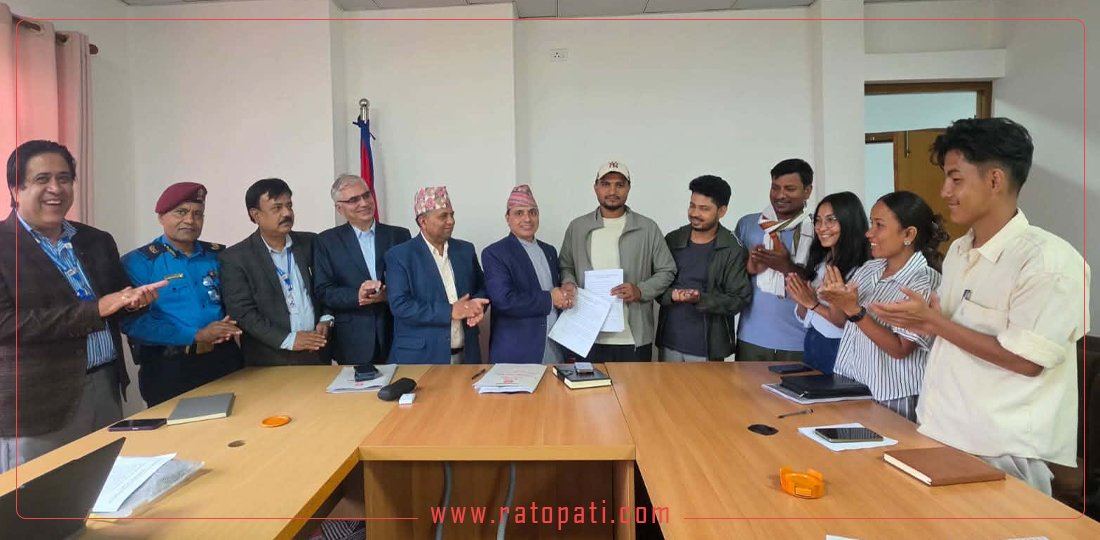
Receiving the support of District In-charge Basanta Majhi and Coordinator Paniraj Bamjan, Maheshwar appears not just as a rebel but as an alternative to the establishment faction.
There is a history in Sindhuli where Nirup Darlami won by standing as a rebel against Lilamani Pokharel in the 2064 election. If that history repeats itself, this election looks very arduous for the official candidate Rajan.
In the last local elections, Deepa Bohora Dahal of the Maoist Centre won in Sunkoshi Rural Municipality by securing 5,376 votes. Similarly, in Marin Rural Municipality, Bimarsha Muktan of the Maoists won with 5,194 votes.
Furthermore, in Hariharpurgadhi Rural Municipality, Bajra Dhwaj Waiba of the Maoists won by securing 4,729 votes. Since the Maoists won three rural municipalities, they are considered strong contenders.
UML's Strategic Move and the Persona of Manoj Jung Thapa
UML has fielded Manoj Jung Thapa again this time. Thapa, who possesses diplomatic experience, an intellectual image, and an engineering background, secured 21,678 votes in the previous election while fighting alone against the alliance.
It is estimated that the UML candidate Thapa might benefit this time due to the splitting of votes caused by the CPN rebel candidacy.
In the proportional representation vote count of 2079 BS, UML was the first party with 17,149 votes. This data shows that UML's organizational vote base is the strongest in Sindhuli-2. If the CPN's votes are divided, Thapa could directly benefit. This time, Thapa has made policy thinking and progressive transformation his main agenda, not just political slogans, which is likely to attract educated and neutral voters.
Thapa began his leftist political journey from ANISU while studying at Kamala Ma Vi Dhungrebas in 2040 BS. He advanced in politics after serving as the General Secretary of the All India Nepal Students' Union. Thapa has expertise in national and international politics.
Congress's Presence and Sushila Thing's Challenge
Sushila Thing of the Nepali Congress is also trying to make this competition a triangular fight. Congress, which supported the Maoists in the previous election due to the alliance, has fielded its own candidate this time.
Thing, a proportional representation MP in the last election, is now contesting the direct election field. She also served as the whip for Congress in the dissolved House of Representatives.
The direction in which the Congress's vote bank, which secured 13,349 votes in proportional representation, will go will also play a decisive role this time. The main challenge for Thing will be to maintain unity within the party while capitalizing on the division of leftist votes.
Infrastructure Expert Gajurel from RSP
Ashish Gajurel of RSP is expected to cause the biggest surprise in the upcoming election. Gajurel, who had a successful tenure as the Executive Director of the Nepal Intermodal Transport Development Committee, resigned from his post to enter the electoral field.
Gajurel, who carries infrastructure and technical expertise along with youthful vigor, is the nephew of leader Haribol Gajurel. He is certain to cut into the votes of the CPN's base, especially in urban areas and among young voters seeking change. He has been active in improving Nepal's transport sector. During his tenure, the construction of the Chobhar Dry Port was completed and operationalized.
Especially since the PRLOPA candidate is a former Maoist, he is expected to dent the CPN's core vote base. The presence of independent candidates like Khadga Bahadur Waiba and Narhari Poudel may also disrupt the calculations of the major parties here.
The construction of the Dodhara-Chandani Dry Port, stalled for 20 years, was initiated through his efforts. Before he took charge, the committee's annual income was around 800 million Rupees, which he increased to 1.8 billion Rupees during his tenure.
In the previous election, RSP received about 4,000 proportional votes. Anoj Kumar Dahal of RSP received 1,553 votes in the 2079 election, which is estimated to increase significantly this time. If he secures substantial votes, it will directly harm Congress and the CPN.
There are a total of 16 candidates here. Mukunda Prasad Gajurel of RPP, Rameshwori Koju of NSP, and Nirmal Kumar Syangtan of PRLOPA will also cut into votes in their respective areas of influence.
Especially since the PRLOPA candidate is a former Maoist, he is expected to dent the CPN's core vote base. The presence of independent candidates like Khadga Bahadur Waiba and Narhari Poudel may also disrupt the calculations of the major parties here.
Analysis of Past Vote Results
In the 2079 House of Representatives election in Sindhuli-2, CPN Maoist's Rajan was elected from the five-party alliance, securing 27,517 votes to win.
In the proportional representation category, UML was the first party here, securing 17,149 votes, followed by Maoist with 15,826, and Congress in third with 13,349 votes. RSP was fourth, securing 3,954 votes.
UML's Manoj Jung Thapa came second with 21,678 votes. RSP's Anoj Kumar Dahal received 1,553 votes, and Rastriya Prajatantra Party's Bhishma Raj Shrestha received 1,340 votes.
In the proportional representation category, UML was the first party here, securing 17,149 votes, followed by Maoist with 15,826, and Congress in third with 13,349 votes. RSP was fourth, securing 3,954 votes.
Based on these votes, the current CPN candidate Rajan Dahal faces increased challenges in the upcoming election.
What the past results clarify is that UML is organizationally strong in Sindhuli-2, but when Maoist and Congress votes are combined, UML falls behind. However, Congress and Maoist are separate now, and the Maoist Centre itself is divided internally. In such a situation, the contest between UML, which has a base vote of 17,000, and the rebel faction of the Maoists, carrying the heat of the rebellion, could take a new turn.
This specific news has been automatically translated by AI. As a result, there may be some inaccuracies or language errors.