Supreme Court Rules Relocation of Local Government Center is Discretionary Power of Rural Municipality

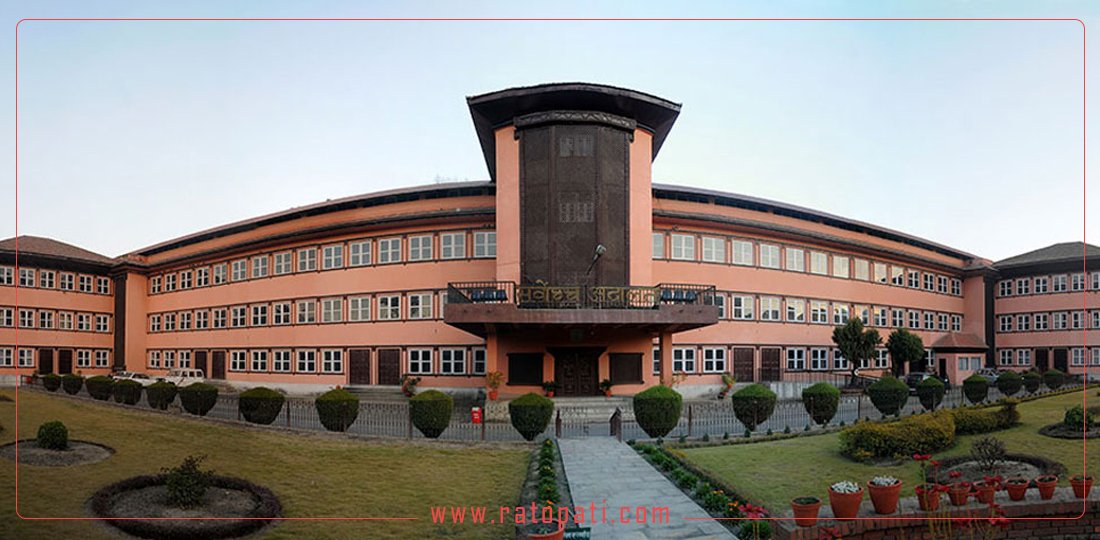
Kathmandu. The Supreme Court has delivered a landmark verdict on a dispute concerning whether the location of a rural municipality's center is merely a technical and administrative matter or also a constitutional one. The Supreme Court ruled that the decision to relocate the center of Isma Rural Municipality in Gulmi falls under the discretionary power of the rural municipality and stated that the court should not proceed to make a decision on such a matter.
By dismissing the writ petition filed against the decision to relocate the center of Isma Rural Municipality in Gulmi, the Supreme Court provided a significant interpretation regarding 'judicial restraint'.
The decision was made by a joint bench of Supreme Court Justices Til Prasad Shrestha and Meghraj Pokharel in the case related to the dispute over relocating the center of Isma Rural Municipality in Gulmi. When a case concerning the jurisdiction of a rural municipality reached the court, the Supreme Court interpreted the jurisdiction of the executive branch and the limits of the court in its ruling.
The court stated, 'The creation and implementation of laws, policies, programs, and standards fall within the purview of the executive or the legislature. This also involves economic and expert aspects.' The Supreme Court stated in the full text of the judgment, 'Legally, the court cannot currently order whether the criteria for altering the centers of municipalities have been met or whether it is appropriate. There is a clear legal provision stating that the authority to make such decisions falls within the jurisdiction of the executive. Since this is entirely the authority of the executive, the court cannot assume this authority or issue orders or directives as demanded by the petitioners in this immature stage, such as 'do this or do that'.'
Through this judgment, the court has spoken on the extent of activism the judiciary needs to show regarding matters within the jurisdiction of the executive. Clarifying the potential future dangers and impacts of judicial activism, the Supreme Court ruled on the matter of judicial activism: 'Sometimes, limited judicial activism becomes indispensable for guaranteeing justice. However, the court must exercise caution, prudence, and restraint to ensure that judicial activism does not always turn into judicial adventurism. Judicial activism is not a directionless weapon; ignoring this fact can lead to constitutional disorder or anarchy. Judges should not be influenced by public praise or popularity, nor should personal ambition or self-promotion be given space. Maintaining the sanctity and credibility of the judicial process is essential to uphold judicial authority. The court cannot play the role of running the government.'
The Indian Supreme Court has also established principles in various cases that the court should not interfere in matters falling under the jurisdiction of other organs. Citing some precedents from India, it also interpreted the issue of the limits of judges' jurisdiction. The Supreme Court pointed out in the judgment that judges must know their limits and should not attempt to run the government. Citing precedents from the Indian Supreme Court, which stated that they should have courtesy and humility and should not behave like emperors, the Supreme Court indicated that it should not pass judgments beyond its limits. The judgment stated, 'If judges begin to behave like legislators or administrators, then judges would also need to be elected or selected and trained like legislators or administrators, which would be counterproductive.'
The Supreme Court raised the issue of the principle of separation of powers regarding the decision to relocate the center of Isma Rural Municipality. In a situation where the three organs of the state—executive, legislature, and judiciary—are complementary to each other based on the principle of separation of powers, the Supreme Court interpreted that it cannot interfere with a decision made by the government following the legal path. The court concluded that deciding where the center of the rural municipality should be located for the convenience of the people is a 'political and administrative' decision and not a 'legal' matter.
The judgment holds that questioning the discretion of two-thirds majority of the elected representatives is contrary to the principle of 'separation of powers'. The judgment stated, 'When there is a clear legal path for the recommendation to be submitted to the Government of Nepal and the Government of Nepal to make a decision based on appropriateness, interfering at this stage is seen to be contrary to the principle of separation of powers as well. The judiciary must also act within the established constitutional standards and limits of its jurisdiction.'
The court stated that the matter cannot be brought within the extraordinary jurisdiction of the court when the Rural Assembly has only made a recommendation and the Government of Nepal has not yet made the final decision. The court raised the first legal question: Was this matter ripe for entering the court? According to the Local Government Operation Act, 2074, although the Rural Assembly recommends a change in the center, the final decision must be made by the Government of Nepal (Cabinet). The judgment stated, 'It was hasty to approach the court in such an immature stage where the recommendation has been submitted but the decision has not been finalized.' This is called the 'Doctrine of Immaturity' in law, where the court cannot interfere before the decision-making process is complete.
The full text of the judgment stated, 'The decision to relocate the center does not appear to be contrary to the Constitution of Nepal or Section 4 of the Local Government Operation Act, 2074. Since the writ petitioners approached the extraordinary jurisdiction of this court in such an immature stage, judicial review cannot be undertaken at this time.'
Thus, the Supreme Court deemed the process of relocating the center of Isma Rural Municipality as 'immature,' re-establishing the principle that the final authority to make policy decisions remains with the executive and that the court must exercise 'judicial restraint' in this regard.
The judgment interpreted 'judicial activism' as an 'alarm system.' That is, when other organs of the state violate the constitution, the judiciary must sound the alarm. However, the judgment stated that the court showing activism in all matters all the time would be 'judicial adventurism.'
The judgment stated, 'Judicial activism is not a directionless weapon; ignoring it can lead to anarchy in the constitutional system.' This clarified that the judiciary should not intrude into the 'discretionary authority' of the executive.
In 2077 BS, the Rural Assembly decided that the center of Isma Rural Municipality would be located at Ratpokhara in Ward No. 5, and the office would be located at Matakhani/Fediphant in Ward No. 3. Ward Chairman Chur Bahadur Khatri of Ward No. 1 and Ward Chairman Tik Bahadur Reshmi of Ward No. 2 filed a writ petition in the Supreme Court against that decision. They claimed that the Rural Assembly meeting was illegal, they were not informed, and the center was relocated without following due process.
The court ruled that the two-thirds majority decision of the Rural Assembly must be recognized. The court termed the balance created by the constitution for the independence of the judiciary as a constitutional trade-off. This means that the court must also respect the jurisdiction of others to maintain its own independence.
The court's legal analysis was that overturning the decision made by 21 out of 30 members of the Rural Assembly in the Isma Rural Municipality center dispute based on a technical error would be an insult to the 'democratic majority'. The court noted in its study of the case records that 21 members (more than two-thirds) out of the total 30 members of the Rural Assembly voted in favor of the proposal to set the center. According to Section 4 of the Local Government Operation Act, 2074, the court determined that the process followed the provision requiring the decision to be made by a two-thirds majority of the Rural Assembly and recommended through the Provincial Government to the Government of Nepal.
This specific news has been automatically translated by AI. As a result, there may be some inaccuracies or language errors.