Nepali Congress Implements 'Special Strategy' Directing Leaders to Work in Assigned Areas for Upcoming Election


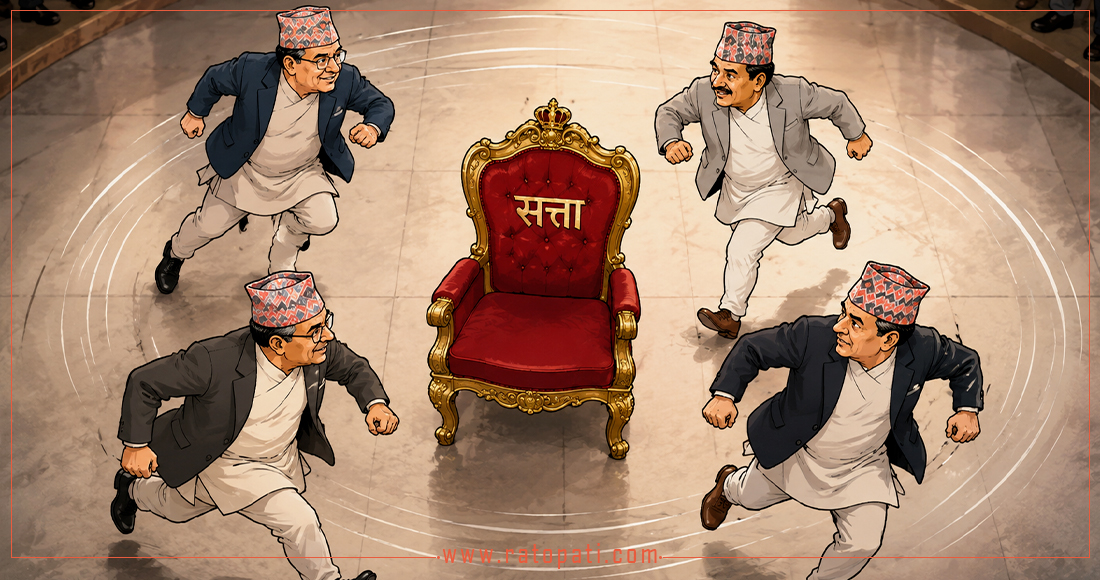
Kathmandu. The Nepali Congress has implemented a 'special strategy' titled 'Whoever has responsibility there, must work there' targeting the House of Representatives election on Falgun 21.
The Election Mobilization Committee, led by Vice President Bishwa Prakash Sharma, has created an 'Election Mobilization Directive.' This directive includes the phrase 'Whoever has responsibility there, must work there' for 30 days. The directive states that leaders, except for district presidents, will not be allowed to go outside their respective electoral constituencies.
Co-General Secretary Dr. Dila Sangraula Pant informed that since there is one month remaining starting Tuesday, leaders will now only be able to work in the areas where their responsibilities lie, in line with this special strategy. 'According to the Election Mobilization Directive, leaders must now work where their responsibility lies,' Co-General Secretary Dr. Sangraula told Ratopati. 'This provision has been implemented so that leaders can work to strengthen the party's position in their own constituencies.'
According to the directive, office bearers and members of various levels of the Congress will work in their respective assigned areas until Falgun 21.
Vice President Sharma had previously informed about the 'special strategy' during the provincial-level internal discussions conducted by the Election Mobilization Committee at the central office.
Congress Spokesperson Devraj Chalise informed that this strategy was formulated to instruct leaders to 'work in your own ward, don't go to others' constituencies.' 'This policy was made so that you work in your own area and don't just create noise in others' areas,' Spokesperson Chalise told Ratopati. 'This is the directive of the Election Mobilization Committee. The colleagues will implement it.'
_JNGkJ3R13m.jpg)
This specific news has been automatically translated by AI. As a result, there may be some inaccuracies or language errors.