Lessons for Nepal from India's Decade of Election Manifestos and Governance Models


Kathmandu. The dissatisfaction and anger seen towards past governments in Nepal were also evident in neighboring India in 2014. However, in India, the change in power occurred through the Lok Sabha elections, not through street protests.
The UPA government, led by the Indian National Congress, was in power in India from 2004 to 2014, with Manmohan Singh serving as the Indian Prime Minister from 2004 to 2009 (first term) and from 2009 to 2014 (second term). However, as the Congress-led government ruled for ten years, public dissatisfaction and the aspiration for change grew. At that time, the UPA government was criticized for major corruption scandals, policy inertia, and economic slowdown.
Based on this background, in the 2014 Indian Lok Sabha elections, Indian voters prioritized development and good governance, ending the ten-year Congress rule and bringing the Bharatiya Janata Party (BJP) to power.
The 2014 Lok Sabha election changed the course of Indian politics. The BJP went into the election declaring Narendra Modi as the Prime Ministerial candidate.
In that election, the BJP secured an absolute majority by winning 282 seats out of the 543-member Lok Sabha. This was the first major majority achieved by a non-Congress party on its own in India. The ruling Indian National Congress managed to win only 44 seats in the 2014 elections, marking its weakest performance in history. The main electoral agenda for the BJP in that election was opposition to corruption, alongside employment and economic development.
Since Modi was put forward as the Prime Ministerial candidate, voters gave him a clear majority, considering him a development-oriented and decisive leader based on the 'Gujarat Model'. He served as the Chief Minister of Gujarat continuously from October 7, 2001, to May 22, 2014. Following that, he won the Lok Sabha election in 2014 and became the Prime Minister of India. Leadership change was the main issue in this election.
At that time, the fatigue of the ruling Indian National Congress leadership and Modi's aggressive, optimistic narrative attracted voters in the Lok Sabha elections. The 2014 Indian Lok Sabha election became a symbol of hope, development, and a new beginning.
2019 Lok Sabha Election
The 2019 election had a completely different emotional tone than 2014. In this election, the ruling party made national security and nationalism central issues in its manifesto, rather than development. The question of whether the country was safe or not became decisive among Indian voters. Modi was presented as a symbol of strong and decisive leadership. Furthermore, welfare schemes run by the government, such as Ayushman Bharat, Ujjwala, and Jan Dhan, particularly influenced rural and poor voters.
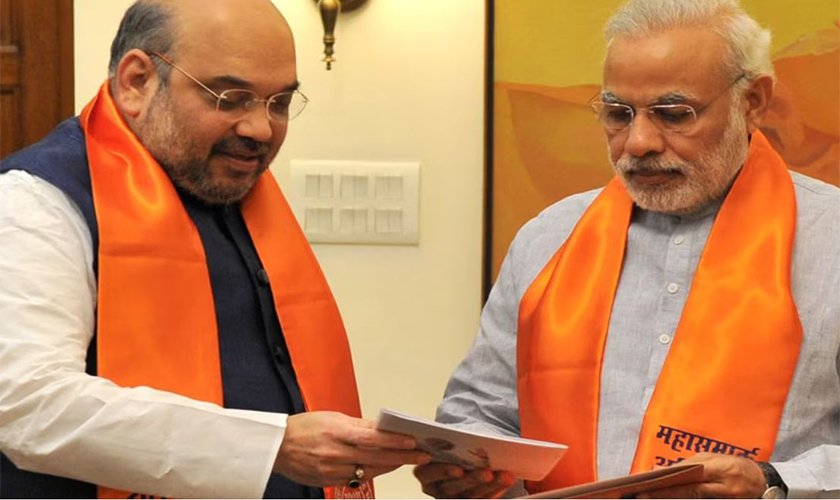
Similarly, the opposition appearing weak in 2019, the lack of a clear alternative leadership, and the surge in nationalist sentiment led voters to favor stability and continuity, establishing the BJP in power.
2024 Lok Sabha Election: Employment, Inflation, and Power-Fatigue
The 2024 election took place after the BJP's ten-year rule. The voter psychology appeared different this time. Unemployment became the biggest issue, especially with young voters feeling disappointed. Concurrently, inflation, cost of living, agricultural crisis, and income inequality forced voters to reconsider.
In 2024, the opposition parties also organized themselves and raised issues concerning the constitution, democracy, social justice, and federal balance. Voters desired stability on one hand, but also sent a message that power needed to be kept in balance.
Political Party Electoral Manifestos
The BJP's 2014 manifesto prioritized development, eradication of corruption, job creation, infrastructure expansion, and good governance. It included promises to control price hikes, promote employment and entrepreneurship, and break free from the old governance system.
The Indian Congress's 'Sankalp Patra' (Resolution Letter) emphasized the party's traditional social security, constitution, and inclusive development priorities, but it was not very influential in the popular vote. Furthermore, the BJP returned even stronger in the 2019 elections. The BJP itself won 303 seats, securing an even larger majority, and its alliance, the National Democratic Alliance (NDA), reached a total of 353 seats. Although the Congress showed some improvement in this election, it won only 52 seats.
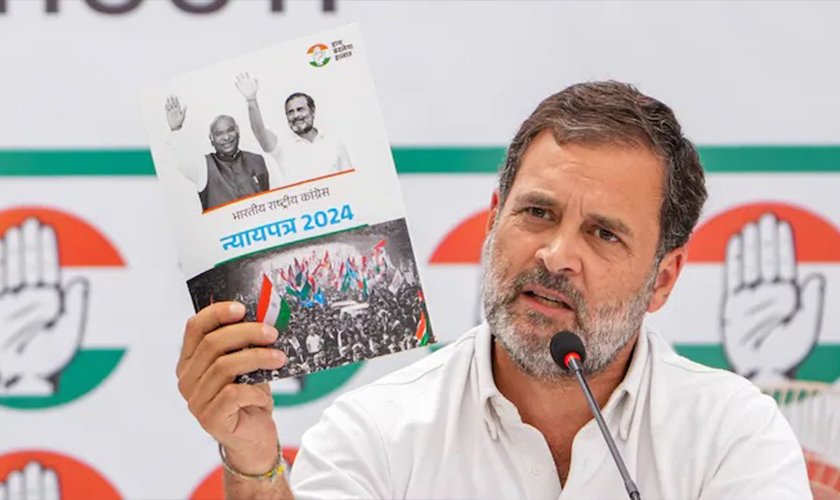
The 2019 BJP manifesto primarily claimed achievements in nationalism, security, welfare schemes, and development, making strong leadership and the familiar Modi image the electoral center. However, the Congress manifesto mainly prioritized employment, social security, agricultural support, and inclusive economic development. It also criticized the Modi government, raising issues of democracy, unemployment, and increased spending. But Indian voters again gave the majority to the BJP.
The political landscape in India changed somewhat again in the most recent 2024 Lok Sabha election. The BJP could not secure an absolute majority on its own in 2024. It won around 240 seats, which was less than the required majority of 272, thus reducing its seat count. Although the BJP's seat count was weaker this time, its alliance succeeded in crossing the 272 majority mark with the support of other coalition partners.
The opposition Congress made a significant leap in this election, winning 99 seats, which was a clear improvement compared to 2014 and 2019. The 2024 BJP manifesto emphasized long-term development expansion, manufacturing, and continuity of welfare schemes, but it did not broadly include measures for major structural economic reforms.
However, the Indian National Congress made rising inflation, unemployment, social equality, and general public welfare its main issues in 2024, positioning itself as a rival to the Modi government's economic and political policies.
Electoral Strategies Adopted in Lok Sabha Elections
Indian democracy is considered the world's largest and most complex. From 2014 to 2024, India has gone through three general elections and dozens of state elections. During this period, the role of manifestos in Indian politics does not seem limited to mere paper assurances.
The manifestos presented by the ruling BJP in the three elections from 2014 to 2024 do not appear merely as electoral declarations. They serve as an established model for governance, politics, and state operation. This journey, which began in 2014 with the hope of change, has transformed into a claim of achievements in 2019 and a vision for long-term nation-building in 2024. The Indian experience regarding the BJP's manifesto and its implementation in the last three elections suggests that Nepal should learn lessons.
The 2014 Sankalp Patra is considered a turning point in Indian politics. With the slogan 'Sabka Saath, Sabka Vikas' (Together with all, Development for all), the BJP came to power with its first absolute majority, and Modi was presented as a symbol of development and decisive leadership. This phase was fundamentally about the politics of hope and change.
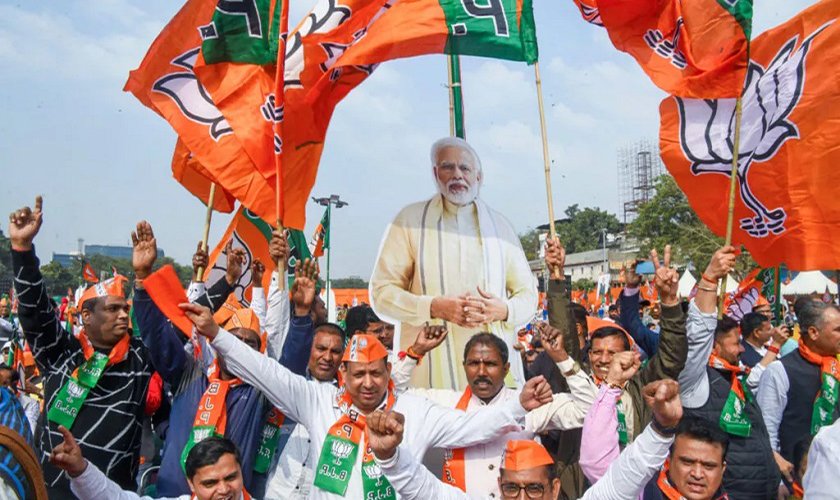
By 2019, the situation had changed. Having governed for five years, the BJP was not in a position to make promises as if it were in opposition. Therefore, the 2019 Sankalp Patra presented a list of the government's accomplishments rather than just declarations. Security actions like the Balakot airstrike and surgical strikes were put forward as proof of decisive leadership.
Furthermore, welfare schemes like Ayushman Bharat, Ujjwala, and Jan Dhan were presented as achievements. During this phase, nationalism, security, and leadership became the main emotional focus of the election. The 2024 Sankalp Patra was a document presented after ten years of rule. The BJP focused on continuity and a long-term vision rather than emotional nationalism.
It prioritized the assessment of achievements over the past 10 years, expansion of welfare schemes, 'Aatmanirbhar Bharat' (Self-reliant India), manufacturing, semiconductors, and building an economy based on new technology.
A comparison can be drawn between the BJP model and Nepal's political practice. In India, a central leadership and policy continuity appear to have stabilized the government, whereas in Nepal, fragmentation of leadership and frequent government changes make the implementation of long-term policies difficult.
In India, there is an effort to deliver announced plans to targeted beneficiaries through digital systems, whereas in Nepal, many schemes remain limited to announcements. Differences are also seen in terms of welfare policies. In India, efforts are being made to support targeted groups through direct benefit transfer systems, while in Nepal, unplanned subsidies and populist programs are seen to be increasing pressure on the budget.
Elections in Uttar Pradesh and Bihar
There is a saying in Indian politics that the road to Delhi passes through UP and Bihar. The impact of manifestos is seen differently in these two states. In Uttar Pradesh (UP), the BJP made law and order and the 'Bulldozer Model' the main attraction of its manifesto in the 2017 and 2022 assembly elections. Although the Congress brought a women-centric agenda ('Ladki Hoon, Lad Sakti Hoon' - I am a girl, I can fight), it could not break the BJP's narrative of development and security. However, in 2024, the Congress-SP alliance's slogan of 'Save the Constitution' posed a stiff challenge to the BJP's manifesto.

Bihar Assembly Election
Politics in Bihar has always revolved around caste equations and development. In the 2020 election, the BJP promised 1.9 million jobs in Bihar state. The RJD-Congress alliance put forward an agenda to provide 1 million government jobs. However, during implementation, caste census became a major issue in Bihar, which the Congress also included in its national manifesto.
The declarations of political parties in these two major states are closely watched across India.
Status of Implementation
In India's experience over the last decade, a new class has been born: the beneficiary class. The BJP has honestly delivered the small but directly impactful schemes mentioned in its manifesto (gas cylinders, toilets, housing, free rations) down to the grassroots level.
The BJP has implemented what was written in the manifesto in a mission mode. Through the Ujjwala scheme, it has provided gas connections to millions of women, successfully creating an impression among the public that a manifesto is a promise that will be fulfilled.
However, the implementation of electoral promises has become a challenge for the Indian National Congress. Congress's plans are long-term and structural, but they could not become as 'instant' and 'branded' as the BJP's schemes. Nevertheless, in recent years, Congress has started distributing its electoral promises as 'Guarantee Cards,' which has created public pressure for implementation.
Lessons Nepali Political Parties Should Learn
In Nepal, election manifestos are increasingly being treated merely as empty talk or literary documents. This is because the trend of political parties bringing out manifestos in every election but limiting their implementation to paper after coming to power is dominant. Therefore, Nepali parties need to learn lessons from the experience of electoral declarations in the state and Lok Sabha elections held in neighboring India over the last ten years.
Indian parties conduct large-scale surveys before preparing their manifestos. The BJP collected millions of suggestions digitally for its 2024 manifesto. Accordingly, Nepali parties need to prioritize the real needs of the people instead of writing manifestos while sitting in rooms.
India has worked by analyzing the financial burden of schemes like justice or farmer support. Instead of writing impossible things like increasing per capita income to $5000 in five years or building bullet trains, Nepali parties need to bring small and concrete plans that can be implemented.
While the BJP has tried to deliver its manifesto plans to the last person, programs like social security allowances brought by Nepali parties are popular. Instead of promising free education and health, parties should create mechanisms to guarantee their quality and access.
In India, the media and civil society run manifesto trackers that keep a record of what percentage of promises each party has fulfilled. However, Nepali political parties do not dare to issue a white paper detailing how many promises from the previous election were fulfilled and how many were not; this needs to be done.
From Paper Promises to Guarantees!
What the 2014, 2019, and 2024 elections in India have confirmed is that future voters trust the mechanism that delivers, not just those who distribute dreams. The BJP has established an implementation model through a fusion of Hindutva and development, while Congress has revived the issue of social justice.
In Nepal, election manifestos are still merely ceremonial. Political parties must start treating manifestos as commitment letters in the upcoming elections. Democracy cannot strengthen until a culture is established in Nepal, as in India, where the public questions leaders based on the manifesto and leaders provide answers.
This is the biggest lesson Nepali parties need to learn from India's experience over the last decade. Emotion can win elections in politics, but the successful implementation of the manifesto appears to be an essential condition for governance. Nepal needs to learn the model, not the leadership, from India. Long-term national vision, limited but effective programs, policy continuity, and a accountable governance system are aspects Nepal can adopt.
This specific news has been automatically translated by AI. As a result, there may be some inaccuracies or language errors.