Electoral Battleground: Analyzing the Tight Race in Kavrepalanchok-2 Constituency
Kathmandu. As the House of Representatives elections draw near, Kavrepalanchok Constituency No. 2 is one of the constituencies generating the most interest regarding the electoral outcome.
Bordering all three districts of the Kathmandu Valley, this constituency is often considered an extension of the Valley itself. It encompasses the entirety of Banepa, Panauti, Panchkhal, and Mandan Deupur municipalities, Wards 1 through 7 of Dhulikhel Municipality, and the rural municipalities of Bethanchok and Bhumlu.
- Profile of the Candidates
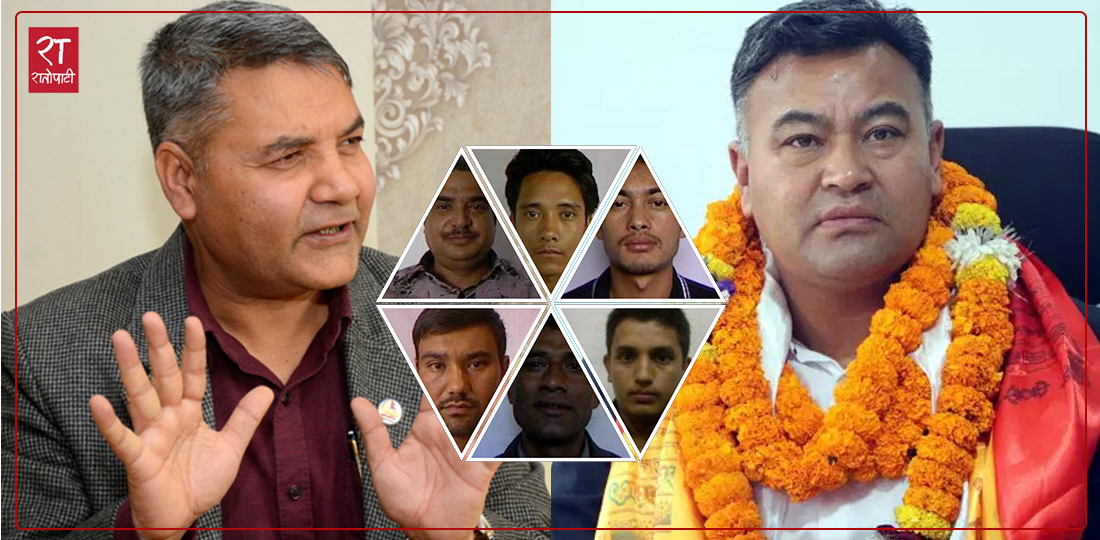
Ashok Byanjankar is the candidate from CPN-UML in this constituency. He was elected mayor of Dhulikhel Municipality in both 2074 and 2079 BS. While serving as mayor, he was also the president of the Municipal Association. He is a central committee member of CPN-UML and has held various positions in the party's district committee previously. He is a resident of Dutol, Dhulikhel Municipality.
Madhu Acharya, the candidate from the Nepali Congress, is also a central committee member of the party. Known for openly supporting the faction advocating for a special general convention, he is considered close to Gagan Thapa. A long-time leader and permanent resident of Balkhali, Panauti, he was also an aspirant in the previous election but did not secure the ticket then. In the last election, Shiva Humagain, considered close to Sher Bahadur Deuba, received the party's candidacy from this constituency.
Basundhara Humagain, the candidate from the Communist Party of Nepal (CPN), is also a local resident of Panauti. He is contesting from the CPN formed by the merger of the then CPN (Maoist Centre) and CPN (Unified Socialist). He was elected as a member of the Bagmati Provincial Assembly from CPN-UML in 2074 BS and served as a provincial minister. When CPN-UML split, he joined the Unified Socialist faction.
Badankumar Bhandari, the candidate from Rastriya Swatantra Party (RSP), has a background rooted in CPN-UML. A local resident of the Bhumlu area, he was initially involved with the ANIS (All Nepal National Free Students Union) affiliated with CPN-UML. Following the split of the CPN, he showed allegiance to the Unified Socialist faction before later joining the RSP.
Additionally, Rakem Lama is contesting from the Janata Samajbadi Party (JSP), Ranjiv Shrestha from RPP, Tank Bahadur Lama from Shram Sanskriti Party, and Jyotsna Sainju from Ujyalo Nepal Party. Candidates from 8 other parties and 8 independent candidates have also registered their nominations in this constituency.
- Past Electoral Arithmetic
Being close to the Valley, this constituency is one of those with the highest number of voters. According to the Election Commission's data, this constituency has 165,511 voters, the majority of whom reside in urban areas.
Based on the Commission's statistics, Banepa has the highest number of voters with 40,910, followed by Panchkhal with 32,407, Mandan Deupur with 30,494, Bhumlu with 18,156, Panauti with 16,425, Dhulikhel with 14,660, and Bethanchok with 12,459 voters.
In the 2079 BS elections, under the Proportional Representation (PR) system, CPN-UML secured 34,705 votes from this area, while Nepali Congress received 26,556, RSP garnered 16,824, Maoist Centre got 7,926, Unified Socialist obtained 6,143, and RPP secured 3,792 votes. The total valid votes cast under PR were 99,748, which accounts for 60.27 percent of the total voters.
In the First-Past-The-Post (FPTP) category, CPN-UML candidate Gokul Baskota secured 45,345 votes, while Congress's Shiva Humagain received 39,492 votes. Statistics show RSP received 10,573 votes and RPP received 1,933 votes. A total of 99,225 votes were declared valid under FPTP, which is also around 60 percent.
In the Provincial Assembly elections of 2079 BS, Laxman Lamsal of the Unified Socialist and Kanchan Chandra Bade of the Nepali Congress were elected from this constituency. In the local elections, Maoist Centre won in Bhumlu Rural Municipality, Unified Socialist in Mandan Deupur, and CPN-UML won in Dhulikhel (which is only partially in this area), while Congress won the elections for Chief/Chairman in Banepa, Panauti, Panchkhal, and Bethanchok, which constitute the largest population areas.
Considering the above situation, although CPN-UML was the leading party in the PR vote, this alone does not appear sufficient for victory in this constituency. Gokul Baskota won this seat by securing over 10,000 more popular votes. Due to the alliance between Congress, the then Maoist Centre, and the Unified Socialist, Congress has shown dominance in all elections held in this area.
The points mentioned above reflect the previous arithmetic, but given the changing circumstances and candidate reshuffles, relying solely on past calculations may not be appropriate. Therefore, an analysis based on the latest situation is necessary.
- Chances and Challenges for Each Candidate
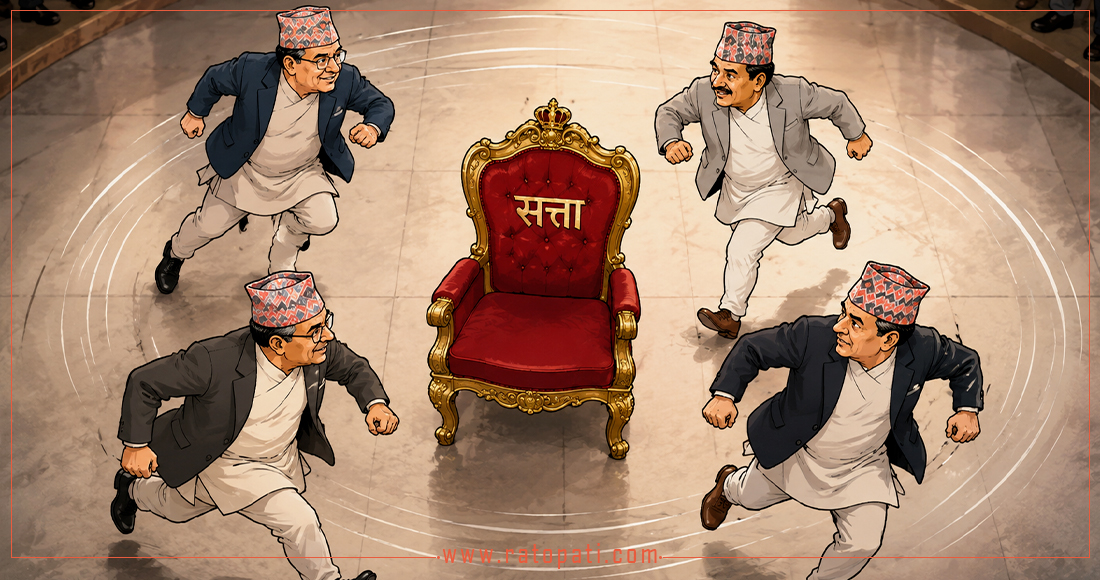
Assessing the past electoral arithmetic, the current political atmosphere, and the profiles of independent candidates, the result is almost certain to be among the top four major parties. However, based on the candidates' and parties' profiles, past performance, and controversies, it is difficult to predict which way the election result will lean.
Both CPN-UML and Nepali Congress, the long-time rivals, are particularly fearful of internal sabotage. In the previous election, Gokul Baskota of CPN-UML, who won with significant popular votes under the Congress-Maoist alliance, did not receive the ticket this time.
CPN-UML has fielded Ashok Byanjankar, who was made to resign as the Mayor of Dhulikhel, after denying the ticket to Baskota, who contested elections from an opposing panel against the wishes of Central Chairman KP Sharma Oli. It cannot be ruled out that the Baskota faction might not support or might even sabotage Byanjankar.
Although Baskota has publicly spoken in support of Byanjankar in public events, everyone understands this was done out of organizational compulsion.
Gokul Baskota was as famous for his blunt nature as he was capable of connecting with many voters. Banepa, where the largest number of voters reside, was his in-laws' area, and Mandan Deupur was his ancestral home. Having entered an inter-caste marriage, he had gained the trust of both the Khas Arya and Newar communities—a quality Byanjankar might lack. Byanjankar only represents half of the voters in Dhulikhel Municipality.
On the other hand, the decline in the prestige of the CPN-UML leadership nationally following the Gen Z movement, and the repetition of old faces in leadership, are certain to be a major cause of voter disillusionment. Kavre-2 does not seem immune to this effect, and it is hard to estimate how much impact this will have on this constituency.
The strong point for the CPN-UML candidate currently is the competition without an alliance. CPN-UML, which was first in the PR vote, had a chance to win based on organizational votes when contesting alone, which benefits Byanjankar.
Furthermore, since he has been active in party politics for a long time and has not been significantly controversial as an elected representative, if he becomes a Member of Parliament, the people of Kavre will not have to hang their heads in shame.
The story of strong and challenging aspects is no less significant for the Nepali Congress. There are allegations that the current candidate, Madhu Acharya, who was denied a ticket in the previous round due to factional politics, was uncooperative towards the previous candidate, Shiva Humagain. Therefore, the suspicion that Humagain might be uncooperative now that Acharya has received the ticket is naturally arising.
Moreover, this ego conflict seems to have spread beyond individuals to the party itself. Such non-cooperation is enough to repeat the fate of the previous election.
On the other hand, Congress does not have the support of the Maoist Centre and Unified Socialist to help them win this election. Acharya will not be untouched by the nationwide rise in influence of the RSP, but he also has his strengths. He has the sympathy of having waited a long time in the party without getting much, and more importantly, he has the path of seeking votes by presenting a changed face of leadership nationally.
It also appears that having the leadership in Banepa, Panauti, Panchkhal, and Bethanchok, along with a strong presence in wards elsewhere, will assist Acharya in this election.
Now, let's look at CPN (Unified Socialist). Basundhara Humagain, who previously served as a Provincial Assembly member and Minister, is established as a qualified candidate for the House of Representatives, but his basis for victory is not strong without a weak foundation and an inspiring agenda.
The combined votes secured by the Maoist Centre and Unified Socialist here are nearly 13,000, whereas the winning vote count is 45,000. This situation suggests that winning the election without popular votes seems unlikely.
The main basis for RSP's victory is also the nationwide wave and popular votes. Given that RSP secured over 16,000 votes from this constituency in the last election and the current nationwide wave for RSP, it cannot be denied that the party's candidate, Badankumar Bhandari, might have an edge in Kavre as well. He can naturally benefit from the internal conflicts within Congress and CPN-UML.
However, Bhandari's weakest point is his portfolio. With very little experience in politics, he also lacks a significant record of contribution in other fields. In an era of celebrity candidates nationwide, he lacks this qualification too. Furthermore, the extent to which the wave for RSP outside the district translates locally, and the fact that voters in Kathmandu and surrounding districts are beginning to evaluate candidates based on local factors, might determine the outcome in Kavre-2. There is also skepticism about how much the urban population will trust him, given he is from Bhumlu.
It is also stated that Ujyalo Nepal Party and Shram Sanskriti Party hold significant influence among the Tamang community and indigenous groups. Analysts suggest that the votes they secure could also determine the election result in this constituency.
This specific news has been automatically translated by AI. As a result, there may be some inaccuracies or language errors.