Illegal Sand and Gravel Extraction Surges in Bara as Local Elections Distract Authorities


Bara. Police, administration, elected representatives, and political parties are busy with preparations for the upcoming elections. Taking advantage of this situation, the theft and smuggling of river-based materials have increased within the Jitpur Simara Sub-Metropolitan City.
The Sub-Metropolis failed to award contracts for river excavation last year, and even after issuing a notice by the third week of Magh in the current fiscal year, the contract agreement has not been finalized. The failure to award river contracts on time has led to an increase in the smuggling of river-based materials, and for two years, the federal, provincial, and local governments have lost millions of rupees in revenue.
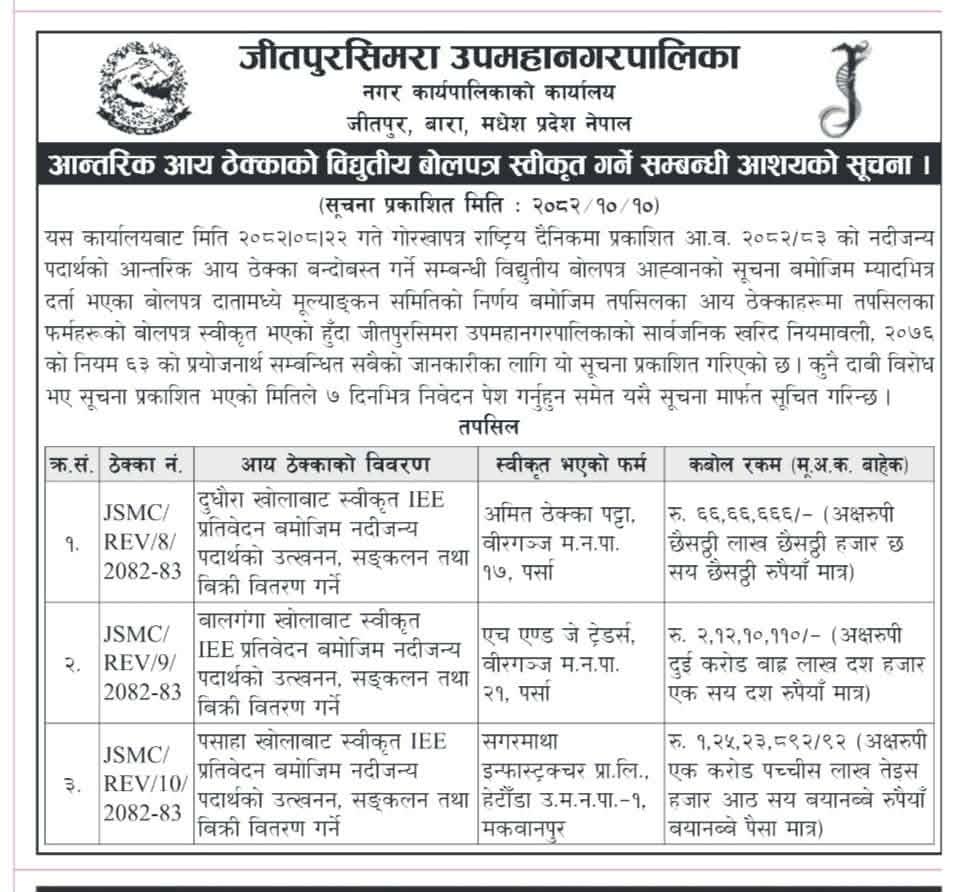
The Sub-Metropolis used to collect an annual revenue of 12 to 14 crore rupees through contracts for river-based materials from the rivers in this area. Around two dozen sand processing and crusher industries are operating near public and other fertile lands along the Dudhaura, Balganga, and Pasaha rivers within the municipality.
Shyambabu Kha Chaudhary, Ward Chairman of Jitpur Simara-12, stated that the source of the river-based materials stockpiled by crushers needs to be investigated since the river contracts have not been awarded for two years. According to him, Mayor Rajan Paudel could immediately confiscate illegal sand, stones, and gravel if he wished.
“Crushers are constantly selling sand, stones, and gravel; the piles never seem to decrease. Where are they bringing it from and how are they stockpiling it? It will only be known after a special investigation,” Ward Chairman Chaudhary said. “The contract wasn't awarded last year, and it hasn't been awarded this year either. What is the reason?”
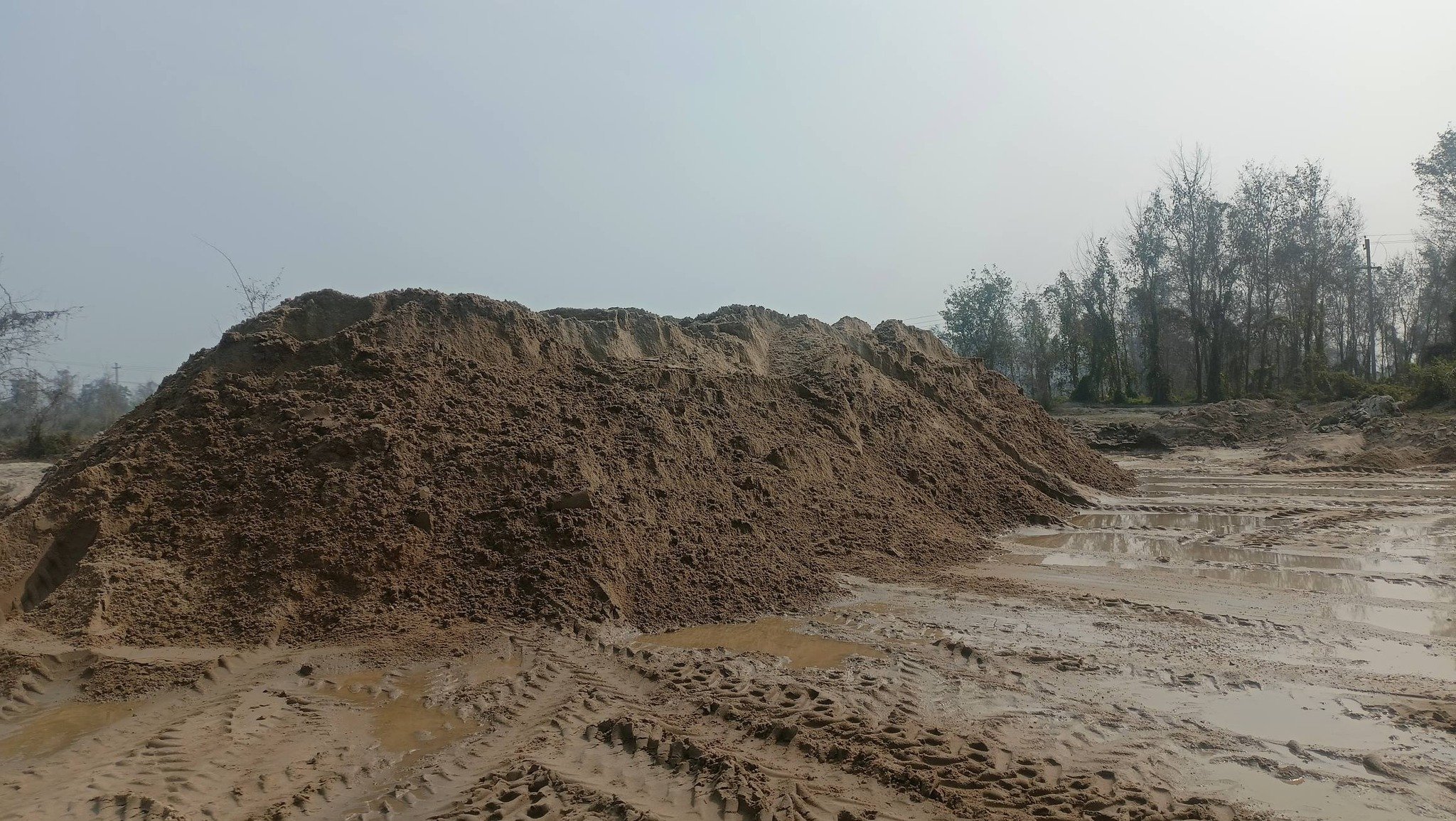
The Balganga Crusher and Sand Processing Industry has been operating an industry by renting about 10 katthas of arable land in Jitpur Simara-12 for the last three years. Currently, the industry has spread its crusher operations over 10 bighas of farmers' arable land. The large piles of materials in the fields are clearly visible even from a distance.
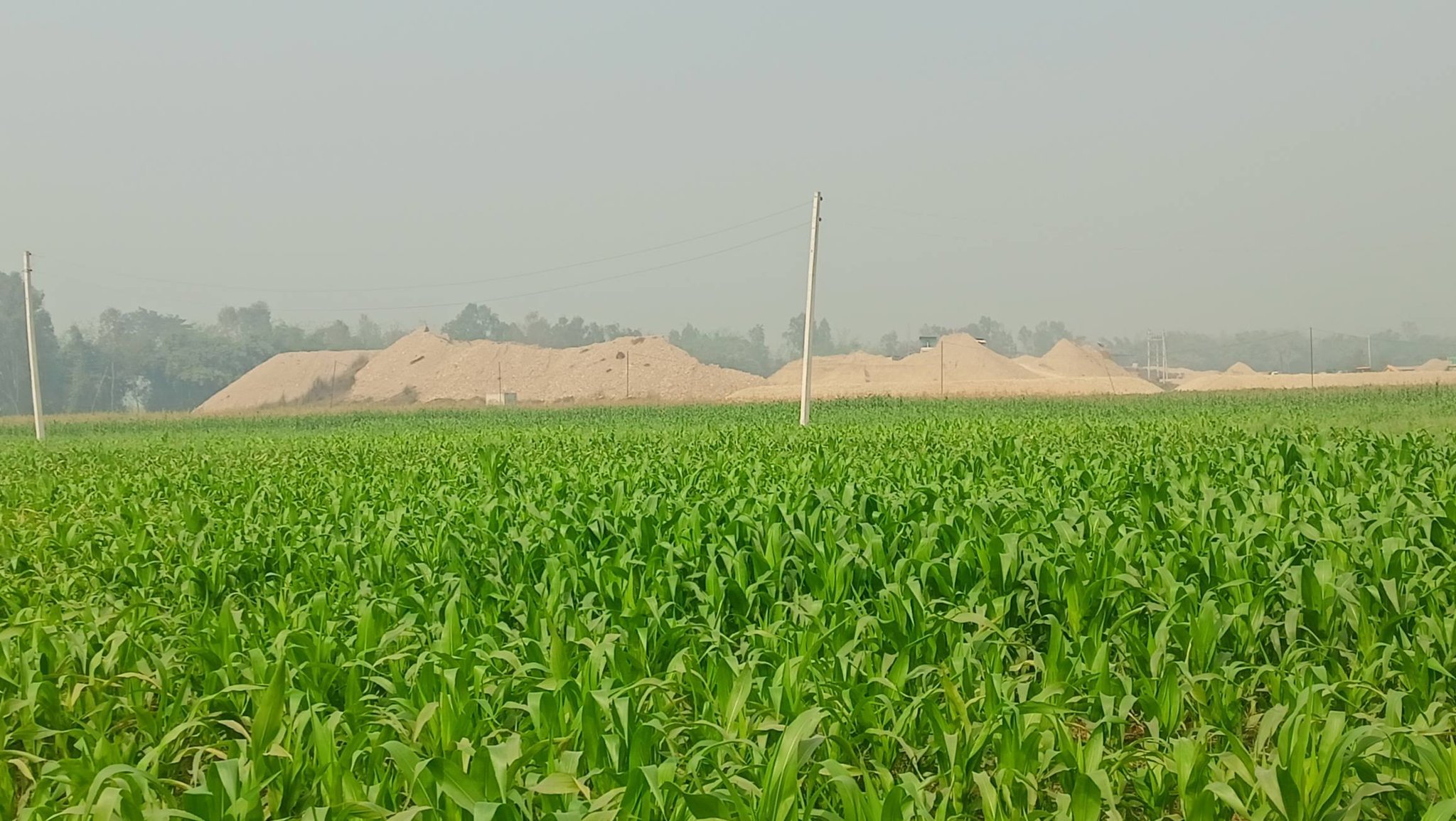
When a Ratopati correspondent reached the site, the operators of the crusher industry obstructed the taking of photographs.
Ward Chairman Chaudhary said that he initially urged farmers not to lease their land to the crusher industries, but according to him, the farmers agreed after receiving up to 5,000 rupees per kattha annually.
Chaudhary mentioned that farmers are now regretting that 20 bighas of fertile land in that area has become barren due to sand and stone accumulation.
“There are complaints that the crusher industry is dumping sand silt water into the irrigation canals of the farmers in our ward, and that heavy tippers speeding during school hours are causing fear and risk of accidents for the children,” he said. “Teachers also complain that the loud noise from the crushers during school hours disrupts teaching and learning.”
Locals also state that the crusher industries have failed to honor any of the commitments they made during the public hearings before establishing the industries.
Bidur Khadka, a local from Jitpur Simara-15, suggests that the theft and smuggling of river-based materials cannot be controlled because some ward chairmen have investments in crusher and sand industries.
Among the 16 local bodies in Bara, only Jitpur Simara Sub-Metropolitan City, Kolhawi, and Nijgadh Municipalities have been awarding contracts for river-based materials. The contracts, which should have been awarded by the end of Ashoj, have not been finalized in any of these three municipalities even after five months of the current fiscal year have passed.
The detailed environmental impact assessment report for Kolhawi and Nijgadh has not been approved by the Madhes Province Ministry of Forest and Environment. In the case of Jitpur Simara, although the intention to award the contract was announced, the agreement could not be finalized due to the absence of a Chief Administrative Officer.
Kolhawi Municipality Mayor Ramprasad Chaudhary stated that compared to Jitpur Simara and Kolhawi, the theft and smuggling of sand, stones, and gravel from the rivers in Nijgadh is in a frightening state. “In our area, we are trying to control it somehow by deploying municipal police throughout the day,” Chaudhary said. “But in Nijgadh, theft is happening at an alarming rate.”
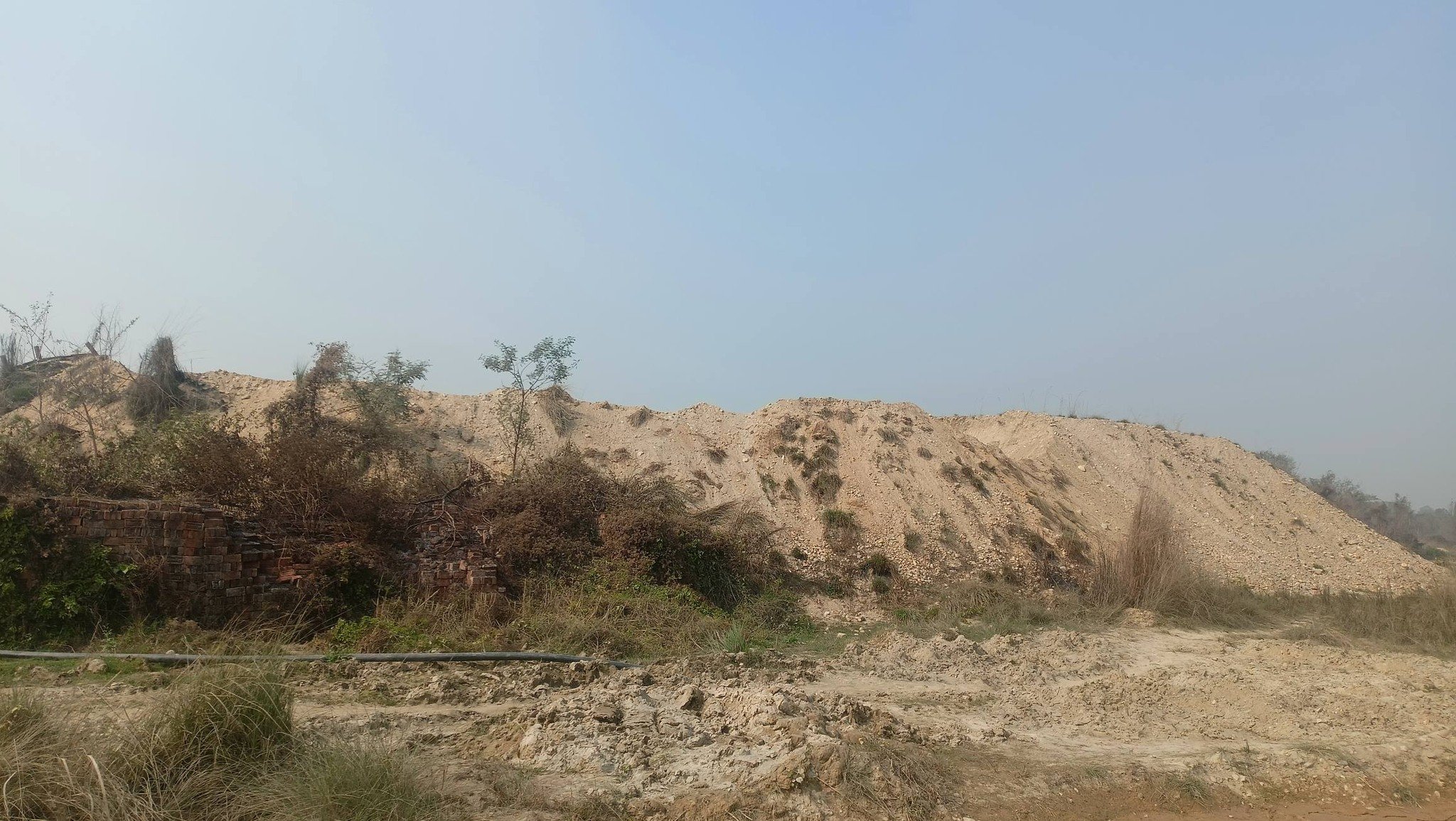
Due to the inability of local levels to award contracts on time and control smuggling, half a dozen rivers in these three municipalities have fallen into the hands of mafia groups. The silence of the District Coordination Committee, Division Forest Office, District Police Office, and District Administration Office—all responsible for monitoring and supervising local natural resources—has also raised suspicions of collusion.
Bara's Chief District Officer, Dharmendra Kumar Mishra, stated that the primary responsibility for controlling the theft and smuggling of river-based materials lies with the municipality. He mentioned that during a previous inspection of the rivers in Nijgadh, sand and crusher industry operators had fled, and large stockpiles of river-based materials with unknown sources were found.
- Contract Agreement Delayed Due to Absence of Chief Administrative Officer
Jitpur Simara Sub-Metropolitan City has been without a Chief Administrative Officer for about a month and a half. After Shanti Raj Prasai was transferred in the second week of Poush, Hiralal Chaudhary arrived as the Chief Administrative Officer in the first week of Magh. A few days after Chaudhary arrived, his promotion to Joint Secretary was finalized, and he returned to the Ministry of General Administration.
During the four days Chaudhary was at the municipality, he made decisions regarding employee salaries and allowances and social security allowances, but other work remains stalled.
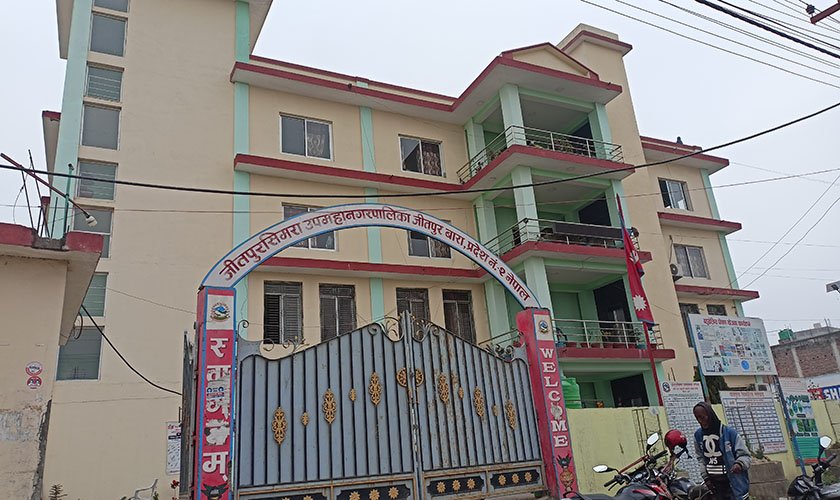
Suden Chaudhary, Head of the Planning Branch of the Sub-Metropolis, stated that the delay in contract agreements for rivers and the issuance of work orders is due to the absence of the Chief Administrative Officer. “Without the Chief Administrative Officer, new agreements at the ward and municipal levels, payments for old contracts are stopped, branches are idle, and contracts for temporary employees have expired,” said Planning Branch Chief Chaudhary. “Since all authority in the municipality is centralized in the administrative office, almost all work, except for routine daily tasks, has come to a standstill.”
Although the Sub-Metropolis allocated a budget of 2 billion and one lakh rupees for the current fiscal year, ward-level works have not commenced this year.
Meanwhile, Joint Secretary Chaudhary stated that he is currently reporting to the Ministry of General Administration as he has not yet received his appointment following his promotion. “I don't know where I will be appointed after the promotion,” Joint Secretary Chaudhary said. “An agreement can be made with the Election Commission to appoint someone as the administrative chief of Jitpur Simara.”
The Sub-Metropolis has 3 directorates—Social and Economic Development, Infrastructure, and General Administration—and about a dozen branches. With the municipality lacking a head employee, even the upcoming Grade 8 district-level examination appears to be affected.
This specific news has been automatically translated by AI. As a result, there may be some inaccuracies or language errors.