Excess Liquidity Poses Challenge for Nepal's Banking Sector Amid Low Credit Demand


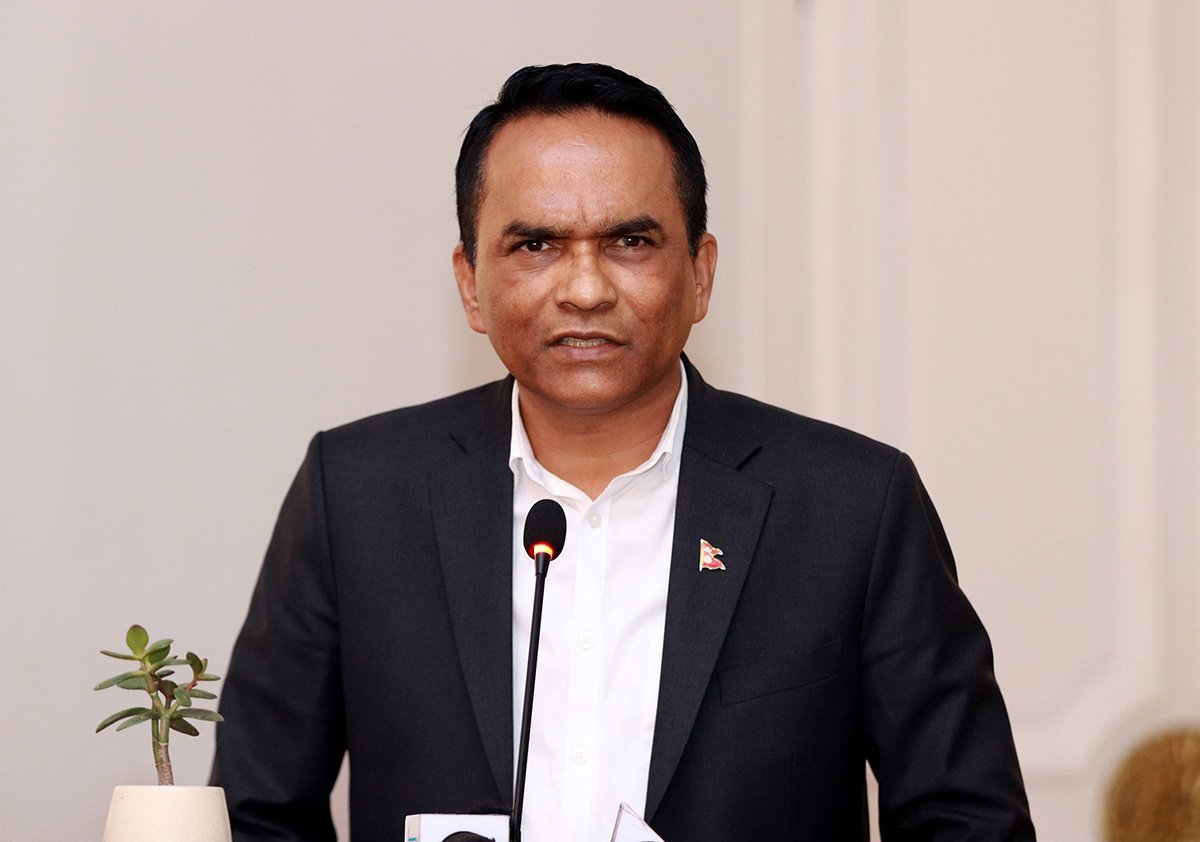
Kathmandu. Managing excess liquidity has become a challenge faced by the entire banking and financial sector in the country. Deposits collected from the general public in various commercial banks, development banks, and finance companies across the nation have reached an all-time high. Nepal Rastra Bank (NRB) spokesperson Guru Poudel informed that there is approximately NPR 900 billion available for investment in the banking system.
The challenge in this sector has increased because, despite maintaining low-interest rates, there has not been an expected improvement in credit demand. Banks have tightened lending due to increasing risks in a situation where there is no demand for credit in the market, leading to an accumulation of deposits. With more investment-ready funds piling up in banks than the market requires, the situation is akin to the state being poor despite having money. Recently, due to improvements in remittance inflows, the trend of increasing deposits continues.
He states that excessive deposits will not lead banks to losses or collapse, but it will create problems for capital growth. He says, "Excessive deposits are a matter of concern for banks, but banks can earn profits by investing in various sectors." The central bank is attempting to encourage businesses to take out loans through various plans and programs.
Issues such as the situation arising from political instability, protests at various times, frequent changes in government, and the policies and programs adopted by the government have been found to affect the regular operations of banks to some extent. Banks must move forward by making the best use of such opportunities. Financial activities driven by banks expanding investments and providing services according to public aspirations to satisfy customers are what keep the country's economy moving. The general public trusts banks.
Banks integrate capital scattered in small units across the country and invest it in various productive sectors. Banks are assisting people who wish to operate small-scale enterprises by making proper use of local resources. In the past, due to a lack of financial awareness, there was a perception in society that banks were established only for big traders and businessmen. Even after the establishment of banks, due to a lack of financial literacy, ordinary citizens used to conduct transactions through barter. Banking transactions were not taken easily.
By spreading awareness about the importance of saving and investment among people, banks have played a significant role in the development of small and cottage industries, the establishment of medium and large-scale industries, and poverty alleviation. Banks are effectively working in managing government revenue and expenditure, providing foreign exchange services, keeping accounts for import-export trade, and handling the transactions of private sector businesses and companies. A provision has been made to provide loans with a premium of no more than 0.50 percentage points above the base rate to employees working in industries, businesses, commercial establishments, and economic activities directly affected by abnormal situations during the protests by the Gen Z generation for salary and allowances.
It is expected that the loan provided at a minimum interest rate to institutions operating export-oriented industries, employing at least one hundred women, will somewhat improve liquidity. These concessions provided by the NRB can increase credit demand and accelerate the economy. When funds are abundant, but credit demand is low, banks are concerned about how to manage deposits. The NRB manages liquidity by injecting it into the market when it is low and withdrawing it when it is high. Spokesperson Poudel informed that the NRB has withdrawn NPR nine hundred billion at 2.64 percent for liquidity management.
During times of excess liquidity, the ample investment-ready funds in the banking and financial sector can be invested in productive sectors. The central bank provides policy-level support to banks to develop their capacity to disburse loans. He stated that credit demand will gradually increase due to international situations, the approaching elections, and financial security.
Despite opportunities for business expansion and industrialization due to relatively low-interest loans, liquidity management has not been possible because of political uncertainty and the high cost of production. This negatively impacts the economy. When deposits increase but credit does not, banks' interest expenses rise, potentially reducing profits. Therefore, deposit interest rates start to fall. Depositors are forced to keep deposits in banks at lower interest rates, which reduces the income source for depositors. The lack of an investment-conducive environment leads to no credit demand, increasing the risk of investment flowing into unproductive sectors.
Excess liquidity leads to a decrease in domestic savings and an increase in unnecessary consumption, which causes price increases. Furthermore, it negatively affects the economy through an increase in national imports and impacts the country's balance of payments. Former Head of the Central Department of Economics at Tribhuvan University, Dr. Resham Thapa, stated that this could lead to an overall rise in the price level and an inflationary situation.
Excess liquidity creates a risk of domestic savings migrating abroad. Both low and high liquidity are not considered good for the financial system. He explained that if banks invest beyond their capacity when credit demand increases, it leads to a low liquidity problem. The banking system, which started with paper processes, has developed the capacity to provide modern digital banking services to service seekers through the use of information technology, adapting over time with technological advancements. The establishment of bank branches across the country has increased public access to this sector, and the number of customers is also on the rise.
It is observed that the establishment of banks and financial institutions rapidly increased in the private sector due to the economic liberalization policy initiated by the government in the 1980s (Bikram Sambat fourties). Generally, liquidity refers to the amount of financial assets a person or institution has deposited in a bank that can be easily converted into cash for spending when needed. Liquidity in the banking and financial sector is understood as immediately investable capital.
A bank's liability is to return the depositors' money, including interest, upon demand. Banks must play both a profit-making and a service-oriented role. There is a close relationship between liquidity, interest rates, and inflation in the country's economy. When liquidity increases, interest rates fall, and inflation tends to rise. When liquidity contracts, interest rates rise, and inflation decreases. Liquidity management is crucial for earning profits in the financial system.
For liquidity management, the deposits kept by the general public in banks are held with the central bank. That is, as the NRB is the central bank, it holds that amount to keep the entire financial system dynamic with the objective of managing liquidity and pays a certain amount as interest to the respective bank. The money collected by banks from individuals, various organizations, companies, and institutions is deposited in current, fixed, and savings accounts. The central bank manages liquidity with the objective of preventing problems in the economy due to liquidity imbalance. Through monetary policy, the central bank has provided facilities to banks and financial institutions to maintain up to 90 percent of deposits. This is also known as the Credit-to-Deposit Ratio. The NRB absorbs excess liquidity in the market and injects it when it is low. Credit demand has not increased due to political instability and the lack of an investment-conducive environment. This situation allows deposits to be kept in banks even at low interest rates.
The government has extended the repayment period for concessional loans to industries and businesses affected during the Gen Z protests. It is expected that this will help in loan repayment. Those who have taken loans and cannot repay them will be provided support from a national-level Reconstruction Fund, according to economist Radheshyam Malakar. This is also expected to aid in liquidity management. The government has already established a Reconstruction Fund for reconstruction.
The Government of Nepal, Nepal Rastra Bank, and insurance companies have initiated various relief facility programs to immediately operate industries, commercial and business establishments, and economic activities affected by the abnormal situation created by the Gen Z protests. It is expected that this will increase credit demand in the market and revitalize the economy. Business owners believe that credit demand will increase with the reconstruction of damages caused by vandalism and arson during the protests. There is a belief that the funds piled up in the financial system will be utilized for revival. If deposits increase but credit investment does not, bank profits will decrease due to interest expenses, and the dividends received by respective shareholders will also be affected.
This specific news has been automatically translated by AI. As a result, there may be some inaccuracies or language errors.