Democracy is Not a Festival: The Vital Role of Public Debate and Accountability in Nepali Politics


Why do we limit democracy only to the day of voting? Is the day of voting the only celebration of democracy? A tendency is deeply ingrained in our consciousness to consider the practice of casting a ballot once every five years and then remaining silent as the fulfillment of democracy.
However, democracy is not a festival that arrives for a day and ends. It is a continuously flowing river where debate is its current, questioning is its wave, and accountability is its life-giving water.
Elections are merely the gateway to democracy, not the destination. Once the door is opened and we step inside, strong pillars are needed to support the house. These pillars are debate, criticism, transparency, and continuous dialogue. If these pillars become weak, the building of democracy, though grand from the outside, becomes hollow from within.
When citizens are confined merely to the role of voters, the soul of democracy gradually begins to wither. In such a situation, citizen participation, public scrutiny, and the right to question are marginalized. Democracy is not just a formal agreement between voters and representatives; it is a continuous dialogue between citizens and the state.
Public debate is the open sky for that dialogue, where ideas clash, truth is churned, and policies are refined. A society without debate cannot be vigilant, and a government without questions cannot be accountable.
Public debate is the scale that measures the legitimacy of power in a democracy. It is in the heat of this debate that the vision, morality, and policy clarity of the leadership are tested. Popularity cannot be above debate; rather, popularity itself must become a subject of debate.
In a democracy, leadership is not a deity, nor is it a power beyond questioning. It is a responsibility that must remain under continuous public scrutiny. Where leadership flees from questions, democracy begins to shrink. The 'Balen trend' seen in recent Nepali politics is one example of this.
In America, debates for the presidency are not just formalities; they are the backbone of democratic culture. There, a candidate fleeing a debate is considered akin to a political crime. In Australia, the parliamentary question time is a daily oversight of the government.
In Britain, Canada, and European countries, debate is considered proof of institutional strength, not a weakness of governance. There, refusing dialogue is seen not as strength, but as a sign of fear.
However, the scene in Nepali politics appears somewhat different. Here, debate is still often viewed as an obstruction. Asking questions is labeled as a personal attack, and dissenting opinions within a party are branded as rebellion. This mindset, which considers silence as stability and questioning as instability, does not align with democratic consciousness.
Democracy is not weakened by debate; rather, it weakens in the absence of debate. Against this backdrop, it is necessary to understand the new political wave developing in Nepali society and its depth. Could this wave be a new form of power-centric politics and opacity?
Novelty should not be limited only to new faces or labels. It must be reflected in vision and agenda. Is the alternative politics explained today positive or negative? Is it for position or for the country? What is the clear agenda and roadmap for nation-building? What is the vision of the parties emerging as new forces? What are their concrete plans regarding the implementation of the constitution, the strengthening of federalism, foreign policy, economic structure, and social justice? Is radical change in the country possible merely through age, energy, and impulse?
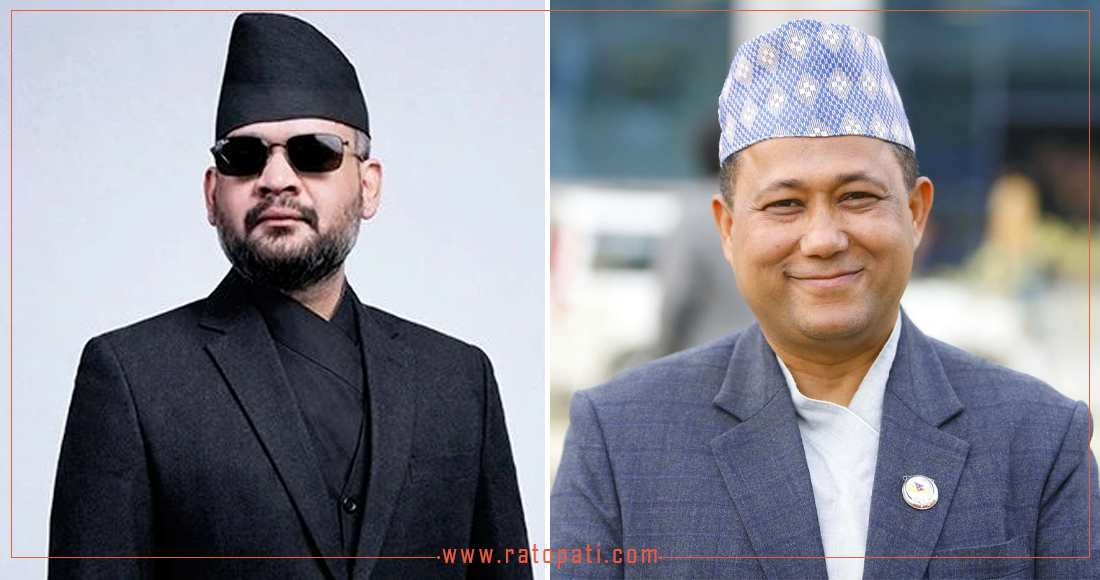
Figures like Balen Shah and Rabi Lamichhane must answer these questions. At the very least, they must provide answers until we, the common people, understand. The street will keep asking questions, and the dreams of those who sacrificed in various movements will seek an accounting for them.
In a democracy, leadership is not an object hidden inside a safe fortress. Leadership is the courage to stand in the open field of criticism. What the Rastriya Swatantra Party (RSP) must understand is that if the party cannot bring its own leadership to the dock of questioning, its capacity to be accountable to citizens in the future will diminish.
Balen Shah, who emerged as an independent political figure, is not just an individual today; he is a hope and a potential leader. His rise was the result of public outrage and the search for an alternative. However, change is not just about changing faces; it is also about the transformation of the culture that accepts dialogue, transparency, and criticism.
Debates, press conferences, and public question-and-answer sessions are not burdens of governance; they are essential links of democracy. Distancing oneself from debate means reducing citizens back to silent spectators. When debate disappears, decisions become opaque. When questions are suppressed, power becomes centralized in individuals. History bears witness—this path is the beginning of democratic decay.
Today's discourse should not be limited to blind support or opposition to any individual or party. The core issue is democratic practice. Whoever is in whichever camp cannot be exempt from public debate and public accountability. Debate is the lifeblood of democracy. Weak debate means democracy itself is weak. Therefore, if we want to save democracy, we must first protect the culture of debating and questioning.
This specific news has been automatically translated by AI. As a result, there may be some inaccuracies or language errors.