Experts Discuss Labor, Foreign Employment, and Social Security in Upcoming Elections


Kathmandu. Political parties are busy drafting their manifestos on the eve of the upcoming House of Representatives elections. A party's manifesto is not just a document for soliciting votes but also a guiding principle for the party's actions in the coming term.
Currently, employment is the most pressing issue. Although exact figures are unavailable, it is estimated that nearly 7 million Nepalis are currently abroad, the majority of whom seek employment. Even those who go for studies often have this underlying objective.
Ratopati organized a special Round Table series focusing on how political parties should address issues related to the labor sector, foreign employment, and social security in light of the changed circumstances following the Jan Andolan (People's Movement) and the mid-term nature of the election.
Participants in this series include Bhuwan Singh Gurung, President of the Nepal Association of Foreign Employment Agencies (NAFEA), Ajay Kumar Rai, General Secretary of the Nepal Trade Union Congress, and Padam Kumar Adhikari, an informal sector researcher and Associate Professor at Tribhuvan University and Principal of Ratna Rajya Laxmi Campus. The main topics of discussion from the Round Table are mentioned here (the detailed conversation can be viewed in the video).
Reasons for Nepalis Going Abroad
The latest statistics show that 2,200 to 2,500 Nepalis leave daily for labor. Even those who go on student visas are ultimately found to have gone for work. Is the main reason for people going abroad compulsion, desire, or whim?
Bhuwan Singh Gurung: Looking at the history of foreign employment in Nepal, it began with the British Army and Hong Kong Army (Lahure). At that time, Nepalis were taken to Hong Kong as security guards under the term 'Re-employment Gurkha'. They had the advantage of an army background (skills) and language familiarity. But the current scenario has changed.

In developed countries, foreign employment might be an option or a matter of career development. But in Nepal, it has become a situation of absolute necessity. The youth here have to go abroad to earn a living, provide higher education for their children, and meet their basic daily needs. Due to the lack of employment opportunities at home and uncertainty about the future, this is a compulsory step, not a choice.
How many go due to lack of employment, and what is the situation for those who leave existing jobs?
Bhuwan Singh Gurung: Although there are no exact statistics, what we observe practically is that returnees from abroad are forced to go abroad again. For example, someone returns to Nepal after spending 4 years in Saudi Arabia or 3 years in Malaysia. They try to start something here, invest, but they become disheartened due to market scarcity, problems finding workers, and bureaucratic hurdles. Ultimately, they are forced to go to another country or their previous destination. This number is currently quite significant.
What about those working in Nepali establishments who leave their jobs to go abroad? What is the reason for this?
Ajaykumar Rai: In our experience, workers in the formal sector—organized industries and institutions—and those affiliated with trade unions rarely go abroad. They are comparatively satisfied with the service benefits here or do not wish to leave their employment. If anyone does go, it is only after securing a very good and favorable opportunity.
However, workers in the informal sector and about five lakh new entrants to the labor market are compelled to go abroad. The main reason for this is the country's political instability. When politics is unstable, policies become unstable, which deteriorates the environment for investment and employment. Youth do not see a bright future for themselves and their families here, so they seek alternatives abroad.
What is the trend of university students or those currently studying going abroad?
Padamkumar Adhikari: The current situation of youth migration is alarming. Many students are going abroad under the pretext of studying from educational institutions. They get recommendations from colleges, but their real objective is to find out how many hours they can work there. Even the migration rate for technical fields (doctors, nurses) is high.
What is the reason for going abroad in the case of those in the informal sector?
Padamkumar Adhikari: My study shows that people in the informal sector are forced to do informal work due to a lack of skills and education. I studied workers involved in pottery in Bhaktapur, weaving in Lalitpur, and metalwork. They initially work as kind labor (learning in exchange for food and lodging). After learning a skill for 6-8 months, they gain some proficiency. But the earnings here barely cover their daily sustenance.
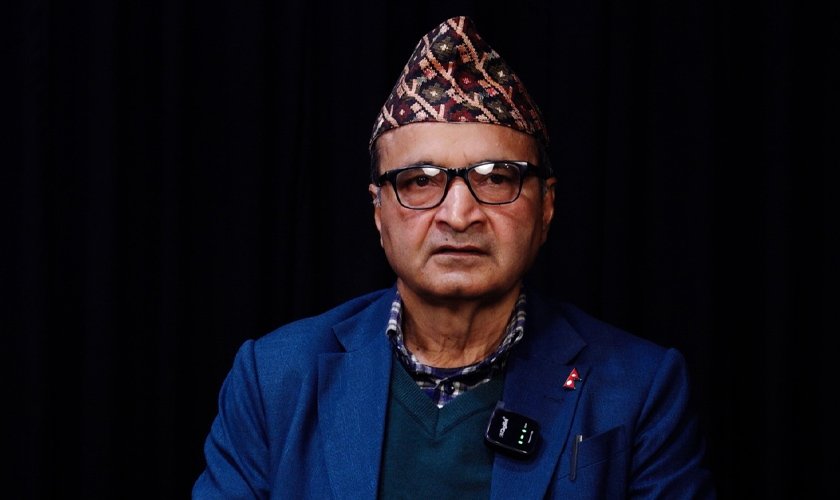
After coming to a city like Kathmandu, they see that people with some skills are earning more by going abroad (Malaysia, Qatar). Then they work here until they secure a visa and save money to go abroad. Their goal is to earn money abroad to build a house, pay off debts, and provide comfort to their families. The shrinking employment opportunities at the local level and the tendency to follow others also compel the youth to go abroad.
Foreign Employment: Reforms and Challenges
How much improvement has there been in terms of ease of going and working in the foreign employment sector over the last two decades?
Bhuwan Singh Gurung: Destination countries have been identified and expanded in line with the times. Previously, we were only focused on the Gulf, but now countries like Europe and Japan have opened up. Due to technological development and online systems (digitalization), workers are starting to receive services and benefits as stipulated. Access to information has significantly reduced incidents of workers being stranded, unlike before.
However, some government policies, such as the 'Free Visa, Free Ticket' slogan, sound good but have not been practically implemented. We are businessmen; if anyone is displaced due to our fault, we are ready to leave the profession. But the state must create timely and practical policies. Due to unclear policies, both businessmen and workers are in a dilemma.
How has the perception of foreign employers towards Nepali workers changed?
Bhuwan Singh Gurung: The identity of Nepalis, once known as 'Gurkhas,' remains that of honest and hardworking laborers. The main reason foreign employers prioritize Nepalis is our honesty, discipline, and tolerance. The impression in the international market is that Nepalis are more dedicated to their work compared to workers from other countries.
How has the income of migrant workers changed over the last two decades?
Bhuwan Singh Gurung: Naturally, earnings have increased. For example, in Malaysia, the salary used to start at 481 Ringgit a few years ago, but now the minimum wage is 1,500, and with overtime, it exceeds 1,700 Ringgit. In Saudi Arabia, it has increased from 800 Riyals to 1,000 plus 300 (for food). Looking at it this way, an improvement in the level of income can be acknowledged.
Domestic Market: Opportunities and Ironies
What is the situation regarding employment and income in the domestic market?
Ajaykumar Rai: Last year, the Ministry of Labor held a National Labor Conference and issued a declaration charter promoting domestic employment within 10 years. However, the country's political instability has become the main obstacle to this. No government lasts 5 years, and now even the parliament seems unlikely to complete a 5-year term. This instability has prevented domestic employment generation, leaving youth with no alternative but to go abroad.
We hear that some sectors face a shortage of workers while others face a shortage of jobs. What is the situation in different sectors?
Ajaykumar Rai: Yes, this situation exists, and there are two reasons for it. First, the state has failed to produce manpower according to market demand. Although there are institutions like CTEVT, there is a lack of sufficient skills-based training.
Second, there is a wrong mindset among employers here. They think that if they hire Nepali workers, they will form trade unions, demand rights, and cause problems. Therefore, they prioritize easily available foreign workers who do not demand rights. This results in Nepalis not finding jobs in their own country.
Has there been any improvement in labor relations and job security recently?
Ajaykumar Rai: Certainly. The unions that mushroomed after 2062/63 (2006/07) caused some problems. But now, mainstream trade unions (like the Nepal Trade Union Congress) have become responsible. If we look at the Nepal Rastra Bank data, recent strikes have been more due to political parties than trade unions.
Through a tripartite agreement between the government, employers, and trade unions, we have raised the minimum wage to NPR 19,550. We want domestic employment to increase and industrial peace to be maintained. Overall, labor relations are good in multinational companies, but problems still exist in small and informal sectors.
What is the state of employment and security in the informal sector?
Padamkumar Adhikari: My study reveals a frightening fact—even large and supposedly formal establishments are employing their workers informally. They use outsourcing or contract labor so they do not have to provide social security and other benefits. The goods produced by these workers go to the international market, but the status of the workers always remains informal.
Although the government announced that all workers would be enrolled in the Social Security Fund, the private sector has ignored this. Workers doing the same type of work in government schools or hospitals receive benefits, but those in private ones do not. This discrimination must end.
Government's Role in Encouraging Foreign Employment
Is the government indirectly encouraging people to go abroad?
Padamkumar Adhikari: It is not the government as much as our social structure and compulsions that cause this. People are also trapped by the tendency to follow others. There is pressure if a neighbor builds a house after going abroad, leading to the feeling that 'I must go too.'
Remittances have reduced the poverty rate, but their contribution to the country's production and Gross Domestic Product is not sustainable. Remittances come in, and that money is again spent on purchasing goods from abroad. The trend of going abroad will not stop until production increases and that production finds a market.
Social Security for Workers: Challenges and Solutions
There is a mandatory provision to contribute to the Social Security Fund. While 20% is supposed to be contributed by the employer out of the 31% contribution, in practice, a large amount is deducted from the worker's salary, leading to the argument that the salary received cannot sustain the deduction, thus increasing the trend of going abroad. How true is this?
Ajaykumar Rai: Going abroad is not because of the Social Security Fund itself. This is for the security of the worker's future. But there are some problems with it.
First, the informal sector could not be included.

Second, migrant workers going abroad were enrolled in the fund, but the contribution was one-sided. Workers alone have to pay the money. Our demand is that the state should contribute something to the worker who contributes 30% to the country's GDP. If that happens, continuity in the fund will be maintained. Currently, they pay once when obtaining a labor permit and then disappear.
There is also a voice suggesting that destination countries should be responsible for the social security of migrant workers. How feasible is that?
Padamkumar Adhikari: Security should be where labor is performed. If a Nepali works in Saudi Arabia or Malaysia, the government or employer of that country should be responsible for their security. They have shed their blood and sweat there. And when they return to Nepal, the amount accumulated in their fund should be transferable to Nepal's Social Security Fund.
Ajaykumar Rai: The International Labour Organization is also running this campaign now. Destination countries must provide social security to migrant workers. The Government of Nepal must include this clause as a mandatory condition when signing labor agreements.
Bhuwan Singh Gurung: Practically speaking, Malaysia has introduced a program called SOXSO, which is a type of accident insurance. But it is not sufficient. We must strongly raise this issue when renewing labor agreements. However, in the long run, since workers ultimately reside in Nepal, enrolling them in Nepal's fund is safer.
Returning Workers and Age Limit Issues
Up to what age do foreign employers hire Nepali workers? What is the situation in different countries?
Bhuwan Singh Gurung: Previously, youths up to 35 years old were generally prioritized. But now, due to labor shortages, Dubai is even hiring people up to 57 years old. However, it is difficult for someone who crosses 50 years of age working only as unskilled labor without acquiring skills. For those who have acquired skills and become proficient, age is less of a barrier.
How to secure the 'retirement life' of returnees from abroad?
Bhuwan Singh Gurung: After spending a long time abroad, they neither integrate well with the society here nor have any foundation here. Most have spent the money they earned sending their children to Australia or America. They face the prospect of being alone in old age.
Therefore, the state should skill-test returning workers, group them, and engage them in entrepreneurship by providing subsidized loans. This utilizes their skills and also serves as support in their old age.
Padamkumar Adhikari: If we fail to manage returning migrants, the economy will face a major problem. The skills and capital they bring must be channeled into production. That production should not be Kathmandu-centric but should happen in villages. The state must provide special packages to those who wish to return to their hometowns to engage in agriculture, animal husbandry, or small enterprises.
Issues to be Included in the Manifesto
What agendas related to labor and employment should political parties include in their election manifestos?
Suggestions from Bhuwan Singh Gurung
1. Curriculum Reform: Foreign employment is the reality now. Therefore, subjects like foreign employment, safe migration, and skills must be included in the school and college curriculum.
2. Search for New Destinations: The manifesto should include a policy to send workers not just to Gulf countries but also to high-income countries like Europe and Japan.
3. Budget Implementation: There must be a commitment to end the practice of spending the budget only in the month of Ashar (mid-June to mid-July).
Suggestions from Ajaykumar Rai
1. Decent Labor and Safe Employment: The main mantra of the manifesto should be 'Decent Labor and Safe Employment.'
2. Realistic Plans: Do not write figures like 'we will create 1 million or 2 million jobs in 5 years' in the air. A realistic framework on how and in which sector these will be created should be presented.
3. Consultation with Stakeholders: When formulating policies or writing the manifesto, it should be done after consulting with trade unions and employers, not just sitting in a room.
4. State Contribution: There should be a commitment that the state will also contribute financially to the social security of migrant workers and informal sector workers.
Suggestions from Padamkumar Adhikari
1. Employment Linked to Production: Do not just give slogans for vote banks. For example, saying 'we will build hydropower' is not enough. Open a factory to manufacture induction stoves in Nepal alongside hydropower projects, or an industry to assemble electric vehicles. Only then will employment be created.
2. Formalizing the Informal: The manifesto should include laws to bring informal sector workers into the formal sphere and guarantee their minimum wages and social security.
3. Use of Technology: Policies should be introduced to increase domestic technology and production by utilizing scientists and researchers from Tribhuvan University.
Photo/Video: Manoj Khadka
This specific news has been automatically translated by AI. As a result, there may be some inaccuracies or language errors.

_wqJwwAzuWG.jpg)

_Mks4af4WAR.jpg)