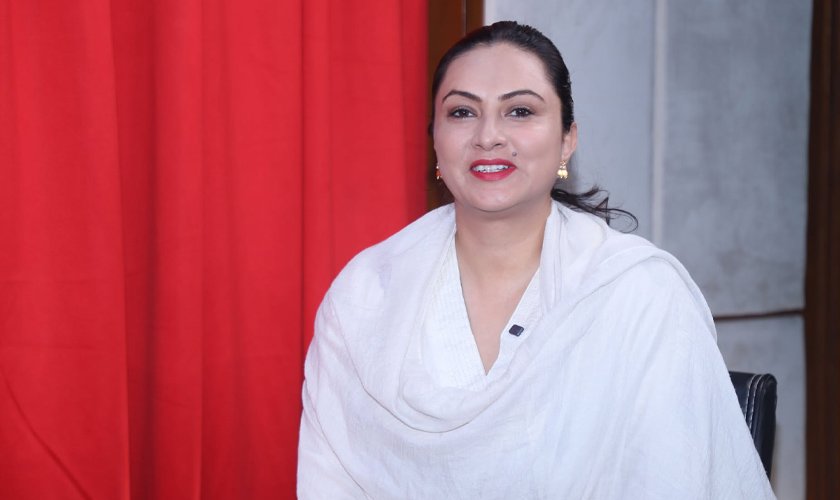
Actress Nisha Adhikari Transitions to Politics, Contesting Kathmandu Seat on 'Dynamic Democratic Party' Ticket


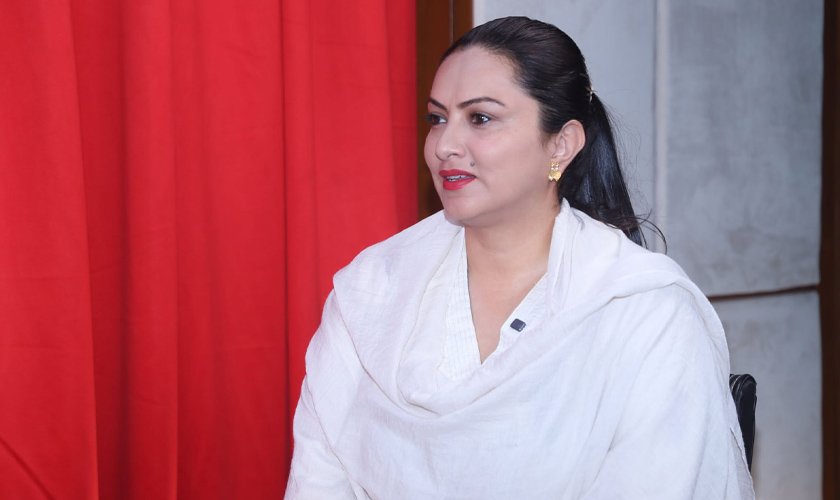
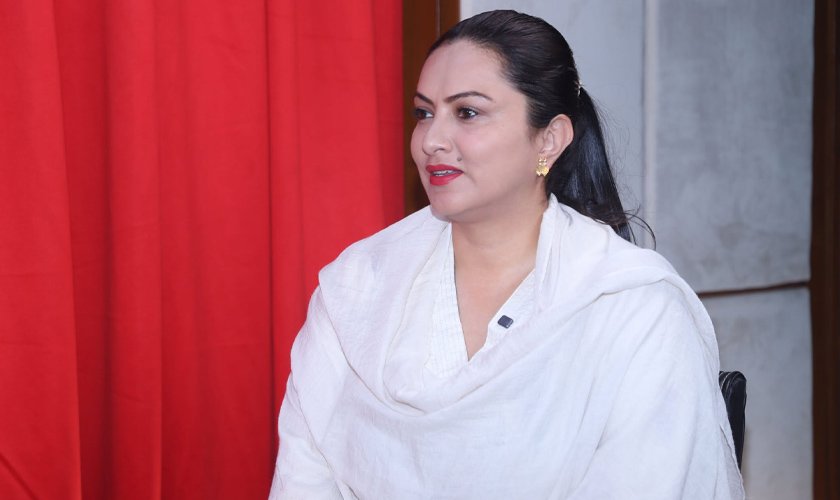
Kathmandu. Nisha Adhikari is changing her identity. She has moved from the role of an actress to that of a political leader. She is a candidate for the House of Representatives election to be held on Falgun 21 from Kathmandu Constituency Number 5 for the Dynamic Democratic Party.
Nisha is determined to advance in politics not as a profession, but as a service. In Ratopati's 'Warpar' segment, she stated that she entered politics to bring about policy changes in the country for a specific period of 10 to 12 years. She has made issues such as youth self-employment and community centers for senior citizens her election agenda.
Here is the edited excerpt of the conversation focusing on the election with actress and leader of the Dynamic Democratic Party, Adhikari (the full interview can be watched in the video):
Currently, many people from professions like acting are entering politics. Do you find this profession easy?
It is extremely difficult. There are many responsibilities involved. If one is to engage in politics with integrity, it must be done with a spirit of service. We call it the service sector. Politics is a place where you first win the mandate and then win the hearts of others.
Is politics harder than climbing Mount Everest?
Certainly. Politics is very difficult. Although there are options to take easier, shorter routes.
Sometimes acting in films, sometimes climbing Everest, sometimes doing something else—why are you so unstable?
I prefer to call it 'dynamic' and 'active' rather than unstable. Trying to do many things and learn in one lifetime is not a bad thing. Whatever I do, I do it wholeheartedly and with full preparation. One should pursue what they desire. Otherwise, there will be regret for not having done what one wished to do.
Acting often brings applause; criticism usually comes only if one misspoke. Politics is always a field where one faces criticism. Why did you want to come from a field of applause to a field of criticism?
Acting is not a sector that only brings applause. If one cannot do good work, there will be criticism. Similarly, those who do good work in politics have also received applause. Right now, my mind is focused only on the agenda, not on applause or criticism.
Why did you choose the Dynamic Democratic Party instead of large, high-profile political parties?
I have not come to do politics as a career. I have come to serve the country politically for the next 10 to 12 years, as much as possible. My ideology is liberal democratic. Large parties have many 'baggage' issues. I liked the structure of the Dynamic Democratic Party. It has a system of 'one person, one post,' and office bearers cannot contest elections.
Furthermore, this party has a provision allowing a maximum of 16 years in politics, which opens the way for the new generation. I prefer to follow agendas rather than individuals.
You mentioned being in politics for only 10 or 12 years. You said you would return to films afterward. Won't age and glamour become an issue for films then?
We need to change our thinking slightly. Youth and glamour are not requirements for film. I am also a producer. I can make films. As I said before, the roles will be different.
You came into politics saying you would only stay for 10 years, right?
I felt that our generation failed after the 'Gen Z' movement. Even if others do not take moral responsibility, I will take moral responsibility. In many places, we failed where we should have raised our voices. That movement happened because my generation failed.
Did the Dynamic Democratic Party approach you, or did you seek them out?
I met Birendra Basnetji during some work. During that time, we discussed whether we could come together. I liked the team and the ideology of this party. I also liked the agendas. That's how I joined.
Were you preparing for a separate party before joining the Dynamic Democratic Party?
No, we were a group of people who left home out of concern for the country. We couldn't stay home after the Gen Z movement. We were discussing that a political way forward must be sought.
Currently, it is said to be both difficult and easy to become a Member of Parliament in Nepal. That is through the proportional representation system. If you give a little money, you can get into the proportional list. Why did you choose the difficult path of direct election instead of this easy route? Many artists from other parties are in the proportional lists too?
Many artist friends from other parties are on the proportional representation list, and I respect their decisions. However, my political perspective and understanding are slightly different. I consider Nepal a shared home. In a home, a parent's attention often goes more towards the weaker child so that they too get equal opportunities. This is the real spirit of the proportional representation system: ensuring the representation of marginalized, voiceless minorities who have been left behind from the mainstream of the state.
What I understand is that proportional representation seats are for those classes who, despite having the capacity to compete directly, have not received opportunities due to various social reasons. If I consider myself capable, I should not block the path of the real deserving candidates by occupying that quota.
I see the beauty of democracy in winning the hearts of the people by taking the difficult path, rather than getting a position by taking the easy path. Therefore, I am ready to lose the election 10 times, but I will not sit on the proportional list.
Why did you choose Kathmandu Constituency Number 5?
I was born on this very soil. I had my schooling here and grew up here. Constituency Number 5 is my home. Today, the place where I grew up, I am raising my own children. Therefore, my personal future, as well as the future of my family and the coming generation, is tied to the development of this constituency. My goal is to make this constituency a model area where every generation can feel a sense of belonging.
I want the generation of our mothers and fathers to feel safe and respected here, my generation to get opportunities here, and for the generation of our children, this place to be livable and modern. I am committed to making this constituency a cultured and developed area, considering it my personal family responsibility. That's why I want to start building my home from this constituency where I reside and work.
You are a direct candidate from Kathmandu Constituency Number 5. There are heavyweight candidates from major parties here like Ishwor Pokhrel, Pradeep Paudel, and Kamal Thapa. Isn't it challenging?
I am not scared at all. They might be heavyweights based on political experience, but I am a heavyweight based on my agenda. How long will the people trust the same old faces? I am ready to debate them on agendas on any platform. I have come understanding the problems and needs of the people in this constituency.
Why should voters vote for you?
The main reason to vote for me is my clear vision and concrete action plan to address the problems of every generation. I want to explain my agendas in four points.
Nepalis currently living in countries like Australia, America, or the Gulf are facing various difficulties. Some want to return but do not see a future here. My candidacy is not just for those living here, but also to create an environment where Nepalis wishing to return from abroad can live with pride and self-respect and invest.
In Kathmandu Constituency Number 5, there are many parents whose children are abroad for livelihood. To address their health and loneliness, I will introduce the concept of a Community Center. I call this a Gold Club or Graceful Retirement, where parents over 60 can share their experiences, and the state will take responsibility for their health and care.
Our party's main slogan is 'Sustainable Employment in Every Ward.' For this, I will establish Innovation Labs and Skill Development Centers for the youth, where they can receive training according to their interests and abilities and connect with entrepreneurship.
I have brought a special plan for Constituency Number 5: Digital Mapping. Through this, we will connect local production and the availability of quality food materials with technology. This way, children and elderly parents residing at home can be supported digitally by their children living abroad, ensuring quality and pure food.
They say contesting elections requires a lot of money. Where will you get that money from?
Spending too much money in elections is the beginning of corruption. I will contest the election within the limit set by the Election Commission, which is around 25 to 27 lakhs. My source is small donations from friends, family, and well-wishers. I will not take donations from any businessperson or middleman. I will contest a transparent election using my social capital.
Photo/Video: Manoj Khadka
This specific news has been automatically translated by AI. As a result, there may be some inaccuracies or language errors.
_uwZqw7sHpf.jpg)